Ghee Benefits: 9 Science-Backed Health Advantages
Discover the science-backed health benefits of ghee, from heart health and digestion to immunity and skin care.
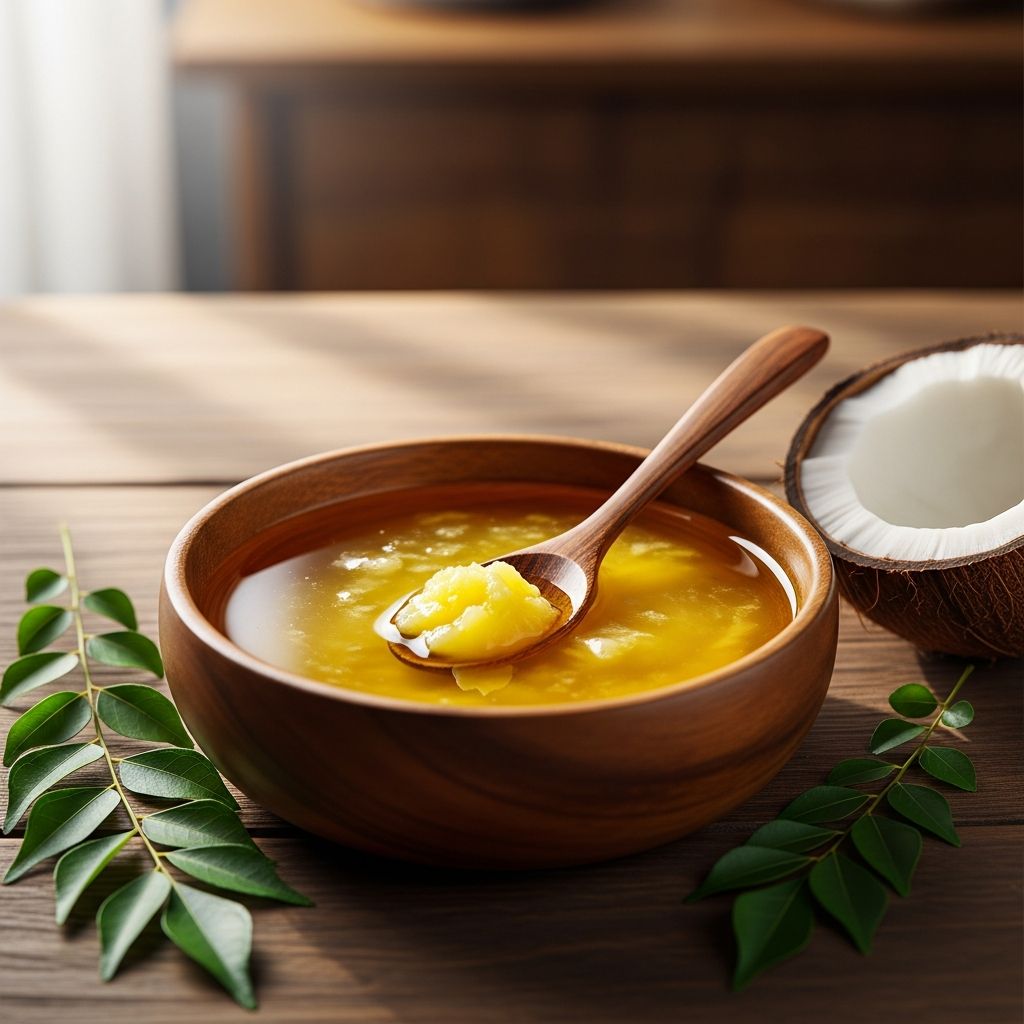
Ghee, a form of clarified butter widely used in Indian cuisine and Ayurvedic medicine, is produced by simmering butter to remove water, milk solids, and impurities, leaving pure butterfat. This process results in a product with a high smoke point, nutty flavor, and rich nutritional profile, including fat-soluble vitamins A, D, E, and K2, short-chain fatty acids like butyrate, omega-3s, and conjugated linoleic acid (CLA).
Unlike regular butter, ghee is lactose- and casein-free, making it suitable for those with dairy sensitivities. Traditionally valued as a rasayana or rejuvenator in Ayurveda, modern research supports many of its purported benefits for digestion, heart health, immunity, and more. This article explores ghee’s key health advantages, drawing from scientific studies and Ayurvedic wisdom.
What Is Ghee?
Ghee is clarified butter originating from ancient India, where it has been a dietary staple for over 5,000 years. The clarification process involves heating unsalted butter until the milk solids separate and sink, then straining to yield golden, aromatic fat. This results in a shelf-stable product that doesn’t require refrigeration.
Nutritionally, one tablespoon (13g) of ghee provides about 120 calories, 14g fat (9g saturated), and trace amounts of vitamins. It’s richer in butyrate—a short-chain fatty acid that feeds gut cells—and CLA, which may combat inflammation. Grass-fed ghee amplifies these benefits with higher omega-3s and vitamin K2.
In Ayurveda, ghee balances Pitta and Vata doshas, enhances agni (digestive fire), lubricates tissues, and nourishes o jas (vital essence). It’s used in cooking, medicinally as ghritas (herbal-infused preparations), and for oil pulling.
9 Health Benefits of Ghee
1. May Promote Heart Health
Despite its saturated fat content, ghee may support cardiovascular health. Studies show it can lower total cholesterol, LDL, VLDL, and triglycerides while raising HDL. A meta-analysis of over 19,000 individuals found ghee consumption reduced total cholesterol by -0.04 mmol/L and LDL by -0.17 mmol/L, with HDL increasing by +0.33 mmol/L.
Components like CLA prevent arterial inflammation and hardening, while butyrate reduces oxidative stress. Animal studies confirm ghee decreases fatty streaks in arteries and prostaglandin levels linked to inflammation. A clinical trial in 206 participants showed ghee outperformed oil in improving lipid profiles.
Ayurveda attributes this to ghee’s ability to cleanse blood tissue and pacify Pitta, reducing heart disease risk when consumed moderately (2-5% of calories).
2. Supports Digestive Health
Ghee’s butyrate nourishes colon cells, reduces gut inflammation, and promotes beneficial bacteria while inhibiting pathogens. This short-chain fatty acid strengthens the intestinal barrier, aiding conditions like IBS and leaky gut.
In Ayurveda, ghee enhances digestive fire, cools the stomach lining, and lubricates the GI tract, preventing dryness and constipation. It’s a key ingredient in Panchakarma detoxification. Modern reviews highlight its role in producing killer T-cells in the gut for immune support.
3. Provides a Good Source of Vitamin A
Related Stories



Ghee boosts intake of fat-soluble vitamin A (retinol), essential for vision, skin, immunity, and reproduction. One study measured 28.21 IU/g in ghee, supporting eye health and mucous membrane integrity.
Ayurvedic texts praise ghee as a rejuvenator for the eyes, enhancing clarity and preventing dryness-related issues.
4. Contains Omega-3 Fatty Acids
Grass-fed ghee is rich in omega-3s like linolenic acid, which decrease inflammation, lower unhealthy cholesterol, and protect against heart disease and allergies. These fats modulate immune responses and support brain health.
5. May Aid in Weight Management
Paradoxically, ghee’s medium-chain triglycerides and CLA promote fat metabolism and reduce weight gain. Rat studies showed curd ghee led to slower weight gain and lower lipids compared to cream ghee.
Its satiating fats curb overeating, and butyrate improves insulin sensitivity. Ayurveda recommends ghee for nourishing without kapha aggravation when properly prepared.
6. Boosts Immunity
Ghee’s butyrate, CLA, and omega-3s enhance immune function. Butyrate stimulates T-cell production in the gut, while CLA improves responses in clinical trials.
Ayurvedic ghritas are used for immunomodulation, supporting respiratory, cardiovascular, and brain health. Reviews confirm ghee’s rejuvenating properties align with modern findings on reducing disease severity.
7. Promotes Healthy Skin
Topically and internally, ghee aids wound healing, skin regeneration, and anti-aging. It promotes keratinocyte migration, reduces inflammation, and provides vitamins A and E for collagen synthesis.
Ayurveda uses ghee for curing skin diseases, enhancing complexion glow, and healing burns. Studies on Jyatyadi ghrita show faster wound contraction.
8. May Benefit Brain Health
Rich in K2, omega-3s, cholesterol (needed for brain tissue), and butyrate (which crosses the blood-brain barrier), ghee supports cognition, memory, and nerve tissue.Medhya (brain-nourishing) in Ayurveda, it enhances learning and stamina.
9. High Smoke Point for Cooking
With a 485°F smoke point, ghee is ideal for high-heat cooking without producing harmful free radicals, unlike butter (350°F).
Nutrition Facts
| Nutrient (per 1 tbsp / 13g) | Amount | % Daily Value |
|---|---|---|
| Calories | 120 | 6% |
| Total Fat | 14g | 18% |
| Saturated Fat | 9g | 45% |
| Vitamin A | ~8% DV | – |
| Vitamin E | ~3% DV | – |
| Cholesterol | 35mg | 12% |
Values approximate; grass-fed varieties higher in K2, omega-3s, CLA.
Potential Downsides
- High calories: Easy to overconsume; limit to 1-2 tbsp daily.
- Saturated fat: Moderation key for those with high cholesterol, though studies show neutral/positive effects.
- Not for everyone: Avoid in gallbladder issues or if allergic to trace dairy proteins.
- Quality matters: Choose organic, grass-fed to minimize toxins.
How to Use Ghee
- Add to coffee or tea (bulletproof style).
- Use for sautéing veggies, popcorn, eggs.
- Drizzle on grains, soups, baked goods.
- Ayurvedic: Take 1 tsp warm with herbs for digestion.
Recipe: How to Make Ghee at Home
- Start with 1 lb unsalted grass-fed butter.
- Melt in saucepan over medium heat.
- Simmer 20-30 min until milk solids brown and sink.
- Strain through cheesecloth into jar.
- Cool; store at room temp up to 3 months.
Yields ~1.5 cups. Nutty aroma indicates perfection.
Frequently Asked Questions (FAQs)
Is ghee healthier than butter?
Yes, ghee lacks lactose/casein, has higher smoke point, and concentrates nutrients like butyrate and CLA.
Can ghee help with lactose intolerance?
Generally yes, as clarification removes most lactose (<0.01%).
How much ghee per day?
1-2 tbsp for most; Ayurveda suggests dosha-based amounts.
Does ghee cause weight gain?
No, in moderation; CLA and MCTs aid fat loss.
Is ghee keto-friendly?
Absolutely; nearly 100% fat, zero carbs.
References
- Ghee: Is It Healthier Than Regular Butter? — Healthline. 2023. https://www.healthline.com/nutrition/ghee
- Health benefits of ghee: Review of Ayurveda and modern science. — PMC/NCBI. 2023-12-01. https://pmc.ncbi.nlm.nih.gov/articles/PMC10789628/
- Ghee: Benefits and How to Make. — Heart Lotus Health. 2023. https://www.heartlotushealth.com/blog/ghee-recipe
- Ghee’s health benefits on cardiovascular health and lipid profile. — Mattioli 1885 Journals. 2023. https://mattioli1885journals.com/index.php/progressinnutrition/article/download/16889/12825/138582
- Better Than Butter? Separating Ghee Fact From Fiction. — Cleveland Clinic. 2023. https://health.clevelandclinic.org/better-than-butter-separating-ghee-fact-from-fiction
Similar Articles








Read full bio of Sneha Tete