Giant Papillary Conjunctivitis: Causes, Symptoms, and Management
Understanding GPC: A comprehensive guide to this contact lens-related eye condition
Contact lenses provide millions of people with clear vision and freedom from glasses, but they come with potential risks that many wearers don’t anticipate. One such complication is giant papillary conjunctivitis (GPC), a condition that affects the inner surface of the eyelid and can significantly impact comfort and lens tolerance. Understanding what causes this condition, how it develops, and what management strategies exist is essential for anyone who wears contact lenses regularly.
What Is Giant Papillary Conjunctivitis?
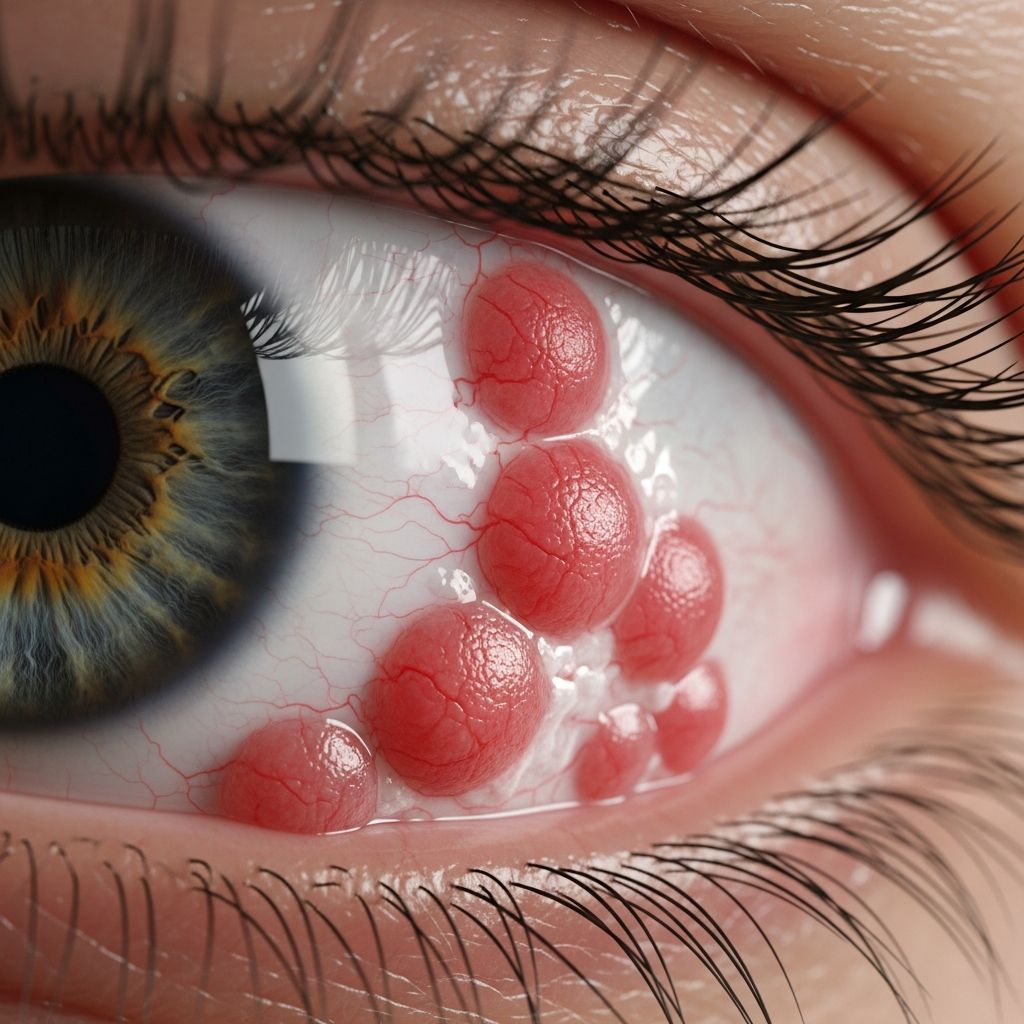
Giant papillary conjunctivitis is an inflammatory condition that affects the conjunctiva—the membrane covering the white part of the eye and the inside of the eyelids. In healthy eyes, the inner surface of the upper eyelid is smooth and allows for comfortable lens wear. However, GPC causes this normally smooth surface to develop abnormal bumps called papillae.
These papillae are enlarged swellings that can exceed one millimeter in diameter, and they form on the superior tarsal conjunctiva (the upper eyelid’s inner surface). Unlike infections or bacterial conjunctivitis, GPC is neither contagious nor caused by bacteria. Instead, it represents the eye’s inflammatory response to chronic irritation and deposits that accumulate over time.
How Common Is This Condition?
GPC is a significant concern for the contact lens community. Research indicates that over 5 percent of all contact lens wearers will develop GPC at some stage. This prevalence has decreased in recent years due to advances in lens technology, particularly the widespread adoption of daily disposable lenses, which reduce the likelihood of problematic protein and lipid buildup.
People who wear soft contact lenses face the greatest risk compared to rigid gas-permeable lens wearers. The nature of soft lens materials makes them more prone to attracting allergens and accumulating deposits that trigger the inflammatory response characteristic of GPC.
Understanding the Two Types of GPC
Giant papillary conjunctivitis is classified into two distinct categories based on its underlying cause:
Primary GPC
Primary GPC develops from allergic reactions rather than direct contact lens wear. Individuals with primary GPC typically have pre-existing allergic conditions such as seasonal allergies, eczema, asthma, or other atopic disorders. These individuals have a heightened immune sensitivity that predisposes them to developing papillary inflammation when exposed to allergens.
Secondary GPC
Secondary GPC is the more common form and is directly associated with contact lens wear. Rather than being purely allergic in nature, secondary GPC results from mechanical trauma combined with an immunologic response to lens deposits. The repetitive friction of the lens against the eyelid with each blink, compounded by protein and lipid accumulation on the lens surface, triggers the inflammatory cascade that leads to papillary development.
Risk Factors That Increase Your Susceptibility
Not all contact lens wearers develop GPC, and understanding the risk factors can help you take preventive measures:
- Lens material and type: Soft contact lenses are associated with higher GPC risk than rigid gas-permeable lenses
- Lens replacement schedule: Non-disposable lenses and infrequent lens replacement increase risk compared to daily disposables
- Wearing duration: Extended wearing time throughout the day and over multiple years increases susceptibility
- Hygiene practices: Inadequate lens cleaning and storage contribute significantly to papillae development
- Genetic predisposition: Personal or family history of allergies and atopy increases vulnerability
- Lens fit quality: Poorly fitting lenses, including specialty scleral contacts, increase mechanical irritation
Related Stories



The Progressive Nature of GPC Symptoms
Giant papillary conjunctivitis doesn’t appear suddenly with severe symptoms. Instead, it develops gradually through distinct stages, with each stage presenting increasingly bothersome signs. Recognizing which stage you’re in can help determine whether intervention is necessary.
Early Stage Indicators
In the beginning, GPC symptoms are subtle and easily mistaken for normal contact lens discomfort. At this stage, many people dismiss their symptoms as temporary irritation:
- Mild itching when removing contact lenses
- Slight redness of the eyes
- Small amounts of excess mucus production
- A vague feeling that something is in the eye
- Reduced contact lens wearing time without an obvious reason
- Lenses feeling less comfortable than they did previously
These early indicators may only appear after removing your contacts or later in the day when lens wear fatigue sets in.
Intermediate Stage Progression
As GPC progresses, symptoms intensify and become harder to ignore:
- Increased and more persistent itching that continues even after lens removal
- Blurred vision while wearing contact lenses
- Contact lenses moving excessively with each blink
- Noticeable increase in mucus production, particularly after waking
- Pronounced eye redness and mild eyelid swelling
- Visible lens deposits that appear as a coating or cloudiness
- Papillae becoming visible and enlarged on the upper eyelid
Advanced Stage Severity
Without intervention, GPC can reach a stage where lens wear becomes intolerable:
- Significant pain and discomfort when attempting to wear lenses
- Excessive mucus production that creates strings or sheets of discharge
- Contact lenses becoming cloudy within minutes of insertion
- Intense sensation of a foreign object in the eye
- Uncontrollable lens movement making wear impossible
- Eyes becoming sealed shut with mucus upon waking
- Complete inability to tolerate contact lens wear
The Mechanisms Behind GPC Development
Understanding why GPC develops requires examining both the mechanical and immunological factors at work:
Mechanical Irritation Component
Each time you blink while wearing contact lenses, friction occurs between the lens and the delicate conjunctival tissue. This repeated mechanical trauma, multiplied thousands of times daily over months or years, gradually irritates the eyelid’s inner surface. The irritation is compounded when lenses are worn for extended periods or when lens fit is suboptimal.
Deposit Accumulation Problem
Proteins and lipids from tears naturally deposit on contact lens surfaces over time. Soft lenses are particularly susceptible to these deposits, which accumulate even with proper cleaning. These deposits act as foreign irritants that both physically irritate the tissue and serve as antigens that trigger immune responses.
Immune System Activation
When the eye perceives threat from mechanical irritation and lens deposits, immune cells become activated and release inflammatory mediators called cytokines, including substances like IL-6 and IL-11. This immune cascade creates the inflammation characteristic of GPC, leading to papillae formation and mucus hypersecretion.
Environmental and Lifestyle Factors That Worsen Symptoms
Even when GPC develops from contact lens wear, certain environmental conditions can exacerbate symptoms:
| Environmental Factor | How It Worsens GPC |
|---|---|
| Seasonal allergies | Increases overall eye sensitivity and allergen exposure |
| Dry environments | Reduces tear film quality and increases lens-to-lid friction |
| Airborne particles | Dust and pollen adhere to lens deposits and increase irritation |
| Preservative-containing solutions | May trigger additional allergic or toxic reactions |
| Sleep deprivation | Reduces tear production and eye’s ability to recover overnight |
Beyond Contact Lenses: Other GPC Causes
While contact lens wear accounts for the majority of GPC cases, the condition can develop from other sources of chronic eyelid irritation:
- Ocular prosthetics: Artificial eyes or eye prosthetics that don’t fit properly create similar mechanical irritation as ill-fitting lenses
- Surgical sutures: Exposed stitches from eye surgery can rub against the eyelid and trigger GPC development
- Foreign objects: Anything that remains in contact with the eye for extended periods can cause the condition
- Medicated eye drops: Frequent use of eye drops containing preservatives may contribute to inflammation
- Systemic allergies: Severe seasonal or environmental allergies can cause primary GPC even without contact lens wear
Management Strategies and Treatment Approaches
The good news is that GPC is manageable, and caught early, it rarely requires permanent cessation of contact lens wear. The specific approach depends on severity and the underlying cause:
Prevention-Focused Strategies
For those without GPC or in very early stages, prevention is the most effective approach:
- Transition to daily disposable contact lenses, which eliminate deposit accumulation
- Maintain meticulous lens hygiene with proper cleaning and disinfection daily
- Replace contact lenses according to the prescribed schedule without extending wear periods
- Take regular breaks from lens wear to allow conjunctival recovery
- Ensure lenses fit properly through regular eye examinations
Symptom Management
When early symptoms appear, several management techniques can slow or halt disease progression without requiring immediate lens discontinuation:
- Reduce daily contact lens wearing time
- Clean lenses more frequently or consider enzymatic cleaning protocols
- Use rewetting drops designed for sensitive eyes
- Take more frequent “contact lens holidays” where you wear glasses instead
- Use prescribed anti-inflammatory or antihistamine eye drops
When Professional Evaluation Becomes Necessary
If you experience persistent symptoms despite preventive efforts, a comprehensive eye examination is essential. Eye care professionals can directly visualize the papillae under magnification and assess their size and distribution. Seeking care becomes particularly important if symptoms progress from the early stage or if contact lens wear becomes uncomfortable.
Key Takeaways for Contact Lens Wearers
Giant papillary conjunctivitis represents a significant but manageable complication of contact lens wear. By understanding the condition’s causes, recognizing early symptoms, and implementing proper lens care practices, you can substantially reduce your risk. Daily disposable lenses, meticulous hygiene, appropriate wearing schedules, and regular eye examinations form the foundation of GPC prevention. For those who develop symptoms, early intervention often prevents progression to severe stages that necessitate long-term lens discontinuation. Remember that GPC is neither an infection nor permanent—it’s your eye’s inflammatory response to irritation, and removing or modifying that irritating factor typically leads to resolution.
References
- Giant Papillary Conjunctivitis — American Optometric Association. https://www.optometrists.org/general-practice-optometry/guide-to-eye-conditions/dry-eye/eyelid-conditions/giant-papillary-conjunctivitis/
- Giant papillary conjunctivitis: A review — National Center for Biotechnology Information (PubMed). https://pubmed.ncbi.nlm.nih.gov/32339665/
- Giant Papillary Conjunctivitis — Cleveland Clinic. https://my.clevelandclinic.org/health/diseases/25016-giant-papillary-conjunctivitis
- Understanding Giant Papillary Conjunctivitis (GPC) — Insight Vision OC. https://www.insightvisionoc.com/primary-eye-care/eye-emergencies/understanding-giant-papillary-conjunctivitis-gpc/
- Giant Papillary Conjunctivitis — Boston Vision Eye Care. https://www.bostonvision.com/services/eye-care/giant-papillary-conjunctivitis/
- Giant Papillary Conjunctivitis (GPC) — Skowron Eye Care. https://www.skowroneyecare.com/gpc.html
Similar Articles








Read full bio of medha deb