Giardia: Symptoms, Causes, Diagnosis, Treatment
Comprehensive guide to Giardia infection: symptoms, transmission, diagnosis, treatment, and prevention strategies for this common parasitic illness.
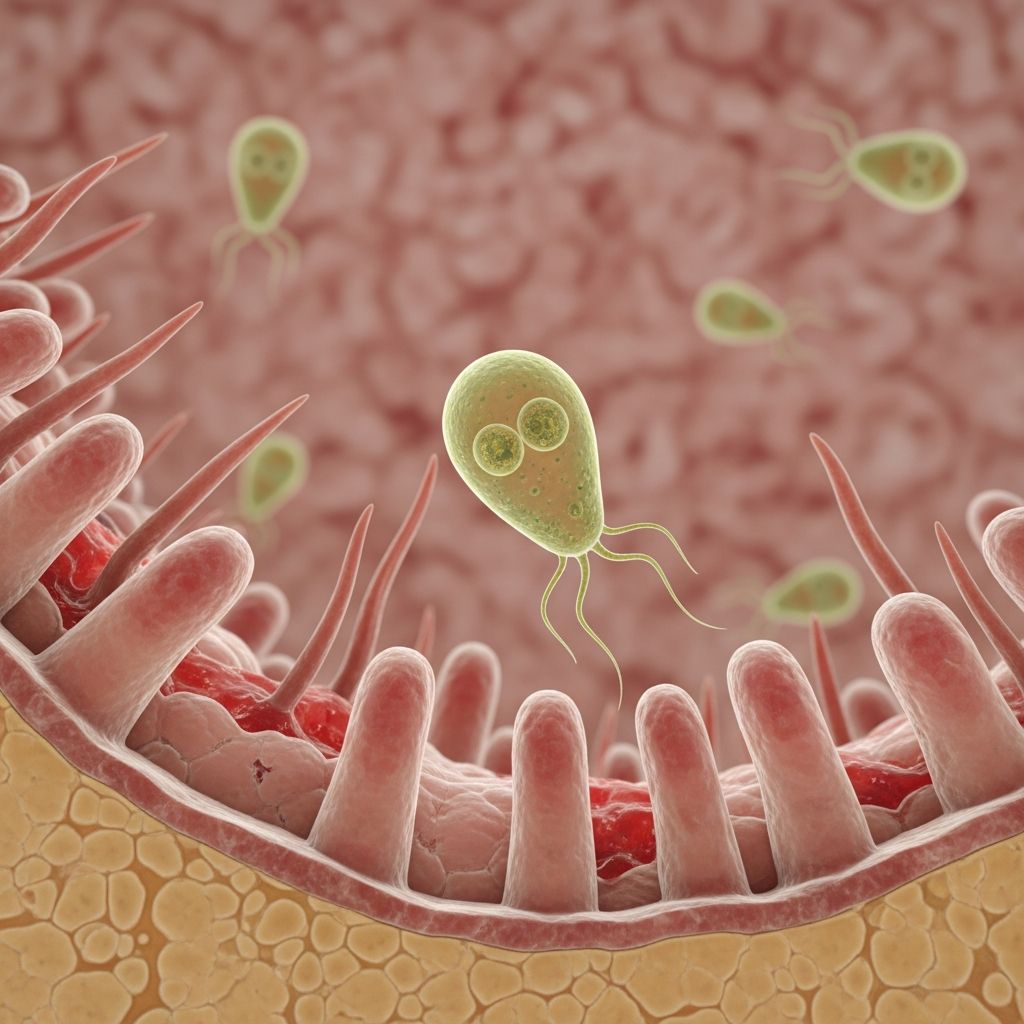
Giardia, also known as giardiasis, is a common intestinal infection caused by the microscopic parasite Giardia duodenalis (also called Giardia lamblia or Giardia intestinalis). This protozoan parasite infects the small intestine, leading to symptoms like diarrhea, gas, and abdominal discomfort. It spreads primarily through contaminated water, food, or fecal-oral contact and affects millions worldwide, particularly in areas with poor sanitation.
Understanding Giardia is crucial because while many infections are asymptomatic, symptomatic cases can cause significant discomfort and dehydration, especially in children, travelers, and immunocompromised individuals. This article covers everything from transmission to management, drawing on authoritative sources like the CDC and peer-reviewed literature.
What Is Giardia?
Giardia is a flagellated protozoan parasite that colonizes the small intestine, interfering with nutrient absorption. It exists in two forms: the active trophozoite, which attaches to the intestinal wall, and the dormant cyst, which is shed in feces and survives in the environment for weeks to months.
Giardiasis ranks as one of the most common intestinal parasites in the United States and globally, with higher prevalence in developing countries due to inadequate water treatment. The CDC notes it’s found in up to 80% of untreated surface water supplies like lakes and streams. Infections can be acute, chronic, or asymptomatic, with cysts excreted in high numbers (up to 1 billion daily) by carriers.
Symptoms of Giardia Infection
Symptoms typically appear 1-3 weeks after exposure and last 2-6 weeks if untreated, though chronic cases can persist for years. Not everyone shows symptoms—up to 50% of infections are asymptomatic, allowing silent spread.
Common symptoms include:
- Watery, foul-smelling diarrhea: Often greasy and floating, affecting 90% of symptomatic cases.
- Gas and bloating: Excessive flatulence due to malabsorption.
- Abdominal cramps and pain: Cramping in 70-75% of cases.
- Nausea and vomiting: Leading to loss of appetite and weight loss.
- Fatigue and headache: From dehydration and nutrient deficits.
Children may experience more abdominal pain with less diarrhea, and post-infection lactose intolerance is common. Severe dehydration risks are higher in vulnerable groups.
Causes and Transmission of Giardia
Giardia spreads via the fecal-oral route. Ingesting as few as 10 cysts can cause infection. Cysts contaminate water (lakes, pools, untreated streams), food, or surfaces.
Key transmission modes:
- Contaminated water: Most common, from animal feces, sewage, or runoff in recreational waters.
- Person-to-person: In daycares, households, or via poor hand hygiene.
- Foodborne: Less common, from unwashed produce or infected handlers.
- Animal-to-human: Pets like dogs/cats or beavers (hence ‘beaver fever’).
High-risk groups: Travelers to endemic areas, hikers, daycare attendees, MSM, and immunocompromised people. No intermediate host is needed; cysts excyst in the duodenum triggered by stomach acid.
Giardia Life Cycle
The Giardia life cycle is direct and efficient for survival. Ingested cysts reach the small intestine, excyst into trophozoites within minutes under acidic conditions and pancreatic enzymes. Trophozoites multiply via binary fission, attach via a ventral sucker, and cause villous flattening, impairing absorption.
Related Stories



In the large intestine, trophozoites encyst in neutral pH with bile salts, forming resilient cysts shed in stool. Only assemblages A and B infect humans; cysts remain viable for months in cool, moist environments.
Diagnosis of Giardia
Diagnosis relies on stool testing, as symptoms overlap with other gastroenteritis. Key methods:
- Stool microscopy: Detects cysts/trophozoites (OVA/parasite exam).
- Antigen detection tests: EIA or rapid immunoassays, highly sensitive.
- PCR: Gold standard for accuracy, genotyping assemblages.
Multiple samples may be needed due to intermittent shedding. Duodenal aspiration or string tests are rarely used. Blood tests are nonspecific. Early diagnosis prevents complications like chronic malabsorption.
Treatment for Giardia Infection
Most cases resolve spontaneously, but treatment shortens duration and prevents transmission. CDC-recommended drugs:
| Medication | Dosage (Adults) | Duration | Notes |
|---|---|---|---|
| Metronidazole | 250 mg TID | 5-7 days | First-line; avoid alcohol. |
| Tinidazole | 2 g single dose | 1 day | Highly effective, single-dose convenience. |
| Nitazoxanide | 500 mg BID | 3 days | Approved for children/adults; broad-spectrum. |
| Albendazole | 400 mg daily | 5 days | Alternative for refractory cases. |
Supportive care: Hydration (ORS), anti-diarrheals (avoid if bloody stool), probiotics for gut recovery. Retest post-treatment if symptoms persist; resistance is rare but reported. Pregnant individuals: Consult specialist; paromomycin preferred.
Prevention and Control of Giardia
Prevention focuses on hygiene and water safety:
- Handwashing: Soap for 20 seconds after toilet, diaper changes, before eating.
- Water treatment: Boil, filter (1-micron), or use EPA-approved purifiers; avoid untreated stream water.
- Food safety: Wash produce; cook thoroughly.
- Swimming: Shower before pools; no diapered kids in water.
- Pet hygiene: Avoid swallowing water where animals defecate.
Public health: Water chlorination ineffective against cysts; use filtration/UV. Daycares should exclude symptomatic children until treated.
Complications and When to See a Doctor
Complications include dehydration, weight loss, chronic fatigue, and lactose intolerance lasting months. Immunocompromised patients risk severe malnutrition. Seek care for persistent diarrhea (>1 week), dehydration (dry mouth, dizziness), bloody stools, or fever.
Frequently Asked Questions (FAQs)
Can Giardia be spread through kissing?
Direct person-to-person spread requires fecal contamination; kissing alone is low-risk unless hygiene is poor.
How long does Giardia last without treatment?
Symptoms last 2-6 weeks, but shedding can persist months; carriers remain infectious.
Is Giardia contagious?
Yes, highly via feces; infected people/animals shed cysts for weeks.
Can Giardia go away on its own?
Often yes, but treatment is advised to alleviate symptoms and halt spread.
Does alcohol kill Giardia?
Hand sanitizer ineffective; cysts resist alcohol—use soap/water.
Can dogs give humans Giardia?
Possible but less common; human strains A/B primary.
(Word count: 1728, excluding metadata and references)
References
- Giardiasis: Causes, Symptoms, and Treatment — Healthline. 2023. https://www.healthline.com/health/giardiasis
- Giardia infection (giardiasis) — HealthyWA, Western Australia Government. 2024-01-15. https://www.healthywa.wa.gov.au/Articles/F_I/Giardia-infection
- Giardiasis — StatPearls, NCBI Bookshelf (Peer-reviewed). 2023-11-27. https://www.ncbi.nlm.nih.gov/books/NBK513239/
- Giardiasis (beaver fever): Symptoms, diagnosis, treatment — Medical News Today. 2023. https://www.medicalnewstoday.com/articles/167079
- About Giardia Infection — Centers for Disease Control and Prevention (CDC). 2024-08-12. https://www.cdc.gov/giardia/about/index.html
Similar Articles








Read full bio of medha deb