Glossectomy Guide: Types, Recovery, Risks, And Outcomes
Complete guide to glossectomy surgery: types, procedure, recovery, and outcomes.
What Is Glossectomy?
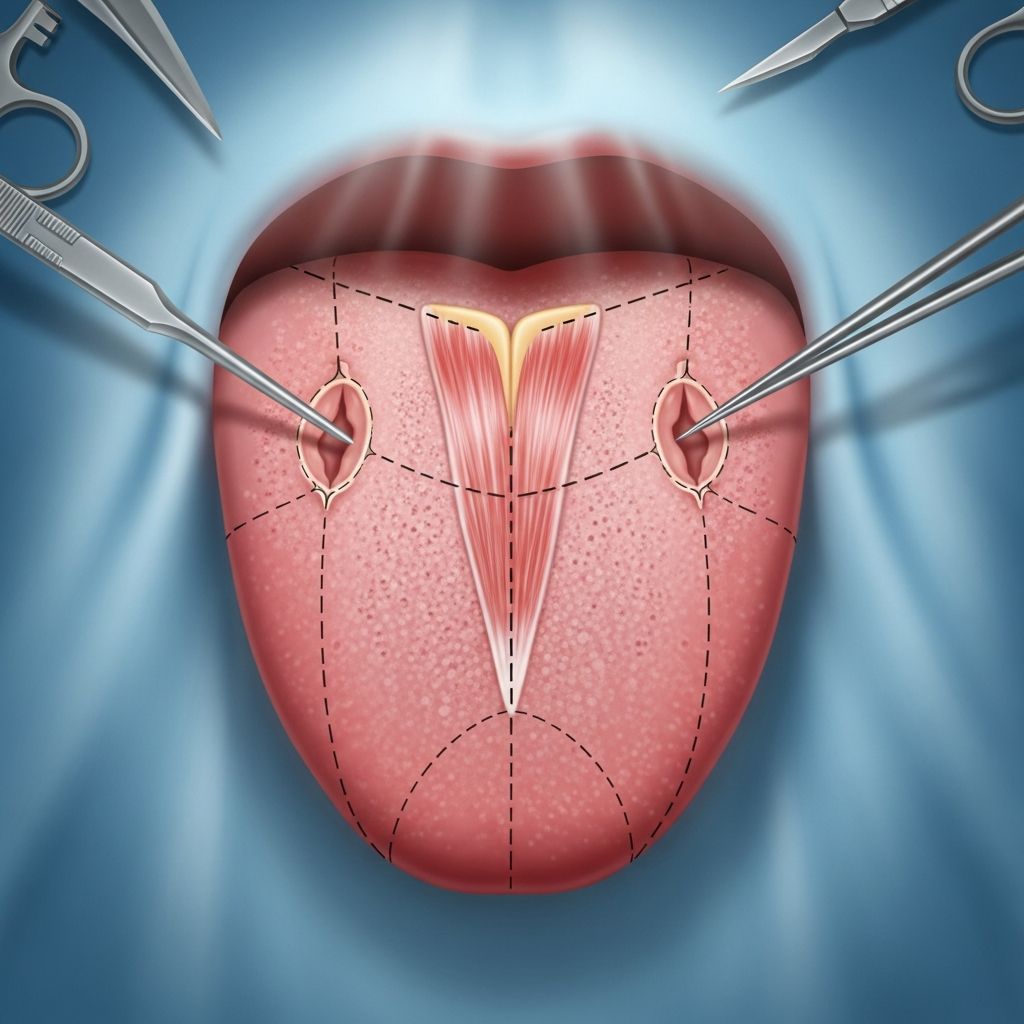
A glossectomy is a surgical procedure that involves the removal of part or all of the tongue. This operation is primarily used to treat tongue cancer and other head and neck malignancies, though it can also address other tongue-related conditions such as chronic pain, bleeding, or airway obstruction. The tongue plays crucial roles in taste, swallowing, breathing, and speech, which is why a glossectomy can significantly impact these functions. Understanding the procedure, its types, and what to expect before, during, and after surgery is essential for patients and their families making informed healthcare decisions.
Indications for Glossectomy
Glossectomy surgery may be recommended for various medical conditions affecting the tongue and oral cavity. The primary indication is tongue cancer, which can develop on the surface or deeper structures of the tongue. The procedure can also treat cancers located in the oral cavity and throat regions. Additionally, glossectomy may be performed to manage obstructive sleep apnea (OSA) when caused by an enlarged tongue, or to alleviate chronic tongue pain and bleeding that cannot be managed through conservative treatments. Your healthcare team will evaluate your specific condition to determine whether glossectomy is the most appropriate treatment option.
Types of Glossectomy
There are several types of glossectomy procedures, each tailored to the extent of tissue removal and the specific condition being treated. The classification depends on how much of the tongue is removed and the location of the affected tissue.
Partial Glossectomy
A partial glossectomy involves the removal of less than half of the tongue, typically for early-stage tongue cancer. During this procedure, the surgeon removes the tumor along with a margin of surrounding tissue called the cuff, which helps ensure any nearby cancer cells are also removed. This conservative approach preserves maximum tongue function and is often the preferred option when the tumor is small and localized. Patients undergoing partial glossectomy generally experience better functional outcomes regarding speech and swallowing compared to more extensive procedures.
Hemiglossectomy
A hemiglossectomy removes one entire half of the tongue while leaving the other half intact. This procedure is typically performed for medium-sized tumors affecting one side of the tongue. The remaining half of the tongue can often compensate for the missing tissue, allowing patients to maintain reasonable speech and swallowing abilities. Most patients undergoing hemiglossectomy will also receive tongue reconstruction surgery to optimize functional recovery and improve oral intake.
Subtotal Glossectomy
A subtotal glossectomy involves removal of most of the tongue while preserving a small portion. This procedure is used to treat larger tumors that extend across a significant portion of the tongue. Following the removal of the majority of the tongue tissue, reconstructive surgery is performed to restore function and improve quality of life. The preservation of even a small portion of tongue tissue can be beneficial for post-operative recovery and functional adaptation.
Total Glossectomy
A total glossectomy involves complete removal of the entire tongue, including the base of the tongue. This extensive procedure is typically reserved for large tumors or cases where cancer has spread throughout the tongue tissue. Total glossectomy often requires a laryngectomy (removal of the voice box) to prevent aspiration and allow for safer swallowing. Reconstructive surgery is essential following total glossectomy to restore oral function and improve quality of life. While this is the most extensive tongue surgery, advanced reconstructive techniques have improved outcomes significantly.
Midline Glossectomy
A midline glossectomy reduces the size of the tongue by removing tissue along the center line, often combined with tonsil removal. This procedure is specifically used to treat obstructive sleep apnea caused by an enlarged tongue that falls backward and blocks the airway during sleep. By removing the middle and back portions of the tongue, the surgeon can increase the space in the airway and reduce obstruction, improving breathing during sleep.
Related Stories



Preparation for Glossectomy
Proper preparation before glossectomy surgery is crucial for optimal outcomes and smoother recovery. Before your surgery date, you will meet with a multidisciplinary team including your surgeon, anesthesiologist, and speech and swallowing therapist. This pre-operative assessment, often called “prehab” or prehabilitation, allows your team to evaluate your overall health, discuss what to expect, and prepare you mentally and physically for the procedure. Your speech and swallowing therapist will establish baseline function and work with you on strategies to protect your airway and manage swallowing after surgery. You will receive specific instructions regarding fasting, medications, and any other pre-operative requirements.
What Happens During Glossectomy Surgery
The surgical procedure varies depending on the type of glossectomy being performed, but all glossectomy procedures follow similar general principles and require general anesthesia.
Anesthesia and Positioning
On your surgery day, you will receive general anesthesia through an intravenous line, which will put you into a deep sleep so you feel no pain or discomfort during the procedure. Once you are asleep, the surgical team will position you to provide optimal access to the tongue and surrounding structures.
Tumor Removal
For partial glossectomy, your surgeon will remove the tumor and surrounding tissue from your mouth. Some tumors are easily accessible intraorally, but tumors in harder-to-reach locations may require a small incision in the neck or jaw to provide better visualization and access. The surgeon removes the entire tumor with adequate margins of normal tissue to reduce the risk of cancer recurrence.
Reconstruction Techniques
Following tumor removal, reconstruction is often necessary to restore tongue function. Several reconstruction options are available depending on the size and location of the defect.
Split Thickness Skin Graft (STSG): This technique uses the top and deeper layers of skin, typically harvested from the arm, belly, or back. It is often used for smaller defects and provides a relatively simple reconstruction method.
Local Flap Graft: This approach uses tissue from nearby areas, often the neck, which is rotated to cover the tongue defect. It is suitable for medium-sized tongue problems and provides tissue with similar characteristics to the tongue.
Free Flap Graft: For larger tongue defects, free flap grafts provide superior reconstruction. Thick skin and soft tissue are harvested from the arm or thigh and surgically transferred to the tongue defect using microsurgical techniques to reconnect blood vessels. This technique provides better functional and aesthetic outcomes.
Additional Procedures
Tracheostomy: During reconstruction or due to post-operative swelling, a tracheostomy may be performed. A breathing tube is placed directly into the throat below the larynx, providing a secure airway during the recovery period. This prevents breathing complications while swelling subsides and is often temporary, with removal before hospital discharge.
Laryngectomy: In cases of total glossectomy, a laryngectomy (removal of the voice box) may be performed to prevent aspiration of food and liquids into the lungs and improve swallowing safety.
Post-Operative Care and Recovery
Recovery from glossectomy varies depending on the extent of the procedure performed. Most patients require a 7 to 10-day hospital stay following glossectomy surgery. During this initial period, careful monitoring ensures proper healing and management of potential complications.
Wound Management
After surgery, grafted areas may have a special gauze called a bolster sutured over them. This bolster gently squeezes the graft to promote healing and proper adherence. Larger grafts such as local or free flaps may have drainage tubes to help manage swelling and prevent fluid accumulation. These drains are typically removed at a follow-up office visit. Any staples from the incisions are removed before hospital discharge or at a post-operative visit. Donor site bandages should be kept dry during the initial healing phase.
Feeding and Nutrition
Many patients require a temporary or permanent feeding tube to maintain adequate nutrition during the healing process. This tube allows nutrition to be delivered directly to your stomach while your mouth heals and swallowing function recovers. Your medical team will discuss the timeline for transitioning back to oral intake and provide guidance on dietary modifications.
Speech and Swallowing Therapy
Rehabilitation is a critical component of recovery following glossectomy. You will work with speech and language pathologists to relearn swallowing and speech techniques. This therapy helps you adapt to the structural changes in your mouth and optimize your functional abilities. Starting rehabilitation early in recovery leads to better long-term outcomes.
Impacts on Speech and Swallowing
The impact of glossectomy on speech and swallowing depends on the extent of tongue removal. Partial glossectomy typically results in minimal changes, as the remaining tongue tissue can often compensate. Hemiglossectomy may cause some speech changes, but many patients achieve acceptable speech clarity with rehabilitation. More extensive procedures may result in more noticeable speech changes and swallowing difficulties. However, with proper rehabilitation and adaptive techniques, many patients achieve satisfactory functional outcomes.
Potential Complications
Like any surgical procedure, glossectomy carries potential risks and complications that should be discussed with your surgical team.
Swallowing Difficulties (Dysphagia): Difficulty swallowing is common after glossectomy, particularly with more extensive procedures. Swallowing therapy helps manage this complication.
Aspiration: Food, fluid, or saliva may enter the lungs instead of the stomach, increasing pneumonia risk, particularly after total glossectomy.
Pneumonia: Aspiration can lead to lung infections, which require medical treatment.
Weight Loss: Difficulty eating may result in inadequate nutritional intake and weight loss during recovery.
Speech Changes: Alterations in speech clarity and voice quality may occur, though rehabilitation can help minimize these changes.
Healing Issues: Flap or reconstruction failure may occur, requiring additional surgical intervention.
Long-Term Outcomes and Quality of Life
Long-term outcomes following glossectomy focus on achieving adequate oral intake, intelligible speech, and maintaining the best possible quality of life. Modern reconstructive techniques have significantly improved functional outcomes compared to earlier surgical approaches. Many patients successfully return to oral eating, though dietary modifications may be necessary. Speech rehabilitation allows most patients to achieve adequate communication, though some may have residual speech changes. Psychological support and counseling can help patients adjust to changes in appearance and function following extensive surgery.
Frequently Asked Questions
Q: How long does glossectomy surgery take?
A: The duration of glossectomy surgery varies depending on the type and complexity of the procedure. Partial glossectomy typically takes 1-2 hours, while more extensive procedures with reconstruction may take 3-5 hours or longer. Your surgical team can provide a more specific estimate based on your particular case.
Q: Will I be able to eat normally after glossectomy?
A: The ability to return to normal eating depends on the extent of tongue removal and reconstruction. Partial glossectomy often preserves most eating ability, while more extensive procedures may require permanent dietary modifications. Swallowing therapy helps optimize eating ability, and most patients can achieve satisfactory nutritional intake through oral eating.
Q: Can I speak after glossectomy?
A: Yes, most patients retain the ability to speak after glossectomy. Speech clarity may be affected, particularly after extensive procedures, but speech therapy helps patients adapt and communicate effectively. Total glossectomy with laryngectomy requires alternative communication methods.
Q: How long is the recovery period?
A: Initial hospital recovery typically lasts 7-10 days. However, complete healing and functional recovery may take several weeks to months. Rehabilitation with speech and swallowing therapy continues for weeks to months after discharge.
Q: Will I need a feeding tube permanently?
A: Many patients require temporary feeding tubes during initial recovery. Whether a permanent tube is needed depends on individual recovery and swallowing function. Your medical team will work with you to transition to oral nutrition as appropriate.
Q: What is the survival rate after glossectomy for tongue cancer?
A: Survival rates depend on cancer stage, patient age, and overall health. Early-stage tongue cancers have better outcomes than advanced tumors. Your oncologist can discuss specific survival statistics relevant to your cancer type and stage.
References
- Surgical Procedures: Glossectomy — Oncolink. Accessed 2025-12-01. https://www.oncolink.org/cancers/head-and-neck/treatments/surgical-treatments/surgical-procedures-glossectomy
- What Happens During a Glossectomy? — WebMD. Accessed 2025-12-01. https://www.webmd.com/cancer/glossectomy
- Outcomes of Total Glossectomy With or Without Total Laryngectomy — JAMA Otolaryngology–Head & Neck Surgery. 2014. https://jamanetwork.com/journals/jamaotolaryngology/fullarticle/2429579
- The Effects of Palate Features and Glossectomy Surgery on Sibilant Production — PubMed Central. 2018. https://pmc.ncbi.nlm.nih.gov/articles/PMC6111526/
- Total Glossectomy — Johns Hopkins University, Department of Otolaryngology. Accessed 2025-12-01. https://pure.johnshopkins.edu/en/publications/total-glossectomy-4/
Similar Articles








Read full bio of medha deb