Glossopharyngeal Nerve: Anatomy, Function & Clinical Significance
Understanding Cranial Nerve IX: Structure, function, and clinical relevance explained.
Understanding the Glossopharyngeal Nerve
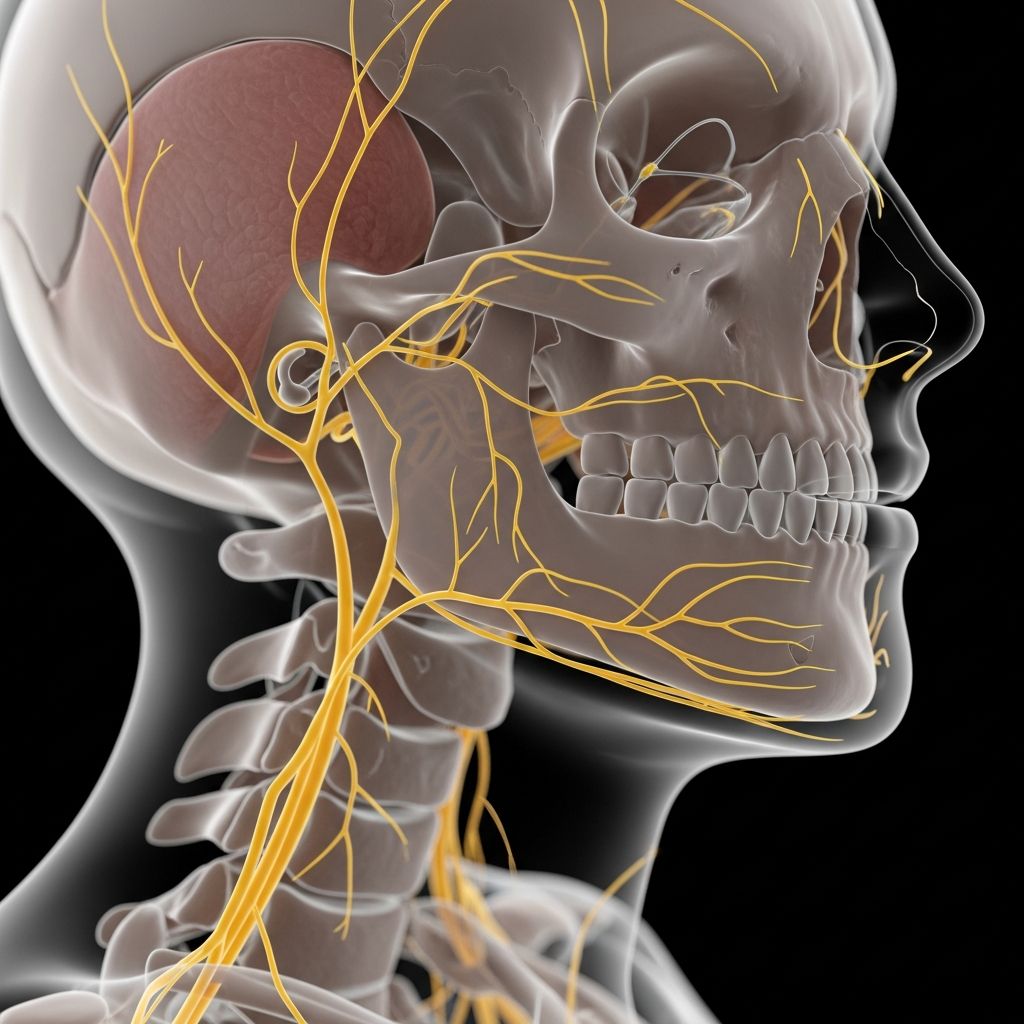
The glossopharyngeal nerve, also known as cranial nerve IX (CN IX), is a complex mixed nerve that plays a vital role in multiple functions related to the head, neck, and throat regions. This nerve carries both sensory and motor fibers, making it essential for essential daily activities such as swallowing, tasting food, and producing saliva. Understanding the anatomy and function of this nerve is important for healthcare professionals, medical students, and individuals seeking to comprehend how their body coordinates vital functions in the oropharyngeal region.
Anatomical Overview and Origin
The glossopharyngeal nerve originates from the medulla oblongata, a region of the brainstem that houses multiple nuclei responsible for generating both motor and sensory fibers. The nerve emerges from the brainstem through several small rootlets located in the retroolivary groove, specifically above the exit point of the vagus nerve. These rootlets quickly merge to form the complete glossopharyngeal nerve body, which then courses forward and laterally alongside the vagus nerve and accessory nerve.
After emerging from the brainstem, the glossopharyngeal nerve travels through the jugular foramen, a narrow opening in the skull base. This foramen is shared with the vagus nerve (CN X) and the accessory nerve (CN XI). During its passage through the jugular foramen, the glossopharyngeal nerve is positioned medially between the internal jugular vein and the internal carotid artery. This anatomical relationship is clinically significant as pathologies affecting these vascular structures may impact nerve function.
Key Anatomical Structures and Ganglia
Associated with the glossopharyngeal nerve are two important sensory ganglia located immediately outside the jugular foramen: the superior ganglion and the inferior ganglion. These ganglia house the cell bodies of sensory neurons and are crucial for processing sensory information from various head and neck structures. The superior ganglion is located within the jugular foramen, while the inferior ganglion sits on the inferior surface of the temporal bone petrous part, within a triangular depression related to the cochlear aqueduct opening.
After exiting the jugular foramen, the glossopharyngeal nerve descends anteriorly and inferiorly toward the root of the tongue. During this descent, it forms an arch on the side of the neck, lying upon the stylopharyngeus muscle and middle pharyngeal constrictor muscle. The nerve then passes beneath the hyoglossus muscle and is ultimately distributed to multiple structures including the palatine tonsil, mucous membrane of the fauces, base of the tongue, and serous glands of the mouth.
Motor Functions and Innervation
Branchial Motor Components
The glossopharyngeal nerve contains special visceral efferent fibers that provide motor innervation to the stylopharyngeus muscle. This muscle is the primary motor component innervated by CN IX and plays a crucial role in elevating the pharynx and larynx during swallowing and speech. The motor fibers originate from the nucleus ambiguus, a group of motor neurons located in the medullary reticular formation of the rostral medulla.
The nucleus ambiguus is shared by the glossopharyngeal nerve, vagus nerve, and accessory nerve, with each nerve receiving axons that innervate different muscles of the pharynx, larynx, and upper esophagus. The stylopharyngeus muscle, specifically innervated by CN IX, works in coordination with other pharyngeal muscles to facilitate the complex mechanics of swallowing and vocal function.
Related Stories



Parasympathetic Motor Functions
Beyond branchial motor function, the glossopharyngeal nerve carries general visceral efferent fibers that provide parasympathetic innervation to the parotid gland. These fibers originate from the nucleus salivatorius in the medulla and travel through the tympanic nerve to reach the otic ganglion. From the otic ganglion, postganglionic fibers stimulate parotid gland secretion, contributing to saliva production—a function particularly active during rest and digestion phases controlled by the parasympathetic nervous system.
Sensory Functions and Innervation
General Somatic Sensory Functions
The glossopharyngeal nerve receives general somatic sensory fibers from multiple structures in the head and neck region. These fibers carry information about touch, temperature, and pain from the posterior one-third of the tongue, palatine tonsils, soft palate, oropharynx, and mucosa of the middle ear. The sensory fibers originate from specialized sensory receptors in these structures and transmit information via the dorsal root ganglia (superior and inferior ganglia) to the medulla oblongata for processing.
An important clinical function of these sensory fibers is their role in the gag reflex. The glossopharyngeal nerve supplies the sensory (afferent) component of this reflex, detecting foreign objects or stimulation in the oropharynx and initiating the protective gag response through connections with motor pathways.
Special Sensory Functions—Taste
The glossopharyngeal nerve carries special visceral sensory fibers responsible for taste sensation from the posterior one-third of the tongue. These taste fibers detect sweet, salty, sour, and bitter compounds through taste buds located on circumvallate papillae and foliate papillae in the posterior tongue region. The taste information is processed through the nucleus tractus solitarius in the medulla and subsequently relayed to higher brain centers for conscious taste perception.
Visceral Sensory Functions
An important but often overlooked sensory function of CN IX is its role in monitoring cardiovascular physiology. The glossopharyngeal nerve carries visceral sensory fibers from the carotid sinus and carotid body. The carotid sinus detects changes in blood pressure, while the carotid body monitors blood oxygen levels, carbon dioxide levels, and pH. These chemoreceptors and baroreceptors are essential for maintaining cardiovascular and respiratory homeostasis, with signals transmitted to the medulla oblongata to regulate heart rate and blood pressure.
Branches of the Glossopharyngeal Nerve
The glossopharyngeal nerve gives off several important branches as it courses through the head and neck:
- Tympanic Nerve: Branches from CN IX within the jugular foramen and carries parasympathetic fibers to the otic ganglion for parotid gland innervation
- Tonsillar Branches: Provide sensory innervation to the palatine tonsil and surrounding tissue
- Stylopharyngeal Branch: Carries motor fibers to the stylopharyngeus muscle
- Carotid Sinus Nerve: Transmits sensory information from the carotid sinus baroreceptors
- Lingual Branches: Terminal branches that provide taste and general sensation to the posterior one-third of the tongue
- Communicating Branch: Connects with the vagus nerve for neural integration
Clinical Significance and Disorders
Glossopharyngeal Neuralgia
Glossopharyngeal neuralgia is a rare condition characterized by sudden, severe shooting pain in the distribution of CN IX. This pain typically affects the ear, base of tongue, or throat and may be triggered by swallowing, talking, or chewing. The condition results from abnormal neuronal firing within the glossopharyngeal nerve and may respond to medical management or surgical intervention in refractory cases.
Nerve Injury and Associated Symptoms
Injury to the glossopharyngeal nerve can result from trauma, tumors, surgical complications, or inflammatory conditions. Clinical presentations of CN IX dysfunction may include difficulty swallowing, loss of taste in the posterior tongue, decreased gag reflex on the affected side, loss of salivation, or cardiovascular abnormalities related to carotid sinus dysfunction. Assessment of CN IX function is routinely performed during neurological examinations using the gag reflex test and evaluation of taste sensation.
Surgical and Clinical Applications
Understanding glossopharyngeal nerve anatomy is crucial for surgeons performing neck dissections, carotid surgery, or temporal bone procedures. Careful identification and preservation of this nerve during surgical procedures help prevent postoperative complications. Additionally, knowledge of CN IX function aids in the diagnosis of brainstem lesions, skull base pathology, and systemic neurological conditions affecting multiple cranial nerves.
Functional Integration
The glossopharyngeal nerve does not function in isolation but rather integrates with multiple other cranial nerves and brainstem nuclei. The pharyngeal plexus, formed by contributions from CN IX, CN X (vagus), and CN XI (accessory), coordinates complex motor and sensory functions of the pharynx and larynx. This neural network ensures precise coordination of swallowing, speech, and airway protection—functions that are essential for nutrition, communication, and respiratory safety.
Additionally, the glossopharyngeal nerve’s role in cardiovascular regulation through carotid baroreceptor and chemoreceptor innervation highlights its importance in maintaining systemic homeostasis beyond local head and neck functions.
Frequently Asked Questions
What is the primary function of the glossopharyngeal nerve?
The glossopharyngeal nerve has multiple primary functions: it provides motor innervation to the stylopharyngeus muscle for swallowing, carries taste sensation from the posterior one-third of the tongue, provides sensory information from the pharynx and tonsils, supplies parasympathetic fibers to the parotid gland for saliva production, and monitors blood pressure and oxygen levels through the carotid sinus and body.
Where does the glossopharyngeal nerve exit the skull?
The glossopharyngeal nerve exits the skull through the jugular foramen, a narrow opening in the skull base. It shares this foramen with the vagus nerve and accessory nerve, exiting just anterior to these two nerves.
What happens if the glossopharyngeal nerve is damaged?
Damage to the glossopharyngeal nerve can result in difficulty swallowing, loss of taste in the posterior tongue on the affected side, absence of the gag reflex, reduced salivation, and potentially cardiovascular symptoms related to impaired carotid sinus function.
How is glossopharyngeal nerve function tested?
Glossopharyngeal nerve function is typically assessed by testing the gag reflex (observing pharyngeal contraction when the back of the throat is stimulated), evaluating taste sensation on the posterior tongue, and assessing swallowing ability and voice quality.
Is the glossopharyngeal nerve a motor or sensory nerve?
The glossopharyngeal nerve is a mixed nerve containing both motor and sensory fibers. Its motor components provide innervation to the stylopharyngeus muscle and parasympathetic fibers to the parotid gland, while its sensory components carry taste, touch, temperature, and visceral information from multiple head and neck structures.
What nuclei in the medulla are associated with CN IX?
The glossopharyngeal nerve is associated with four nuclei in the medulla: the nucleus ambiguus (providing motor fibers), the dorsal motor nucleus of the vagus (parasympathetic), the nucleus tractus solitarius (sensory), and the spinal trigeminal nucleus (general somatic sensation).
References
- Neuroanatomy, Cranial Nerve 9 (Glossopharyngeal) — National Center for Biotechnology Information (NCBI), National Institutes of Health. Updated 2024. https://www.ncbi.nlm.nih.gov/books/NBK539877/
- Glossopharyngeal Nerve (Cranial Nerve IX) – Anatomy and Physiology — Kenhub Educational Platform. 2024. https://www.kenhub.com/en/library/anatomy/the-glossopharyngeal-nerve
- Glossopharyngeal Nerve — Wikipedia Medical Reference. Updated 2024. https://en.wikipedia.org/wiki/Glossopharyngeal_nerve
- The Glossopharyngeal Nerve Explained — Colgate Oral Health Center. 2024. https://www.colgate.com/en-sa/oral-health/mouth-and-teeth-anatomy/the-glossopharyngeal-nerve-explained
- The Glossopharyngeal Nerve (CN IX) – Course and Relations — TeachMeAnatomy. 2024. https://teachmeanatomy.info/head/cranial-nerves/glossopharyngeal-nerve/
Similar Articles








Read full bio of Sneha Tete