Glucagon: What It Is, Function & Related Conditions
Understanding glucagon: How this critical hormone regulates blood sugar and maintains metabolic health.
What Is Glucagon?
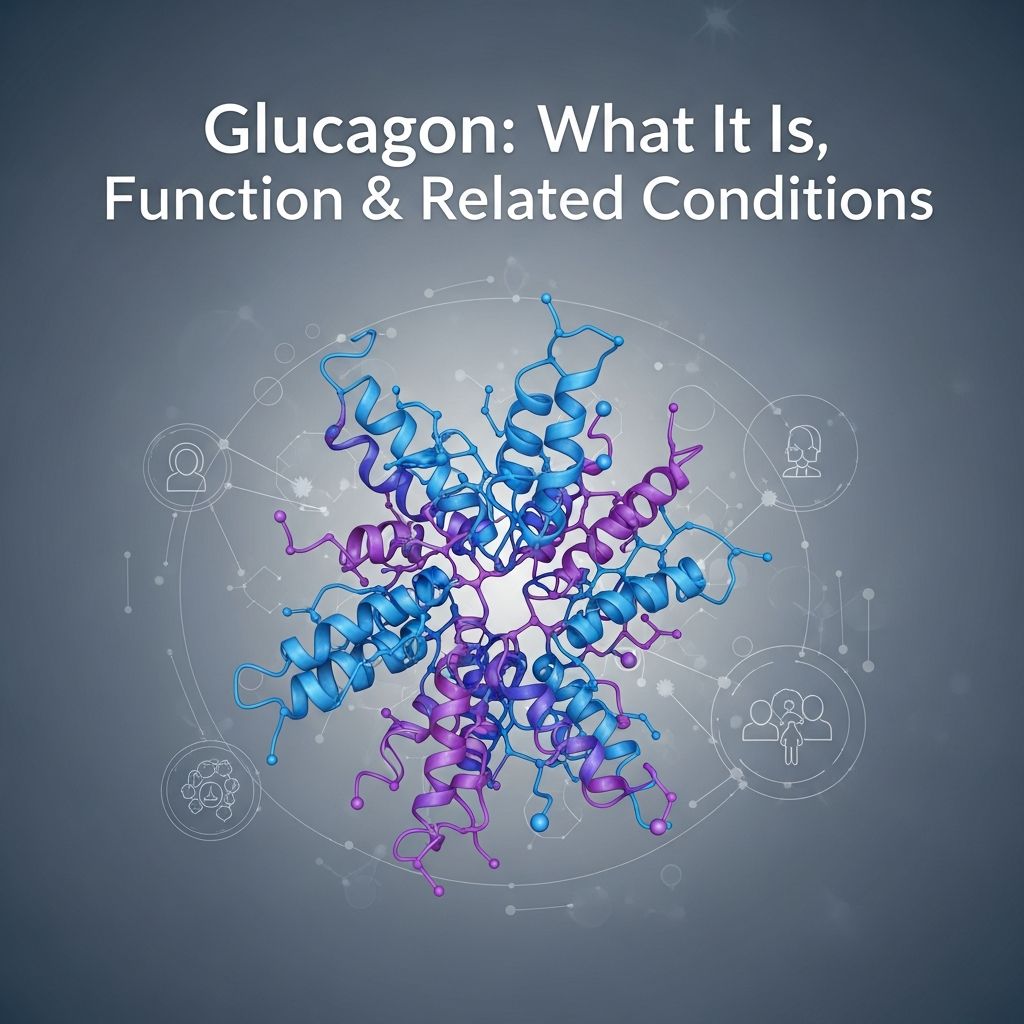
Glucagon is a hormone produced by your pancreas that plays a crucial role in regulating blood glucose levels. Specifically, alpha cells located in the pancreatic islets (also called islets of Langerhans) produce and release glucagon into your bloodstream. This hormone works to increase blood sugar levels when they drop too low, a condition known as hypoglycemia. While many people are familiar with insulin, which lowers blood sugar, glucagon is equally important for maintaining proper glucose balance in your body.
The pancreas is a gland located behind your stomach that functions both as an endocrine gland (producing hormones) and an exocrine gland (producing digestive enzymes). When it comes to blood sugar regulation, the pancreas maintains a delicate balance by releasing both insulin and glucagon depending on your body’s needs. Understanding glucagon and its relationship with insulin is essential for comprehending how your body maintains metabolic homeostasis.
How Does Glucagon Function?
Glucagon functions through a well-coordinated series of physiological responses designed to raise blood sugar levels when they become dangerously low. When your blood glucose drops below normal levels, specialized sensors in your pancreas detect this change and trigger alpha cells to release glucagon into the bloodstream. Once released, glucagon travels throughout your body and targets specific cells, primarily in the liver.
The primary mechanism of glucagon involves stimulating the liver to convert stored glycogen back into glucose through a process called glycogenolysis. Glycogen is essentially a storage form of glucose that your body maintains for times when immediate energy is needed. When glucagon binds to receptors on liver cells, it activates a cascade of chemical signals that cause these cells to break down glycogen into individual glucose molecules, which are then released into your bloodstream. This process happens relatively quickly, allowing your blood sugar to rise within minutes.
In addition to glycogenolysis, glucagon also promotes gluconeogenesis, which is the creation of new glucose from non-carbohydrate sources such as proteins and fats. This process occurs primarily in the liver and is particularly important during extended fasting or intense physical activity when glycogen stores become depleted. Through these mechanisms, glucagon ensures that your body always has access to glucose, even when you haven’t eaten recently.
The Relationship Between Glucagon and Insulin
Glucagon and insulin work together in a reciprocal relationship to maintain blood glucose homeostasis. While glucagon raises blood sugar levels, insulin does the opposite—it lowers blood sugar by promoting the uptake of glucose into cells and the storage of glucose as glycogen and fat. This relationship is often described as a hormonal seesaw: when one hormone rises, the other typically falls.
After you eat a meal containing carbohydrates, your blood glucose rises, prompting beta cells in the pancreas to release insulin. Insulin facilitates the movement of glucose from your bloodstream into your cells, where it can be used for energy or stored for later use. As blood glucose levels normalize and drop, insulin secretion decreases. Simultaneously, if blood glucose drops too low, glucagon is released to bring levels back up.
This finely tuned system ensures that your blood sugar remains within a narrow, healthy range regardless of whether you’re eating, fasting, or exercising. The balance between these two hormones is critical for maintaining energy levels and preventing complications associated with excessively high or low blood sugar.
Related Stories



Conditions Related to Glucagon Dysfunction
Several medical conditions can develop when the glucagon system doesn’t function properly. These conditions can result from problems with glucagon production, release, or the body’s ability to respond to glucagon.
Hypoglycemia
Hypoglycemia occurs when blood sugar levels drop too low, typically below 70 milligrams per deciliter (mg/dL). While this condition can develop for various reasons, it often results from insufficient glucagon production or response. In people with type 1 diabetes or advanced type 2 diabetes, the alpha cells may fail to produce adequate glucagon during hypoglycemic episodes, preventing effective blood sugar recovery. This is why people with diabetes sometimes carry glucagon emergency kits to treat severe hypoglycemia.
Type 1 Diabetes
In type 1 diabetes, the immune system attacks and destroys the beta cells that produce insulin. However, research indicates that glucagon secretion may also be impaired in this condition. People with type 1 diabetes may experience reduced glucagon response to low blood sugar, making them more vulnerable to severe hypoglycemic episodes.
Type 2 Diabetes
Type 2 diabetes involves insulin resistance, where cells don’t respond effectively to insulin. In this condition, there is often a paradoxical problem: while the body produces insulin, it may also produce too much glucagon or have an inappropriate glucagon response. This contributes to elevated fasting blood sugar levels and difficulties achieving glycemic control. Additionally, some medications used to treat type 2 diabetes, such as GLP-1 receptor agonists, work partly by enhancing glucagon suppression after meals.
Glucagonoma
A glucagonoma is a rare neuroendocrine tumor of the pancreas that produces excessive amounts of glucagon. This condition leads to persistently elevated blood glucose levels, a characteristic skin rash called necrolytic migratory erythema, weight loss, diarrhea, and deep vein thrombosis. The tumor arises from alpha cells and causes glucagon levels to increase dramatically, typically 10 times higher than normal.
Other Glucagon-Related Conditions
Certain genetic conditions can affect glucagon production or function. Mutations affecting the glucagon gene or the development of pancreatic islet cells can lead to various metabolic disorders. Additionally, conditions affecting the pancreas, such as pancreatitis or pancreatic cancer, can impair the organ’s ability to produce glucagon appropriately.
Symptoms of Abnormal Glucagon Levels
Signs of Low Glucagon (Insufficient Glucagon Response)
When your body cannot produce or respond to glucagon effectively, you may experience symptoms of hypoglycemia that don’t improve after eating. These include:
- Trembling or shakiness
- Rapid heartbeat
- Sweating
- Anxiety or nervousness
- Difficulty concentrating
- Confusion or disorientation
- Seizures in severe cases
Signs of High Glucagon (Excessive Glucagon Production)
Persistently elevated glucagon levels, as seen in glucagonoma, can cause:
- Persistent thirst and frequent urination
- Weight loss despite adequate food intake
- Chronic diarrhea
- Distinctive rash on skin (necrolytic migratory erythema)
- Fatigue and weakness
- Muscle pain or aching
- Blood clots (thrombosis)
Testing and Diagnosis
Glucagon levels can be measured through blood tests, though this is not a routine screening test. Healthcare providers typically measure glucagon when investigating unexplained hypoglycemia or when glucagonoma is suspected. A fasting glucagon level above 50 pg/mL may warrant further investigation for glucagonoma, though normal ranges can vary between laboratories.
During diagnostic evaluation, doctors may perform additional tests including glucose tolerance tests, imaging studies such as CT or MRI scans to locate tumors, and genetic testing if hereditary syndromes are suspected. The relationship between glucagon and glucose levels during various metabolic states helps healthcare providers understand the glucagon system’s functionality.
Treatment Options
Managing Low Glucagon Response
For people with impaired glucagon response, particularly those with type 1 diabetes or severe hypoglycemia, treatment options include:
- Glucagon emergency kits for severe hypoglycemic episodes
- Continuous glucose monitoring systems to alert users to dropping blood sugar
- Insulin pump therapy with improved glucose management
- Frequent blood sugar monitoring
- Dietary adjustments to minimize rapid glucose fluctuations
Managing High Glucagon Levels
Treatment for glucagonoma typically involves surgical removal of the tumor. In cases where surgery isn’t possible or as an adjunctive therapy, medications such as somatostatin analogs or alpha-glucosidase inhibitors may be used to reduce glucagon secretion or its effects. Chemotherapy may be considered if the tumor has metastasized.
Frequently Asked Questions
Q: What is the normal glucagon level?
A: Normal fasting glucagon levels typically range from 30 to 110 pg/mL (picograms per milliliter), though this can vary between laboratories. Levels are typically suppressed after eating when insulin is elevated.
Q: Can you have a glucagon deficiency?
A: Yes, glucagon deficiency can occur in certain conditions, particularly in advanced type 1 diabetes or from pancreatic disorders. This deficiency impairs your body’s ability to recover from low blood sugar episodes.
Q: How quickly does glucagon work?
A: Injected glucagon typically begins raising blood sugar within 5 to 10 minutes, with peak effects occurring within 30 minutes. Oral glucagon tablets work more slowly, taking 10 to 15 minutes to show effects.
Q: Is glucagon the same as glucose?
A: No. Glucagon is a hormone that raises blood glucose levels, while glucose is the sugar itself. Glucagon acts to increase glucose availability in your bloodstream.
Q: Can stress affect glucagon levels?
A: Yes, during stress, your body releases hormones like cortisol and adrenaline, which can trigger glucagon release as part of the “fight or flight” response, raising blood sugar levels.
Q: Are there side effects to glucagon injection?
A: Common side effects include nausea, vomiting, and headache. Allergic reactions are rare but possible. Glucagon should be used as directed in emergency situations.
References
- Glucagon: What It Is, Function & Related Conditions — Cleveland Clinic. 2024. https://my.clevelandclinic.org/health/articles/22283-glucagon
- Glycogen: What It Is & Function — Cleveland Clinic. 2024. https://my.clevelandclinic.org/health/articles/23509-glycogen
- Should glucagon-like peptide 1 receptor agonists be withheld during elective surgery? — Cleveland Clinic Journal of Medicine. April 2025. https://www.ccjm.org/content/92/4/209
- Glucagon-like peptide-1 receptor agonists and pancreatitis: A reconcilable divorce — Cleveland Clinic Journal of Medicine. October 2025. https://www.ccjm.org/content/92/8/483
- GLP-1 Agonists: What They Are, How They Work & Side Effects — Cleveland Clinic. 2024. https://my.clevelandclinic.org/health/treatments/13901-glp-1-agonists
Similar Articles








Read full bio of Sneha Tete