Glycopyrronium Inhaler (Seebri Breezhaler)
Comprehensive guide to Seebri Breezhaler for COPD symptom relief: usage, side effects, and patient advice.
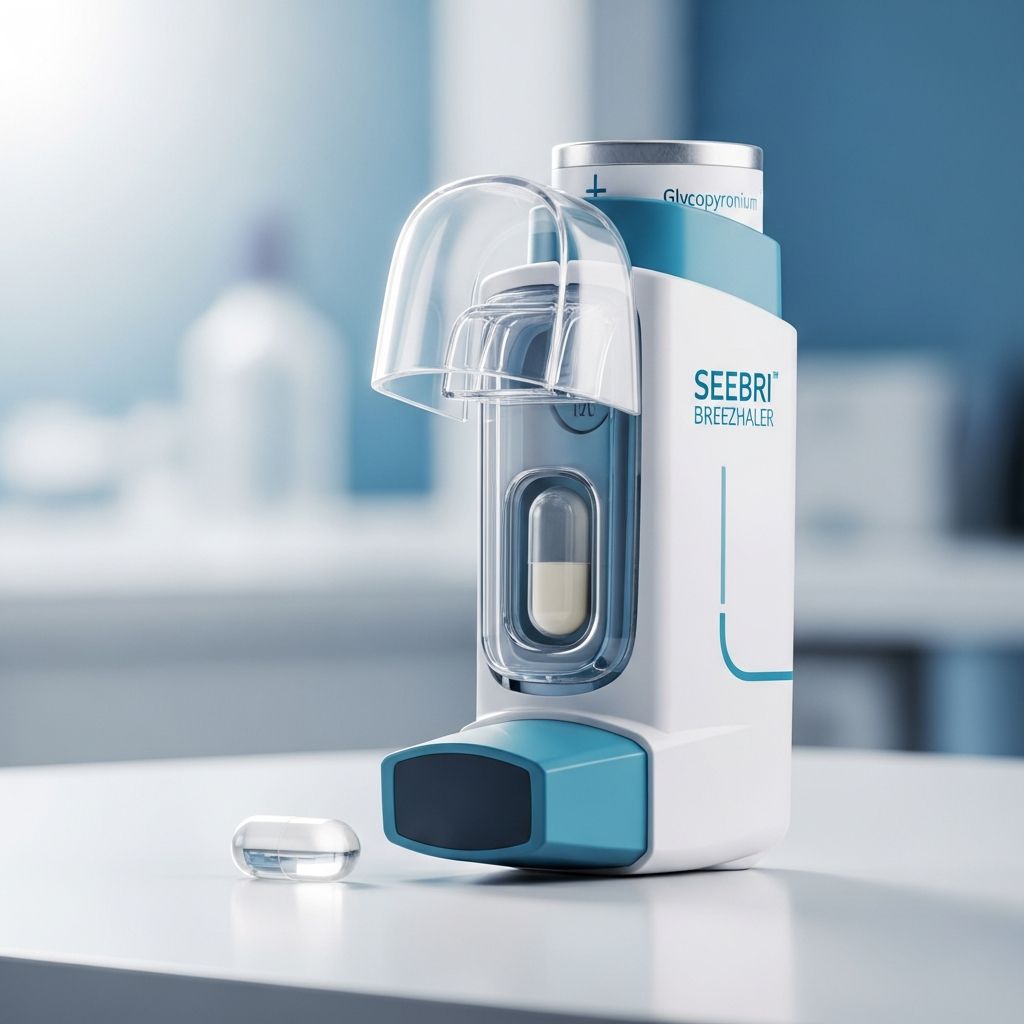
Glycopyrronium inhaler (Seebri Breezhaler) is a once-daily maintenance bronchodilator used to relieve symptoms in adult patients with chronic obstructive pulmonary disease (COPD).
About glycopyrronium inhalers
Glycopyrronium inhaler, branded as Seebri Breezhaler, belongs to a group of medications known as anticholinergics or long-acting muscarinic receptor antagonists (LAMAs). It works by blocking the action of acetylcholine, a chemical that causes tightening of the muscles around the airways in the lungs. By relaxing these muscles, glycopyrronium opens the airways, making breathing easier for people with COPD, which includes conditions like chronic bronchitis and emphysema.
The inhaler delivers a precise dose of glycopyrronium powder directly to the lungs via inhalation. Each hard capsule contains 63 micrograms of glycopyrronium bromide, equivalent to 50 micrograms of glycopyrronium, with a delivered dose of 44 micrograms. This targeted delivery minimizes systemic side effects compared to oral or intravenous forms, as the drug is rapidly absorbed with peak plasma levels reached in about 5 minutes post-inhalation.
Seebri Breezhaler is indicated specifically for maintenance therapy, not for acute relief of sudden breathing difficulties. It provides sustained bronchodilation over 24 hours, partly due to prolonged retention in the lungs, reflected in a terminal elimination half-life of 33 to 57 hours after inhalation—much longer than after intravenous (6.2 hours) or oral (2.8 hours) administration.
Key facts about glycopyrronium inhalers
- Brand name: Seebri Breezhaler
- Active ingredient: Glycopyrronium bromide (equivalent to glycopyrronium)
- Dose per capsule: 63 micrograms glycopyrronium bromide (50 micrograms glycopyrronium); delivered dose 44 micrograms
- Dosing schedule: Once daily
- For adults with: COPD (chronic obstructive pulmonary disease)
- Not suitable for: Children under 18 years; acute COPD attacks
- Common side effects: Sore throat, nasal congestion, cough
Steady-state exposure is reached within one week, with mean peak plasma concentrations of 166 pg/mL and trough of 8 pg/mL for the 44 microgram dose. Exposure increases dose-proportionally up to 176 micrograms.
How does glycopyrronium inhaler work for COPD?
In COPD, airflow obstruction is partly due to cholinergic tone from parasympathetic nerves causing bronchoconstriction. Glycopyrronium, as an inhaled LAMA, selectively blocks muscarinic receptors in airway smooth muscle, preventing acetylcholine-induced contraction and promoting airway dilation.
Pharmacodynamic studies show no significant changes in heart rate or QTc interval at doses up to 176 micrograms in COPD patients. Even at supratherapeutic doses (352 micrograms), only a slight heart rate reduction (-2.8 bpm over 24 hours) was observed, without QT prolongation. This profile supports its safety for long-term use.
The drug’s lung retention contributes to its 24-hour duration, improving lung function (e.g., FEV1) and reducing symptoms like breathlessness and wheezing.
About COPD
Chronic obstructive pulmonary disease (COPD) is a progressive lung condition characterized by persistent airflow limitation, primarily caused by significant exposure to noxious particles or gases, such as cigarette smoke. It encompasses chronic bronchitis (airway inflammation with mucus) and emphysema (damage to alveoli).
Symptoms include chronic cough, sputum production, and dyspnea, which worsen over time and lead to exacerbations. COPD affects millions worldwide and is a leading cause of death. Maintenance bronchodilators like glycopyrronium are cornerstone treatments to improve quality of life, reduce exacerbations, and slow decline.
Related Stories



Common questions about COPD
How can you tell if you have COPD?
Symptoms develop gradually: persistent cough, frequent respiratory infections, unexplained weight loss, fatigue, and shortness of breath during activities. Diagnosis involves spirometry showing FEV1/FVC <0.7 post-bronchodilator.
Can you cure COPD?
COPD is not curable but manageable. Smoking cessation is critical; medications, pulmonary rehabilitation, and oxygen therapy help control symptoms.
What triggers a COPD flare-up?
Triggers include infections, air pollution, cold weather, and non-adherence to therapy. Early intervention with rescue inhalers prevents hospitalization.
Will you still need to use your reliever inhaler?
Yes, Seebri Breezhaler is for maintenance, not relief. Keep a short-acting bronchodilator for sudden symptoms.
When not to use glycopyrronium inhaler for COPD
- Allergy to glycopyrronium or excipients (lactose, magnesium stearate)
- Acute bronchospasm or status asthmaticus
- Paediatric patients (under 18; no data available)
Use cautiously in severe renal impairment (CrCl <30 mL/min) or dialysis patients, weighing benefits against risks due to increased exposure.
How to use glycopyrronium inhalers
Inhale contents of one capsule once daily using the Breezhaler device. Do not swallow capsules.
Step-by-step instructions:
- Separate one blister from the strip; peel open to access capsule.
- Remove capsule; insert into Breezhaler chamber with transparent end facing left.
- Pierce capsule by firmly pressing side buttons once.
- Breathe out fully (away from device); place mouthpiece in mouth, close lips, inhale deeply and steadily.
- Hold breath for 5-10 seconds; exhale slowly.
- If powder remains, repeat inhale. Discard used capsule.
- Store device clean and dry.
Capsules are transparent with yellow cap/base, marked “SGB 44” and logo. Healthcare professionals should demonstrate use.
Dosage for glycopyrronium inhaler
Adults: One 44 microgram delivered dose (50 microgram capsule) once daily, anytime, with/without food. No dose adjustment for mild-moderate renal/hepatic impairment, elderly, or body weight.
| Patient Group | Recommended Dose |
|---|---|
| Adults with COPD | 1 capsule (44 mcg delivered) once daily |
| Mild-moderate renal impairment | No adjustment |
| Severe renal impairment | Use if benefit > risk |
| Paediatrics | Not recommended |
How to clean the inhaler
Open mouthpiece, eject capsule if present, wipe chamber with dry tissue. Avoid water/liquids. Weekly: brush chamber with included cleaning brush. No need to wash.
Side effects of glycopyrronium inhalers
Most are mild, anticholinergic-related.
Common (>1/100):
- Nasopharyngitis, cough
- Oropharyngeal pain, dry mouth
- Dyspepsia, toothache
- Chest pain, COPD worsening
Serious (seek medical help):
- Urinary retention, constipation, glaucoma
- Paradoxical bronchospasm
- Cardiovascular effects (rare at therapeutic doses)
Overdose may cause anticholinergic symptoms (dry mouth, blurred vision); treat supportively.
Cautions of glycopyrronium inhalers
- Monitor for urinary retention, angle-closure glaucoma, prostatic hypertrophy
- Benzyl alcohol in capsule shell (hypersensitivity risk)
- Lactose content (<1 mg/capsule)
- Avoid abrupt stop; taper if discontinuing
- Drug interactions: Other anticholinergics increase effects
Interactions
Potentiates other LAMAs/short-acting muscarinics. No significant CYP interactions due to minimal metabolism.
Pregnancy and breastfeeding
No data; use only if clearly needed. Unknown if excreted in milk.
Patient tips
- Rinse mouth post-inhalation to reduce oropharyngeal effects.
- Track symptoms; report worsening.
- Store capsules in blisters at room temp; discard 60 days post-opening.
Frequently Asked Questions (FAQs)
Can children use Seebri Breezhaler?
No, it’s for adults only. EMA waived paediatric studies for COPD.
Does it cause heart problems?
No QT prolongation or tachycardia at recommended doses.
What if I miss a dose?
Take as soon as remembered unless near next dose; do not double.
Is it a steroid?
No, it’s a bronchodilator, not corticosteroid.
References
- Seebri Breezhaler 44 micrograms inhalation powder (hard capsules) – Summary of Product Characteristics — electronic Medicines Compendium (medicines.org.uk). 2023. https://www.medicines.org.uk/emc/product/2840/smpc
- Seebri Breezhaler EPAR – Risk Management Plan Summary — European Medicines Agency (ema.europa.eu). 2019-01-01. https://www.ema.europa.eu/en/documents/rmp-summary/seebri-breezhaler-epar-risk-management-plan-summary_en.pdf
- Seebri Breezhaler Product Information — Novartis. 2020-02-01. https://www.novartis.com/sg-en/sites/novartis_sg/files/Seebri-Feb2020.SINv1-app260422.pdf
- Seebri Breezhaler – Uses, Side Effects, Interactions — MedBroadcast.com. Accessed 2026. https://medbroadcast.com/drug/getdrug/seebri-breezhaler
- Glycopyrrolate (inhalation route) – Description — Mayo Clinic. 2024-06-01. https://www.mayoclinic.org/drugs-supplements/glycopyrrolate-inhalation-route/description/drg-20165175
- Seebri Breezhaler Consumer Medicine Information — Medsafe (New Zealand Government). 2023. https://www.medsafe.govt.nz/consumers/cmi/s/seebri.pdf
Similar Articles








Read full bio of Sneha Tete