Gnathostomiasis: Symptoms, Diagnosis, And Treatment Guide
Zoonotic nematode infection from undercooked fish causing migratory swellings and severe visceral complications.
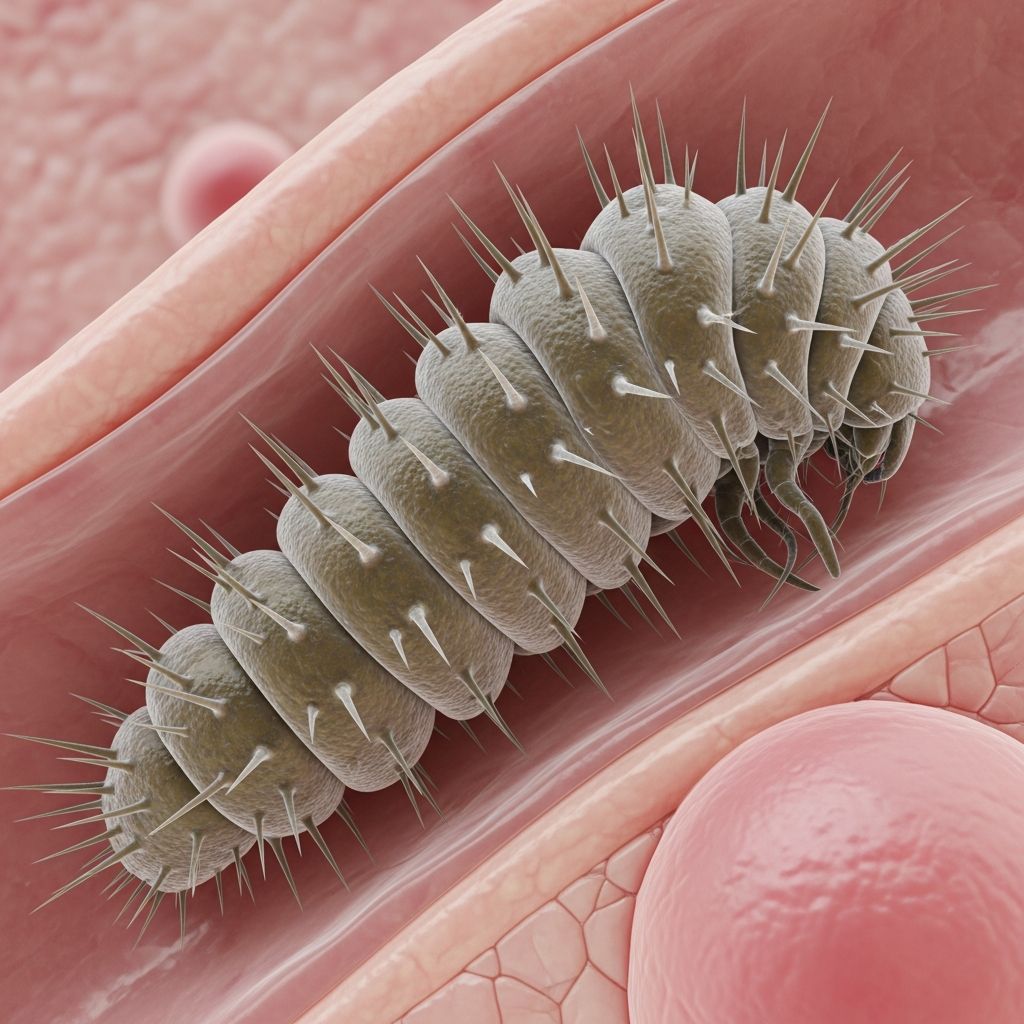
Gnathostomiasis is a zoonosis (an infection passed on from animals) caused by larvae of a nematode (unsegmented roundworm) in the genus Gnathostoma. It is acquired by humans through eating undercooked freshwater fish, undercooked chicken, frogs, snakes, or undercooked meat from wild boars containing the third-stage larvae of Gnathostoma spinigerum or related species.
The disease is endemic in Southeast Asia and Latin America but cases are increasingly reported worldwide due to travel and globalisation. Humans are accidental dead-end hosts as the larvae cannot mature or reproduce in people.
Who gets gnathostomiasis?
Gnathostomiasis affects travellers to endemic areas who consume raw or undercooked intermediate hosts, particularly freshwater fish in dishes like som-fak (Thailand), ceviche (Peru) or lex bo la (Vietnam). Locals in endemic regions and expatriates are also at risk.
- Most cases reported from Thailand, Japan, China; increasing reports from Mexico, Ecuador, Colombia
- Men affected more than women (3:1 ratio), possibly due to dietary habits
- Age range broad but peaks in 20–50-year-olds
What causes gnathostomiasis?
Gnathostoma spinigerum is the principal species causing human infection worldwide, with G. binucleatum prominent in the Americas. The nematode requires a complex life cycle involving specific definitive, first intermediate, and second intermediate hosts.
Life cycle
Adult worms reside in the stomach wall of definitive hosts (wild or domestic felids, canines, pigs, rats).
- First intermediate host: Cyclops (minute freshwater copepods) ingest eggs and develop first-stage larvae (L1)
- Second intermediate host: Fish, frogs, snakes, birds, poultry ingest copepods; second-stage larvae (L2) develop into advanced third-stage larvae (L3)
- Paratenic (transport) hosts: Larger predators (e.g. snakes eating fish) accumulate infective L3 larvae
- Humans: Ingest L3 in raw/undercooked second intermediate or paratenic hosts. Larvae penetrate gut wall, migrate through tissues but cannot mature

What are the clinical features of gnathostomiasis?
Incubation 3–4 weeks (range 1 day to many months). Initial acute gastrointestinal symptoms (24–48h post-ingestion) include nausea, vomiting, anorexia, diarrhoea, epigastric pain as larvae penetrate gut wall. Marked eosinophilia develops (>50% total WBC).
The larva then migrates causing:
- Cutaneous gnathostomiasis (75–90% cases): Intermittent migratory swellings, pruritus, erythema
- Visceral gnathostomiasis: Invasion of lungs, urinary tract, abdominal viscera
- Neurognathostomiasis: CNS invasion (rare but <5% mortality untreated)
Cutaneous gnathostomiasis
Pathognomonic intermittent migratory subcutaneous swellings (2–20cm, non-pitting, tender, pruritic) lasting 1–4 weeks. Track across skin over 1–10cm/day leaving serpentine haemorrhagic tracts.
- Common sites: trunk, upper limbs; face/neck in 10–20%
- Fixed swellings possible if larva encysts
- Recurrent crops over 10–12 years untreated


Visceral gnathostomiasis
Larva invades:
- Lungs: Cough, haemoptysis, pleural effusion, pneumothorax
- Urinary: Haematuria, dysuria
- Abdominal: Pain, ascites
- Ocular: Uveitis, glaucoma, vision loss (40% cases)
Related Stories



Neurognathostomiasis
Most severe form (worse prognosis). Presents as:
- Radiculomyelitis: Severe root pain → limb paresis/paraplegia (lower > upper limbs)
- Myeloencephalitis: Pain → paralysis → cranial nerve palsies → coma
- Eosinophilic meningitis: Headache, neck stiffness
- Subarachnoid haemorrhage: Sudden collapse (Thailand)
CSF shows eosinophilia (>10%, up to 80%). Mortality 10–25% without prompt treatment.
How is gnathostomiasis diagnosed?
Suspect in travellers from endemic areas with migratory swellings + eosinophilia or typical CNS presentation.
Investigations
| Test | Findings |
|---|---|
| Serology (ELISA/Western blot) | Specific IgG to larval antigens (90–100% sensitive) |
| Eosinophil count | Marked early (>3×10⁹/L, >50% WBC); normalises chronically |
| Biopsy | May show larva (1–4mm, cephalated head-bulb); often non-diagnostic |
| CSF (neurognathostomiasis) | Eosinophilia >10%, ↑protein, specific antibodies |
| Imaging | Subcutaneous tracks (US/MRI); CNS haemorrhages/tracts |
PCR on tissue/biopsy emerging but not routine.
What is the treatment for gnathostomiasis?
Albendazole 400mg BD x 21 days (first-line).
- Ivermectin 200μg/kg single dose (alternative, esp. cutaneous)
- Doxycycline 200mg OD x 21 days (synergistic, ↓larval motility)
Combine for severe/CNS disease: Albendazole + ivermectin + corticosteroids.
Surgical excision possible for accessible cutaneous lesions but risky (larva migrates).
What is the outcome for gnathostomiasis?
Untreated: Larvae survive 10–12yrs causing recurrent symptoms.
- Excellent cutaneous prognosis with treatment (>90% cure)
- CNS: Good if diagnosed early; permanent deficits if delayed
How can gnathostomiasis be prevented?
Avoid raw/undercooked freshwater fish, poultry, amphibians, reptiles in endemic areas.
- Cook thoroughly (>60°C)
- Freeze fish (-20°C x 7d or -35°C x 15h) kills larvae
- Peel fruit/veg; drink bottled water
Frequently Asked Questions (FAQs)
Q: Is gnathostomiasis contagious?
A: No. Cannot transmit human-to-human; only via contaminated food.
Q: How long do symptoms last untreated?
A: Up to 10–12 years with recurrent migratory swellings.
Q: Can gnathostomiasis be fatal?
A: Yes, CNS invasion causes 10–25% mortality if untreated.
Q: What does a gnathostoma larva look like?
A: 3–4mm long, red-white, with characteristic head-bulb containing 4 hook rows.
Q: Which test confirms gnathostomiasis?
A: Specific serology (ELISA/Western blot) against larval antigens.
References
- Gnathostomiasis, Another Emerging Imported Disease — Delhaes L et al. Emerging Infectious Diseases. 2009-06-01. https://pmc.ncbi.nlm.nih.gov/articles/PMC2708391/
- Gnathostomiasis: an emerging infectious disease relevant to all — Morassutti AL et al. Anais Brasileiros de Dermatologia. 2021-01-04. https://www.anaisdedermatologia.org.br/en-gnathostomiasis-an-emerging-infectious-disease-articulo-S0365059620303937
- Gnathostomiasis – Knowledge @ AMBOSS — AMBOSS. 2025 (continuously updated). https://www.amboss.com/us/knowledge/gnathostomiasis/
- DPDx – Gnathostomiasis — CDC Division of Parasitic Diseases. 2024-08-15. https://www.cdc.gov/dpdx/gnathostomiasis/index.html
Similar Articles








Read full bio of medha deb