Goiter: What It Is, Causes, Symptoms, Diagnosis & Treatment
Complete guide to understanding goiter: causes, symptoms, diagnosis, and effective treatment options.
Understanding Goiter: An Overview
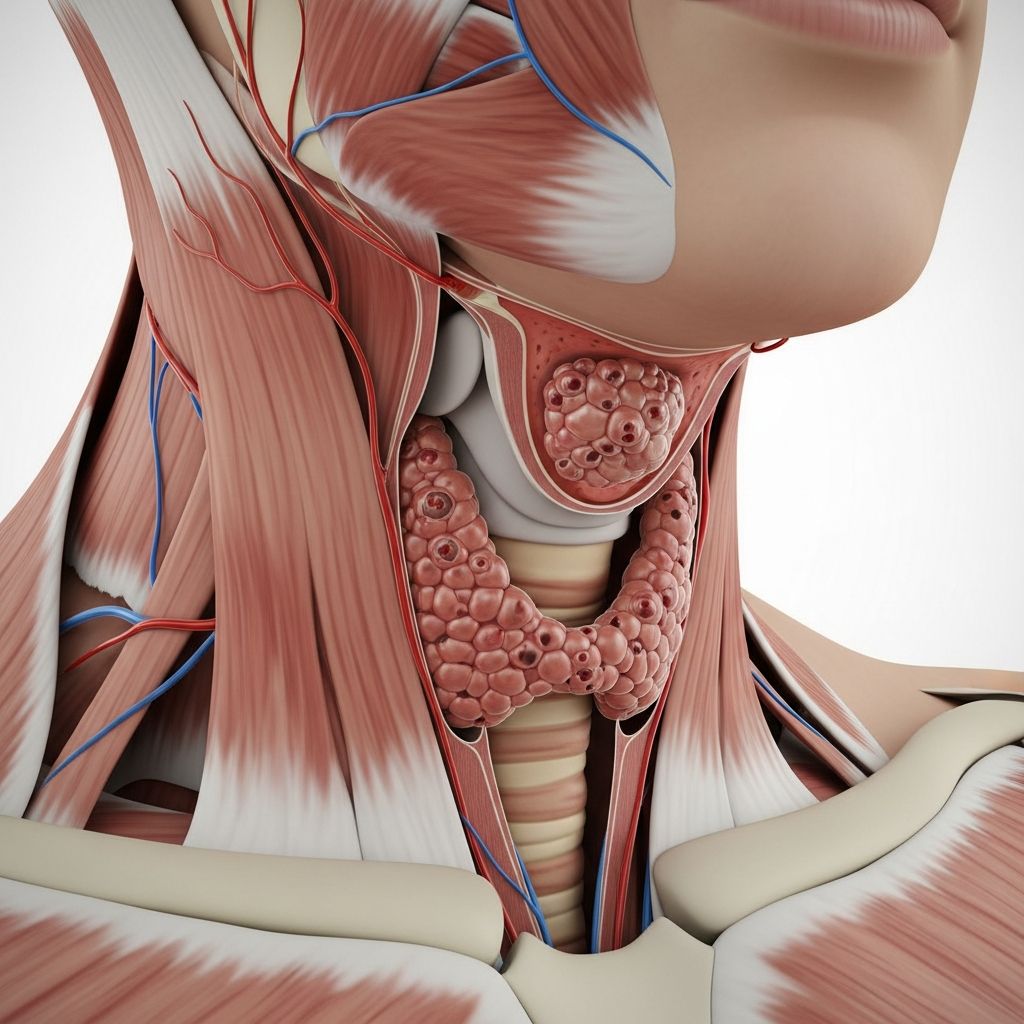
Goiter is a medical condition characterized by an enlargement of the thyroid gland, the butterfly-shaped organ located in the front of your neck. This enlargement can involve the entire thyroid gland or manifest as one or more small lumps called thyroid nodules. While goiter can affect anyone, it’s approximately four times more likely to develop in females compared to males, and the risk increases significantly with age, particularly after the age of 40.
The thyroid gland plays a crucial role in your endocrine system, producing hormones that regulate metabolism, energy production, and numerous other vital bodily functions. When the thyroid becomes enlarged, it indicates an underlying issue that requires attention and proper diagnosis to determine the appropriate course of action.
What Causes Goiter?
Goiter develops as an adaptive reaction of the thyroid cells to any process that blocks or interferes with thyroid hormone production. Understanding the underlying cause is essential for determining the appropriate treatment approach.
Primary Causes of Goiter
The most common cause of goiter worldwide is iodine deficiency, affecting an estimated 2.2 billion people globally. Iodine is an essential mineral required for thyroid hormone synthesis. When the body lacks sufficient iodine, the thyroid gland attempts to compensate by enlarging itself in an effort to produce adequate hormones. The severity of iodine deficiency directly correlates with goiter development—the more severe the deficiency, the more likely someone is to develop a goiter.
Beyond iodine deficiency, various other conditions can trigger goiter formation:
- Graves’ disease, an autoimmune condition causing hyperthyroidism
- Hashimoto’s thyroiditis, an autoimmune disorder leading to hypothyroidism
- Thyroiditis, inflammation of the thyroid gland
- Thyroid nodules, abnormal growths within the thyroid tissue
- Pregnancy-related hormonal changes
- Certain medications, particularly lithium used in treating mental health conditions
- Exposure to certain environmental toxins
- Hereditary factors and genetic predisposition
In cases of sporadic goiters, no identifiable cause can often be determined. These types may occasionally be triggered by certain medications or other unknown factors that interfere with normal thyroid function.
Recognizing Goiter Symptoms
The presentation of goiter symptoms varies considerably depending on the size and underlying cause of the thyroid enlargement. Understanding these symptoms helps you determine when medical evaluation is necessary.
Size and Physical Manifestations
The size of a goiter ranges from very small and barely noticeable to extremely large and visibly prominent. Most goiters are painless, though certain conditions affecting the thyroid can cause discomfort. For instance, thyroiditis, which involves inflammation of the thyroid gland, typically causes pain in the affected area.
When Goiter Becomes Symptomatic
While many individuals with small goiters experience no symptoms, larger goiters can produce noticeable effects:
- A visible lump or swelling in the front of the neck
- Difficulty swallowing (dysphagia)
- Breathing difficulties or shortness of breath
- Hoarseness or voice changes
- Neck discomfort or tightness
- Symptoms related to thyroid hormone imbalance, such as fatigue, weight changes, or temperature sensitivity
Related Stories



How Goiter Is Diagnosed
Healthcare providers typically identify goiter during a physical examination by palpating the thyroid gland and detecting enlargement. However, determining the underlying cause requires additional diagnostic testing.
Diagnostic Procedures
Your healthcare provider may employ several diagnostic tools to evaluate your condition comprehensively:
- Physical Examination: The initial step involves a thorough neck examination and palpation of the thyroid gland
- Blood Tests: Thyroid function tests measuring TSH, free T4, and free T3 levels help assess hormone production
- Thyroid Antibody Tests: These identify autoimmune thyroid conditions like Graves’ disease or Hashimoto’s thyroiditis
- Ultrasound Imaging: High-resolution ultrasound provides detailed visualization of thyroid structure and identifies nodules
- Fine-Needle Aspiration (FNA): A biopsy procedure collecting cells for microscopic examination if nodules are present
- Thyroid Scan: Nuclear imaging studies assess thyroid function and hormone uptake patterns
- CT or MRI Imaging: Advanced imaging for evaluating large goiters affecting surrounding structures
Classification of Goiter Types
Healthcare providers use descriptive terms to classify goiter based on structural characteristics and functional status. These classifications help guide treatment decisions and predict outcomes.
Common Goiter Classifications
Simple Goiter: Develops when the thyroid gland doesn’t produce sufficient hormones to meet the body’s needs. The gland enlarges in an adaptive attempt to increase hormone production. Simple goiters frequently result from iodine deficiency and are particularly common in regions with limited iodine availability.
Multinodular Goiter: This type features multiple nodules within the thyroid tissue. Healthcare providers combine descriptive terms to classify specific variations. For example, a toxic multinodular goiter occurs when multiple nodules produce excessive thyroid hormone, resulting in hyperthyroidism symptoms.
Diffuse Goiter: The entire thyroid gland enlarges uniformly without distinct nodular formations, commonly seen in Graves’ disease and iodine deficiency.
Treatment Options for Goiter
Treatment approaches for goiter depend on several factors including the size of the enlargement, presenting symptoms, the underlying cause, and whether thyroid hormone levels are abnormal. Your healthcare provider will determine the most appropriate intervention based on your individual circumstances.
Conservative Management
Watchful Waiting: Many small, asymptomatic goiters require no immediate treatment. Your healthcare provider may recommend regular monitoring through periodic clinical examinations and thyroid function tests to ensure the condition remains stable.
Iodine Supplementation: For goiters caused by iodine deficiency, consuming adequate dietary iodine through fish, dairy products, and iodized table salt often resolves the condition. However, iodine supplements and other supplements are generally not recommended for other types of goiter and may cause harm.
Medical Therapy
Hormone Replacement: When hypothyroidism accompanies goiter, thyroid hormone replacement therapy (levothyroxine) can normalize hormone levels and sometimes reduce goiter size over time.
Antithyroid Medications: For hyperthyroid goiters like Graves’ disease, antithyroid drugs such as propylthiouracil or methimazole reduce excessive hormone production and may decrease goiter size.
Beta-Blockers: These medications manage hyperthyroid symptoms while other treatments take effect, providing symptom relief during the treatment course.
Surgical Intervention
Thyroidectomy: Surgical removal of the thyroid gland becomes necessary when goiter causes significant symptoms such as difficulty breathing or swallowing, compresses surrounding structures, or when malignancy is suspected. This procedure provides definitive treatment but requires lifelong thyroid hormone replacement therapy.
Radioactive Iodine Therapy
For certain hyperthyroid conditions causing goiter, radioactive iodine treatment destroys overactive thyroid tissue, reducing hormone production and goiter size. This approach is particularly effective for toxic multinodular goiter and Graves’ disease.
Prognosis and Long-Term Outlook
The prognosis for goiter depends significantly on its type and underlying cause. Many goiters, particularly those caused by iodine deficiency, resolve with appropriate dietary interventions. Autoimmune thyroid conditions may require long-term management but generally carry an excellent prognosis with proper treatment adherence.
The positive news is that goiter is treatable, and many cases improve substantially or resolve completely with appropriate intervention. Some goiters spontaneously regress, particularly if the triggering factor is removed or adequately treated.
Prevention Strategies
Goiter caused by iodine deficiency represents the only type you can reliably prevent. Consuming a balanced diet including sufficient iodine-rich foods prevents these types of goiters. Recommended dietary sources include fish, dairy products, eggs, and a healthy amount of iodized table salt. These simple dietary measures provide adequate iodine for normal thyroid function and prevent goiter development.
For other types of goiter, prevention focuses on managing underlying thyroid conditions through regular medical care and medication compliance when prescribed.
When to Seek Medical Attention
If you notice a lump in the front of your neck or experience symptoms suggesting thyroid dysfunction, schedule an appointment with your healthcare provider. Even if your goiter causes no current symptoms, regular monitoring ensures early detection of any changes or complications.
Contact your provider promptly if you develop new symptoms such as:
- Difficulty swallowing or breathing
- Voice hoarseness or changes
- Neck pain or discomfort
- Progressive enlargement of the thyroid
- Symptoms of thyroid hormone imbalance
Frequently Asked Questions
Q: Can goiter go away on its own?
A: Yes, some goiters spontaneously resolve, particularly those caused by temporary thyroid inflammation or when the underlying cause is removed. However, monitoring by your healthcare provider is essential to track changes.
Q: Is goiter dangerous?
A: Most goiters are not dangerous, but large ones can compress the trachea or esophagus, causing breathing or swallowing difficulties. Underlying causes of goiter may require treatment to prevent thyroid complications.
Q: Does goiter always cause hyperthyroidism or hypothyroidism?
A: No, goiter doesn’t always affect thyroid hormone levels. Some goiters occur with normal thyroid function, while others accompany thyroid hormone imbalances requiring treatment.
Q: Can iodine supplements prevent goiter?
A: Consuming iodine-rich foods is preferable to supplements. Iodine supplements may cause harm in certain conditions and are not universally recommended for goiter prevention.
Q: How often should I see my doctor if I have goiter?
A: At minimum, annual check-ups are recommended to monitor goiter size and thyroid function. Your provider may recommend more frequent visits depending on your specific situation and underlying cause.
Q: Is goiter more common in women?
A: Yes, goiter develops approximately four times more frequently in women than men, and risk increases significantly after age 40.
References
- Goiter: What It Is, Causes, Symptoms, Diagnosis & Treatment — Cleveland Clinic. 2022-06-05. https://my.clevelandclinic.org/health/diseases/12625-goiter
- Thyroid: What It Is, Function & Problems — Cleveland Clinic. https://my.clevelandclinic.org/health/body/23188-thyroid
- Thyroidectomy (Thyroid Surgery): What It Is & Recovery — Cleveland Clinic. https://my.clevelandclinic.org/health/treatments/7016-thyroidectomy
- Current Methods of Diagnosis and Management of Goiter — Cleveland Clinical Journal of Medicine, Vol. 31, No. 2. https://www.ccjm.org/
- Thyroid Grossing Guidelines — Cleveland Clinic Laboratories. https://clevelandcliniclabs.com/our-laboratories/pathology-subspecialty-consultative-services/head-neck-pathology/thyroid-grossing-guidelines/
Similar Articles








Read full bio of Sneha Tete