Goiter: Symptoms, Causes, Diagnosis, Treatment
Understand goiter: thyroid enlargement causes, symptoms, diagnosis, and effective treatments for better thyroid health.
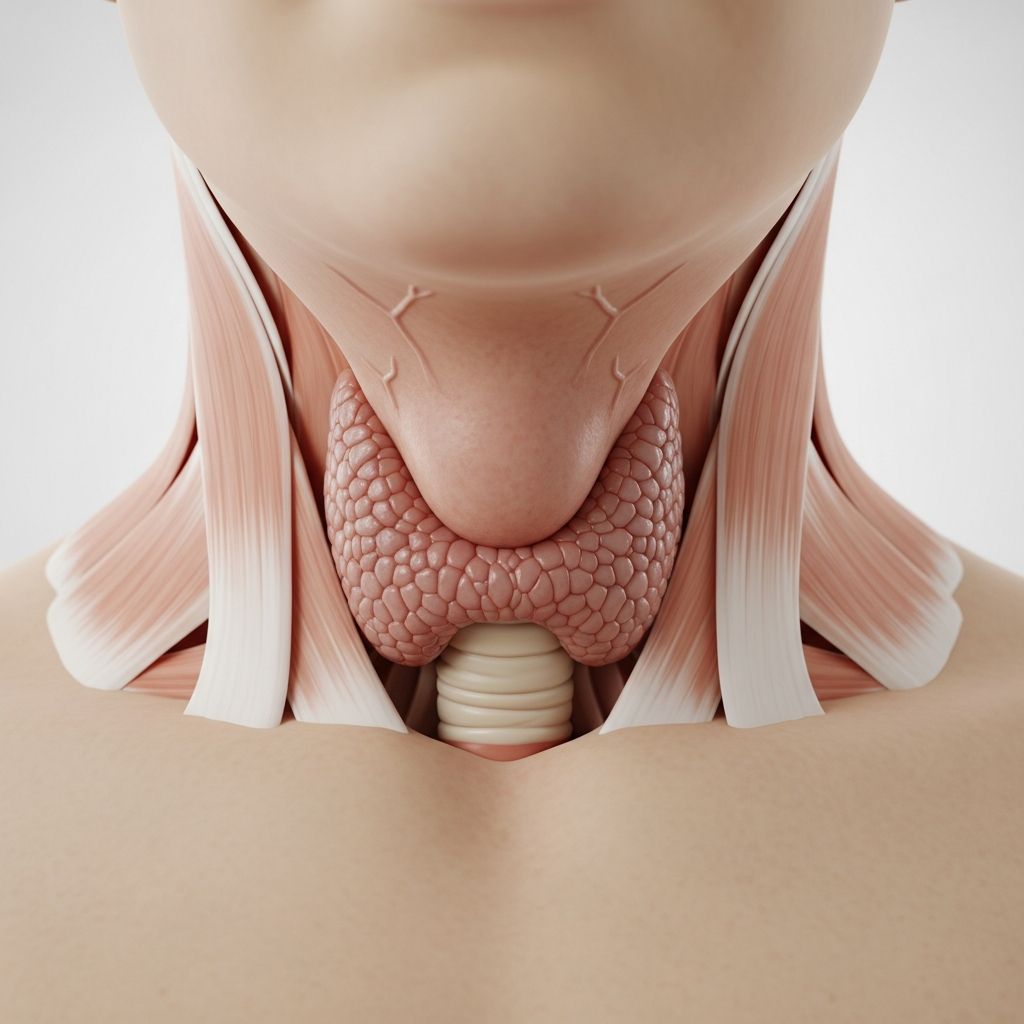
A goiter is an abnormal enlargement of the thyroid gland, a butterfly-shaped organ in the neck that produces hormones regulating metabolism, heart rate, and body temperature. This condition affects millions worldwide, often due to iodine deficiency or autoimmune disorders, and can range from harmless to indicative of serious thyroid dysfunction.
What Is a Goiter?
The thyroid gland, located below the Adam’s apple, normally measures about 5 cm long and weighs 20 grams in adults. A goiter occurs when it enlarges beyond normal size, detectable by inspection, palpation, or imaging. It can be diffuse (uniform enlargement), nodular (single lump), or multinodular (multiple lumps). Goiters may associate with normal thyroid hormone levels (euthyroid), excess (hyperthyroidism), or deficiency (hypothyroidism).
Physiological goiters arise during adolescence or pregnancy due to increased hormone demands. Pathological causes include iodine deficiency, the leading global factor impacting 2.2 billion people, autoimmune diseases like Hashimoto’s thyroiditis or Graves’ disease, and infiltrative conditions such as sarcoidosis.
Symptoms of Goiter
Many goiters are asymptomatic, especially small ones. Larger goiters cause visible neck swelling, a feeling of fullness, or tightness in the throat. Common symptoms include:
- Neck swelling or lump: Often the first noticeable sign, more prominent when swallowing.
- Difficulty swallowing (dysphagia) or breathing: Due to compression of the esophagus or trachea.
- Hoarseness or voice changes: From pressure on vocal cords or recurrent laryngeal nerve.
- Coughing or choking sensation: Especially when lying down.
- Pain or tenderness: If caused by thyroiditis (inflammation).
Associated thyroid dysfunction symptoms vary: hyperthyroidism brings weight loss, rapid heartbeat, anxiety, heat intolerance; hypothyroidism causes fatigue, weight gain, cold sensitivity, constipation.
Causes of Goiter
Goiter results from thyroid follicular cells adapting to stimuli blocking hormone production, prompting growth. Key causes:
- Iodine deficiency: Primary worldwide cause; thyroid needs iodine for T3 and T4 hormones. Mild deficiency yields 5-20% prevalence; severe, over 30%.
- Autoimmune disorders: Hashimoto’s thyroiditis leads to gradual enlargement via inflammation; Graves’ disease causes diffuse toxic goiter through stimulating antibodies.
- Nodular growth: Nontoxic multinodular goiter evolves into toxic forms (Plummer’s disease) with autonomous nodules producing excess hormones.
- Medications and toxins: Lithium, amiodarone inhibit hormone synthesis.
- Other: Pregnancy, puberty, thyroid cancer, infections, genetic factors.
In iodine-sufficient regions like the U.S., autoimmune conditions predominate; globally, deficiency persists in certain areas.
Risk Factors for Developing Goiter
Anyone can develop goiter, but risks include:
- Gender: Four times more common in females due to hormonal influences.
- Age: Increases after 40.
- Family history: Genetic predisposition to thyroid diseases.
- Geography/diet: Residence in iodine-poor soil regions without iodized salt.
- Medical history:
Autoimmune diseases, prior radiation to neck.
| Risk Factor | Prevalence Impact | Example |
|---|---|---|
| Iodine Deficiency Severity | Mild: 5-20%; Moderate: 20-30%; Severe: >30% | Remote mountainous areas |
| Gender | 4x higher in females | Postpartum thyroiditis |
| Age | Common after 40 | Multinodular goiter |
Types of Goiter
Goiters classify by enlargement pattern and hormone status:
Related Stories



- Diffuse goiter: Uniform enlargement, e.g., Graves’ disease.
- Nodular goiter: Single nodule (toxic adenoma) or multiple (multinodular).
- Toxic vs. nontoxic: Toxic causes hyperthyroidism; nontoxic euthyroid or hypothyroid.
- Simple/sporadic: No known cause, often resolves spontaneously.
Toxic multinodular goiter features “hot” (overactive) and “cold” (inactive) nodules on scans.
How Is Goiter Diagnosed?
Diagnosis starts with physical exam: provider palpates neck while swallowing to assess size/texture. Further tests:
- Blood tests: TSH, free T4/T3 to check function; antibodies for autoimmune causes.
- Ultrasound: Images gland size, nodules, blood flow; distinguishes solid vs. cystic.
- Thyroid scan: Radioactive iodine uptake reveals hot/cold nodules.
- Fine-needle aspiration (FNA) biopsy: Samples suspicious nodules for cancer.
- CT/MRI: Evaluates compression on airways/esophagus.
Early detection prevents complications like tracheal compression.
Goiter Treatment
Treatment addresses size, symptoms, and hormone imbalance:
- Observation: For small, asymptomatic nontoxic goiters; monitor TSH, ultrasound yearly.
- Levothyroxine: Shrinks nontoxic goiters by suppressing TSH in hypothyroid cases.
- Antithyroid drugs: Methimazole/propylthiouracil for toxic goiters to block hormone production.
- Radioactive iodine (RAI): Shrinks gland/nodules, especially toxic multinodular; may cause hypothyroidism.
- Surgery (thyroidectomy): Partial/total removal for large compressive/suspicious goiters. Risks: voice changes, hypoparathyroidism.
Prevention: Iodized salt, seafood/ dairy intake in deficient areas.
Complications of Goiter
Untreated large goiters risk:
- Airway/esophageal compression: Breathing/swallowing difficulty.
- Thyroid storm: Life-threatening hyperthyroidism.
- Cancer: 5-10% nodules malignant.
- Heart issues: Arrhythmias from hyperthyroidism.
When to See a Doctor
Seek care for neck swelling, swallowing/breathing issues, voice changes, unexplained weight changes, fatigue. Prompt evaluation rules out malignancy.
Prevention of Goiter
Avoid via adequate iodine (150 mcg/day adults), prenatal vitamins with iodine. Screen high-risk groups.
Frequently Asked Questions (FAQs)
What causes the most goiters worldwide?
Iodine deficiency affects 2.2 billion, prompting thyroid enlargement to compensate.
Is goiter cancerous?
Most are benign; biopsy evaluates suspicious nodules.
Can goiter go away on its own?
Simple goiters may resolve; others need treatment.
Does goiter affect pregnancy?
Physiological goiter common; monitor to prevent fetal issues.
How is toxic goiter treated?
Antithyroid meds, RAI, or surgery to restore euthyroidism.
References
- Goiter – StatPearls — NCBI Bookshelf / NIH. 2023 (updated). https://www.ncbi.nlm.nih.gov/books/NBK562161/
- Goiter: What It Is, Causes, Symptoms, Diagnosis & Treatment — Cleveland Clinic. 2022-06-05. https://my.clevelandclinic.org/health/diseases/12625-goiter
Similar Articles








Read full bio of Sneha Tete