Goldenseal: 11 Uses, Safety Concerns, And Interactions
Exploring the effectiveness, safety profile, and drug interactions of goldenseal supplements.
Goldenseal: Usefulness and Safety
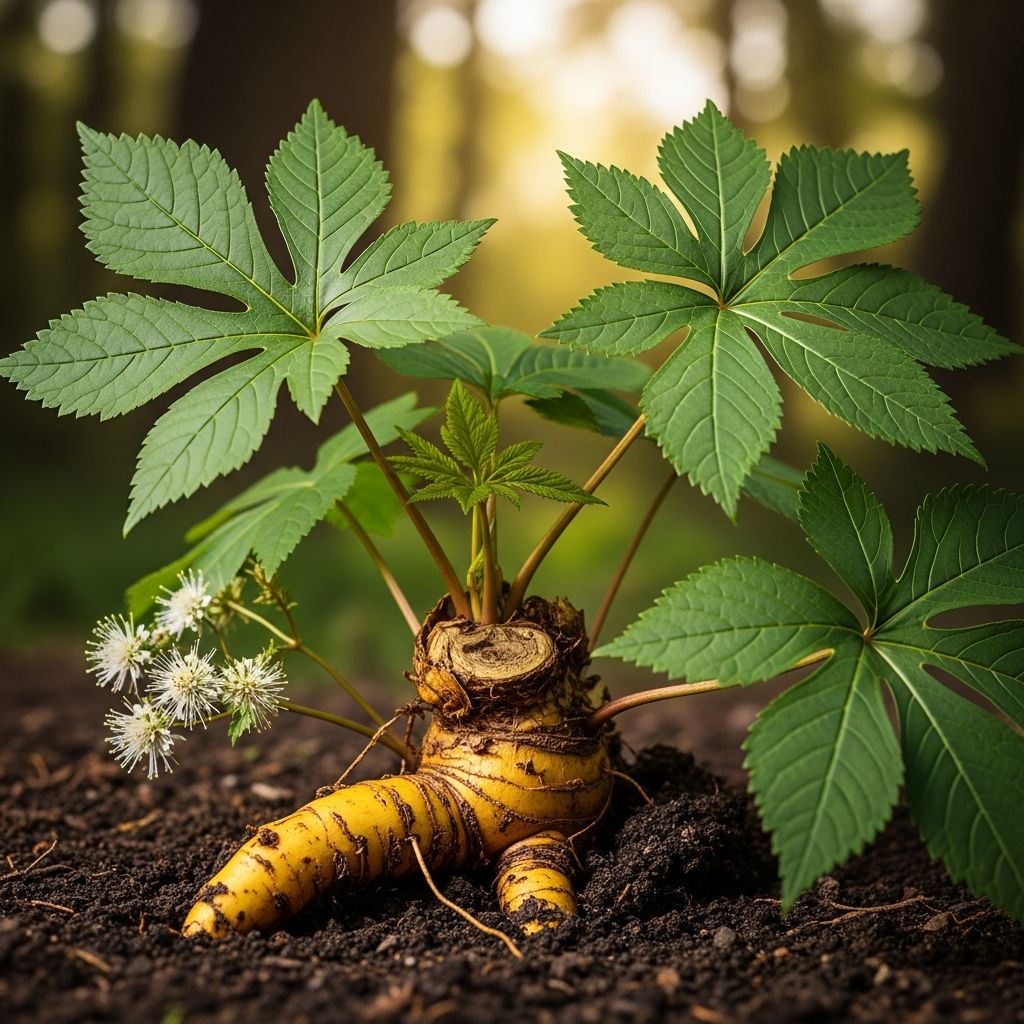
Goldenseal is a plant native to the northeastern United States and southeastern Canada, characterized by its distinctive bright yellow rhizome or underground stem. As one of the most popular herbal supplements in North America, goldenseal has a complex history spanning centuries of use and significant modern interest. This comprehensive guide explores what we know about goldenseal’s usefulness, safety profile, and important considerations for those considering its use.
Background and Historical Context
Goldenseal (Hydrastis canadensis) holds significant cultural and medicinal importance in North American history. Historically, Native Americans used goldenseal to treat a diverse array of health conditions, including digestive disorders, wounds, skin conditions, eye problems, and even cancer. The herb’s popularity surged dramatically during the 19th century when herbalist Samuel Thompson promoted it as a cure-all remedy, leading to widespread commercial demand and subsequent overharvesting that significantly impacted wild populations.
Today, wild goldenseal has been severely overharvested and is available only in limited amounts in its natural habitat. The plant is grown commercially, but cultivation is expensive and challenging. This scarcity and cultivation cost have made goldenseal products relatively expensive compared to other herbal supplements. Despite these challenges, goldenseal remains among the top 20 best-selling botanical dietary supplements in the United States and maintains significant popularity in international markets.
Current Uses and Health Claims
In contemporary practice, goldenseal is promoted as a dietary supplement for various health conditions. The most common current uses include:
– Common cold and upper respiratory tract infections- Hay fever and allergic rhinitis- Diarrhea and constipation- Digestive disorders- Minor wounds and skin conditions- Mouth sores and oral infections- Eye irritations and infections- Urinary tract infections- Vaginal yeast infections- High blood pressure and cholesterol- Diabetes and blood sugar management
Many modern herbalists emphasize goldenseal’s active compound, berberine, which exhibits antimicrobial properties in laboratory studies. This focus on berberine’s antimicrobial activity has led practitioners to recommend goldenseal for treating skin wounds, mouth sores, and superficial fungal infections. However, the actual therapeutic value of these applications remains largely unproven in clinical settings.
Scientific Evidence: What We Know
Despite goldenseal’s long history of use and current popularity, the scientific evidence supporting its effectiveness remains remarkably limited. There is not enough rigorous evidence to determine whether goldenseal is genuinely useful for any specific health condition. More comprehensive research would be needed before definitive conclusions can be reached about its therapeutic benefits.
Research Findings on Berberine
While berberine—a substance found in goldenseal—has been studied for its effects on blood sugar levels, blood cholesterol levels, and body weight, an important limitation exists. When people take goldenseal orally by mouth, very little berberine may be absorbed by the body. This bioavailability issue means that study results on purified berberine may not necessarily apply to goldenseal supplements as they are typically consumed. The body’s inability to absorb significant quantities of berberine from oral goldenseal administration raises questions about whether the benefits observed in laboratory studies translate to real-world human use.
Related Stories



Limitations of Current Research
No rigorous, well-designed clinical studies have been completed to evaluate the effects of goldenseal on health conditions in people. The existing body of scientific literature on goldenseal consists primarily of historical accounts, small preliminary studies, and laboratory research rather than large-scale, controlled human trials. This lack of rigorous clinical evidence represents a significant gap in our understanding of goldenseal’s actual effectiveness and safety profile in real-world use.
Safety Profile and Considerations
Understanding the safety of goldenseal is crucial for anyone considering its use. Research has revealed both reassuring findings and important safety concerns that warrant careful consideration.
Short-Term Safety
In small research studies, goldenseal has been administered at doses of approximately 3 grams per day for short periods without producing serious harmful effects in most participants. However, the safety of taking goldenseal for longer periods remains uncertain, as long-term safety studies have not been conducted. This means we lack comprehensive data on what happens when people use goldenseal for weeks, months, or years.
Product Quality Concerns
An important safety issue involves product quality and labeling accuracy. Some commercial goldenseal products have been found to contain other herbs or ingredients not listed on the label, either in addition to or instead of the stated goldenseal content. This quality control problem means consumers cannot always be certain they are receiving what they believe they are purchasing. This variability in product composition makes it difficult to assess the true safety and efficacy of goldenseal supplements in practice.
Critical Drug Interactions
One of the most significant safety concerns with goldenseal involves its potential to interact with medications. Goldenseal may substantially change the way your body processes many medications, which can have serious health consequences.
Metabolic Enzyme Inhibition
Goldenseal has been shown to inhibit two major metabolic enzymes in the liver: CYP2D6 and CYP3A4. These enzymes are responsible for the metabolism of more than half of all currently used pharmaceutical agents. By inhibiting these enzymes, goldenseal can alter how medications are processed by the body, potentially leading to toxic accumulation or reduced effectiveness.
Metformin Interaction
A particularly important interaction involves metformin, the most commonly prescribed diabetes medication. A study funded by the National Center for Complementary and Integrative Health (NCCIH) found that levels of metformin decreased by approximately 25 percent in healthy adults who were given goldenseal extract combined with metformin. This reduction was substantial enough to potentially hinder glucose control in people with type 2 diabetes taking metformin. For diabetic patients, this interaction could have serious implications for blood sugar management.
Other Medication Interactions
Beyond metformin, goldenseal may interact with multiple other medications, including:
– Cyclosporine (used to prevent rejection of transplanted organs)- Antihypertensive medications (blood pressure-lowering drugs)- Losartan (a commonly used blood pressure medication)- Various other medications metabolized by CYP2D6 and CYP3A4
Goldenseal may increase levels of some medications to dangerous degrees and decrease the effectiveness of others. Until more comprehensive human clinical trials are completed, clinicians generally recommend against using goldenseal in combination with most other medications.
Common Misconceptions About Goldenseal
Several popular beliefs about goldenseal’s risks and benefits lack scientific support. Understanding these misconceptions helps clarify what is actually known about the supplement.
False Beliefs About Harm
One widespread misconception is that goldenseal disrupts the normal beneficial bacteria of the intestines, similar to how antibiotics can cause dysbiosis. However, there is no scientific evidence that this actually occurs. Another common but incorrect belief is that even small overdoses of goldenseal are toxic and cause ulcerations of the stomach and other mucous membranes. This idea appears to be based on a misunderstanding of older historical literature rather than on actual evidence.
False Beliefs About Benefits
Contrary to popular claims, goldenseal is not an effective immune system booster and does not prevent colds or upper respiratory infections. Additionally, goldenseal does not affect drug tests, despite persistent rumors to this effect. These misconceptions have become deeply embedded in popular health culture but lack scientific validation.
FDA Regulation of Herbal Products
Unlike pharmaceutical drugs, dietary supplements including goldenseal are not approved by the U.S. Food and Drug Administration (FDA) before they are sold to the public. Instead, manufacturers and distributors of supplements are responsible for evaluating the safety and labeling of their products before marketing to ensure that they meet all regulatory requirements. The FDA can take action to protect the public when safety concerns arise about a supplement or ingredient, but this occurs after products are already in the marketplace rather than through pre-market approval.
This regulatory framework differs significantly from the process for pharmaceutical drugs, meaning that goldenseal supplements undergo less rigorous testing and oversight before reaching consumers. Understanding this regulatory difference is important when evaluating supplement claims and safety.
Key Considerations for Users
If you are considering using goldenseal or any herbal supplement, several important steps should guide your decision:
– Consult with your healthcare provider before using goldenseal, particularly if you take any medications- Inform your doctor about any herbal products you are currently using or considering- Be aware that some herbs and medicines can interact in harmful ways- Recognize that dietary supplements are not as rigorously tested as pharmaceutical medications- Understand that the absence of reported side effects does not prove safety- Consider the limited scientific evidence supporting goldenseal’s effectiveness for most claimed uses
Frequently Asked Questions
Q: Is goldenseal effective for treating colds and respiratory infections?
A: There is not enough scientific evidence to determine whether goldenseal is effective for treating colds or upper respiratory tract infections. While it is commonly promoted for these uses, no rigorous clinical trials have demonstrated its effectiveness.
Q: Can goldenseal interact with my medications?
A: Yes, goldenseal can potentially interact with many medications by affecting how your liver processes them. This is particularly concerning if you take diabetes medications, blood pressure medications, or other drugs metabolized by CYP2D6 and CYP3A4 enzymes. You should discuss goldenseal use with your healthcare provider before starting.
Q: How much goldenseal is safe to take?
A: Studies have used doses of about 3 grams per day for short periods without serious harmful effects, but long-term safety is unknown. The appropriate dose may vary, and you should consult with a healthcare provider before taking any supplement.
Q: Does goldenseal boost the immune system?
A: No, goldenseal is not effective as an immune booster and does not prevent colds, despite what some manufacturers claim. This is a common misconception not supported by scientific evidence.
Q: Is goldenseal safe during pregnancy?
A: Safety considerations include potential risks for pregnant women. You should avoid goldenseal during pregnancy and consult with your healthcare provider about appropriate alternatives.
Q: What is berberine and why is it important in goldenseal?
A: Berberine is an alkaloid compound found in goldenseal with antimicrobial properties in laboratory studies. However, when taking goldenseal orally, very little berberine is absorbed by the body, so benefits seen in berberine studies may not apply to goldenseal supplements.
Q: Can goldenseal help with blood sugar control?
A: While berberine (found in goldenseal) has been studied for blood sugar effects, evidence for goldenseal itself is extremely weak. Additionally, goldenseal may decrease the effectiveness of metformin, a common diabetes medication, making it potentially harmful for diabetic patients.
References
- Goldenseal: Usefulness and Safety — National Center for Complementary and Integrative Health (NCCIH), National Institutes of Health. 2024-12-01. https://www.nccih.nih.gov/health/goldenseal
- Common Herbal Dietary Supplement–Drug Interactions — American Academy of Family Physicians (AAFP). 2017-07-15. https://www.aafp.org/pubs/afp/issues/2017/0715/p101.html
- Goldenseal (Hydrastis canadensis L.) extracts synergistically inhibit Staphylococcus aureus growth — National Center for Biotechnology Information (NCBI), National Institutes of Health. 2010. https://pmc.ncbi.nlm.nih.gov/articles/PMC3100400/
- Supplementation with goldenseal (Hydrastis canadensis), but not kava kava (Piper methysticum), inhibits human CYP3A activity in vivo — Gurley BJ, Swain A, Hubbard MA, et al. Clinical Pharmacology and Therapeutics. 2008;83(1):61-69. https://doi.org/10.1038/clpt.2007.307
- The Pharmacokinetic Interaction Between Metformin and the Natural Product Goldenseal — American Society of Clinical Pharmacology and Therapeutics. 2025. https://ascpt.onlinelibrary.wiley.com/doi/full/10.1111/cts.70120
- Goldenseal — Merck Manuals Consumer Version. 2024. https://www.merckmanuals.com/home/special-subjects/dietary-supplements-and-vitamins/goldenseal
Similar Articles








Read full bio of medha deb