Thymus Gland: Essential Guide To Its Lifelong Immune Role
Discover why your thymus gland is crucial for lifelong immunity and disease prevention.
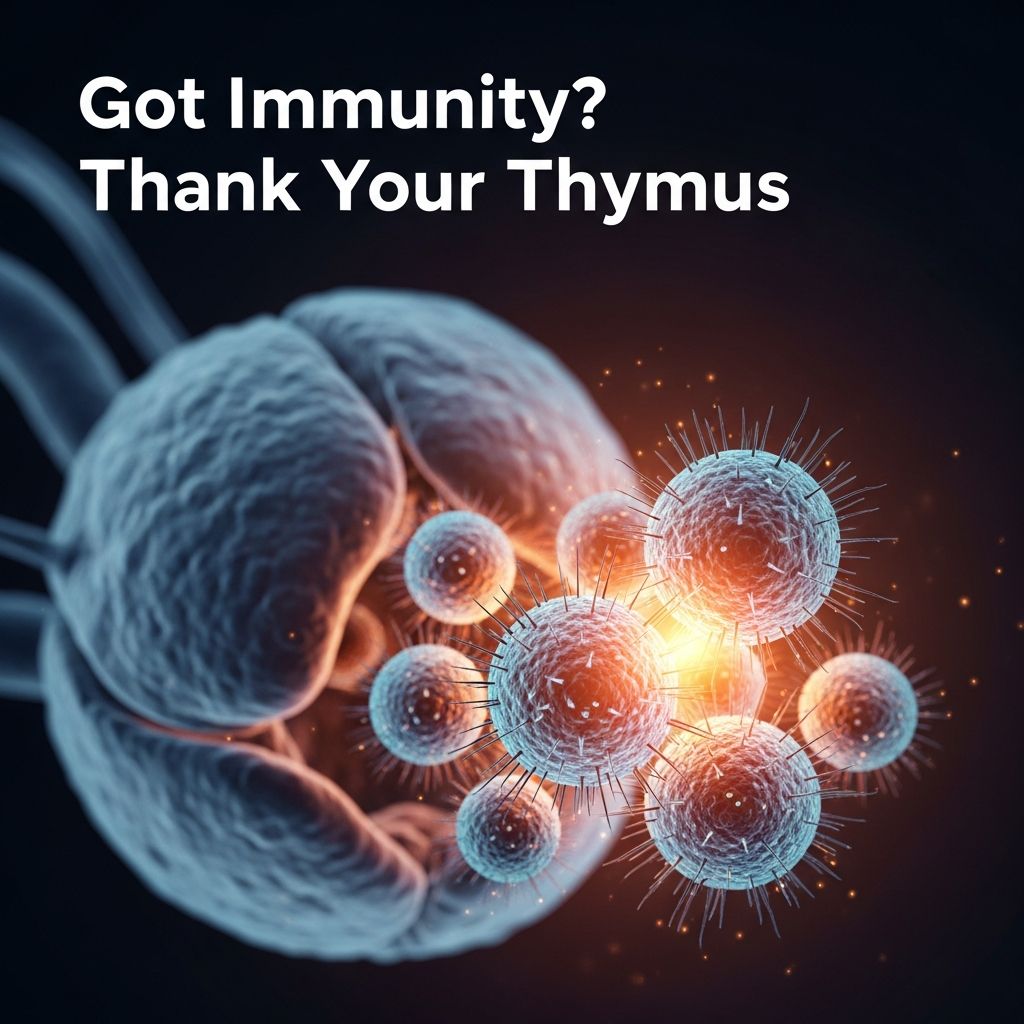
Got Immunity? Thank Your Thymus
Most people have never heard of their thymus gland, and fewer still understand its critical importance to lifelong health. Tucked behind the breastbone in the upper chest, this walnut-sized organ plays a far more significant role in maintaining immunity and preventing disease than scientists previously believed. For decades, medical professionals dismissed the thymus as virtually useless in adults, often removing it without hesitation during chest surgeries for easier access to the heart. However, groundbreaking research now reveals that this “forgotten” gland continues to be essential for protecting us from cancer, infectious disease, and autoimmune conditions throughout our lives.
Understanding the Thymus Gland
The thymus is a specialized lymphoid organ that serves as a training ground for immune cells called T lymphocytes, or T cells. These cells are among the most powerful weapons in your immune system’s arsenal, responsible for recognizing and eliminating pathogens, cancer cells, and other threats to your health. The name “T cell” actually derives from the thymus, where these crucial immune defenders mature and learn their essential functions.
The Fastest-Aging Organ
The thymus is unique in that it is the fastest-aging organ in the human body. During fetal development and early childhood, the thymus is highly active and reaches its maximum size around puberty. It works tirelessly during these formative years to produce the diverse population of T cells that will form the foundation of your immune system for life. After puberty, the thymus begins to shrink and is gradually replaced by fatty tissue, a process called involution. By adulthood, the thymus becomes significantly smaller than it was during childhood, which led researchers to mistakenly conclude that it no longer served any important function.
How the Thymus Educates Immune Cells
The thymus functions as a sophisticated training academy for developing T cells. When immature T cells, known as thymocytes, enter the thymus from the bone marrow, they undergo an extensive educational process to learn how to distinguish between the body’s own proteins (self) and foreign invaders (non-self). This critical distinction is essential for preventing autoimmune diseases while maintaining the ability to fight genuine threats.
Mimicking Body Tissues
Remarkably, the thymus accomplishes this training through an ingenious mechanism: specialized thymus cells mimic proteins from various tissues throughout the body. By exposing developing T cells to these self-protein previews, the thymus teaches new immune cells what the body’s own tissues look like. This process ensures that once T cells are released into circulation, they will recognize and tolerate the body’s own cells while remaining vigilant against actual pathogens and abnormal cells.
As Daniel Michelson, a researcher at Harvard Medical School, explained, “T cells get educated in the thymus, but the thymus is not a gut, it’s not a pancreas. There’s no reason why these T cells should be able to recognize these organs before they leave the thymus.” Yet through this remarkable mimicry system, the thymus enables T cells to develop the comprehensive knowledge they need to protect the entire body.
The Ongoing Role of the Adult Thymus
Although the thymus shrinks significantly after puberty, it does not stop functioning. Recent research demonstrates that the adult thymus continues to produce new T cells, maintaining immune diversity and competence throughout life. This discovery fundamentally challenges decades of medical assumptions about the organ’s irrelevance in adulthood.
Related Stories



Maintaining T Cell Diversity
One of the most important functions of the adult thymus is maintaining the diversity of the T cell population. Each T cell is highly specialized to recognize only one specific type of molecular target, such as a protein on the surface of a virus or bacterium. The body requires an enormous diversity of different T cell types to respond effectively to the countless pathogens it may encounter. Without continued T cell production by the thymus, this diversity would gradually diminish, leaving the immune system less capable of responding to new or unexpected threats.
This principle becomes particularly important when confronting novel pathogens that people never encountered during childhood when their thymuses were most active. For example, with no prior exposure to SARS-CoV-2, many adults have relied on their residual thymus function to generate new T cells capable of targeting this novel virus.
Surprising Findings From Landmark Research
A groundbreaking study published in the New England Journal of Medicine by researchers at Massachusetts General Hospital and Harvard Medical School has provided compelling evidence for the thymus’s critical importance in adult health. The researchers compared health outcomes between adults who had their thymus removed during cardiac surgery (thymectomy) and matched control patients who underwent similar chest surgery without thymus removal.
Mortality and Cancer Risk
The findings were striking and unexpected. Adults who underwent thymectomy had a nearly three-fold higher risk of dying over a five-year period compared to those who retained their thymus. Even more concerning, thymectomy patients showed a two-fold higher risk of developing cancer during this timeframe. These dramatic increases in mortality and cancer risk suggest that the thymus plays a central role in protecting us from malignant transformation throughout our lives.
Autoimmune Disease Risk
The research also identified a connection between thymus removal and autoimmune disease, though the relationship was more nuanced than for cancer. When the researchers excluded patients who had pre-existing infections, cancer, or autoimmune disease before surgery, they found that 12.3 percent of patients in the thymectomy group developed autoimmune disease compared with 7.9 percent in the control group, representing a 1.5-fold increased risk.
Changes in T Cell Production
In a subgroup of patients where blood markers were carefully measured, researchers made additional discoveries. Patients who had undergone thymectomy showed consistently lower production of new T cells, including both helper T cells (CD4+) and cytotoxic T cells (CD8+). These patients also demonstrated higher levels of pro-inflammatory molecules called cytokines in their blood. Pro-inflammatory cytokines are signaling proteins associated with both autoimmune disease and cancer development, suggesting one mechanism through which thymus loss increases disease risk.
Why the Thymus Protects Against Cancer
The researchers identified cancer prevention as the primary mechanism through which the thymus protects overall health. The thymus appears to maintain the diversity and quality of T cells necessary for recognizing and eliminating abnormal cells before they can develop into full-blown malignancies. As David Scadden, who led the Harvard research team, noted, “The primary reason why the thymus has an impact on overall health seems to be as a way to protect against the development of cancer.”
This protective function likely involves multiple types of T cells working in concert. Cytotoxic T cells can directly recognize and kill cancer cells, while helper T cells orchestrate the immune response against malignant growths. Without adequate thymus function to maintain diversity and numbers of these cells, the body becomes increasingly vulnerable to cancerous transformation.
Implications for Vaccines and Infectious Disease
The research also raises important questions about vaccine effectiveness in people without a thymus. Because vaccines work by training the immune system to recognize specific pathogens, they depend on the immune system’s ability to generate appropriate T cell responses. Patients without thymus function may have diminished capacity to respond to vaccines, potentially leaving them more vulnerable to infectious diseases even after vaccination. Although this relationship has not been directly studied, it represents an important area for future research.
Clinical Implications and Future Directions
The implications of this research extend beyond understanding basic immune biology. The findings suggest that routine thymectomy during cardiothoracic surgery should be reconsidered. If removing the thymus significantly increases the risk of death and cancer, surgeons may need to modify their surgical approaches to preserve this vital organ whenever possible, particularly in younger patients who have many decades of life ahead of them.
Measuring Thymus Function
Scadden and his colleagues plan to pursue additional research to understand how different levels of thymus activity affect health outcomes. “We can test the relative vigor of the thymus and define whether the level of thymus activity, rather than just whether it is present, is associated with better health,” Scadden noted. This future work could lead to methods for assessing individual thymus function and potentially identifying people at risk for thymus decline.
Supporting Your Thymus Gland
While we cannot regenerate a removed thymus, there are steps individuals can take to support optimal thymus function and overall immune health:
Maintain Regular Exercise: Physical activity supports immune function and may help preserve thymus activity. Regular exercise has been shown to benefit immune system maintenance across all ages.
Prioritize Sleep: During sleep, the immune system undergoes crucial repair and regeneration processes. Adequate sleep is essential for maintaining robust immune function and thymus health.
Manage Stress: Chronic stress can impair immune function. Practices such as meditation, yoga, or mindfulness can help reduce stress and support immune resilience.
Eat a Nutrient-Dense Diet: Vitamins and minerals are essential cofactors for immune cell development and function. A diet rich in fruits, vegetables, lean proteins, and healthy fats supports overall immune health.
Stay Current With Vaccinations: Vaccines remain one of the most effective ways to protect against serious infectious diseases, and maintaining current vaccination status is particularly important for supporting your immune system.
The Bottom Line
The thymus gland, long dismissed as a vestigial remnant of childhood, has emerged as a critical organ for lifelong health and longevity. Recent research demonstrates unequivocally that the adult thymus continues to produce immune cells essential for cancer prevention, infectious disease resistance, and maintaining the delicate balance of immune function. The dramatic increases in mortality, cancer risk, and autoimmune disease observed in people without a thymus underscore just how vital this organ remains throughout life.
As our understanding of the thymus’s role in health advances, medical practice may shift to better preserve this precious gland during surgical procedures. In the meantime, supporting overall health through exercise, sleep, stress management, and proper nutrition represents the best approach to maintaining robust thymus function and the comprehensive immune protection it provides.
Frequently Asked Questions (FAQs)
Q: What exactly is the thymus gland and where is it located?
A: The thymus is a walnut-sized lymphoid organ located behind the breastbone in the upper chest. It serves as a training ground where T cells, essential immune cells, mature and learn to distinguish between the body’s own proteins and foreign invaders.
Q: Why do doctors sometimes remove the thymus during surgery?
A: The thymus is located in front of the heart, and surgeons traditionally removed it during cardiac or other chest surgeries for easier access to the heart and major blood vessels. However, new research suggests this practice should be reconsidered given the thymus’s importance to long-term health.
Q: Does the thymus stop working in adulthood?
A: No. While the thymus shrinks and becomes less active after puberty, it continues to produce new T cells throughout life. This ongoing production is crucial for maintaining immune diversity and protecting against cancer and infectious disease.
Q: How much higher is the cancer risk in people without a thymus?
A: Research shows that adults who underwent thymectomy had approximately a two-fold higher risk of developing cancer compared to those who retained their thymus, with a nearly three-fold higher overall mortality risk.
Q: Can the thymus be regenerated if it’s been removed?
A: Currently, there is no clinical method to regenerate a removed thymus. This underscores the importance of preserving the thymus during surgical procedures whenever possible.
Q: How does the thymus help prevent cancer?
A: The thymus maintains a diverse population of T cells capable of recognizing and eliminating abnormal cells before they develop into cancer. Without adequate thymus function, the body becomes increasingly vulnerable to malignant transformation.
Q: Are vaccines less effective in people without a thymus?
A: This relationship has not been directly studied, but it’s theoretically possible since vaccines depend on the immune system’s ability to generate appropriate T cell responses, which requires thymus function.
References
- Health Consequences of Thymus Removal in Adults — Massachusetts General Hospital / National Institutes of Health. 2023-09-07. https://pubmed.ncbi.nlm.nih.gov/37530823/
- Turns out lowly thymus may be saving your life — Harvard Gazette / Harvard University. 2023-08-18. https://news.harvard.edu/gazette/story/2023/08/turns-out-lowly-thymus-may-be-saving-your-life/
- Boot Camp for the Immune System — Harvard Medical School. 2024-06-16. https://hms.harvard.edu/news/boot-camp-immune-system
- Doctors have long considered the thymus expendable. But could removing it be fatal? — Science Magazine. 2023-09-07. https://www.science.org/content/article/doctors-have-long-considered-thymus-expendable-could-removing-it-be-fatal
- Study Reveals Unexpected Importance of the Thymus in Adults — Massachusetts General Hospital. 2023-09-07. https://www.massgeneral.org/news/press-release/study-reveals-unexpected-importance-of-the-thymus-in-adults
Similar Articles








Read full bio of medha deb