Gout Medications Guide: Expert Treatments, Pipeline 2025
Comprehensive overview of proven and emerging treatments to manage gout symptoms and prevent flares effectively.
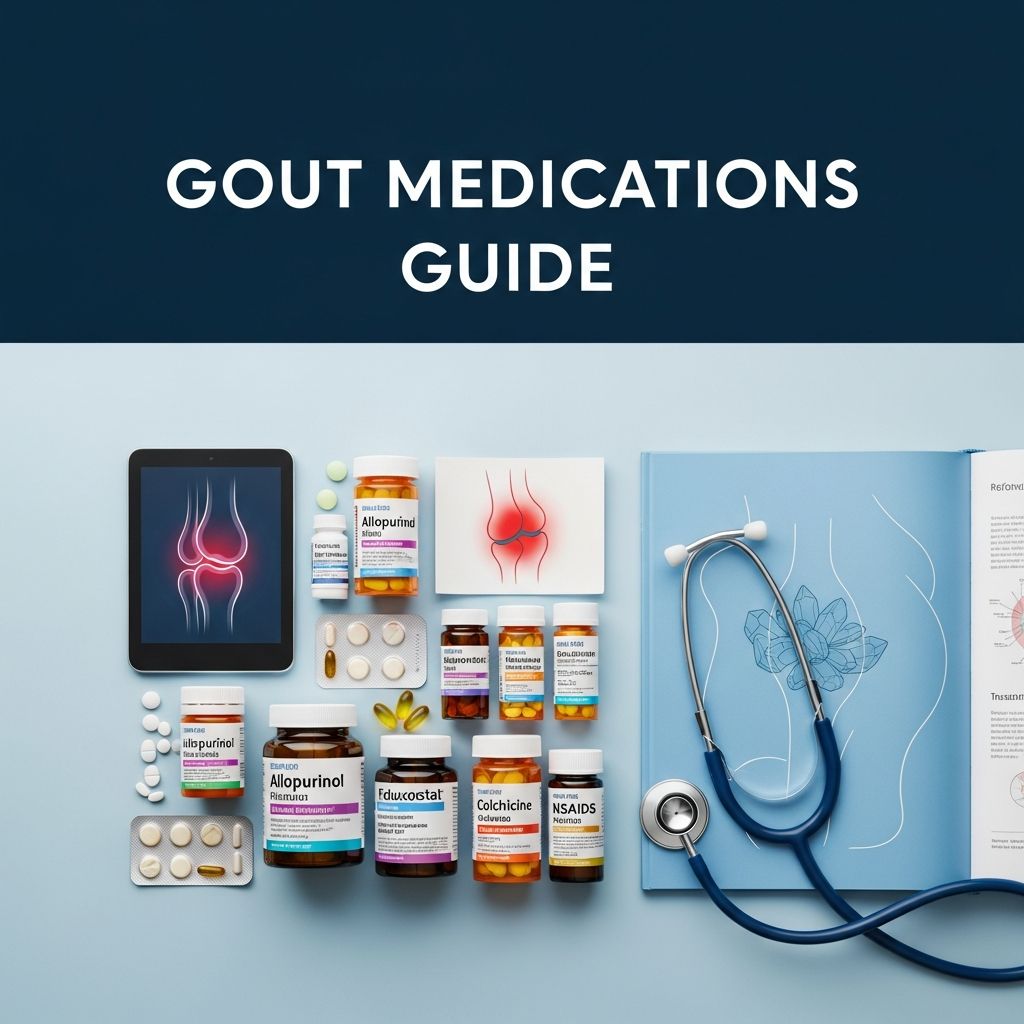
Gout is a form of inflammatory arthritis caused by elevated uric acid levels in the blood, leading to painful crystal deposits in joints. Effective medications target either acute flare relief or long-term uric acid reduction to prevent recurrence. This guide details standard treatments and promising pipeline drugs, drawing from clinical evidence for informed management.
Understanding Gout and the Need for Targeted Therapy
Hyperuricemia, or high serum uric acid (sUA), drives gout by forming monosodium urate crystals that trigger intense inflammation, often in the big toe but potentially affecting other joints. Treatments fall into two categories: those addressing immediate pain and swelling during flares, and those lowering sUA to dissolve crystals over time. Achieving sUA below 6 mg/dL is the key goal for chronic control.
Acute attacks require rapid intervention to curb inflammation, while prophylaxis prevents future episodes during urate-lowering initiation. Lifestyle factors like diet and hydration complement pharmacotherapy, but medications are cornerstone for most patients.
Medications for Acute Gout Flares
During a flare, the priority is swift pain reduction and inflammation control. Options include anti-inflammatories that act within hours.
- Non-Steroidal Anti-Inflammatory Drugs (NSAIDs): First-line for many, these block prostaglandin production to ease pain and swelling. Common choices like ibuprofen or indomethacin provide relief but require caution in kidney or stomach issues.
- Colchicine: This alkaloid disrupts microtubule formation in neutrophils, halting crystal-induced inflammation. For acute use, start with 1.2 mg followed by 0.6 mg one hour later; low doses minimize gastrointestinal upset like diarrhea.
- Corticosteroids: Oral prednisone or joint injections suppress immune responses quickly, ideal for those unable to tolerate NSAIDs or colchicine. Doses taper over days to avoid rebound flares.
Combining low-dose colchicine with NSAIDs enhances efficacy while reducing side effects. Intravenous colchicine is avoided due to toxicity risks.
Long-Term Urate-Lowering Therapies
Preventive strategies focus on reducing uric acid production or enhancing excretion to resolve tophi (crystal deposits) and avert flares.
Xanthine Oxidase Inhibitors: Reducing Production
These block the enzyme converting purines to uric acid, the most common first-line approach.
- Allopurinol: Widely used, it lowers sUA effectively in most but fails in 58% due to genetic factors like BCRP transporter variants impairing renal delivery. Start low (100 mg daily) and titrate; monitor for hypersensitivity.
- Febuxostat (Uloric): Alternative for allopurinol-intolerant patients, offering superior sUA control in some. Dosed once daily, it suits chronic gout but carries cardiovascular warnings.
Titration with flare prophylaxis (e.g., colchicine 0.6 mg daily) for 3-6 months is standard to prevent mobilization flares.
Uricosurics: Boosting Excretion
These inhibit URAT1 transporters in kidneys, increasing uric acid elimination via urine.
- Probenecid: Affordable option for under-excretors, requiring good hydration and kidney function. Combine with xanthine oxidase inhibitors if needed.
Lesinurad, a URAT1 inhibitor, was used selectively but withdrawn; future agents may revive this class.
Uricolytics: Breaking Down Uric Acid
For refractory gout, enzymes like pegloticase (Krystexxa) convert uric acid to allantoin for easy excretion.
Administered IV every two weeks (8 mg), it rapidly resolves tophi and normalizes sUA in treatment failures. Response rates reach 42-56% in trials, but antibodies develop in non-responders, causing infusion reactions. G6PD deficiency contraindicates use.
Related Stories



Emerging Therapies on the Horizon
Innovation targets unmet needs in refractory cases and novel mechanisms.
| Drug | Class | Status | Key Benefits |
|---|---|---|---|
| AR882 | Xanthine Oxidase Inhibitor | Phase 3 prep | Reduces sUA, resolves tophi over 6 months |
| Tigulixostat | Xanthine Oxidase Inhibitor | Phase 3 (EURELIA trials) | Significant sUA drop, good tolerability |
| SAP-001 | Xanthine Oxidase Inhibitor | Phase 1/2 complete | Well-tolerated up to 120 mg single dose |
| Pegadricase + ImmTOR | Uricolytic + Immunotolerance | Phase 3 (DISSOLVE) | 56% response, sustained sUA <6 mg/dL |
| Dapansutrile (OLT1177) | NLRP3 Inhibitor | Phase 2/3 recruiting | Reduces joint pain in flares |
These agents promise once-monthly dosing and better adherence, addressing chronic hyperuricemia holistically.
Choosing the Right Medication: Patient Factors
Treatment selection considers comorbidities, kidney function, and response.
- Renal Impairment: Favor febuxostat or pegloticase over probenecid.
- Cardiovascular Risk: Monitor febuxostat; allopurinol preferred if tolerated.
- Refractory Gout: Escalate to pegloticase or trials.
Regular sUA monitoring guides adjustments. Prophylaxis during initiation cuts flare risk by 85%.
Managing Side Effects and Safety
Common issues include rash (allopurinol), diarrhea (colchicine), and flares during urate lowering. Rare severe reactions like Stevens-Johnson syndrome warrant HLA-B*5801 screening in high-risk groups. Infusion reactions with pegloticase require premedication.
Drug interactions: Colchicine with CYP3A4 inhibitors risks toxicity; avoid in severe renal/hepatic disease.
Lifestyle Integration with Medications
Medications work best alongside weight loss, alcohol limits, purine-rich food avoidance, and hydration. Cherry juice or vitamin C may adjunctively lower sUA mildly.
Frequently Asked Questions (FAQs)
What is the first medication tried for gout?
Allopurinol is standard for long-term control after acute flare management with colchicine or NSAIDs.
How quickly does pegloticase work?
Many see sUA normalization and flare reduction within 3 months; full tophi resolution in 6.
Can gout be cured with medication?
Not cured, but controlled indefinitely with sustained sUA lowering and lifestyle measures.
Are there new gout drugs coming soon?
Yes, tigulixostat and SEL-212 show phase 3 promise for better efficacy and tolerability.
Is colchicine safe long-term?
Low-dose (0.6 mg daily) is safe for prophylaxis with monitoring for interactions.
Future Directions in Gout Management
Pipeline emphasizes selectivity, like NLRP3 inhibitors targeting inflammation roots, and combinations for personalized care. Trials like NCT05119686 for AR882 underscore progress toward <5% uncontrolled gout rates. Treat-to-target protocols, with sUA checks every 3-6 months, optimize outcomes.
References
- FDA Roundup: Pipeline Drugs for Gout — Rheumatology Advisor. 2023. https://www.rheumatologyadvisor.com/features/fda-roundup-emerging-drug-treatments-for-gout/
- Gout Treatment and Clinical Considerations: The Role of … — PMC (NCBI). 2023-10-20. https://pmc.ncbi.nlm.nih.gov/articles/PMC10627564/
- Study discovers why leading gout medication is ineffective for many — UCSF Pharmacy. 2015-07-01. https://pharmacy.ucsf.edu/news/2015/07/study-discovers-why-leading-gout-medication-ineffective-many
- Medicines for Gout — healthdirect.gov.au. 2024. https://www.healthdirect.gov.au/medicines-for-gout
- Gout Medications List: How To Manage Gout Symptoms — Summit Rheumatology. 2023. https://summitrheumatology.com/patient-lifestyle/gout-medications-list/
Similar Articles








Read full bio of Sneha Tete