Gout: Diagnosis, Treatment, And Prevention Guide
Gout is a crystal arthritis caused by hyperuricaemia, leading to painful joint inflammation from monosodium urate crystal deposition.
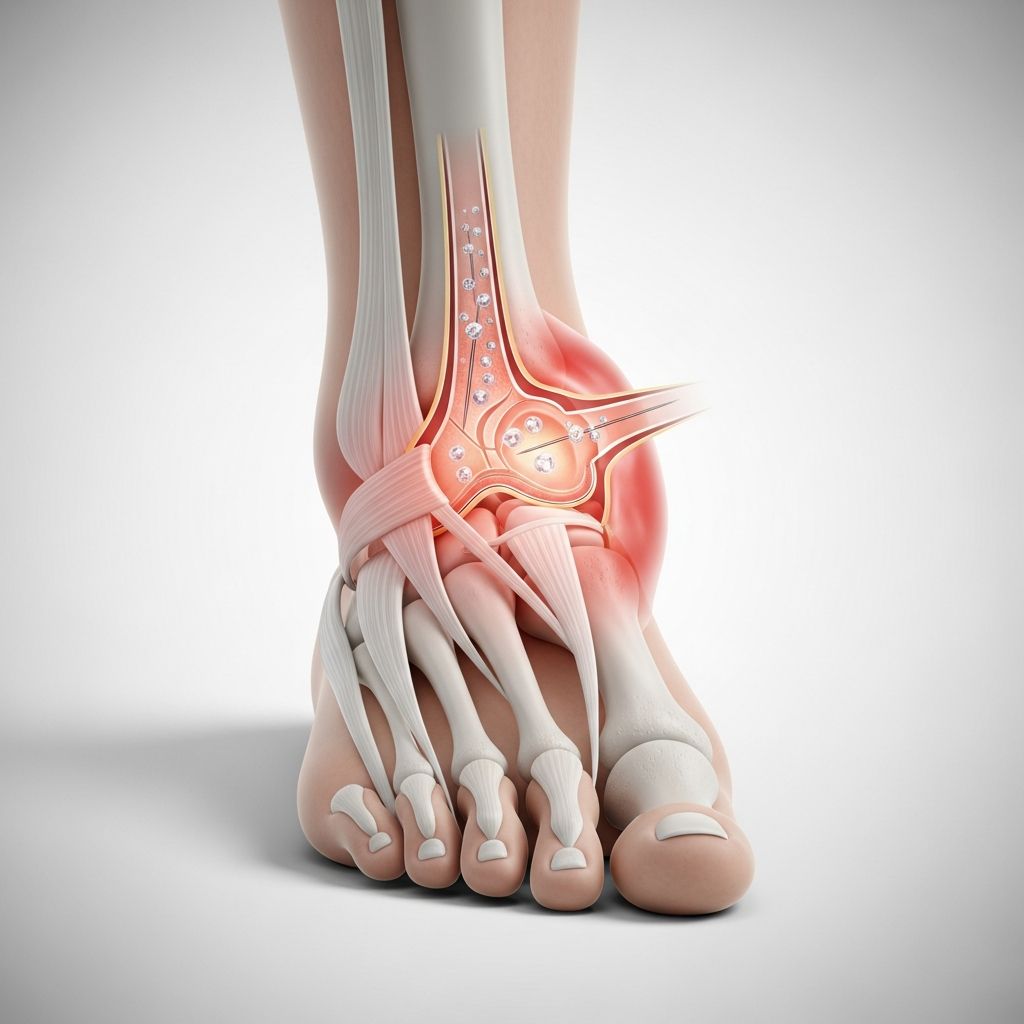
Gout is a form of
crystal arthritis
characterised by the deposition ofmonosodium urate (MSU) crystals
in joints and soft tissues, resulting fromhyperuricaemia
(elevated serum uric acid levels). It manifests as acute inflammatory arthritis, most commonly affecting the first metatarsophalangeal joint (podagra), and can progress to chronic tophaceous gout with subcutaneous tophi and joint destruction if untreated.Who gets gout? Gout affects approximately 4% of adults in the United States, predominantly men (ratio 3:1), with peak incidence between ages 30–60 years. Postmenopausal women are increasingly affected due to oestrogen decline reducing urate excretion. Risk factors include genetic predisposition, obesity, hypertension, diabetes, chronic kidney disease, high-purine diet, alcohol excess, and medications like diuretics.
What is gout?
Gout arises when serum urate exceeds solubility (typically >6.8 mg/dL or 405 µmol/L), leading to MSU crystal formation in joints, bursae, and skin. These crystals trigger intense neutrophilic inflammation via NLRP3 inflammasome activation, causing sudden-onset pain, swelling, and erythema.
Gout progresses through four stages: asymptomatic hyperuricaemia, acute gouty arthritis, intercritical gout, and chronic tophaceous gout. Early intervention prevents progression to destructive arthropathy and renal complications.
Clinical features
Acute gout
Classic presentation is abrupt, severe pain in the
first metatarsophalangeal joint (MTP1)
(podagra, 50–70% of first attacks), peaking within 6–12 hours. The joint is exquisitely tender, swollen, red, and warm—often too painful for touch, weight-bearing, or bedcovers. Systemic symptoms like fever and malaise may occur.- Duration: 7–14 days untreated; resolves faster with therapy.
- Polyarticular involvement in 10–20% of attacks, especially recurrent cases.
- Triggers: Trauma, surgery, alcohol, dehydration, infection, medications.
Intercritical gout
Asymptomatic periods between flares (average 1–2 years for second attack). Elevated urate persists, risking recurrence.
Chronic tophaceous gout
Develops after years of suboptimal control: subcutaneous
tophi
(chalky-white MSU deposits) form in olecranon bursae, helix/antihelix, fingers, Achilles tendon, and pressure sites. Tophi cause painless swelling but erode bone/cartilage, leading to joint deformity and chronic pain.Skin and extracutaneous features
Tophi appear as firm, yellowish nodules (1 mm–several cm), sometimes discharging white chalky material. Sites include ears (30–50%), elbows, hands, feet, knees, and olecranon. Rarely, tophi involve heart valves or spinal cord. Renal manifestations: uric acid nephrolithiasis (10–25%), chronic urate nephropathy.
Diagnosis
Gold standard:
Synovial fluid analysis
showing negatively birefringent needle-shaped MSU crystals under polarised light microscopy. Joint aspiration during acute attack yields cloudy fluid with >2000 WBC/µL (predominantly neutrophils).Supportive tests:
- Serum urate: >6 mg/dL supports diagnosis but normal in 30–40% during acute flares due to crystal precipitation.
- Imaging: X-rays show punched-out erosions with overhanging edges in chronic gout; ultrasound detects ‘double contour’ sign; dual-energy CT identifies urate deposits.
- 2015 ACR/EULAR criteria: Score ≥8 points (e.g., MTP1 involvement=2, tophi=4, crystals=2) confirms gout when aspiration unavailable.
| Diagnostic Feature | Points |
|---|---|
| MTP1 involvement | 2 |
| Maximal inflammation <24h | 0.5 |
| Redness over joint | 1 |
| MSU crystals on microscopy | 2 |
| Serum urate >6 mg/dL | 1–3 |
| Tophus | 4 |
| Joint aspiration negative for infection | 2 |
| X-ray erosions | 1 |
Related Stories



ACR/EULAR 2015 criteria (simplified).
Treatment
Acute attack management
Initiate within 24 hours:
- NSAIDs: Indomethacin 50 mg TDS, naproxen 500 mg BD (first-line if no contraindications).
- Colchicine: 1.2 mg stat, then 0.6 mg 1h later (avoid if >12h onset or CrCl <30).
- Corticosteroids: Prednisolone 30–40 mg/day taper over 7–10 days or intra-articular injection.
Continue urate-lowering therapy (ULT) through flare; add flare prophylaxis (colchicine 0.6 mg/day or low-dose NSAID) for 3–6 months when starting ULT.
Urate-lowering therapy (ULT)
Indications: ≥2 flares/year, tophi, chronic kidney disease stage ≥3, urolithiasis. Target serum urate <6 mg/dL (<5 mg/dL if tophi).
- Allopurinol: Start 100 mg/day, titrate by 100 mg every 4 weeks to urate target. HLA-B*5801 screen in high-risk groups (Han Chinese, Thai, Korean) to avoid SJS/TEN.
- Febuxostat: 40–80 mg/day if allopurinol intolerant.
- Probenecid: 500 mg BD for under-excretors (CrCl >50).
- Pegloticase: IV every 2 weeks for refractory tophaceous gout.
Non-pharmacological
- Weight loss (5–10% reduces flares 30–50%).
- Limit alcohol (beer/spirits), fructose, seafood, red meat.
- Hydration >2L/day; avoid purine-rich foods.
Complications
Untreated gout leads to polyarticular flares, tophaceous deposits eroding bone/joints, chronic pain, disability, and renal failure. Cardiovascular risk doubles (hypertension, MI, stroke). Tophi cause ulceration, infection, nerve compression.
Prevention
Treat hyperuricaemia before symptoms if CKD, urolithiasis, or urate >9 mg/dL. Lifestyle: Mediterranean diet, exercise, limit alcohol/purine. Annual monitoring for high-risk patients.
Differential diagnosis
- Septic arthritis (fever, chills; aspirate culture essential).
- Cellulitis, pseudogout (CPPD crystals positively birefringent).
- Reactive arthritis, rheumatoid arthritis, psoriatic arthritis.
Prognosis
Excellent with adherence: 90% achieve target urate within 6–12 months, flare-free state, tophi resolution. Poor control risks irreversible arthropathy.
Guidelines
Frequently asked questions
What triggers a gout attack?
Dehydration, alcohol, high-purine meals, trauma, surgery, medications (diuretics).
Can diet cure gout?
Diet helps but ULT is required for hyperuricaemia control.
Is gout curable?
Manageable to flare-free state with lifelong ULT.
Does gout affect women?
Less common premenopause; rises postmenopause.
When is surgery needed?
Large symptomatic tophi impairing function.
References
- Patient Guide to Gout — CreakyJoints. 2021-12-09. https://creakyjoints.org/wp-content/uploads/2021/12/Patient-Guide-to-Gout_2ndEd_120921.pdf
- Gout/Gouty Arthritis In Depth — Hospital for Special Surgery. 2023. https://www.hss.edu/health-library/conditions-and-treatments/gout-risk-factors-diagnosis-treatment
- Gout — Illinois Department of Public Health. 2024. https://dph.illinois.gov/topics-services/diseases-and-conditions/diseases-a-z-list/diseases/gout.html
- Gout Symptoms, Causes, & Risk Factors — NIAMS, NIH. 2023-05-01. https://www.niams.nih.gov/health-topics/gout
- Guide to Gout: Signs, Symptoms and Treatments — UHC Rheumatology. 2024. https://wvrheumatology.com/guide-to-gout-signs-symptoms-and-treatments/
- Gout Clinical Practice Guidelines — American College of Rheumatology. 2020-11-27. https://rheumatology.org/gout-guideline
- Gout: Symptoms, Treatment & Prevention — Cleveland Clinic. 2023-07-28. https://my.clevelandclinic.org/health/diseases/4755-gout
Similar Articles








Read full bio of medha deb