Graham Little Syndrome: Rare Scarring Alopecia Explained
Comprehensive guide to Graham Little syndrome, a rare inflammatory scarring hair loss condition affecting women.
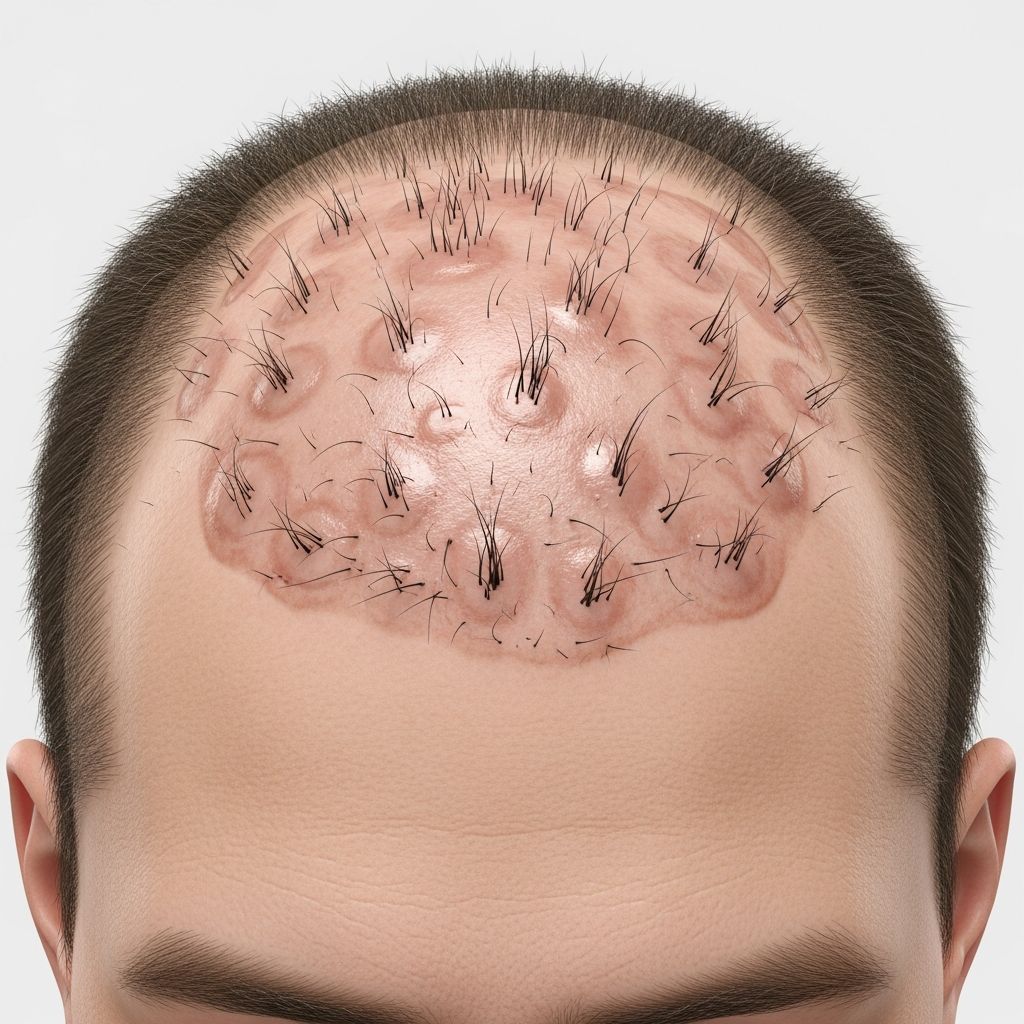
Graham Little Syndrome: A Rare Variant of Lichen Planopilaris
Graham Little syndrome, also known as Graham Little-Piccardi-Lassueur syndrome, is a rare variant of lichen planopilaris, an inflammatory form of scarring hair loss. This condition represents a complex presentation combining scarring and non-scarring alopecia with distinctive clinical features that require specialized dermatological expertise for accurate diagnosis and management.
Introduction and Overview
Graham Little syndrome is characterized by a unique combination of hair loss patterns and skin manifestations that distinguish it from other forms of alopecia. The condition primarily affects middle-aged and post-menopausal women, though cases in other demographics have been documented. The syndrome’s multifaceted presentation can make diagnosis challenging, requiring careful clinical evaluation and often histopathological confirmation.
Demographics and Epidemiology
Graham Little syndrome most commonly affects women in the age range of 30-70 years, with particular prevalence in the middle-aged post-menopausal group. While the condition predominantly presents in women, rare cases have been reported in male patients, making it important for clinicians to maintain awareness of this possibility in their differential diagnosis.
The exact prevalence of Graham Little syndrome remains unknown due to its rarity, but it is recognized as an uncommon variant of lichen planopilaris. This limited frequency contributes to diagnostic delays and emphasizes the importance of clinical awareness among dermatologists.
Etiology and Cause
The underlying cause of Graham Little syndrome remains unknown; however, it is suspected to represent an immune-mediated disorder. Current research suggests that the condition may involve T-cell-mediated autoimmunity, with studies demonstrating decreased expression of peroxisome proliferator-activated receptor and upregulation of interferon and Janus kinase (JAK) signaling in affected tissues.
There have been rare familial cases and associations reported in the medical literature, though the clinical significance of these findings remains unclear. The lack of clear hereditary patterns suggests that Graham Little syndrome likely results from a complex interaction between genetic susceptibility and environmental or immunological triggers.
Clinical Features and Symptoms
Graham Little syndrome is characterized by a distinctive triad of clinical features that define the condition:
- Scalp hair loss (cicatricial alopecia): Scarring alopecia on the scalp, which is usually the first sign and may present as patches of permanent hair loss. Initially, affected areas may appear rough and red, but eventually smooth and white patches develop as the hair follicles are destroyed and replaced by scar tissue.
- Axillary and pubic hair loss (non-cicatricial alopecia): Non-scarring hair loss in the armpits and groin regions, which can range from patchy hair thinning to complete hair loss in these areas. Unlike the scalp involvement, these areas do not develop scarring.
- Follicular keratotic papules: Small, rough, keratotic bumps that develop on hair follicles, typically appearing on the trunk and limbs. These spikes can develop rapidly and may occasionally affect the eyebrows and sides of the face. Some clinicians have described this manifestation as resembling keratosis pilaris or lichen spinulosa.
Related Stories



Additional symptoms that may accompany these primary features include:
- Itching or burning sensations in affected areas, which can sometimes be severe
- Redness or inflammation around hair follicles
- Thickening or changes in skin texture in affected regions
- Potential mucosal or cutaneous lichen planus involvement, which occurs in more than 50% of patients during their lifetime
The severity and progression of symptoms vary significantly among individuals, making each case unique and requiring personalized assessment and management approaches.
Diagnostic Approach
Clinical Diagnosis
Graham Little syndrome is initially suspected clinically when all three characteristic features are present together. The combination of scalp scarring alopecia, axillary and pubic hair loss, and follicular keratotic papules on the body creates a distinctive clinical presentation that alerts experienced clinicians to the diagnosis.
During clinical examination, dermatologists may observe that hairs can be easily pulled from the edge of active patches of hair loss and are typically in the anagen (growth) phase. This finding, combined with the characteristic distribution pattern of hair loss, provides valuable diagnostic clues.
Dermoscopic Findings
Dermoscopy of lichen planopilaris, including Graham Little syndrome variants, reveals several characteristic features:
- Perifollicular scales, which correspond to infundibular hyperplasia
- Loss of eccrine openings in scalp lesions
- Scattered brown-black interfollicular pigmentation
- Dark perihilar halo surrounding follicles
- Blue-gray target pattern in some cases
Histopathological Confirmation
A diagnosis of Graham Little syndrome is usually confirmed through scalp biopsy. Histopathological examination reveals characteristic findings that confirm the diagnosis:
- Initially, affected hair follicles are filled with keratin (scale)
- Perifollicular patchy mild-to-moderate lymphocytic infiltrate with fibrosis develops
- As the condition progresses, follicles are destroyed and the epidermis becomes thin
- Fibrotic longitudinal tracks and perifollicular lamellar fibrosis appear in older lesions
- Interface dermatitis and lichenoid lymphocytic infiltrate of the hair follicle isthmus and infundibulum are observed
- The hair bulb is typically spared in early stages
The pressure from inflammatory infiltrate from the sides of the follicle has been proposed to decrease blood supply to the follicle, ultimately leading to its destruction.
Treatment Approach and Management
Treatment Principles
Treatment of Graham Little syndrome is challenging, as no consistently useful therapy has been universally identified. However, the primary therapeutic goal is clear: to stop disease progression and prevent further hair loss. It is important to note that scarring hair loss does not recover, making early intervention crucial.
Since the condition is rare and responses to treatment vary significantly among patients, a personalized, multi-modal approach is often necessary. Early initiation of treatment is essential to prevent progression of hair loss.
Pharmacological Treatment Options
Several treatment modalities have been utilized in managing Graham Little syndrome:
- Corticosteroids: Both topical and systemic corticosteroids can be used to reduce inflammation and slow disease progression. Intralesional corticosteroid injections may also provide localized benefit.
- Hydroxychloroquine: An antimalarial drug that has demonstrated efficacy in treating lichen planopilaris. Studies have shown 69% reduction in severity at 6 months and 83% reduction at 12 months in treated patients.
- Calcineurin inhibitors: Topical calcineurin inhibitors offer an alternative immunosuppressive approach, particularly useful in patients who cannot tolerate or have contraindications to corticosteroids.
- Immunosuppressive medications: Cyclosporine has been utilized to modulate immune response and slow disease progression.
- Retinoids: Oral or topical retinoids, including topical tretinoin 0.05%, can be employed, particularly for treating follicular keratotic papules.
- JAK inhibitors: Tofacitinib and other JAK inhibitors represent newer treatment options based on understanding of immune pathways involved in lichen planopilaris.
- Pioglitazone: This medication has been explored as a potential treatment option in managing the condition.
Phototherapy
Phototherapy represents another treatment option that may complement pharmacological approaches in managing Graham Little syndrome, though its efficacy in this specific condition requires further evaluation.
Follow-up and Monitoring
Regular follow-ups with a dermatologist are essential to monitor disease progression and adjust treatment as needed. Since individual responses to treatment vary considerably, ongoing assessment allows for timely modifications to the therapeutic regimen.
Frequently Asked Questions
Q: Is Graham Little syndrome hereditary?
A: While rare familial cases have been reported, Graham Little syndrome does not show a clear hereditary pattern. The condition is believed to involve genetic susceptibility combined with immunological factors rather than simple inheritance patterns.
Q: Can Graham Little syndrome affect men?
A: Although Graham Little syndrome predominantly affects post-menopausal women, rare cases in male patients have been documented in medical literature. Clinicians should maintain awareness of this possibility when evaluating patients with the characteristic clinical triad.
Q: Is hair loss from Graham Little syndrome reversible?
A: No, the scarring alopecia on the scalp is permanent and does not recover. The goal of treatment is to halt disease progression and prevent further hair loss. Non-scarring hair loss in the axillary and pubic regions may potentially recover if inflammation is controlled early.
Q: How is Graham Little syndrome diagnosed?
A: Diagnosis is based on clinical presentation of the characteristic triad and is confirmed through scalp biopsy showing characteristic histopathological features of lichen planopilaris. Dermoscopic findings provide additional diagnostic support.
Q: What is the most effective treatment for Graham Little syndrome?
A: Since no single universally effective treatment exists, a personalized multi-modal approach is typically employed. Hydroxychloroquine has shown promising results with significant symptom reduction in many patients, often combined with topical or systemic corticosteroids.
Q: Can Graham Little syndrome be prevented?
A: Currently, there is no known prevention method for Graham Little syndrome since its exact cause remains unclear. Early recognition and treatment initiation offer the best opportunity to prevent disease progression.
Q: Is Graham Little syndrome associated with other skin conditions?
A: Yes, more than 50% of patients with Graham Little syndrome experience episodes of mucosal or cutaneous lichen planus during their lifetime. Some patients may present with concomitant hypertrophic lichen planus or lichen planus pigmentosus.
Summary
Graham Little syndrome represents a distinctive and rare variant of lichen planopilaris characterized by the combination of scarring scalp alopecia, non-scarring axillary and pubic hair loss, and follicular keratotic papules on the body. The condition predominantly affects middle-aged and post-menopausal women and is believed to involve immune-mediated mechanisms, though its exact etiology remains unclear. Accurate diagnosis requires recognition of the characteristic clinical triad, often confirmed by scalp biopsy and histopathological examination. While treatment remains challenging due to variable individual responses, a personalized multi-modal approach utilizing corticosteroids, hydroxychloroquine, calcineurin inhibitors, and other immunosuppressive agents offers the best opportunity to halt disease progression. Early intervention and regular dermatological follow-up are essential, as scarring hair loss is permanent and irreversible. Ongoing research into immune pathways and emerging targeted therapies may provide improved treatment options for patients with this rare condition.
References
- Graham Little Syndrome – Scarring Alopecia Foundation — Scarring Alopecia Foundation. Accessed January 2026. https://scarringalopecia.org/graham-little-syndrome
- Graham Little Syndrome — DermNet, authored by Dr Delwyn Dyall-Smith FACD. 2011. https://dermnetnz.org/topics/graham-little-syndrome
- A Curious Case of Scarring and Non-Scarring Alopecia in the Same Patient: Graham Little-Piccardi-Lassueur Syndrome — Cosmoderma. Accessed January 2026. https://cosmoderma.org/a-curious-case-of-scarring-and-non-scarring-alopecia-in-the-same-patient-graham-little-piccardi-lassueur-syndrome/
- Graham-Little Piccardi Lassueur Syndrome and Review of the Literature — PubMed Central, National Institutes of Health. 2021. https://pubmed.ncbi.nlm.nih.gov/34504697/
- Graham-Little-Piccardi-Lasseur Syndrome — StatPearls, National Center for Biotechnology Information. 2024. https://www.ncbi.nlm.nih.gov/books/NBK537330/
- Graham-Little-Piccardi-Lassueur Syndrome Treatment Outcomes — International Journal of Dermatology, Wiley Online Library. 2024. https://onlinelibrary.wiley.com/doi/full/10.1111/ijd.70039
Similar Articles








Read full bio of medha deb