Gram-Negative Folliculitis: Causes, Diagnosis, and Treatment
Understanding gram-negative folliculitis: bacterial infection mimicking acne with specialized treatment approaches.
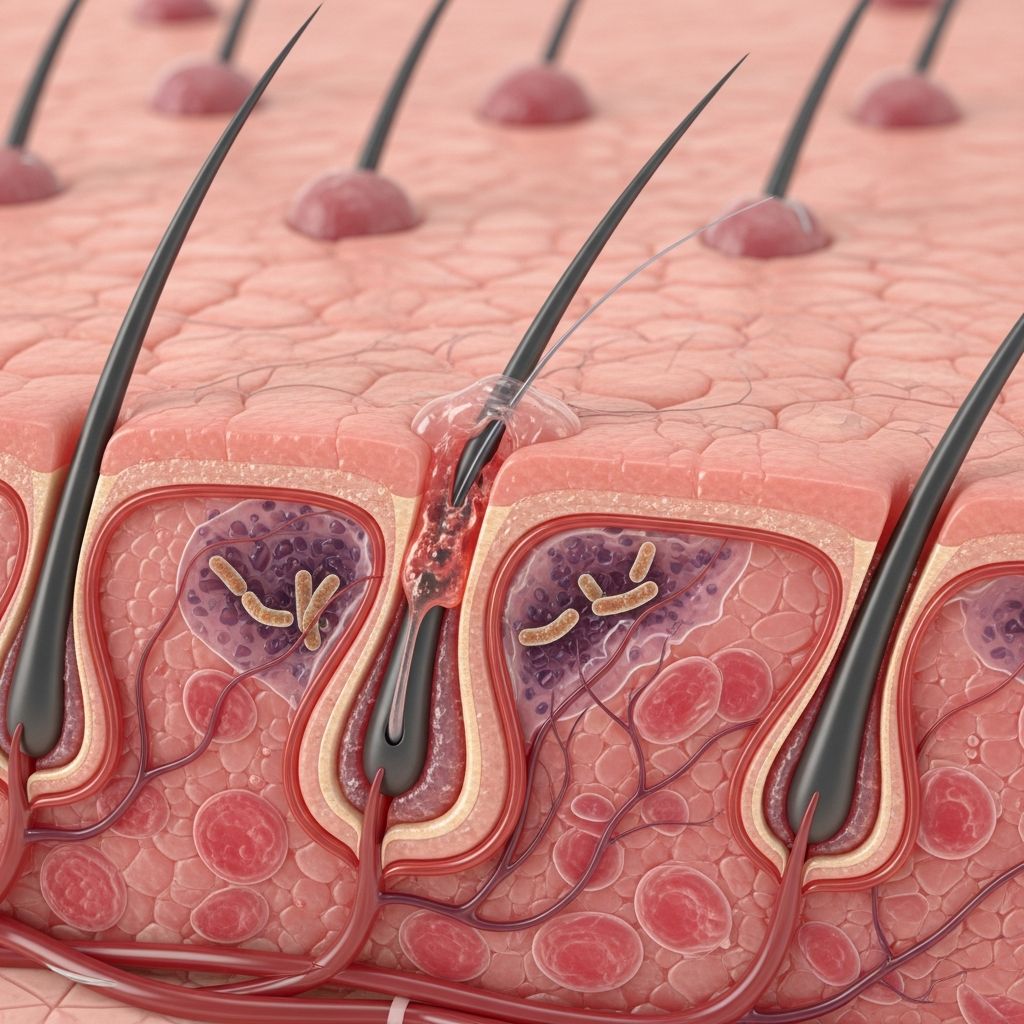
What is Gram-Negative Folliculitis?
Gram-negative folliculitis is an acne-like disorder caused by a bacterial infection of hair follicles. The condition develops when gram-negative bacteria colonize the skin, leading to the formation of pustules and inflammatory lesions that closely resemble acne vulgaris. This similarity often results in misdiagnosis, as the condition typically occurs in patients who already have existing acne, making it difficult to distinguish between a worsening of acne and a new bacterial infection. The term “gram-negative” refers to the staining pattern of bacteria observed under laboratory microscopy, where these organisms do not retain the Gram stain that other bacteria absorb.
Causative Organisms
Gram-negative folliculitis results from infection with various gram-negative bacterial species, including:
- Escherichia coli
- Pseudomonas aeruginosa
- Serratia marcescens
- Klebsiella species
- Proteus species
- Citrobacter species
- Acinetobacter baumannii (in immunocompromised patients)
Understanding which organism is responsible for infection is clinically important, as different bacteria have varying antibiotic sensitivities and clinical presentations. The causative organism must be identified through bacterial culture to guide appropriate treatment selection.
Etiology and Risk Factors
Under normal circumstances, gram-positive organisms such as coagulase-negative Staphylococcus species and aerobic diptheroids predominate in the nasal passages and skin flora, while gram-negative bacteria comprise less than 1% of normal skin flora. However, certain conditions can disrupt this balance and allow gram-negative bacteria to proliferate.
Long-Term Antibiotic Use
The most common etiology of gram-negative folliculitis is prolonged systemic antibiotic therapy, particularly tetracycline antibiotics used to treat acne vulgaris. When patients receive long-term antibiotics for 3-6 months or longer, the nasal flora and facial skin flora undergo significant alteration. The antibiotics eliminate gram-positive bacteria that normally dominate, creating an ecological niche that gram-negative bacteria exploit. These organisms establish a carrier state in the nasal passages and can subsequently disseminate to other facial areas, resulting in gram-negative folliculitis development. Topical antibiotics, including clindamycin phosphate, can similarly alter skin flora and contribute to the condition’s development.
Hot Tub and Spa Exposure
Gram-negative folliculitis can develop following exposure to contaminated swimming pools, hot tubs, or spa facilities. This variant is most commonly caused by Pseudomonas aeruginosa, a gram-negative bacterium frequently found in warm water environments. Hot tub folliculitis typically appears within 24-48 hours of exposure and generally resolves spontaneously within a few days without treatment if the individual avoids further water exposure.
Immunocompromised States
Patients with compromised immune systems, including those with HIV/AIDS, are susceptible to gram-negative folliculitis caused by various organisms, including Acinetobacter baumannii. In these populations, the condition may be more persistent and require systemic antifungal or antibiotic intervention.
Clinical Presentation and Types
Gram-negative folliculitis presents as pustular lesions that mimic acne vulgaris, making clinical diagnosis challenging. The condition typically affects the facial region, with lesions concentrated around the upper lip, chin, cheeks, and jawline areas. Lesions can occasionally extend to the neck but predominantly remain on facial skin.
Type 1 Folliculitis (Superficial Pustules)
Approximately 80% of gram-negative folliculitis cases present as Type 1 lesions, characterized by superficial pustules with relatively few papules and comedones. These lesions appear as small, inflamed bumps surrounding hair follicles. Type 1 infections are typically caused by Klebsiella, Escherichia, and Serratia species, which remain superficial within the follicular structure. The pustules lack the characteristic comedones (blackheads and whiteheads) that typically accompany acne vulgaris, providing an important diagnostic clue that distinguishes gram-negative folliculitis from standard acne.
Related Stories



Type 2 Folliculitis (Deep Nodular and Cystic Lesions)
Approximately 20% of patients present with Type 2 lesions, which appear as deep, nodular, and cyst-like eruptions. These more severe lesions are primarily caused by Proteus species, which possess invasive properties allowing them to penetrate deeply into the dermis and subcutaneous tissues, creating pus-filled abscesses and cysts. Type 2 presentations may be more painful and difficult to treat than superficial Type 1 lesions.
Diagnostic Methods
Accurate diagnosis is essential for distinguishing gram-negative folliculitis from acne vulgaris and other follicular disorders, as this distinction determines treatment approach.
Clinical Suspicion
Clinical suspicion should be raised in patients demonstrating poor response to conventional acne antibiotics, particularly those receiving tetracycline therapy for 3-6 months without clinical improvement. Additional warning signs include sudden flares of pustular or nodulocystic acne during antibiotic treatment and the appearance of new pustular lesions in patients with previously stable acne.
Gram Staining and Microscopy
The diagnosis of gram-negative folliculitis is confirmed through Gram staining and microscopy of pustular material. Gram staining of specimens reveals gram-negative bacteria that appear red or pink under microscopic examination, contrasting with gram-positive bacteria that appear blue or purple. Cytology and direct microscopy examination of pustule contents provide rapid diagnostic confirmation.
Bacterial Culture and Sensitivity Testing
Bacterial culture is the gold standard for identifying the specific causative organism and determining its antibiotic susceptibility profile. Culture results guide targeted antibiotic selection, as different gram-negative species demonstrate varying resistance patterns. Culture identification is particularly important because antibiotic sensitivity differs significantly among the various gram-negative bacterial species responsible for folliculitis. However, gram-negative folliculitis is probably underreported in clinical practice because routine cultures are rarely performed, and many cases may be misdiagnosed as treatment-resistant acne.
Systemic Implications
Unlike some skin infections that can lead to serious systemic complications, gram-negative folliculitis is confined to the skin and does not have systemic implications or life-threatening complications in immunocompetent patients. The infection remains localized to the epidermis and superficial dermis without progression to bacteremia or disseminated disease. However, in immunocompromised individuals with HIV/AIDS, more aggressive systemic manifestations may occur requiring prompt treatment.
Treatment Options
Treatment approaches for gram-negative folliculitis vary based on severity, underlying cause, and patient factors. Both topical and systemic therapies exist, though their effectiveness differs substantially.
Topical Therapy
Topical treatments are generally considered ineffective for gram-negative folliculitis and should not be relied upon as primary therapy. Topical agents that have proven ineffective include:
- Benzoyl peroxide
- Clindamycin phosphate
- Gentamicin
The limited efficacy of topical agents is attributed to their inability to penetrate follicular structures sufficiently and eliminate bacteria establishing biofilms within hair follicles. Patients should be counseled that topical therapy alone will not effectively resolve gram-negative folliculitis.
Systemic Antibiotic Therapy
Prior to the availability of isotretinoin, systemic antibiotics were the standard treatment approach. Antibiotics can suppress the eruption but are generally considered suppressive rather than curative. Frequently used antibiotics include:
- Ampicillin 250-500mg every 6 hours (considered suppressive)
- Trimethoprim-sulfamethoxazole 160/800mg every 12 hours (considered suppressive)
- Fluoroquinolones (for Pseudomonas coverage in hot tub folliculitis)
- Ciprofloxacin (first-line for pseudomonas-related cases)
A significant limitation of antibiotic therapy is the high frequency of relapse and recurrence after discontinuation. Patients often experience flare-ups when antibiotics are stopped, requiring extended or repeated courses of therapy. For hot tub-related folliculitis caused by Pseudomonas aeruginosa, antibiotics that specifically cover this organism provide the most appropriate coverage.
Isotretinoin Therapy (Treatment of Choice)
The treatment of choice for gram-negative folliculitis is isotretinoin at a dose of 0.5-1.0mg/kg for 20 weeks. Isotretinoin offers the most effective and durable treatment, providing long-term resolution of both gram-negative folliculitis and any underlying acne vulgaris. Unlike antibiotics, isotretinoin addresses the pathophysiology of the condition rather than simply suppressing symptoms temporarily.
Although isotretinoin carries potential adverse effects that require careful monitoring, its superior efficacy makes it the preferred treatment for patients with confirmed gram-negative folliculitis. Patients receiving isotretinoin require regular laboratory monitoring including liver function tests, lipid panels, and in female patients of childbearing potential, pregnancy testing due to the drug’s severe teratogenic effects.
Treatment for Special Populations
Patients with HIV/AIDS and gram-negative folliculitis caused by susceptible organisms have responded to intravenous ticarcillin-clavulanic acid, a broad-spectrum beta-lactam antibiotic combination. This approach may be necessary for immunocompromised patients who do not respond to oral antibiotics.
Hot Tub Folliculitis Management
Gram-negative folliculitis associated with hot tub use will generally resolve spontaneously within less than 2 weeks if the individual avoids further exposure to the contaminated water source. However, symptomatic patients can be treated with antibiotics that provide Pseudomonas coverage, including fluoroquinolones, to hasten resolution. Prevention through proper hot tub and spa maintenance is the most effective long-term strategy.
Patient Management Considerations
Comprehensive patient management extends beyond medication selection to include patient education and long-term follow-up.
Patients should be counseled that:
- Topical therapy is generally ineffective and should not be expected to resolve the condition
- Systemic antibiotics can suppress eruptions but frequently result in relapse when discontinued
- Isotretinoin provides the most durable long-term cure for both gram-negative folliculitis and underlying acne
- Avoidance of long-term prophylactic antibiotics for acne can prevent the flora shift that precipitates gram-negative folliculitis
- Hot tub and spa avoidance prevents recurrence of water-associated folliculitis
Since most patients with gram-negative folliculitis have underlying acne vulgaris, isotretinoin therapy offers the added benefit of providing definitive treatment for both conditions simultaneously, potentially providing years of remission from both disorders.
Unusual Clinical Scenarios
Gram-negative folliculitis can be difficult to diagnose and is likely underreported in clinical practice. Healthcare providers should maintain a high index of suspicion for this condition when encountering patients who:
- Have been on tetracycline antibiotics for 3-6 months with no clinical improvement despite appropriate acne therapy
- Experience sudden flares of pustular or nodulocystic acne during ongoing antibiotic treatment
- Present with pustular eruptions that do not respond to conventional anti-acne medications
- Develop new pustular lesions in atypical distributions (upper lip, chin, cheeks)
- Have recent hot tub or spa exposure preceding folliculitis onset
Frequently Asked Questions
Q: Can gram-negative folliculitis be distinguished from acne by appearance alone?
A: Clinical appearance alone is insufficient for definitive diagnosis. While gram-negative folliculitis typically lacks the comedones characteristic of acne vulgaris, laboratory confirmation through Gram staining and bacterial culture is necessary for accurate diagnosis and appropriate treatment selection.
Q: Is gram-negative folliculitis contagious?
A: Gram-negative folliculitis is not contagious between individuals. The condition results from alterations in the individual’s own skin flora or exposure to environmental bacteria, not from transmission of organisms from infected persons.
Q: How long does isotretinoin treatment typically last?
A: The standard isotretinoin treatment course for gram-negative folliculitis is 20 weeks at a dose of 0.5-1.0mg/kg daily. This duration is generally sufficient to achieve long-term remission of both gram-negative folliculitis and underlying acne vulgaris.
Q: What should patients do if they suspect hot tub-related folliculitis?
A: The most important initial step is to avoid further exposure to the suspected contaminated water source. Most cases resolve spontaneously within 2 weeks with avoidance alone. If symptoms persist or are bothersome, fluoroquinolone antibiotics covering Pseudomonas aeruginosa can accelerate resolution.
Q: Can gram-negative folliculitis recur after successful treatment?
A: Recurrence risk depends on treatment type. Antibiotic therapy frequently results in relapse after discontinuation. Isotretinoin provides more durable long-term remission. Recurrence following isotretinoin is possible if patients resume long-term antibiotic use for acne or re-expose themselves to contaminated water sources.
Q: Why are some antibiotics ineffective for gram-negative folliculitis?
A: Antibiotics that are highly effective against gram-positive bacteria (such as standard acne treatments) may have poor activity against gram-negative organisms. Additionally, bacteria within follicles may form biofilms that resist antibiotic penetration. Proper culture and sensitivity testing identify which antibiotics are effective against the specific infecting organism.
References
- Gram-Negative Folliculitis — Dermatology Advisor. 2024. https://www.dermatologyadvisor.com/home/decision-support-in-medicine/dermatology/folliculitis-gram-negative/
- Gram-Negative Folliculitis — DermNet. 2024. https://dermnetnz.org/topics/gram-negative-folliculitis
- Folliculitis — StatPearls, National Center for Biotechnology Information (NCBI). 2024. https://www.ncbi.nlm.nih.gov/books/NBK547754/
- Folliculitis: Dermatologic Disorders — Merck Manuals Professional Edition. 2024. https://www.merckmanuals.com/professional/dermatologic-disorders/bacterial-skin-infections/folliculitis
- Folliculitis — Symptoms & Causes — Mayo Clinic. 2024. https://www.mayoclinic.org/diseases-conditions/folliculitis/symptoms-causes/syc-20361634
- Folliculitis — Causes and Treatment — Healthdirect Australia. 2024. https://www.healthdirect.gov.au/folliculitis
Similar Articles








Read full bio of medha deb