Gram Stain Test: Purpose, Procedure & Results
Understanding Gram stain tests: A quick bacterial infection diagnostic tool.
Gram Stain: What It Is, Purpose, Procedure & Results
A Gram stain is a laboratory test that checks for bacteria at the site of a suspected infection or in certain bodily fluids. This common diagnostic test helps healthcare providers quickly determine if a bacterial infection is present and identify the general characteristics of the bacteria involved. Medical laboratory scientists process Gram stain samples to provide relatively quick results, enabling healthcare providers to understand if bacteria are present and the general type of bacteria causing the infection. This preliminary information helps guide further identification tests and appropriate treatment options.
What Is a Gram Stain?
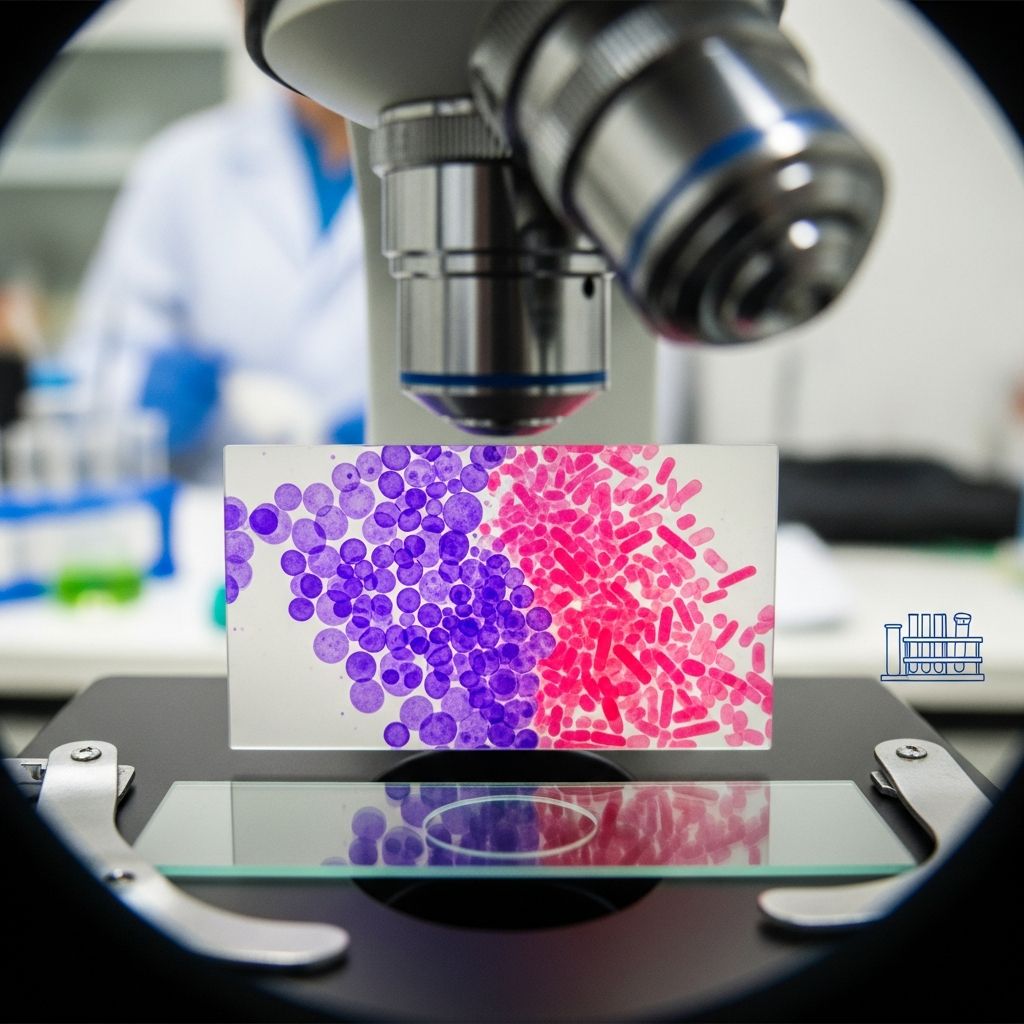
A Gram stain is a fundamental laboratory technique used to classify bacteria into two main groups: gram-positive and gram-negative. This differential staining method enhances the visibility of bacterial structures under a microscope, which is essential for accurately identifying microorganisms, especially in clinical settings. The test involves applying a series of stains to a sample on glass microscope slides and examining it under a microscope to determine if bacteria are present. If bacteria are present, laboratory scientists can determine whether they are gram-negative or gram-positive based on their color appearance under the stain—bacteria appear pink to red if gram-negative or purple to blue if gram-positive.
Healthcare providers often request bacteria culture tests alongside Gram stain tests to provide comprehensive diagnostic information. In a bacteria culture test, a medical laboratory scientist takes cells from the same sample used for the Gram stain and places it in a special environment to encourage cell growth. Results from culture tests are often available within a few days, though some types of bacteria grow slowly, which may take several days or longer to show results.
What Is a Gram Stain Used For?
A Gram stain test is primarily used to find out if you have a bacterial infection. If bacteria are present, the test shows whether the bacteria in your infection is gram-positive or gram-negative, which helps your healthcare provider decide what other tests are needed to identify which bacteria are causing your infection and how to treat it effectively.
The test is most commonly used in the following clinical situations:
– Diagnosing respiratory tract infections- Identifying urinary tract infections- Detecting wound and skin infections- Analyzing cerebrospinal fluid for meningitis or encephalitis- Examining blood samples for bacteremia- Investigating gastrointestinal infections- Testing ocular (eye) samples for infection
A Gram stain may also be used to help diagnose fungal infections, though additional tests are typically needed for specific fungal identification. The test provides valuable preliminary information that can guide initial treatment decisions while waiting for more detailed culture and sensitivity results.
How to Prepare for a Gram Stain Test
You don’t need to do anything special to prepare for a Gram stain test. No fasting is required, and no special dietary restrictions apply. The test is non-invasive in most cases, though the method of sample collection depends on where the suspected infection is located.
If your healthcare provider is collecting a sample from a specific site, they will provide instructions based on the collection method. For urine samples, you may be asked to provide a clean-catch midstream specimen. For blood samples, no special preparation is needed beyond the standard blood draw procedure. Your healthcare provider will explain any specific instructions relevant to your particular test.
Related Stories



How Is a Gram Stain Test Performed?
A Gram stain test involves three general steps: sample collection, sample preparation at the laboratory, and microscopic examination and staining.
Step 1: Sample Collection
Your healthcare provider collects a sample from the site of a suspected infection. The method of collection depends on the location of the infection and the type of sample needed. Common collection methods include:
Swab collection: Healthcare providers use a special sterile swab to collect samples from various body sites. Sites collected by a swab may include your throat, nose, skin wounds, or genital areas. Some swabs may involve brushing and scraping to ensure adequate sample collection.Direct collection in sterile containers: Samples that can be collected directly into a sterile container include urine, sputum (cough-up mucus), stool, or other bodily fluids. You may be instructed on proper collection techniques to avoid contamination.Fine-needle aspiration: For deeper infections, your provider may use fine-needle aspiration to collect fluid from areas such as joints, abscesses, or other body cavities.Blood collection: A healthcare provider draws a blood sample from a vein in your arm using a sterile needle and collects it in special culture bottles designed to support bacterial growth.
After collection, your provider places the sample in a sterile container and sends it to a laboratory for testing.
Step 2: Laboratory Sample Preparation
At the laboratory, a medical laboratory scientist smears or spreads the sample on glass microscope slides. These slides are known as smears. The scientist then applies a series of stains to the smear to perform the Gram stain procedure. The staining process involves four basic chemical steps that differentiate bacteria based on their cell wall composition.
Step 3: Microscopic Examination
The medical laboratory scientist examines the stained sample under a microscope to categorize any bacteria present by color and shape. The scientist also observes the groupings and arrangements of bacteria on the slide, which provide additional diagnostic information. The laboratory scientist then prepares a report describing their findings and sends it to your healthcare provider.
Understanding the Gram Stain Process
The Gram staining process includes four basic chemical steps. The process begins with the application of crystal violet dye to the bacterial smear, followed by the addition of iodine as a mordant, which fixes the crystal violet into a complex. After rinsing, the smear is covered with an alcohol or acetone decolorizing solution for several seconds, which differentially removes the stain. Finally, the smear is counterstained with safranin, a red dye. After a final wash, the bacteria are observed under a microscope.
If bacteria were not destained by the alcohol step and retain the blue or violet color, they are gram-positive. If they have stained pink because of the counterstain safranin, they are gram-negative. This color differentiation is based on the bacterial cell wall composition—specifically, the thickness and permeability of the peptidoglycan layer.
The medical laboratory scientist also observes additional characteristics of the sample, including the groupings and arrangements of bacteria on the slide. Examples of bacterial arrangements include:
– Cocci (round-shaped bacteria) that may appear individually, in pairs (diplococci), in chains (streptococci), or in clusters (staphylococci)- Bacilli (rod-shaped bacteria) that may appear as single rods or in chains- Spiral or curved bacteria (spirilla or vibrios)
What Do Gram Stain Results Mean?
Gram stain test results reveal one of two general categories: a negative Gram stain or a positive Gram stain. It is important not to confuse these test results with the classification of gram-negative or gram-positive bacteria.
Negative Gram Stain Results
If your test result shows a negative Gram stain or “no organism seen,” it usually means that there are too few bacteria present to be visible using the Gram stain method. This result suggests you likely don’t have a bacterial infection, or the sample may have contained insufficient bacteria for detection. However, bacteria might still be detected through culture if a culture is performed on the specimen, as culture methods are more sensitive and can grow and concentrate bacteria from the sample.
Positive Gram Stain Results
If your test result shows a positive Gram stain, it means that bacteria were present in your sample. A positive result usually includes detailed information about the organisms present on the sample slide, including:
– Whether the bacteria are gram-positive (appearing purple or blue) or gram-negative (appearing pink or red)- The shape of the bacteria (cocci or bacilli)- The arrangement or grouping pattern of the bacteria- An estimate of the number of bacteria present- The presence of any white blood cells or other inflammatory cells
This information, along with your signs and symptoms and other clinical findings, will help your healthcare provider determine which treatment may be most effective, sometimes before bacteria culture results are available. A positive Gram stain result is particularly valuable because it provides preliminary identification that can guide immediate treatment decisions in urgent situations.
Gram-Positive vs. Gram-Negative Bacteria
The two main categories of bacterial infections are determined by how the bacteria react to the Gram stain test. After the sample is treated with the Gram stain, the bacteria will either stay purple or turn pink or red.
Gram-positive bacteria remain purple after the Gram staining process. These bacteria have a thick peptidoglycan layer in their cell walls that retains the crystal violet-iodine complex, preventing decolorization by alcohol. Gram-positive bacteria typically cause different types of infections than gram-negative bacteria and may require different treatment approaches.
Gram-negative bacteria turn pink or red after the Gram staining process. These bacteria have a thinner peptidoglycan layer and an outer lipid membrane that allows the crystal violet-iodine complex to be removed during the decolorization step, allowing the red safranin counterstain to be visible. The characteristics revealed by Gram staining help your provider narrow down which bacteria are causing your infection.
When Might You Need Additional Tests?
Your Gram stain results may not identify the exact type of bacteria in your sample, but they can help your healthcare provider figure out what’s causing your illness and how best to treat it. You may need more tests, such as a bacteria culture, to confirm the exact type of bacteria present.
Gram stain results may also show whether you have a fungal infection and what category of fungal infection you have—yeast or mold. However, you may need more tests to find out which specific fungal infection you have. Culture and sensitivity testing can provide definitive bacterial identification and determine which antibiotics will be most effective against the identified organism.
Frequently Asked Questions About Gram Stains
Q: How quickly do I get Gram stain results?
A: Gram stain results are typically available within 24 to 48 hours, making this test valuable for quick preliminary diagnosis. However, bacterial culture results, which are often ordered alongside Gram stains, may take several days or longer depending on the type of bacteria and growth rate.
Q: Can a Gram stain diagnose a specific bacterial infection?
A: A Gram stain provides preliminary information about bacterial presence, color (gram-positive or gram-negative), shape, and arrangement, but it typically does not provide a definitive diagnosis of a specific bacterial species. Additional culture and identification tests are usually needed for precise diagnosis.
Q: What should I do if my Gram stain results are negative?
A: A negative Gram stain result may mean you don’t have a bacterial infection. However, your healthcare provider may recommend additional tests or a bacterial culture if they still suspect an infection, as culture methods are more sensitive.
Q: Are there any risks associated with a Gram stain test?
A: Gram stain tests themselves carry no risk, as they are performed on samples in the laboratory. The risks associated with sample collection depend on the collection method—for example, a blood draw carries minimal risk, while more invasive collection methods may have slightly higher risks.
Q: Can a Gram stain detect viral or fungal infections?
A: Gram stains are primarily designed to detect bacterial infections. They can sometimes help identify fungal infections (yeast or mold) but cannot detect viral infections. Different tests are needed for viral diagnosis.
Q: How is a Gram stain different from a bacterial culture?
A: A Gram stain provides quick preliminary information about bacterial presence and characteristics within 24-48 hours. A bacterial culture grows bacteria from the sample, allowing for definitive identification and antibiotic susceptibility testing, but takes longer (usually several days).
References
- Gram Stain: What It Is, Purpose, Procedure & Results — Cleveland Clinic. 2024. https://my.clevelandclinic.org/health/diagnostics/22612-gram-stain
- Gram Stain: MedlinePlus Medical Test — U.S. National Library of Medicine. 2024. https://medlineplus.gov/lab-tests/gram-stain/
- Gram staining — EBSCO Research Starters. 2024. https://www.ebsco.com/research-starters/health-and-medicine/gram-staining
Similar Articles








Read full bio of medha deb