Granola vs. Nuts in Yogurt: Which Topping Is Healthier?
Compare granola and nuts as yogurt toppings to make the healthier choice for your breakfast.
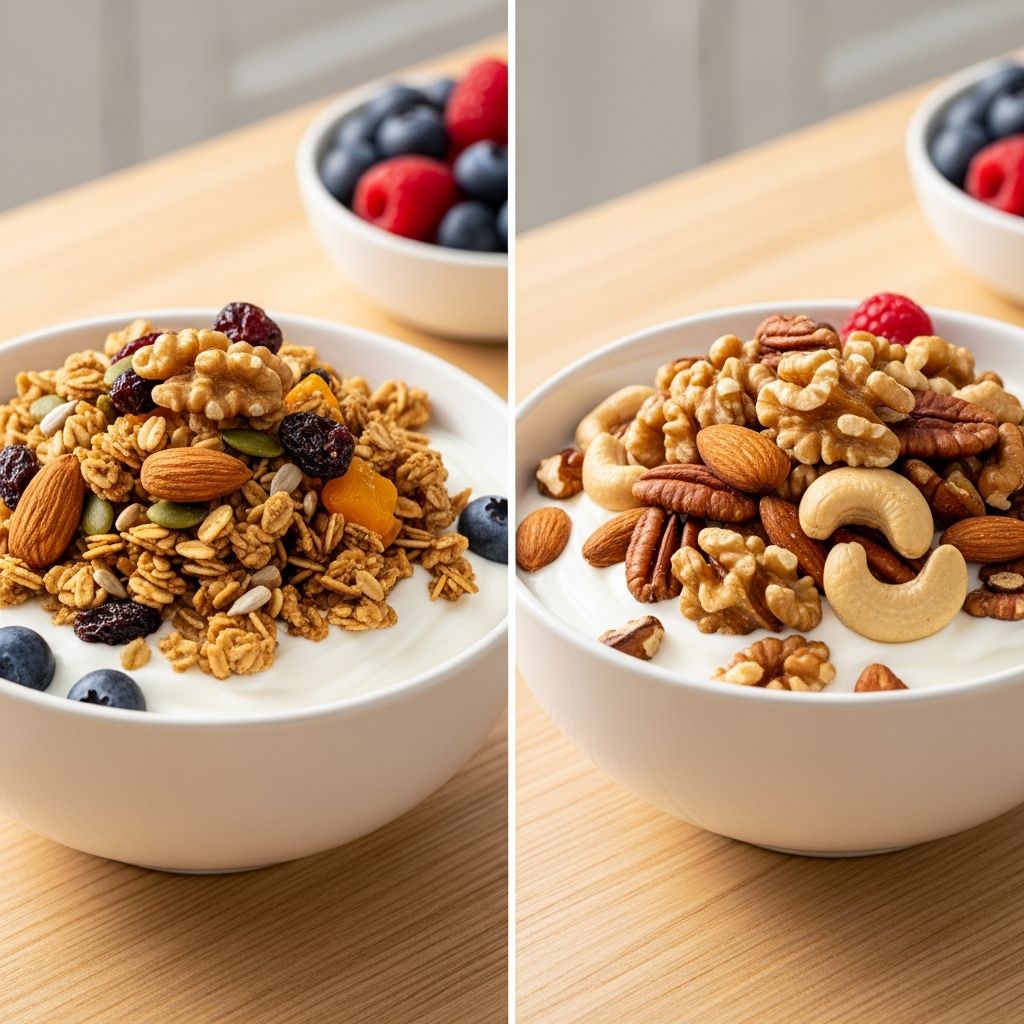
Yogurt is a nutritious breakfast staple, but the toppings you choose can significantly impact its overall health value. Two popular options—granola and nuts—offer distinct nutritional profiles, and understanding the differences can help you make the best choice for your dietary goals. While both can be part of a healthy diet, they differ substantially in sugar content, fat composition, fiber, and protein levels.
Understanding Granola as a Yogurt Topping
Granola is a breakfast ingredient made primarily from oats, nuts, seeds, and a binding agent such as honey or oil. While granola can provide genuine nutritional benefits, many commercial varieties are problematic for health-conscious consumers.
The Benefits of Quality Granola
Oats, the primary ingredient in most granolas, are a cholesterol-lowering, fiber-packed whole grain. When made with wholesome ingredients, granola can contribute valuable nutrients to your breakfast. The oats provide soluble fiber that helps keep you feeling full throughout the morning, while nuts included in quality granola add heart-healthy fats and anti-inflammatory compounds.
Quality granola brands keep their ingredient lists simple, featuring components like oats, dried fruits, nuts, and spices such as cinnamon. These formulations maximize nutritional density while minimizing unnecessary additives.
The Hidden Challenges with Commercial Granola
Unfortunately, most granola brands sold in supermarkets are high in added sugars, saturated fats, and processed ingredients that are difficult to identify. A single serving of conventional granola can contain 10–15 grams of added sugar—nearly half the daily recommended intake for adults—while simultaneously providing significant calories in a small portion size.
This high sugar content often masks the taste of whole grains and nuts, making granola appeal to consumers’ preferences for sweetness. However, this formulation undermines the health benefits of the base ingredients, particularly for those managing blood sugar levels or watching their caloric intake.
The Nutritional Profile of Nuts
Nuts are nutritional powerhouses that offer substantial health benefits when consumed as part of a balanced diet. Unlike granola, nuts are minimally processed whole foods with clear, simple nutritional profiles.
Key Nutrients Found in Nuts
Nuts provide a comprehensive array of essential nutrients:
- Fiber for digestive health
- Antioxidants for cellular protection
- Vitamins and minerals including vitamin E and magnesium
- Healthy monounsaturated and polyunsaturated fats
- Plant-based protein
Health Benefits of Specific Nuts
Almonds are among the most nutritious nuts available. A one-ounce serving contains 170 calories, 15 grams of fat, 6 grams of protein, 6 grams of carbs, 3 grams of fiber, and 45% of the daily value of vitamin E. Research shows that consuming 2 ounces of almonds daily for 12 weeks significantly reduced LDL cholesterol, inflammatory markers, and hemoglobin A1c in study participants. Almonds may also support gut health by promoting the growth of beneficial bacteria species.
Walnuts are exceptionally high in ALA omega-3 fatty acids, providing 2.57 grams per ounce—more than any other nut. Human and animal research suggests that 1–2 ounces of walnuts daily may improve brain function and reduce dementia risk factors. They also supply copper and manganese, minerals essential for bone health and metabolic function.
Related Stories



Cashews provide vitamin K and minerals critical for bone health, including magnesium and manganese. Studies suggest that eating cashews may reduce blood pressure and triglyceride levels, supporting cardiovascular health, though more research is ongoing.
Brazil nuts are among the richest dietary sources of selenium, a nutrient essential for thyroid hormone production and DNA synthesis. They also contain high levels of vitamin E and magnesium, which regulate blood sugar, blood pressure, nerve function, and energy production.
Pistachios provide 162 calories per ounce, with 13.5 grams of fat, 7 grams of protein, 6 grams of carbs, and 2.5 grams of fiber. They also supply 23% of the daily value of niacin and 17% of folate, vitamins important for energy metabolism and cellular function.
Comparing Granola and Nuts: A Nutritional Breakdown
When choosing between granola and nuts as a yogurt topping, several key nutritional factors should guide your decision:
| Nutrient Factor | Granola (Quality) | Granola (Commercial) | Nuts |
|---|---|---|---|
| Added Sugar | Moderate (5-8g per serving) | High (10-15g+ per serving) | Minimal (0-2g per serving) |
| Saturated Fat | Low to Moderate | Moderate to High | Low (mostly unsaturated) |
| Fiber | High (3-5g) | Moderate (2-4g) | Moderate to High (1-3g per ounce) |
| Protein | Moderate (4-6g) | Moderate (3-5g) | High (5-7g per ounce) |
| Calories per serving | 200-250 | 250-350 | 150-200 per ounce |
| Processing Level | Minimal | Moderate to High | Minimal (whole foods) |
Which Yogurt Type Works Best With Each Topping?
The best topping choice also depends on the yogurt base you’re using. Plant-based yogurts, particularly almond and oat varieties, have significantly different nutritional profiles compared to dairy yogurts.
Plant-Based Yogurts: Almond and Oat Varieties
Almond and oat yogurts are more nutritionally dense than dairy yogurts, scoring higher on nutrient density indices due to their low levels of total sugar, sodium, and saturated fat. These yogurts contain significantly less protein, calcium, and potassium than dairy options, but they compensate with higher fiber content and lower calorie counts. When paired with nuts, plant-based yogurts create a nutritionally balanced meal that emphasizes healthy fats and fiber without excess sugar.
Adding nuts to almond or oat yogurt is an excellent pairing strategy, as the nuts provide the protein and minerals that plant-based yogurts lack.
Dairy Yogurts
Dairy yogurts, especially full-fat varieties, already provide substantial protein, calcium, and potassium. These yogurts pair well with either granola or nuts, depending on your dietary priorities. If you’re using full-fat dairy yogurt, nuts may be the preferable topping to avoid excessive fat and calorie intake. For low-fat or nonfat dairy yogurts, quality granola or nuts both work well as they add flavor and nutritional variety.
Making the Healthier Choice: Granola or Nuts?
Choose Nuts If You Want To:
- Minimize added sugar: Nuts contain virtually no added sugar, making them ideal for blood sugar management and weight control
- Maximize protein intake: Nuts provide 5–7 grams of protein per ounce, supporting muscle maintenance and satiety
- Optimize heart health: The unsaturated fats and omega-3 fatty acids in nuts reduce heart disease risk and inflammation
- Support brain function: Walnuts specifically enhance cognitive performance and reduce dementia risk
- Keep ingredients simple: Nuts are whole foods with no added processing or additives
Choose Granola If You Want To:
- Add texture variety: Granola provides satisfying crunch that nuts alone may not deliver
- Increase whole grain intake: Quality granola supplies fiber and nutrients from oats
- Use a smaller amount: A small granola serving delivers diverse flavors from multiple ingredients
- Sweeten naturally: Quality granola made with honey or fruit provides subtle sweetness without refined sugar
However, granola should be chosen carefully. Always select brands that list oats, nuts, and fruit as primary ingredients, with minimal added sugar (ideally under 5 grams per serving). Avoid granola with long ingredient lists containing words you don’t recognize.
The Optimal Strategy: Combination Toppings
Rather than choosing exclusively between granola and nuts, consider a hybrid approach. Adding a small amount of quality granola (1–2 tablespoons) along with a handful of nuts (approximately 1 ounce) provides the textural variety of granola with the nutritional density of nuts. This strategy keeps added sugar intake moderate while maximizing nutrient diversity.
For example, pair oat or almond plant-based yogurt with 1 tablespoon of quality granola and 1 ounce of almonds or walnuts. This combination provides adequate protein from both sources, substantial fiber, healthy fats, and minimal added sugar—typically under 8 grams per serving.
How to Choose Quality Granola
If you opt for granola, follow these guidelines when selecting a brand:
- Check the ingredient list for whole grains (oats) as the first ingredient
- Look for added sugars of 5 grams or less per serving
- Verify that nuts are included as a significant ingredient
- Avoid artificial flavors, colors, and preservatives
- Choose brands that use natural sweeteners like honey or dates rather than refined sugar
- Check the serving size and nutritional information for calories and fat content
Frequently Asked Questions
Q: How much granola or nuts should I add to yogurt?
A: A standard serving of nuts is 1 ounce (about a small handful), which provides approximately 150–170 calories. For granola, limit portions to 1–2 tablespoons due to its higher calorie density and sugar content. Both toppings should enhance rather than dominate your yogurt.
Q: Are raw nuts or roasted nuts healthier?
A: Both raw and roasted nuts offer similar nutritional benefits. Roasting does not significantly decrease nutrient content, though high-heat roasting may damage some heat-sensitive antioxidants. Choose unsalted varieties when possible to control sodium intake. Avoid nuts with added oils or sugary coatings.
Q: Can I make homemade granola to control ingredients?
A: Yes, homemade granola is an excellent option that allows complete control over ingredients and sugar content. Combine rolled oats, nuts, seeds, cinnamon, and a modest amount of honey or coconut oil. This approach costs less and ensures quality ingredients aligned with your health priorities.
Q: Are there specific nuts better for yogurt toppings?
A: Almonds, walnuts, cashews, and pistachios all work well as yogurt toppings and offer distinct health benefits. Almonds provide exceptional nutrient density, walnuts support brain health, cashews may benefit cardiovascular function, and pistachios offer substantial folate. Choose based on your specific health goals or rotate varieties for maximum nutritional diversity.
Q: Can I use nuts if I’m allergic to other tree nuts?
A: If you have tree nut allergies, explore alternative toppings such as seeds (sunflower, pumpkin, chia), legumes, or quality nut-free granola. Always consult with an allergist before introducing new foods. Some individuals with specific nut allergies can tolerate other tree nuts safely, but medical guidance is essential.
Q: Which option is better for weight loss?
A: Nuts are generally superior for weight loss due to their high protein content, which promotes satiety, and their minimal sugar content. While calorie-dense, nuts provide sustained fullness, potentially reducing overall calorie intake throughout the day. Granola’s high sugar content may trigger hunger spikes and should be limited during weight loss efforts.
References
- A Comparison of the Nutritional Profile and Nutrient Density of Plant-Based and Dairy Yogurts — National Institutes of Health/PubMed Central. 2023. https://pmc.ncbi.nlm.nih.gov/articles/PMC10248066/
- Is Granola Healthy? — The Granola Factory. https://thegranolafactory.com/blog/is-granola-healthy/
- The Top 9 Nuts to Eat for Better Health — Healthline. https://www.healthline.com/nutrition/9-healthy-nuts
- Best Granola: Great-Tasting Granolas Without All the Fat, Sugar, and Calories — Consumer Reports. https://www.consumerreports.org/health/cereals/great-tasting-granolas-without-all-the-fat-sugar-calories-a1188431093/
Similar Articles








Read full bio of Sneha Tete