Granular Parakeratosis: Causes, Symptoms, and Treatment
Comprehensive guide to understanding granular parakeratosis, a rare skin condition affecting body folds.
Understanding Granular Parakeratosis
Granular parakeratosis is an uncommon red and scaly skin condition that primarily affects body folds, most often the armpits. Also known as axillary granular parakeratosis, intertriginous granular parakeratosis, or colloquially as ‘zombie patch,’ this benign inflammatory keratinization disorder reflects a defect in the normal conversion of profilaggrin to filaggrin. The condition is characterized by brownish-red keratotic papules that can coalesce into plaques, creating a distinctive appearance in affected areas.
Granular parakeratosis is sometimes referred to as hyperkeratotic flexural erythema and may be the same condition as recurrent flexural pellagroid dermatitis. While the exact underlying pathogenesis remains unknown, there has been a wide variety of precipitating factors and treatment options reported in the literature. This condition is not a distinct disease entity but rather represents a reaction the skin has to certain environmental stimuli or irritants.
Who Gets Granular Parakeratosis?
Granular parakeratosis is often reported in middle-aged women but has been reported to affect babies, children, and men of all races. The condition is most common in middle-aged women, though it has increasingly been recognized in other demographics. In infants, the infantile form of the condition is sometimes encountered, though this is relatively uncommon.
The condition shows no significant racial predilection and can affect individuals across different ethnic backgrounds. However, certain groups may be at higher risk due to environmental or occupational factors that increase exposure to known irritants.
Causes and Risk Factors
While the exact etiology of granular parakeratosis remains unclear, several precipitating factors have been identified through clinical observations and case reports. The condition is often associated with topical irritants, occlusion, or friction. Understanding these triggers is crucial for both prevention and management.
Common Precipitating Factors:
- Antiperspirants and deodorants — Among the most frequently reported triggers, these products can cause irritation in susceptible individuals.
- Zinc oxide — Found in many barrier creams and protective ointments, this ingredient has been linked to granular parakeratosis development.
- Benzalkonium chloride — A preservative and antimicrobial agent found in some household laundry products.
- Moisturizers and barrier creams — Paradoxically, products intended to protect the skin can sometimes trigger the condition.
- Petrolatum-based ointments — These occlusive products may contribute to development in susceptible individuals.
- Corticosteroids — Topical corticosteroid application has been associated with granular parakeratosis development.
- Moisture and maceration — Excessive moisture in skin folds and diaper dermatitis contribute significantly.
- Mechanical irritation and friction — Continuous rubbing or pressure in skin fold areas can precipitate the condition.
- Occlusion — Tight clothing or other factors that prevent air circulation in skin folds are associated with development.
Environmental factors such as friction from tight clothing, excessive sweating, and poor air circulation in intertriginous areas contribute to the development of granular parakeratosis. Some patients develop symptoms after exposure to mercury and various metals in occupational settings.
Clinical Presentation and Symptoms
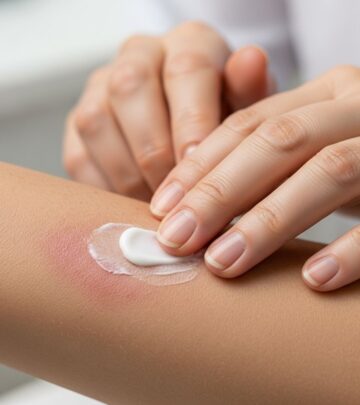
Granular parakeratosis presents as a red or brown patchy scaly rash, most often in the armpits or in other skin folds. The condition is characterized by erythematous-brown hyperkeratotic papules and erythematous patches with scaling, occurring predominantly in the flexures and sites of occlusion.
Typical Clinical Features:
- Color and appearance: Erythematous to brownish plaques with a fine, scaly surface
- Texture: Sometimes shiny or slightly elevated patches
- Symptoms: Commonly asymptomatic or mildly pruritic, though some patients experience significant itching
- Distribution: Occurs in intertriginous areas: axillae, groin, inframammary region, perianal skin
- Development pattern: Gradually evolving plaques in areas of friction or occlusion
- Scaling: Fine, bran-like desquamation that may resemble pellagra
In certain people, granular parakeratosis may be significantly pruritic, causing discomfort and concern. The condition can present as an intertrigo (rash in body folds) or as a non-intertriginous rash in severe cases, where the rash spreads widely over the trunk.
In children, granular parakeratosis typically presents in two main ways. One manifestation appears as linear patches in the folds of both groin areas with a flaky scale, while the other presents as geometric patches in areas under pressure from wearing diapers. The infantile form predominantly affects the perianal or diaper area involvement.
Affected Body Areas
Granular parakeratosis preferentially affects intertriginous regions—areas where skin touches skin and moisture accumulates. The most commonly affected locations include:
- Axillae (underarms) — The most frequently reported site
- Groin region — Common in both adults and children
- Inframammary folds — Under the breasts, particularly in women
- Perianal area — Around the anus, especially in infants
- Abdominal skin folds — Particularly in individuals with obesity
- Diaper region — In infants and young children wearing diapers
In infants, the condition is mostly confined to the diaper region, though it can occasionally appear in other intertriginous areas. Rare generalized or disseminated cases have been reported, though localized involvement in skin folds remains the norm.
Diagnosis of Granular Parakeratosis
The diagnosis of granular parakeratosis typically relies on a combination of clinical presentation and histopathological examination. Clinicians should pay careful attention to this disease and differentiate it from various other conditions to avoid misdiagnosis.
Clinical Diagnosis:
Initial diagnosis is often made based on the typical morphology and distribution of the lesions. The characteristic presentation of brownish-red keratotic papules in skin fold areas, particularly in middle-aged women, should raise suspicion for granular parakeratosis.
Histopathological Confirmation:
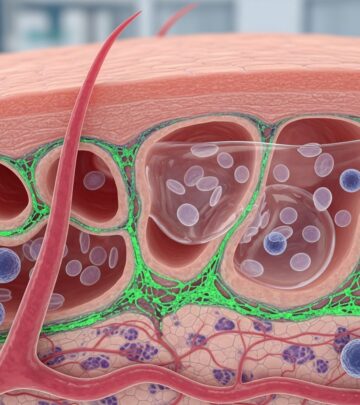
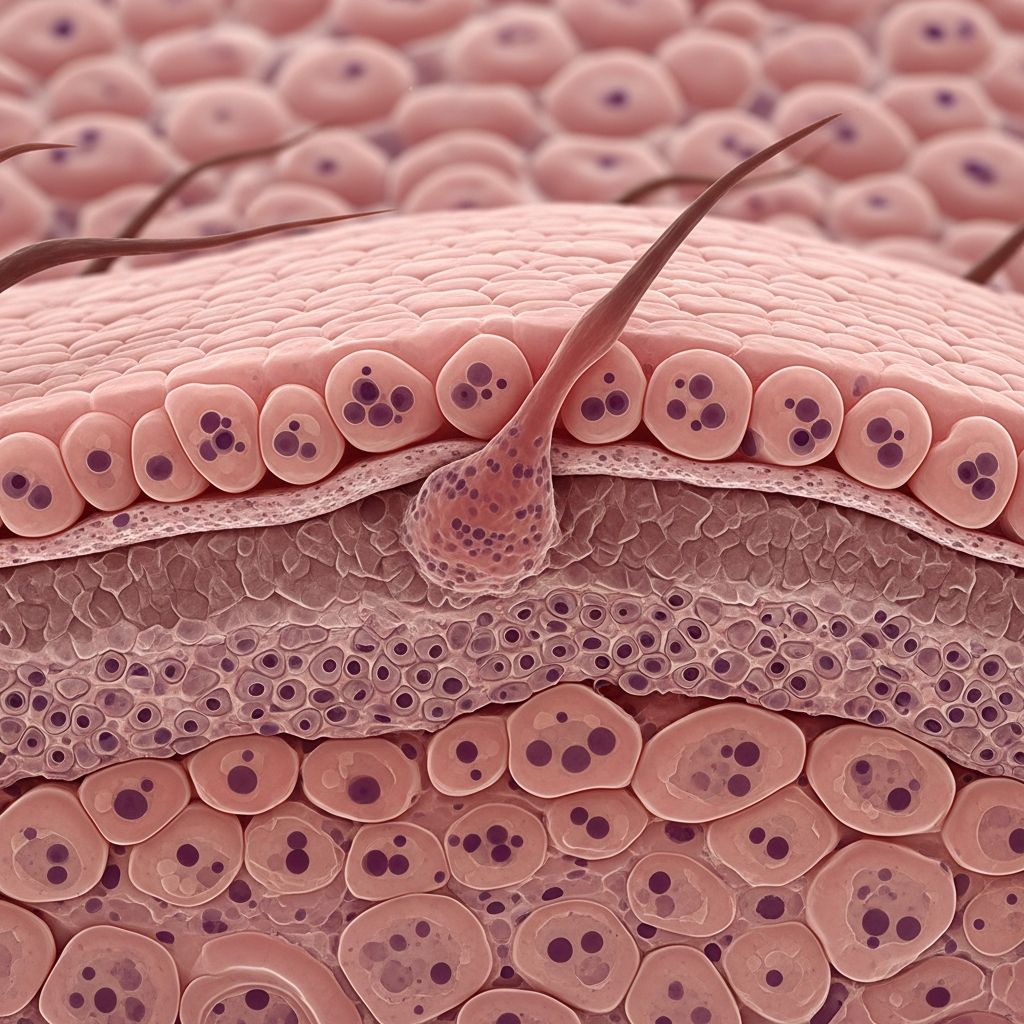
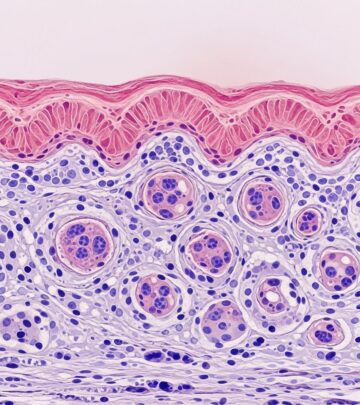
Granular parakeratosis skin biopsies reveal distinctive histological features that confirm the diagnosis. A skin biopsy is stained with hematoxylin and eosin (H&E), a common staining technique used to highlight important features of tissues and cells. This method is usually enough to confirm granular parakeratosis.
The characteristic histological findings include:
- Compact parakeratosis and hyperkeratosis in the stratum corneum
- Basophilic keratohyalin granules in cells in the higher layers of the skin — the defining feature of the illness
- Thickened stratum corneum with both ortho- and parakeratosis
- Retention of basophilic keratohyalin granules in parakeratotic cells
- Acanthosis and papillomatosis — thickening of the epidermis
- No epidermal dysplasia or fungal elements
- Mild perivascular lymphocyte-dominated infiltration in the superficial dermis
- Dilated and congested blood vessels in the superficial dermis
Most frequently, papillomatosis or an acanthotic pattern of thickening of the epidermis occurs with or without psoriasis. There may also be a low-grade lymphohistiocytic infiltration. Importantly, fungal culture and microscopic examination should not reveal any abnormalities, helping to rule out fungal infections.
Differential Diagnosis
Granular parakeratosis is clinically and histopathologically distinct from psoriasis, eczema, and acantholytic dermatoses. Other conditions that should be considered in the differential diagnosis include:
- Contact dermatitis and other forms of eczema
- Psoriasis and other keratinization disorders
- Tinea corporis and other fungal infections
- Candidiasis in intertriginous areas
- Pemphigus and other acantholytic disorders
- Seborrheic dermatitis
Histopathological examination is essential for accurate differentiation from these conditions.
Treatment Options
Granular parakeratosis has various treatment options and a favorable prognosis. Treatment approaches should focus on removing the triggering factor while providing symptomatic relief.
First-Line Treatment:
The most effective management strategy is the avoidance of occlusive, irritant, or fragranced products in intertriginous areas, combined with the use of breathable clothing and barrier-reducing hygiene. This preventive approach alone often leads to resolution without further intervention.
Topical Therapies:
- Glucocorticoid creams — Topical corticosteroids have demonstrated effectiveness in treating granular parakeratosis lesions
- Silicone oil cream — Combined with glucocorticoid cream, this provides lubrication and healing support
- Emollients and moisturizers — Non-irritating moisturizers help restore skin barrier function
- Barrier creams — Non-occlusive formulations help protect affected areas
In a documented case, skin lesions disappeared after 2 weeks of topical glucocorticoid and silicone oil cream, with no recurrence after 3 months of follow-up. Treatment success depends on identifying and eliminating the causative irritant.
Preventive Measures:
- Avoid antiperspirants and deodorants in susceptible individuals
- Choose loose-fitting, breathable clothing
- Maintain dry skin in fold areas
- Use fragrance-free skincare products
- Avoid zinc oxide and petrolatum-based products if they trigger symptoms
- Ensure proper hygiene with gentle cleansing
- Consider alternative products to household laundry rinse aids containing benzalkonium chloride
Prognosis and Course
The prognosis of granular parakeratosis is benign, with the condition often being self-limited after removal of the triggering factor. However, it can become chronic or recurrent in cases with ongoing exposure to irritants or occlusion.
As the condition heals, the skin peels off (desquamation), resembling the peeling seen in pellagra. Most patients experience resolution of symptoms and clearance of lesions following identification and elimination of the causative agent.
Complications
Granular parakeratosis itself is a benign condition that has not been reported to lead to cancer. However, secondary complications can develop in certain circumstances:
- Secondary bacterial infections: Particularly in cases where patients have itchy skin lesions that are scratched open
- Co-existing conditions: The skin condition often co-exists with other common skin conditions such as ringworm
- Pruritus or irritation: Cosmetic concern and discomfort from itching
The risk of secondary infection emphasizes the importance of avoiding scratching and maintaining proper skin hygiene.
Frequently Asked Questions
Q: Is granular parakeratosis contagious?
A: No, granular parakeratosis is not contagious. It is a non-infectious inflammatory skin condition that results from a reaction to certain irritants or environmental factors.
Q: Can granular parakeratosis turn into cancer?
A: No, granular parakeratosis has not been reported to lead to cancer. It is a benign condition with an excellent prognosis, though it may occasionally become chronic if triggering factors are not identified and removed.
Q: How long does granular parakeratosis take to resolve?
A: Resolution depends on identifying and removing the triggering factor. Some patients see improvement within 2-3 weeks with appropriate treatment, while others may require several weeks to months for complete clearance.
Q: Can granular parakeratosis occur in children?
A: Yes, granular parakeratosis can occur in children and infants. In children, it typically appears in the diaper area or groin folds with characteristic linear or geometric patches. Diaper use may contribute to development, though the exact mechanism remains unclear.
Q: What should I avoid if I have granular parakeratosis?
A: Avoid antiperspirants, deodorants, fragrance-containing products, zinc oxide, petrolatum-based ointments, and tight clothing. Identify any topical product that coincides with lesion onset and eliminate it from use.
Q: Is there a cure for granular parakeratosis?
A: While there is no specific cure, granular parakeratosis is highly manageable. Most cases resolve completely with removal of the triggering factor and appropriate topical treatment, though recurrence can occur with re-exposure to irritants.
References
- Granular parakeratosis — DermNet. Accessed January 2026. https://dermnetnz.org/topics/granular-parakeratosis
- Clinical features, histology, and treatment outcomes of granular parakeratosis — Wiley Online Library. 2022. https://onlinelibrary.wiley.com/doi/10.1111/ijd.16107
- Granular Parakeratosis — DermaCompass. Accessed January 2026. https://www.dermacompass.net/en/diseases/granular-parakeratosis
- Granular Parakeratosis: A Case Report — PubMed Central (PMC9297043). 2022. https://pmc.ncbi.nlm.nih.gov/articles/PMC9297043/
- Granular parakeratosis — Wikipedia. Accessed January 2026. https://en.wikipedia.org/wiki/Granular_parakeratosis
- Granular Parakeratosis secondary to benzalkonium chloride exposure from common household laundry rinse aids — New Zealand Medical Journal. 2022. https://nzmj.org.nz/journal/vol-134-no-1534/granular-parakeratosis-secondary-to-benzalkonium-chloride-exposure-from-common-household-laundry-rinse-aids/
Similar Articles




Read full bio of medha deb