Granulocytes: Definition, Types & Function
Understanding granulocytes: the body's frontline defenders against infection and inflammation.
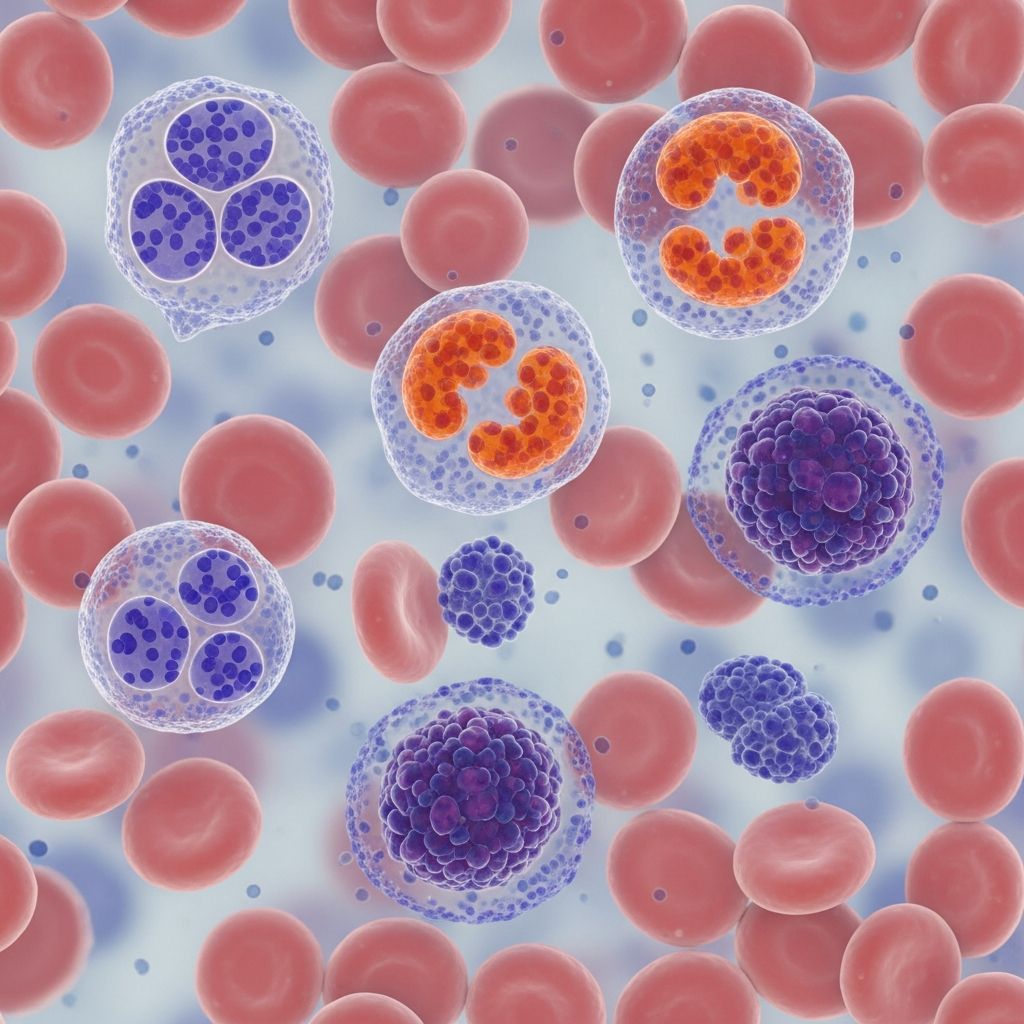
What Are Granulocytes?
Granulocytes are the most abundant type of white blood cell in your body, comprising approximately 50-70% of your total white blood cell count. These specialized immune cells are defined by the presence of small granules—tiny sacs filled with powerful chemicals and enzymes—that they use to combat infections and manage inflammation. The name “granulocyte” literally refers to these distinctive granules that become visible under a microscope, giving these cells their characteristic appearance.
As part of your body’s innate immune system, granulocytes work continuously to defend against pathogens, allergens, and other harmful substances that threaten your health. They represent your body’s first line of defense, acting quickly and aggressively to neutralize threats before they can cause significant damage. Understanding these cells and their functions is crucial for comprehending how your immune system maintains your overall health and wellness.
The Four Types of Granulocytes
While granulocytes share common characteristics, they are not a homogeneous group. Instead, they encompass four distinct types, each with specialized roles and unique chemical compositions within their granules. Each type of granulocyte has its own combination of chemicals and enzymes in its granules, resulting in different functions and responsibilities within your immune system.
Neutrophils
Neutrophils are the most prevalent type of granulocyte, accounting for the majority of your granulocyte population. These cells are rapid responders to bacterial infections and are typically the first immune cells to arrive at sites of infection or inflammation. Neutrophils contain granules filled with powerful enzymes and antimicrobial proteins that allow them to engulf and destroy bacteria, fungi, and other pathogens through a process called phagocytosis. They are particularly effective against bacterial infections and play a crucial role in acute inflammatory responses.
Eosinophils
Eosinophils are granulocytes specifically designed to combat parasitic infections and play a significant role in allergic responses. These cells contain granules filled with toxic proteins and enzymes that are particularly effective against parasites. When you experience allergic reactions or hay fever, eosinophils are mobilized to manage the allergic response. They also participate in the inflammatory response associated with asthma and other allergic conditions. Additionally, eosinophils help regulate inflammatory responses and contribute to tissue remodeling in certain conditions.
Basophils
Basophils are the least common type of granulocyte but play an important role in allergic and inflammatory responses. These cells contain granules filled with histamine and other chemical mediators that trigger allergic reactions. When exposed to allergens, basophils release their granule contents, causing the familiar symptoms of allergies such as itching, swelling, and hives. Basophils also participate in immune responses to parasitic infections and contribute to the inflammatory cascade that occurs during various immune challenges.
Mast Cells
Mast cells are sometimes classified with granulocytes due to their similar structure and function, though they are technically distinct cells. Like basophils, mast cells contain granules filled with histamine and other inflammatory mediators. However, mast cells are primarily tissue-resident cells, meaning they remain stationed in various tissues throughout your body rather than circulating in the bloodstream. They serve as sentinels in tissues, responding to allergens and pathogens by releasing their granule contents to initiate inflammatory responses.
How Granulocytes Function
Granulocytes work together as a coordinated team to rid your body of infection or allergens. Their function begins when they detect the presence of pathogens or allergens in your body. This detection triggers a series of events that allows granulocytes to locate, engulf, and destroy threats to your health.
Related Stories



Detection and Migration
Granulocytes continuously patrol your bloodstream and tissues, searching for signs of infection or allergens. When pathogens or allergens are detected, they release chemical signals called cytokines and chemokines that attract granulocytes to the affected area. These signals act like a beacon, guiding granulocytes from the bloodstream into tissues where the threat is located.
Phagocytosis and Destruction
Once granulocytes reach the site of infection or inflammation, they employ their primary defense mechanism: phagocytosis. This process involves the granulocyte engulfing the pathogen or allergen, incorporating it into an internal vacuole. Once internalized, the granules release their contents—powerful enzymes and antimicrobial proteins—into the vacuole, effectively destroying the pathogen through multiple mechanisms including enzymatic degradation and oxidative burst.
Inflammatory Response Regulation
Beyond destroying pathogens, granulocytes also regulate the inflammatory response. When granulocytes activate and release their granule contents, they initiate a cascade of inflammatory reactions that recruit additional immune cells and enhance the body’s defense mechanisms. However, this response must be carefully controlled; excessive inflammation can damage healthy tissue, so granulocytes also produce molecules that help resolve inflammation once the threat has been eliminated.
Immature Granulocytes and Their Significance
Granulocytes undergo a maturation process in your bone marrow before being released into the bloodstream. Mature granulocytes are fully developed and ready to function optimally, while immature granulocytes—also called “left shift” cells—are still developing. Normally, your blood contains predominantly mature granulocytes, with very few immature forms circulating.
When Immature Granulocytes Appear
The presence of immature granulocytes in your bloodstream can indicate various conditions. Pregnant women and newborn babies may naturally have immature granulocytes in their bloodstream. In these cases, immature granulocytes indicate a healthy bone marrow response and are not a cause for concern. However, in other situations, elevated immature granulocytes can signal that your bone marrow is working overtime to fight an infection or manage another health challenge.
Clinical Implications
When a complete blood count (CBC) reveals elevated immature granulocytes, it often indicates an acute infection or significant stress on your immune system. Your bone marrow responds by accelerating granulocyte production and releasing cells before they are fully mature. Immature granulocytes are reported as a percentage of total white blood cells and can help clinicians identify specific conditions affecting your immune system or bone marrow function.
Normal Granulocyte Ranges
Understanding what constitutes a normal granulocyte count is essential for interpreting blood test results. The normal range for granulocytes is between 1,500 and 8,500 cells per microliter of blood. Anything above these levels indicates granulocytosis, a condition characterized by elevated granulocyte counts.
| Granulocyte Count (cells/microliter) | Classification | Clinical Significance |
|---|---|---|
| 1,500 – 8,500 | Normal Range | Healthy immune function |
| Above 8,500 | Granulocytosis | May indicate infection, inflammation, or other conditions |
| Below 1,500 | Agranulocytosis/Leukopenia | Reduced immune function; increased infection risk |
Granulocytes and Your Immune System
Granulocytes are an essential part of your immune system, functioning as the body’s primary defenders against a variety of infections. Your immune system operates through multiple layers of defense, and granulocytes serve as crucial components of both innate and adaptive immunity.
Role in Innate Immunity
As part of your innate immune system, granulocytes provide immediate, non-specific defense against pathogens. Unlike adaptive immunity, which requires sensitization and time to develop, innate immunity provides rapid responses to any threat. Granulocytes are pre-programmed to recognize and respond to common pathogenic patterns, allowing them to attack foreign invaders immediately without delay.
Inflammatory Response Participation
Granulocytes are central to inflammatory responses, which are necessary for healing and immune defense but must be carefully controlled. When granulocytes release their granule contents, they trigger a cascade of inflammatory reactions that increase blood flow to affected areas, increase vessel permeability to allow immune cells to enter tissues, and activate complement proteins. While inflammation is essential for fighting infection, excessive or prolonged inflammation can damage healthy tissue.
Conditions Affecting Granulocyte Levels
Various conditions can affect your granulocyte levels, resulting in either elevated counts (granulocytosis) or depressed counts (agranulocytosis or leukopenia). Understanding these conditions helps explain why your healthcare provider might order granulocyte testing and what abnormal results might indicate.
Causes of Elevated Granulocytes (Granulocytosis)
Granulocytosis can occur due to numerous causes, ranging from temporary infections to chronic diseases. Common causes include bacterial infections, viral infections, fungal infections, leukemia and other blood cancers, rheumatoid arthritis and other autoimmune diseases, medications (particularly corticosteroids), physical or emotional stress, smoking, and tissue damage from burns or heart attacks. In many cases, granulocytosis resolves on its own once the underlying cause is treated or resolved.
Causes of Low Granulocytes (Agranulocytosis)
Conversely, agranulocytosis refers to a condition in which your bone marrow doesn’t make enough neutrophils, a specific type of granulocyte. This can result from bone marrow disorders, certain medications, severe infections that overwhelm the bone marrow, nutritional deficiencies, and autoimmune conditions that destroy granulocytes. Agranulocytosis is a more serious condition that requires medical attention, as it significantly compromises immune function.
Diagnosing Granulocyte Abnormalities
When your healthcare provider suspects an abnormality in your granulocyte levels, they employ specific diagnostic tests to confirm and characterize the condition. A healthcare provider will review your medical history and perform a physical examination before ordering tests.
Complete Blood Count (CBC)
The primary diagnostic tool for assessing granulocyte levels is the complete blood count (CBC), which requires only a small sample of your blood. The CBC provides information about all types of white blood cells, including the specific count of granulocytes and the percentage of immature forms. This test establishes baseline values and helps identify whether granulocyte counts fall within normal ranges or indicate abnormality.
CBC with Differential
A CBC with differential provides more detailed information by identifying the specific types and percentages of granulocytes present in your blood. This additional information helps distinguish between different causes of granulocyte abnormalities. For example, a marked increase in neutrophils might suggest bacterial infection, while eosinophilia could indicate parasitic infection or allergic disease.
Advanced Testing
If initial test results suggest serious conditions like leukemia or bone marrow disorders, a hematologist may recommend additional diagnostic tests, such as bone marrow biopsy, flow cytometry, or genetic testing to assess the production and health of blood cells and identify specific disease processes.
Treatment Approaches for Granulocyte Abnormalities
Treatment for granulocyte abnormalities depends entirely on the underlying cause. If a complete blood count (CBC) indicates that you have granulocytosis, then your healthcare provider will begin looking for conditions that may have caused it. From there, you can discuss treatment options and develop an appropriate management plan.
Managing Granulocytosis
Depending on the cause, you may need long-term treatments to manage the condition and return your granulocyte levels back to normal. Treatment typically focuses on addressing the underlying cause, such as antibiotics for infections or anti-inflammatory medications for autoimmune conditions, with supportive care for temporary or benign causes. In some cases, the condition resolves on its own and your granulocyte levels fall without treatment.
Managing Agranulocytosis
Agranulocytosis requires more aggressive intervention, as the severely compromised immune function puts patients at high risk for serious infections. Treatment may include discontinuation of offending medications, treatment of underlying infections with antibiotics, growth factor therapy to stimulate bone marrow production, and in severe cases, bone marrow transplantation.
When to Seek Medical Attention
Certain signs warrant prompt medical evaluation. Red flags include persistent high levels of immature granulocytes, unexplained symptoms like fatigue, fever, frequent infections, or abnormal findings in other blood cell counts (such as platelets or hemoglobin). If you experience recurrent infections, persistent fever, unexplained fatigue, or unusual bleeding or bruising, consult your healthcare provider for evaluation.
Frequently Asked Questions
Q: What is the difference between granulocytes and leukocytes?
A: Leukocytes is a broader term that includes all white blood cells, while granulocytes are a specific type of white blood cell with granules. Granulocytes comprise about 50-70% of all white blood cells and include neutrophils, eosinophils, and basophils.
Q: Are high granulocytes always a sign of infection?
A: While elevated granulocytes often indicate infection, they can also result from stress, inflammation, certain medications, autoimmune diseases, or leukemia. Your healthcare provider must consider your complete clinical picture when interpreting granulocyte levels.
Q: Can granulocyte levels change throughout the day?
A: Yes, granulocyte levels can fluctuate naturally throughout the day due to circadian rhythms and stress responses. This is why blood samples are typically collected at consistent times for accurate interpretation.
Q: What should I do if my granulocyte count is abnormal?
A: Follow up with your healthcare provider to determine the underlying cause. They may order additional tests and recommend treatment based on the specific condition causing the abnormality.
Q: Are immature granulocytes always concerning?
A: Not necessarily. Pregnant women and newborns may naturally have immature granulocytes without cause for concern. However, in other populations, elevated immature granulocytes warrant investigation to identify the underlying cause.
References
- Granulocytes: Definition, Types & Function — Cleveland Clinic. 2024. https://my.clevelandclinic.org/health/body/22016-granulocytes
- Granulocytosis: Symptoms, Causes & Treatment — Cleveland Clinic. 2024. https://my.clevelandclinic.org/health/diseases/22302-granulocytosis
- Complete Blood Count (CBC): What It Is & Normal Ranges — Cleveland Clinic. 2024. https://my.clevelandclinic.org/health/diagnostics/4053-complete-blood-count
- High Immature Granulocytes: Causes, Symptoms, and Treatment Options — Rupa Health. 2024. https://www.rupahealth.com/post/high-immature-granulocytes-causes-symptoms-and-treatment-options
- White Blood Cells: Types, Function & Normal Ranges — Cleveland Clinic. 2024. https://my.clevelandclinic.org/health/body/21871-white-blood-cells
- Agranulocytosis: Symptoms, Causes & Treatment — Cleveland Clinic. 2024. https://my.clevelandclinic.org/health/diseases/15262-agranulocytosis
Similar Articles








Read full bio of medha deb