Granuloma Annulare: Causes, Symptoms, and Treatment
Understand granuloma annulare: A comprehensive guide to this benign skin condition.
Understanding Granuloma Annulare
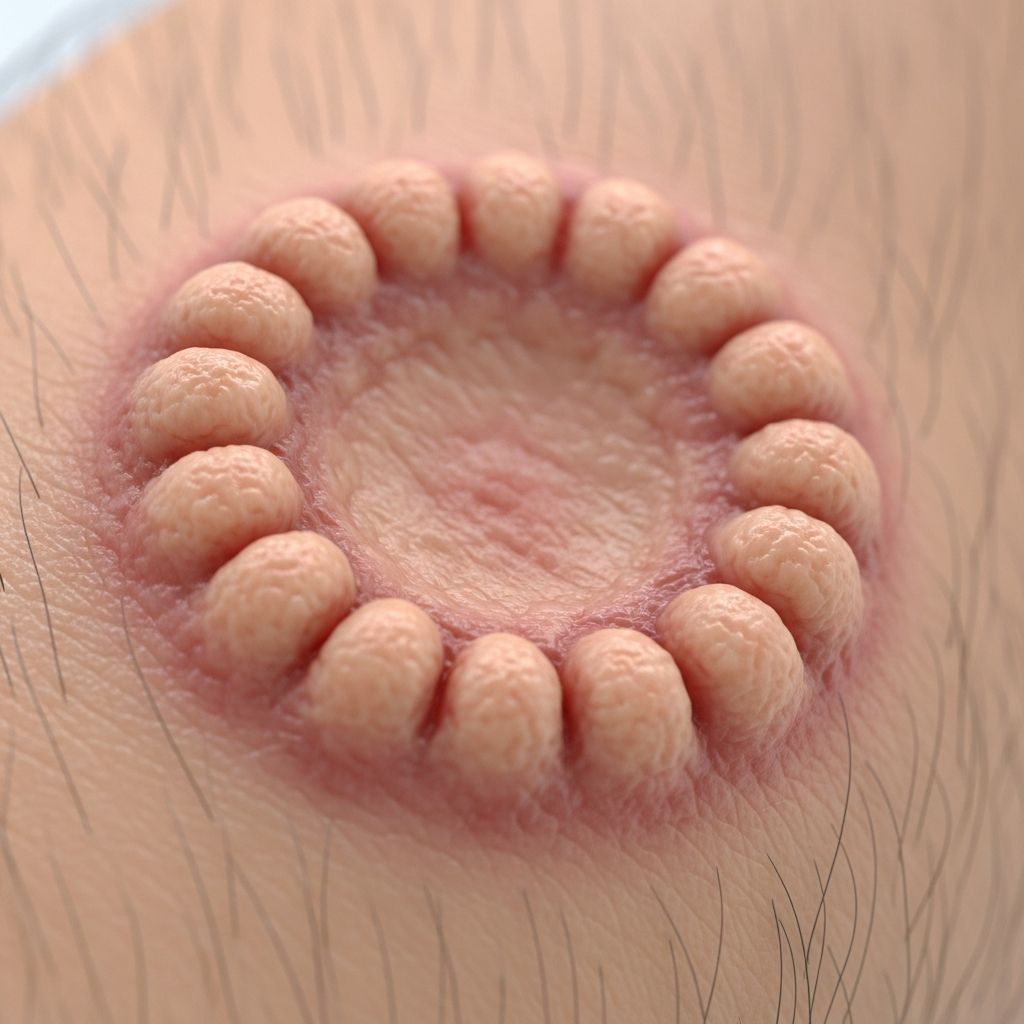
Granuloma annulare is a benign, non-infectious skin condition characterized by the formation of small, firm bumps that typically arrange themselves in a ring or circular pattern. This cutaneous granulomatous disease represents the most common non-infectious granulomatous disorder affecting the skin. The condition is neither contagious nor dangerous, though it may cause cosmetic concerns for those affected. Granuloma annulare predominantly appears on the hands and feet, though it can develop on various body areas depending on the form of the disease.
Clinical Presentation and Symptoms
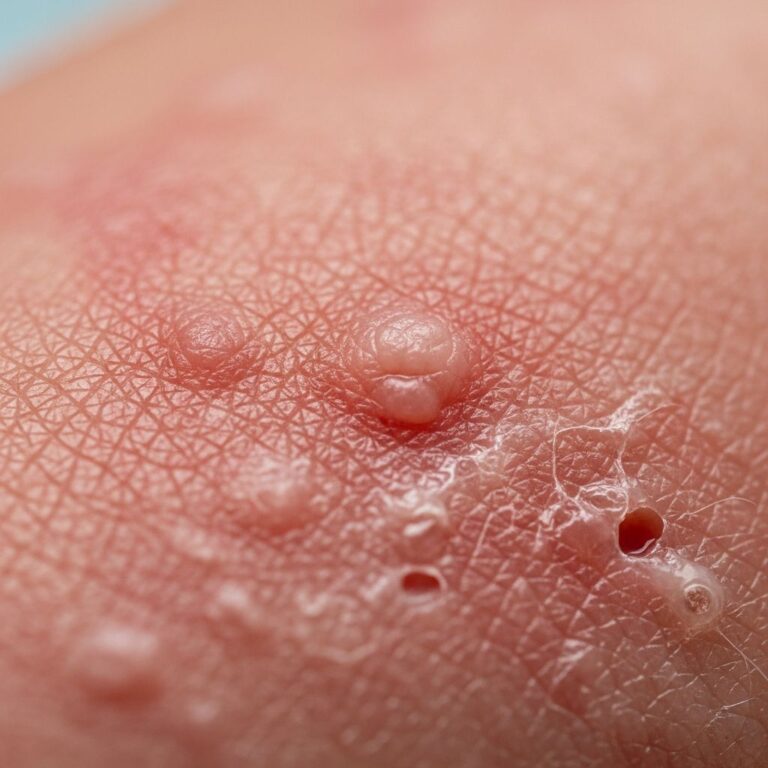
Granuloma annulare manifests with distinctive clinical features that aid in diagnosis. The most characteristic presentation involves small circular patches of pink, purple, or skin-colored bumps that appear on the skin. These bumps are typically firm, flesh-colored, or red in appearance and tend to form rings of varying sizes.
Key Symptoms Include:
- Raised circular rashes or bumps arranged in ring patterns
- Lesions that may appear tender when knocked or bumped
- Central clearing, creating a distinctive “annular” or ring-like appearance
- Painless lesions in most cases, though some individuals experience mild itching
- Plaques that slowly change shape, size, and position over time
- Patches that can appear on one or multiple areas of the body simultaneously
In most instances, granuloma annulare causes no symptoms at all. However, the affected areas are often tender when knocked or subjected to pressure. The plaques characteristic of this condition tend to slowly change shape, size, and position, making the condition unpredictable in its progression.
Types and Forms of Granuloma Annulare
Granuloma annulare presents in several distinct clinical forms, each with unique characteristics and prevalence patterns. Understanding the different types is essential for appropriate diagnosis and treatment planning.
Localized Granuloma Annulare
This is by far the most common form, accounting for approximately 75 percent of all cases. Localized granuloma annulare typically affects a single area and presents as red or skin-colored bumps that form rings. The lesions generally start as a ring of small, firm, flesh-colored or red papules. As the condition progresses, central involution occurs, and the ring of papules slowly increases in diameter from 0.5 to 5.0 centimeters. The lesions may remain isolated or coalesce into larger plaques. These lesions are most commonly found on the lateral or dorsal surfaces of the hands and feet.
Localized lesions are usually painless and not itchy. A significant clinical advantage of the localized form is its tendency toward spontaneous resolution. Notably, more than 50 percent of patients with localized granuloma annulare will experience spontaneous resolution within two years without any treatment intervention.
Generalized Granuloma Annulare
This form is considerably less common than the localized variant. Generalized granuloma annulare tends to involve multiple areas simultaneously, often with more than 10 distinct spots distributed across the body. The bumps in this form are typically smaller and more widespread than in localized disease, commonly appearing on the arms, legs, or torso. Some people with generalized granuloma annulare may experience mild itching (pruritus), distinguishing it from the often completely asymptomatic localized form.
Related Stories



Patch Variant
This form features larger red areas known as erythematous patches that can affect broad areas of skin. The patch variant presents a diagnostic challenge because there is overlap in appearance with other skin conditions called reactive granulomatous eruptions, occasionally making diagnosis challenging.
Subcutaneous Granuloma Annulare
This variant affects deeper skin layers and may present with firm nodules rather than surface papules. Subcutaneous granuloma annulare sometimes responds differently to treatment compared to other forms.
Causes and Etiology
The exact cause of granuloma annulare remains unclear, and the etiology and pathogenesis of this disease are not fully understood. However, multiple factors have been implicated in the development of this condition.
Suspected Causative Factors:
- Mild skin injuries such as insect bites or trauma
- Sun exposure, especially in areas with photodamaged skin
- Infections, including various bacterial and viral pathogens
- Vaccinations including hepatitis B, MMR (measles, mumps, rubella), varicella, pneumococcal, and anti-tetanus vaccines
- Certain medications including allopurinol, amlodipine, diclofenac, and specific blood pressure medications (ACE inhibitors, calcium channel blockers)
- Biologic medications such as anti-TNF drugs and checkpoint inhibitors
- Medications used to treat autoimmune or inflammatory conditions like secukinumab, ixekizumab, and apremilast
Pathophysiological Mechanisms
Some researchers believe that granuloma annulare is caused by a delayed-type hypersensitivity reaction, more specifically a Th1 reaction involving interferon-gamma (IFN-gamma) stimulating macrophages to release matrix metalloproteinases. This ultimately results in connective tissue degradation characteristic of the lesions.
Other studies support the theory that impaired neutrophil chemotaxis plays a role in granuloma annulare. According to this hypothesis, macrophages take over inflammatory sites because of the impaired neutrophil response, which leads to the granulomatous inflammation seen in granuloma annulare as opposed to a suppurative neutrophil-type inflammation.
Diagnosis
Diagnosis of granuloma annulare is typically made based on clinical appearance, though definitive confirmation often requires additional testing. The characteristic ring-shaped arrangement of firm papules is highly suggestive of the condition.
Diagnostic Approach:
- Clinical examination: Visual inspection of the characteristic ring-shaped lesions is the primary diagnostic tool
- Dermoscopy: Microscopic examination of the skin lesions can reveal characteristic features
- Skin biopsy: A tissue sample examined under microscopy can confirm granuloma annulare and rule out other conditions, particularly when the patch variant is suspected or diagnosis is uncertain
- Histopathological examination: Microscopic analysis reveals granulomatous inflammation with characteristic palisading macrophages surrounding areas of degenerated collagen
Natural Course and Prognosis
The natural history of granuloma annulare is highly variable and depends significantly on the form of the disease. Understanding the disease course helps guide treatment decisions.
Localized granuloma annulare often resolves on its own without treatment through a process called spontaneous remission. In fact, approximately half of people with the localized form will see their symptoms disappear within two years. However, certain subtypes, particularly generalized granuloma annulare, can return (recur) despite treatment.
Although the lesions of granuloma annulare usually regress, they tend to recur in some individuals. For this reason, and for cosmetic reasons, treatment sometimes is indicated. It is important to note that granuloma annulare is a chronic condition that will not be resolved overnight. With appropriate treatment, however, many patients see complete clearing of redness and bumps with no recurrence within two years.
Treatment Options
In most cases, granuloma annulare does not require treatment because the patches disappear by themselves in a few months, leaving no trace. However, sometimes they persist for years. Treatment is not curative but may help individual lesions and may be pursued to accelerate healing, manage discomfort, or address cosmetic concerns.
Localized Disease Treatment
For localized granuloma annulare, treatment options are generally straightforward and minimally invasive:
- Topical Steroids: Topical steroid creams or ointments are typically the first option for localized disease. These may be applied directly to the affected area, with or without occlusion (covering the area to improve absorption), usually over four to six weeks
- Intralesional Steroid Injections: Despite the lack of robust research evidence, experts agree that intralesional steroid injection is first-line therapy for lesions of granuloma annulare. When topical treatment is insufficient, corticoids may be injected directly into the lesion
- Cryotherapy: Liquid nitrogen freezing of small areas of skin can be effective, though this approach can leave permanent scars
- Laser Therapy: Laser devices such as pulsed dye lasers or excimer lasers have been reported to help with localized granuloma annulare
Generalized Disease Treatment
Generalized granuloma annulare is more difficult to treat and typically requires systemic approaches. Treatment options include:
- Topical and Intralesional Steroids: Same as localized treatment but applied more broadly
- Topical Immunomodulators: Medications like tacrolimus, pimecrolimus, or imiquimod, which alter immune activity in the skin and can reduce inflammation
- Antimicrobial Agents: Various antimicrobials have been reported to help in some cases
- Phototherapy: Ultraviolet light therapies are commonly used and considered relatively safe for long-term management. Narrowband ultraviolet B (UVB) phototherapy is often the first-line option due to its efficacy and low risk. Another option, PUVA (psoralen plus ultraviolet A), involves taking a photosensitizing medication before UVA exposure
- TNF-alpha Inhibitors: Biologic agents including etanercept, infliximab, and adalimumab are typically reserved for more severe or refractory cases
- Janus Kinase (JAK) Inhibitors: These agents interfere with signaling pathways involved in inflammation
- Oral Medications: Oral antibiotics, antimalarials, or medications to help suppress the immune system may be necessary for generalized flare-ups. Hydroxychloroquine has shown success in several small studies
- Other Systemic Therapies: Apremilast (a phosphodiesterase-4 inhibitor), cyclosporine (an immunosuppressant), interferon gamma, and topical tapinarof cream have all been reported as potential treatments
- Oral Vitamin E: Vitamin E supplementation has been included in treatment regimens for generalized disease
Subcutaneous Disease Treatment
In some people with subcutaneous granuloma annulare, surgery by removing the lesions may be considered as a treatment option.
Treatment Efficacy and Evidence
It is important to note that physicians try many therapies for granuloma annulare, but there is limited research-based evidence supporting most interventions. In one study conducted with 67 granuloma annulare patients, researchers did not find a significant difference between the duration of lesions between untreated and treated patients. This underscores the importance of understanding the natural remission tendency of this condition.
There are reports of improvement after certain types of trauma to the lesions such as biopsy, pricking, incision, and cryotherapy. Phototherapy has shown promising results in some studies. There are reports of success with both excimer laser and pulsed dye laser treatments.
Dermatologists recognize that some cases of granuloma annulare can be stubborn. The first treatment attempted may not work, and for this reason, dermatologists use different treatments that can help clear the skin.
When to Seek Professional Help
While granuloma annulare is benign and often resolves without intervention, certain circumstances warrant professional medical evaluation:
- When lesions persist for extended periods or show signs of spreading
- When the condition causes significant cosmetic concern
- When lesions are causing discomfort or itching
- When generalized forms are suspected
- When diagnosis is uncertain and other conditions need to be ruled out
- For treatment of disseminated granuloma annulare, which should be undertaken in consultation with a dermatologist
Frequently Asked Questions
Q: Is granuloma annulare contagious?
A: No, granuloma annulare is not contagious. It is a benign skin condition that cannot be transmitted to other people through contact.
Q: Will granuloma annulare go away on its own?
A: In many cases, yes. The localized form has a strong tendency toward spontaneous remission, with approximately 50 percent of cases resolving within two years without treatment. However, some cases may persist for years or recur.
Q: What is the best treatment for granuloma annulare?
A: Treatment depends on the type and severity of the condition. For localized disease, topical steroids and intralesional steroid injections are typically first-line treatments. For generalized forms, systemic therapies such as phototherapy, antimalarial medications, or biologic agents may be recommended by a dermatologist.
Q: Can granuloma annulare be cured permanently?
A: While complete clearing is possible and many patients see resolution within two years, some cases may recur. Treatment helps manage individual lesions but is not considered curative in all instances.
Q: Should I be concerned about having granuloma annulare?
A: No, granuloma annulare is not harmful, dangerous, or contagious. It is purely a cosmetic concern for most people. However, persistent or widespread cases should be evaluated by a dermatologist to confirm diagnosis and explore treatment options if desired.
Q: What causes granuloma annulare to develop?
A: The exact cause remains unknown, though it may be triggered by factors such as minor skin injuries, insect bites, sun exposure, infections, vaccinations, or certain medications. It is believed to involve an abnormal immune response.
References
- Granuloma Annulare — National Organization for Rare Disorders (NORD). 2024. https://rarediseases.org/rare-diseases/granuloma-annulare/
- Diagnosis and Management of Granuloma Annulare — American Academy of Family Physicians. 2006. https://www.aafp.org/pubs/afp/issues/2006/1115/p1729.html
- Granuloma Annulare — StatPearls, National Center for Biotechnology Information. 2024. https://www.ncbi.nlm.nih.gov/books/NBK459377/
- Granuloma Annulare: Diagnosis and Treatment — American Academy of Dermatology. 2024. https://www.aad.org/public/diseases/a-z/granuloma-annulare-treatment
- Granuloma Annulare: Symptoms, Causes, And Treatment Options — Westlake Dermatology. 2024. https://www.westlakedermatology.com/blog/granuloma-annulare-treatment-options/
- Granuloma Annulare — National Health Service (NHS). 2024. https://www.nhs.uk/conditions/granuloma-annulare/
- Granuloma Annulare — DermNet New Zealand. 2024. https://dermnetnz.org/topics/granuloma-annulare
Similar Articles








Read full bio of Sneha Tete