Grapefruit and Medications: Understanding Drug Interactions
Discover how grapefruit impacts medication safety and which drugs are affected.
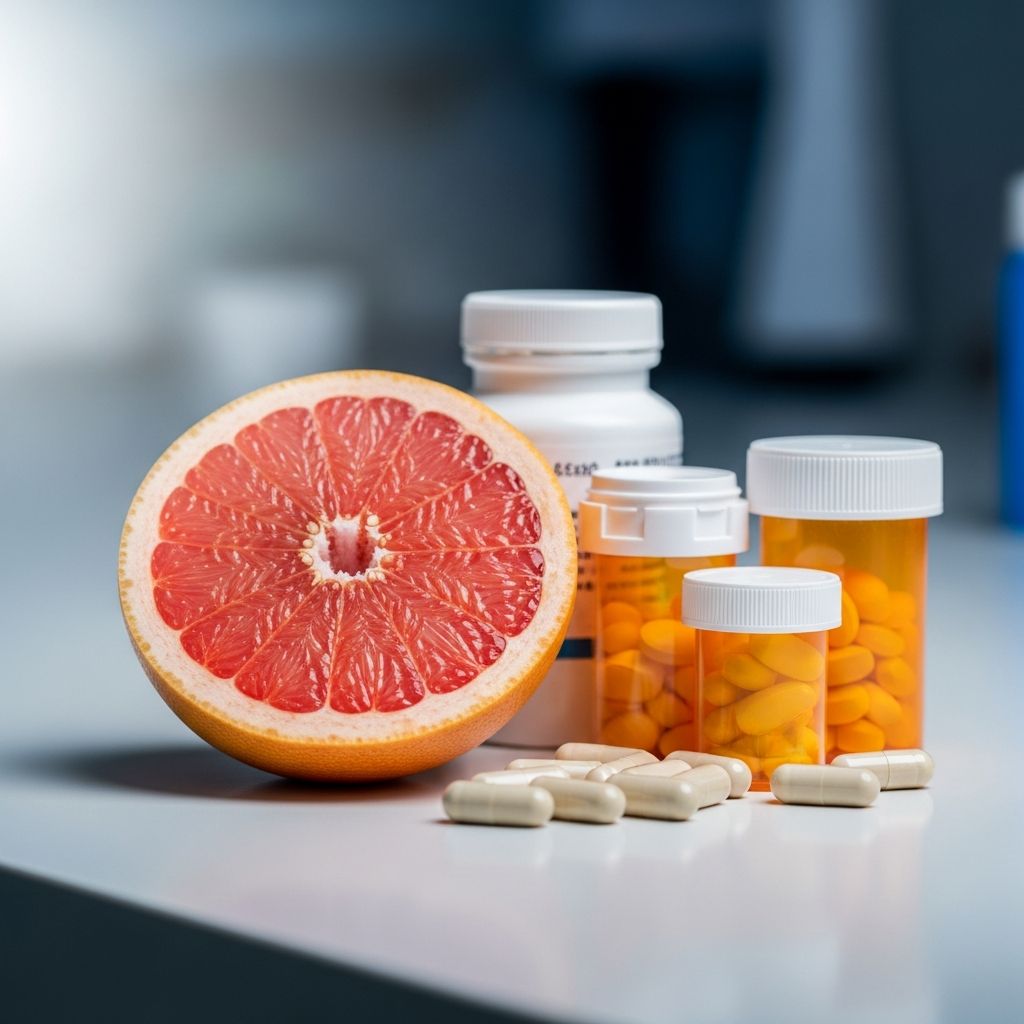
The relationship between grapefruit consumption and medication safety is a critical health concern that affects millions of people taking prescription drugs worldwide. While grapefruit is widely recognized as a nutritious citrus fruit packed with vitamins and antioxidants, its consumption can create significant complications for individuals taking certain medications. Understanding this interaction is essential for maintaining your health and ensuring that your medications work as intended.
The Extent of the Problem
The scope of grapefruit-medication interactions has expanded dramatically over recent decades. Currently, more than 85 medications have documented interactions with grapefruit, with the number of drugs capable of causing serious adverse effects increasing substantially. Between 2008 and 2012 alone, the number of medications known to interact with grapefruit and produce severe health consequences grew from 17 to 43—an alarming increase of more than 6 drugs per year. This upward trend underscores the growing importance of public awareness about this food-drug interaction.
Individuals taking medications for common and important health conditions—including cardiovascular disease, high cholesterol, and pain management—face the greatest risk. Many of these frequently prescribed medications have the potential to interact adversely with grapefruit when consumed together.
How Grapefruit Interferes with Medication Metabolism
The mechanism underlying grapefruit-medication interactions involves a sophisticated biological process centered on how your body breaks down drugs. To understand why grapefruit is problematic, it’s important to recognize how medications are normally processed in your system.
Your body relies on specialized liver enzymes, particularly a protein called cytochrome P450 3A4 (CYP3A4), to metabolize countless medications. This enzyme is found both in your liver and in your intestinal tract, where it plays a crucial role in breaking down drugs so they can be eliminated from your body. When CYP3A4 functions normally, it ensures that medications reach therapeutic levels in your bloodstream—high enough to be effective but not so high as to cause toxicity.
Grapefruit contains naturally occurring chemical compounds called furanocoumarins that directly interfere with this enzyme system. These furanocoumarins undergo metabolism and then bind irreversibly to the active site of CYP3A4, essentially disabling the enzyme through what scientists call “mechanism-based inhibition”. This means the damage is permanent—your body cannot recover until it synthesizes new enzyme molecules.
The consequence of this interference is dramatic: medications that would normally be broken down and eliminated become concentrated in your bloodstream. Rather than reaching the intended therapeutic dose, they accumulate to dangerously high levels, significantly increasing your risk of experiencing side effects or toxic reactions.
Which Medications Are Affected?
Grapefruit does not interact with all medications uniformly. Drugs that interact with grapefruit share specific characteristics: they must be taken orally, have low to intermediate bioavailability (meaning a relatively small percentage of the drug reaches your bloodstream when taken by mouth), and be metabolized primarily by the CYP3A4 enzyme.
Several major drug classes are known to interact with grapefruit:
Related Stories



Cardiovascular Medications
Calcium channel blockers represent one of the most significant categories affected by grapefruit. These medications, prescribed for high blood pressure and certain heart conditions, are particularly vulnerable to this interaction. Research demonstrates that consuming grapefruit with some calcium channel blockers can increase systemic drug concentrations threefold compared to consumption with water alone. This amplification can lead to excessive blood pressure reduction, dizziness, and heart rhythm abnormalities.
Specific calcium channel blockers of concern include nicardipine and others in this drug class. Additionally, certain antiarrhythmic agents used to regulate heart rhythm can interact with grapefruit, including amiodarone, dronedarone, and dofetilide.
Cholesterol-Lowering Medications
Statins, the most commonly prescribed class of medications for managing high cholesterol, demonstrate varying susceptibility to grapefruit interaction. Simvastatin is notably affected and should not be consumed with grapefruit. However, not all statins pose equal risk. Pravastatin does not produce a pharmacokinetic interaction with grapefruit, rosuvastatin is eliminated from the body unchanged and unaffected by grapefruit, and fluvastatin is metabolized by a different enzyme (cytochrome P450 2C9) that grapefruit does not inhibit.
For individuals taking atorvastatin, spacing out grapefruit consumption and medication administration may reduce—but does not eliminate—risk. Healthcare providers often recommend substituting with non-interacting alternatives or eliminating grapefruit from the diet entirely.
Pain Medications and Opioids
Opioid medications used for pain management can interact significantly with grapefruit. Oxycodone and methadone are particularly concerning because elevated levels of these medications can lead to serious respiratory depression and overdose risk. Given the potentially life-threatening nature of opioid toxicity, healthcare providers typically recommend complete avoidance of grapefruit for patients taking these medications.
Hormonal and Immunosuppressant Medications
Estrogen-containing medications, including estradiol used in hormone replacement therapy or contraceptives, can experience increased bioavailability when consumed with grapefruit. Immunosuppressant drugs like ciclosporin and tacrolimus, critical for transplant patients, show significantly elevated blood levels when combined with grapefruit juice, potentially leading to serious kidney damage (nephrotoxicity) and other adverse effects.
Additional medications affected by grapefruit include repaglinide (used for diabetes), certain antihistamines, and cancer medications like tamoxifen.
The Timing and Dose Factors
The severity of grapefruit-medication interactions depends significantly on timing and consumption patterns. A single glass of grapefruit juice (approximately 200 mL or 6.8 fluid ounces) contains enough furanocoumarins to cause measurable interaction with susceptible medications. However, the timing between grapefruit consumption and medication administration matters considerably.
Research specifically examining felodipine (a calcium channel blocker) demonstrates this timing effect clearly. When grapefruit juice is consumed within 4 hours before taking the medication, the maximal pharmacokinetic interaction occurs. Beyond this window, the interaction gradually diminishes: at 10 hours separation, the effect reduces to 50% of maximum, and at 24 hours separation, it decreases to 25% of maximum.
This finding carries important implications: a modest amount of grapefruit consumed in the morning can still meaningfully affect medications taken later in the day. Additionally, repeated consumption amplifies the problem. When grapefruit juice is consumed three times daily for a week, the interaction doubles in magnitude, demonstrating a cumulative inhibitory effect. Furthermore, the interaction with repeated consumption persists for up to 72 hours after grapefruit consumption ends.
Individual Variation in Susceptibility
Not everyone responds identically to grapefruit consumption. Individual vulnerability to this pharmacokinetic interaction varies markedly, meaning some people experience dramatic drug level elevations while others show minimal changes.
The reason for this variation lies in baseline enzyme activity. People with higher CYP3A4 levels in their small intestine before consuming grapefruit experience greater enzyme reduction and consequently greater increases in drug bioavailability afterward. This genetic and physiological variation explains why the same amount of grapefruit can produce vastly different results in different individuals.
Older patients face particular vulnerability. They are more likely to be taking multiple medications that might interact with grapefruit and tend to be more susceptible to the serious adverse consequences of elevated drug concentrations.
Potential Health Consequences
The dangers of unmanaged grapefruit-medication interactions extend beyond simple side effect amplification. Serious adverse effects documented in medical literature include:
- Torsade de pointes (a dangerous heart rhythm abnormality)
- Rhabdomyolysis (muscle tissue breakdown)
- Myelotoxicity (bone marrow damage)
- Respiratory depression (dangerously slowed breathing)
- Gastrointestinal bleeding
- Nephrotoxicity (kidney damage)
- Increased side effects such as headache, fatigue, insomnia, and anxiety
The fact that the number of drugs capable of producing such serious outcomes has nearly tripled over a single decade underscores the evolving nature of this clinical problem.
Practical Recommendations for Medication Safety
Given the complexity and scope of grapefruit-medication interactions, practical steps are essential:
- Consult Healthcare Providers: Always inform your doctor and pharmacist about your grapefruit consumption patterns. They can review your specific medications and determine whether interaction risk exists.
- Review All Medications: Discuss not only prescription medications but also over-the-counter drugs and supplements, as some may also interact with grapefruit.
- Consider Alternatives: If you regularly consume grapefruit and take an interacting medication, switching to a non-interacting alternative may be possible. For example, choosing pravastatin instead of simvastatin eliminates grapefruit interaction risk for statin therapy.
- Plan Timing Carefully: If grapefruit avoidance is impractical, spacing consumption at least 4 hours away from medication administration may reduce—though not eliminate—interaction risk.
- Account for Cumulative Effects: Recognize that repeated grapefruit consumption creates more pronounced interactions than isolated consumption.
- Avoid Other Citrus: While grapefruit poses the greatest risk, certain related citrus fruits including pomelo and Seville oranges (used in some marmalades) can produce similar interactions.
Frequently Asked Questions
Can I drink grapefruit juice if I space it hours apart from my medication?
While spacing provides some benefit, it does not eliminate risk. A single glass of grapefruit juice consumed within 4 hours before medication administration produces maximal interaction. Even 24 hours later, the effect persists at 25% of maximum. For critical medications, complete avoidance remains the safest approach.
Are all grapefruit products equally problematic?
While whole grapefruit, fresh juice, and processed juice all contain furanocoumarins and can cause interaction, specific factors like grapefruit variety (white versus pink), batch variation, and storage conditions theoretically influence interaction magnitude. However, these aspects have not been systematically studied, so all grapefruit products should be treated as potentially problematic.
Do other citrus fruits pose similar risks?
Pomelo and Seville oranges (bitter oranges used in marmalades) can produce grapefruit-like interactions. Regular sweet oranges and lemons pose minimal interaction risk for most medications.
If I miss a dose of grapefruit avoidance, what should I do?
Contact your pharmacist or doctor. They can advise whether your specific situation requires additional monitoring or temporary medication adjustment. Do not assume a single lapse creates immediate danger, but do report the incident for professional guidance.
Conclusion
The interaction between grapefruit and medications represents a significant but manageable health concern. With more than 85 drugs affected and the number of serious-consequence interactions climbing steadily, awareness and proactive communication with healthcare providers are essential. By understanding the mechanism of interaction, recognizing which medications are vulnerable, and implementing practical safety strategies, individuals can enjoy the nutritional benefits of citrus fruits while maintaining medication safety and effectiveness. The key is informed decision-making based on your specific medication regimen and professional guidance from your healthcare team.
References
- Grapefruit–Medication Interactions: Forbidden Fruit or Avoidable Interaction? — PubMed Central, National Center for Biotechnology Information. 2013. https://pmc.ncbi.nlm.nih.gov/articles/PMC3589309/
- Grapefruit and Medication: 11 Interactions to Know — GoodRx Health. 2024. https://www.goodrx.com/drugs/safety/grapefruit-juice-interactions
- Grapefruit–Drug Interactions — Wikipedia. Accessed 2026. https://en.wikipedia.org/wiki/Grapefruit%E2%80%93drug_interactions
- Management of Grapefruit-Drug Interactions — American Academy of Family Physicians. 2006. https://www.aafp.org/pubs/afp/issues/2006/0815/p605.html
- Drug Interactions with Grapefruit Juice — British Journal of Medical Practitioners. Accessed 2026. https://www.bjmp.org/content/drug-interactions-grapefruit-juice
Similar Articles








Read full bio of Sneha Tete