Greenstick Fractures: Causes, Symptoms & Treatment
Complete guide to understanding greenstick fractures in children: diagnosis, treatment, and recovery.
What Is a Greenstick Fracture?
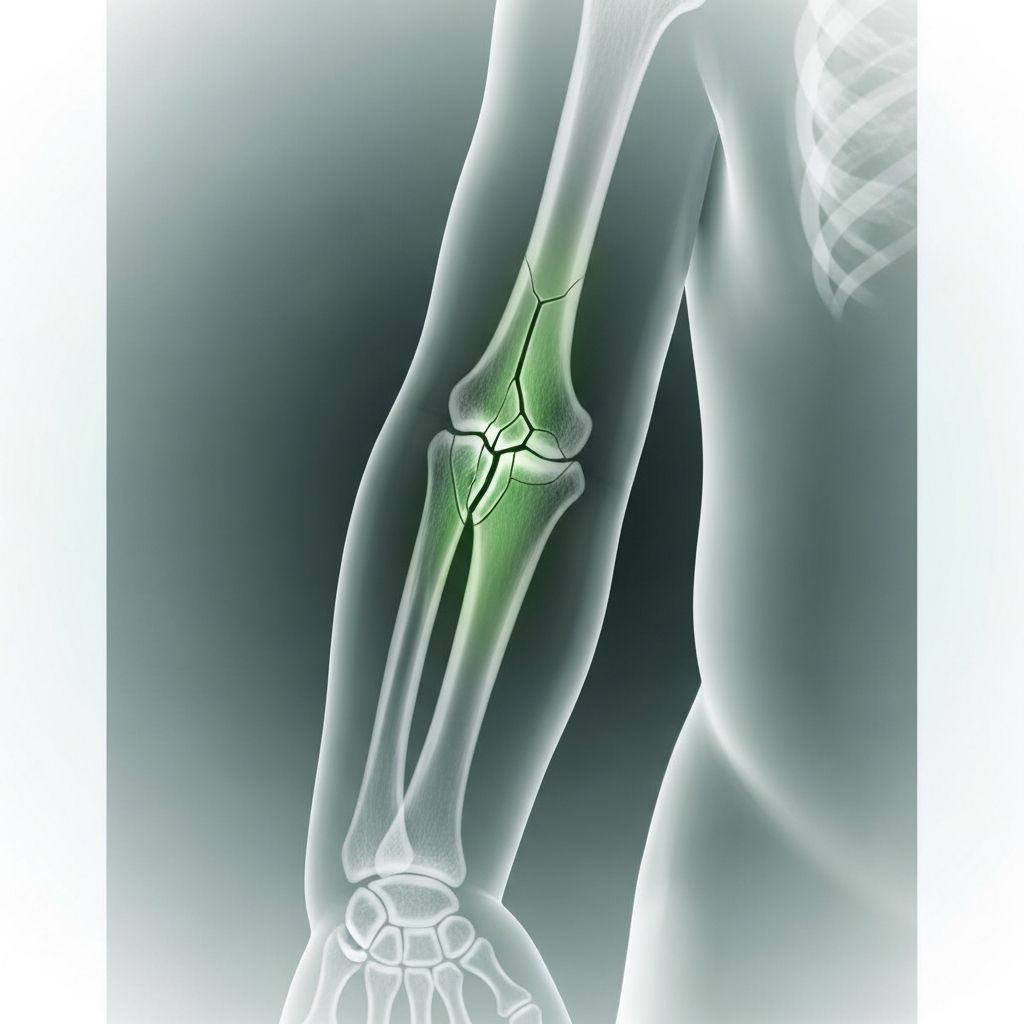
A greenstick fracture is a partial thickness fracture where only the cortex and periosteum are interrupted on one side of the bone while they remain uninterrupted on the other side. This type of injury occurs when a bone bends and cracks but does not break completely into separate pieces. The name “greenstick” comes from the similarity to what happens when you attempt to break a young, flexible green branch from a tree—the branch bends and splinters without snapping cleanly in two.
Greenstick fractures are characterized by their incomplete nature, which distinguishes them from complete fractures or breaks. The bone maintains some structural continuity, allowing it to retain partial alignment even after the injury. These fractures occur most commonly in long bones, including the fibula, tibia, ulna, radius, humerus, and clavicle, with the forearm and arm being the most frequently affected areas. This distribution pattern reflects how children naturally brace themselves during falls by extending their arms outward.
Why Children Are Most Susceptible
Greenstick fractures predominantly affect children under ten years old because their bones possess unique structural and compositional characteristics that differ significantly from adult bones. The pediatric periosteum—the connective tissue layer surrounding the bone—is thicker and more elastic than in adults. Additionally, children’s bones contain more water and less mineral content, making them more compliant and flexible.
These qualities of the pediatric skeleton result in unique fracture patterns, including greenstick, torus, and spiral injuries, which are fundamentally bending injuries rather than full-thickness cortical breaks. Adults rarely experience greenstick fractures because their bones have ossified and become rigid, losing the pliability necessary to bend without complete breakage. When greenstick fractures do occur in adults, the circumstances are typically extremely rare and unusual.
Common Causes of Greenstick Fractures
The primary mechanism for greenstick fractures involves traumatic injury, with falls being by far the most common cause. Falls on an outstretched arm (FOOSH) account for the majority of greenstick fractures in children. When a child attempts to catch themselves during a fall, they naturally extend their arms, placing significant compressive and tensile forces on the bones of the upper extremities.
Beyond falls, greenstick fractures can result from various other traumatic events:
- Motor vehicle collisions
- Sports injuries from direct impact or falls
- Non-accidental trauma where a child is struck with an object
- Indirect trauma from compression forces
Certain medical conditions and nutritional deficiencies increase susceptibility to greenstick fractures. Malnutrition, specifically vitamin D deficiency, significantly increases the risk of greenstick fractures of the long bones following trauma. Children with metabolic bone disease, rickets, or other conditions affecting bone mineralization face elevated risk for these injuries.
Recognizing Symptoms and Clinical Presentation
The symptoms of a greenstick fracture vary depending on the severity of the fracture and its anatomical location. In mild cases, patients may experience only a bruise or general tenderness in the affected area. More severe fractures present with obvious clinical signs including an apparent bend in the limb or fractured area, accompanied by significant swelling and pain.
Related Stories



Common physical findings associated with greenstick fractures include:
- Decreased range of motion in the affected limb
- Pain to palpation over the fracture site
- Ecchymosis (bruising) over the injured area
- Swelling and edema around the fracture
- Visible tenting if the fracture is displaced
- Soft tissue changes such as abrasion or laceration
More critical findings that require immediate medical attention include signs of injury to the neurovascular bundle, suggesting compromise to blood vessels or nerves. When assessing a distal forearm injury, there should be suspicion for median nerve injury, which can occur with greenstick fractures in this region. Symptoms also depend on the specific location of injury—for instance, a greenstick fracture in the finger might prevent normal finger movement, while a fracture in the arm typically presents with painful swelling and tenderness while maintaining some mobility.
Diagnostic Evaluation and Imaging
Seeking medical evaluation is advisable if you experience persistent pain in a limb that doesn’t resolve after a day or two, observe an obvious bend in your limb, or are unable to bear weight on an affected leg. During the clinical evaluation, your doctor will perform a thorough physical examination, assessing for tenderness, swelling, deformity, and numbness.
The healthcare provider will check for potential nerve damage that can accompany bone injuries by asking you to wiggle your fingers or perform other similar tests. They will also examine the joints above and below the injured area to ensure comprehensive assessment of the injury and surrounding structures.
Diagnostic imaging is essential for confirming a greenstick fracture. X-ray is the standard imaging modality used to diagnose greenstick fractures. Typical X-ray findings demonstrate a bending injury with a fracture line that does not completely traverse the bone. The imaging shows a fracture of the periosteum and cortex on one side (the tension side) which does not extend to the other side of the cortex and periosteum. On X-ray, there is a visible fracture on the tension side, with the opposite side of the bone demonstrating plastic deformation due to compressive forces.
Treatment and Management Approaches
The treatment strategy for greenstick fractures depends on the degree of angulation and displacement present at the time of injury. All greenstick fractures require immobilization to prevent further injury and promote proper healing. If the degree of angulation is significant, the healthcare provider needs to perform a closed reduction and immobilization. This procedure may involve manually straightening the limb, for which patients may receive pain medication, sedatives, or occasionally general anesthesia, as the procedure can be quite painful.
Casting several days after the initial injury decreases the risk of the need to recast due to increasing edema post-fracture. Most greenstick fractures are treated with a cast that keeps the bones in place as they heal and prevents further breakage of the already damaged bone. Because greenstick fractures are not full breaks, your doctor may decide that a removable splint will be sufficient for healing the limb, which can be more convenient as you can remove the splint for bathing.
The duration and type of immobilization depends on fracture location:
- Cast Duration: Cast immobilization of long bone greenstick fractures should last approximately six weeks.
- Distal Fractures: Can be managed with short arm casts
- Proximal Fractures: Require long arm casting initially, which may be switched to a short arm cast midway through the healing process at approximately three weeks. Patients with proximal fractures require closer orthopedic follow-up.
Orthopedic referral at the initial visit is generally recommended but depends on the degree of angulation and age of the child. All greenstick fractures should have some type of orthopedic follow-up due to their unstable nature and increased likelihood of refracture and displacement compared to buckle or plastic bending injuries.
Healing Timeline and Recovery
The recovery timeframe for greenstick fractures is generally favorable compared to complete fractures. It normally takes between four to eight weeks to completely heal a greenstick fracture. Your doctor may order X-rays at follow-up visits to ensure your injury is healing properly and that no complications have developed.
During the healing period, activities with a high risk of falling should be avoided, as there is a substantial risk of refracture and complete fracture while the bone is mending. Patients should maintain the immobilization as prescribed and attend all scheduled orthopedic follow-up appointments to monitor healing progress and address any concerns.
Prognosis and Long-Term Outcomes
Generally, the prognosis for greenstick fractures is good; the majority heal well without functional or gross changes in the appearance of the injured bone. Most children recover completely without long-term complications when properly managed. However, if not properly immobilized and without proper orthopedic follow-up, there is a significant risk of refracture, complete fracture, and displacement of the fracture.
Complications arising from inadequate management can lead to prolonged healing times, potential deformity, and functional limitations. Proper adherence to treatment protocols and follow-up care is essential to minimize these risks and ensure optimal outcomes.
Prevention and Patient Education
Trauma and sports injuries, most commonly due to a fall on an outstretched arm, may lead to fractures and require immediate evaluation to prevent complications. Understanding the risk factors and mechanisms of injury can help families implement preventive strategies. Greenstick fractures require immediate immobilization to prevent recurrent fractures, complete fractures, or displacement.
Key prevention strategies include:
- Proper protective equipment during sports and recreational activities
- Ensuring safe play environments with appropriate supervision
- Teaching children how to fall safely and protect themselves
- Maintaining adequate nutrition, particularly vitamin D intake, to support bone health
- Avoiding activities with high falling risk while healing from a previous injury
Frequently Asked Questions
Q: At what age do greenstick fractures most commonly occur?
A: Greenstick fractures occur most frequently in children under 10 years old due to the greater flexibility and elasticity of their bones compared to older children and adults.
Q: Can adults get greenstick fractures?
A: Adults rarely experience greenstick fractures because their bones have fully ossified and become rigid, lacking the pliability necessary for this type of injury. When they do occur in adults, the circumstances are extremely rare and unusual.
Q: How long does a greenstick fracture take to heal?
A: Greenstick fractures typically take between four to eight weeks to completely heal, depending on the location and severity of the fracture and how well the patient adheres to treatment protocols.
Q: What is the difference between a greenstick fracture and a complete fracture?
A: A greenstick fracture is a partial break where the bone bends and cracks but doesn’t break completely into separate pieces. A complete fracture breaks the bone entirely into two or more separate pieces, whereas a greenstick fracture maintains partial structural continuity.
Q: Can a greenstick fracture become a complete fracture?
A: Yes, if a greenstick fracture is not properly immobilized or without proper orthopedic follow-up, there is a risk of it progressing to a complete fracture. This is why continued medical follow-up is essential.
Q: What should I do if I suspect my child has a greenstick fracture?
A: Seek immediate medical evaluation if you observe persistent pain in a limb lasting more than a day or two, an obvious bend in the limb, or inability to bear weight on a leg. Your doctor will perform a physical examination and order X-rays to confirm the diagnosis.
References
- Greenstick Fracture — National Center for Biotechnology Information (NCBI), StatPearls. 2024. https://www.ncbi.nlm.nih.gov/books/NBK513279/
- Greenstick Fracture: Symptoms, Causes, and More — Healthline, Medically Reviewed by William Morrison, M.D. 2017. https://www.healthline.com/health/greenstick-fracture
- Understanding Bone Fractures — Science of Falling. https://scienceoffalling.com/articles/understanding-bone-fractures
Similar Articles








Read full bio of Sneha Tete