Griscelli Syndrome: Rare Hereditary Pigmentation Disorder
Understanding Griscelli syndrome: causes, types, diagnosis, and management of this rare hereditary condition.
Griscelli Syndrome: A Rare Hereditary Pigmentation Disorder
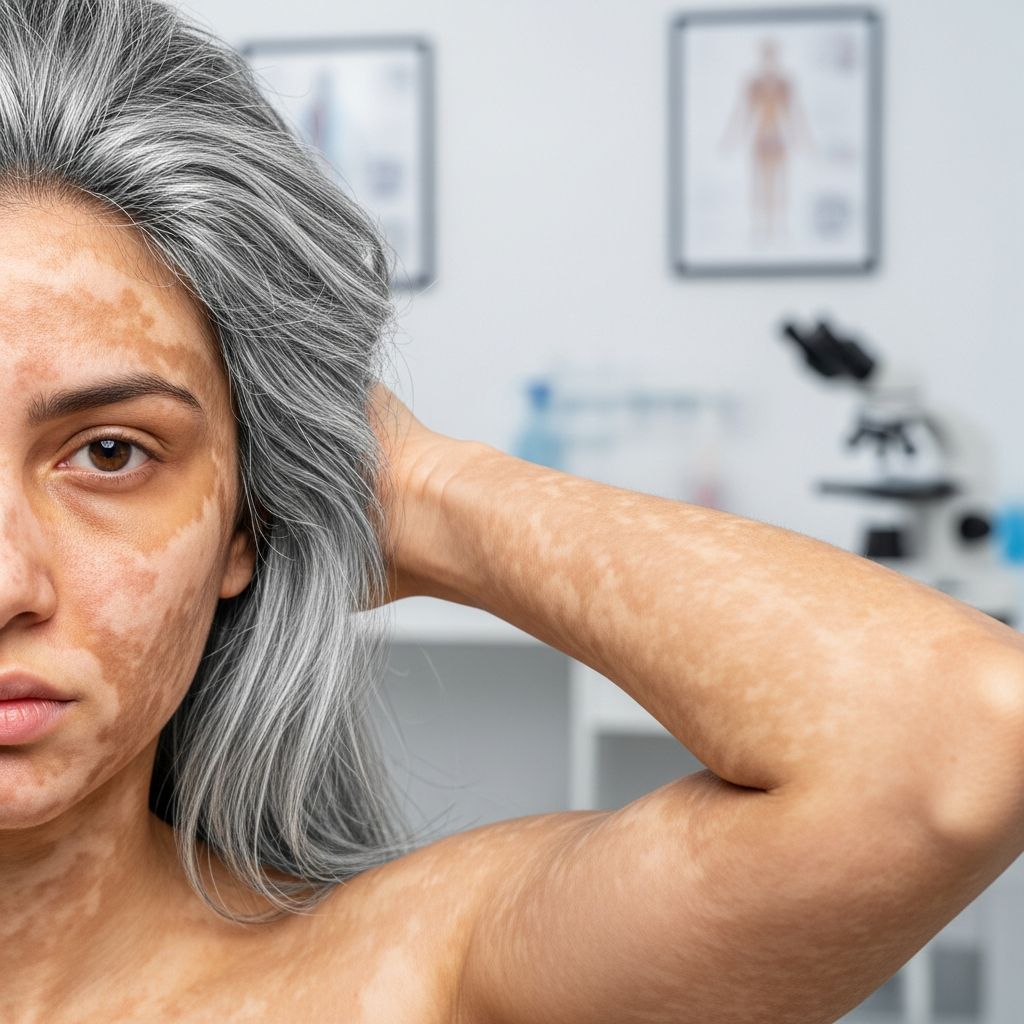
Griscelli syndrome is a rare hereditary syndrome characterized by pigmentary dilution of the skin and distinctive silver-colored hair. Also known as Griscelli-Pruniéras syndrome, this autosomal recessive genetic disorder primarily manifests as a form of partial albinism and may be associated with immunological or neurological complications depending on the specific type. Without appropriate treatment, most children affected by this condition face significant health challenges in early childhood.
Understanding the Pathophysiology
Griscelli syndrome is caused by genetic mutations that lead to defective transport of melanosomes—specialized organelles containing melanin pigment found within melanocytes (pigment-producing cells). Under normal circumstances, melanosomes are transported from the center of the melanocyte to its peripheral borders, allowing melanin to transfer to surrounding keratinocytes (skin cells) and hair follicle cells. When this transportation mechanism fails due to genetic mutations, melanosomes accumulate abnormally within melanocytes rather than being distributed properly. This accumulation results in reduced melanin delivery to the skin and hair, causing the characteristic pale appearance and silvery discoloration observed in affected individuals.
Classification of Griscelli Syndrome
Griscelli syndrome is classified into three distinct types based on the specific genetic defects and clinical manifestations:
Type 1: Neurological Form
Type 1 Griscelli syndrome is caused by a mutation in the MYO5A gene located on chromosome 15q21. This gene encodes myosin Va, a motor protein responsible for regulating organelle transport in both melanocytes and neuronal cells. Patients with type 1 typically present with dominant neurological alterations, including delayed motor development, intellectual disability, and hypotonia (reduced muscle tone). The neurological involvement is the defining characteristic of this type, distinguishing it from other forms of the syndrome.
Type 2: Immunological Form
Type 2 Griscelli syndrome results from a mutation in the RAB27A gene, also located on chromosome 15q21. The RAB27A gene encodes a protein belonging to the RAS oncogene family that regulates exocytic pathways, particularly cytotoxic granule exocytosis. This type is characterized by primary immunodeficiency with uncontrolled T lymphocyte and macrophage activation, leading to hemophagocytic lymphohistiocytosis (HLH). HLH is a serious blood disorder in which activated macrophages abnormally engulf other blood cells, resulting in reduced circulating blood cell counts, anemia, bleeding tendencies, and increased infection risk. Patients with type 2 may also present with neurological symptoms due to infiltration of the brain by activated hematopoietic cells. Additionally, type 2 Griscelli syndrome is associated with an increased incidence of lymphomas, including primary peripheral cutaneous T cell lymphoma.
Type 3: Pigmentation-Limited Form
Type 3 Griscelli syndrome presents with partial dilution of skin and hair pigment only, without systemic complications. This type is caused by mutations in the MLPH gene (melanophilin gene) located on chromosome 2q37, or in some cases by mutations in the MYO5A gene. The melanophilin protein forms a complex with RAB27a and myosin Va, participating in melanosome transport within melanocytes. Type 3 is considered less severe than types 1 and 2, as it lacks the immunological or neurological manifestations characteristic of the other forms.
Clinical Features and Presentation
Common Presentation Across All Types
All three types of Griscelli syndrome present with distinctive pigmentary changes:
Related Stories



- Silvery-gray or silver-colored hair
- Light-colored eyebrows and eyelashes
- Pale or hypopigmented skin that may develop a bronzed appearance after sun exposure
- Melanin clumping visible in hair shafts
Type-Specific Clinical Features
Type 1 patients present with:
- Delayed motor development
- Intellectual disability or developmental regression
- Hypotonia and muscle weakness
- Neurological alterations as the primary systemic manifestation
Type 2 patients exhibit:
- Recurrent infections due to immunodeficiency
- Fever and hemophagocytic lymphohistiocytosis
- Lymphadenopathy (enlarged lymph nodes)
- Hepatosplenomegaly (enlarged liver and spleen)
- Possible neurological symptoms from brain involvement
- Higher risk of lymphoma development
Type 3 patients present with:
- Only pigmentary dilution
- No neurological or immunological complications
- Normal development and immune function
Diagnostic Approach
Clinical Examination
Griscelli syndrome should be suspected in any child presenting with silver-colored hair, pale skin, eyebrows and eyelashes, particularly when neurological or immune defects are present. The distinctive appearance of the hair and skin often provides the first clinical clue to diagnosis.
Hair Shaft Microscopy
Microscopic analysis of hair shafts represents a key diagnostic tool. Light microscopy reveals characteristic clumps of pigment distributed irregularly throughout the hair shaft. These pigment clumps are larger and more prominently grouped compared to those seen in similar conditions like Chédiak-Higashi syndrome, where pigment clumps are more evenly distributed.
Skin Biopsy and Histological Examination
Histological examination of a skin biopsy may reveal prominent accumulation of mature melanosomes within epidermal and hair follicle melanocytes. This finding reflects the defective melanosome transport characteristic of the syndrome.
Immunological Testing
For suspected type 2 Griscelli syndrome, immunological assessment is essential. Testing should include evaluation of T and NK lymphocyte degranulation and cytotoxicity. A decrease in these functions characterizes type 2, while normal immunological function is observed in types 1 and 3. Flow cytometry can be used to assess expression levels of RAB27A protein.
Genetic Sequencing
Definitive diagnosis requires genetic sequencing of the corresponding causative gene. Based on clinical presentation and biological findings, sequencing of the MYO5A gene (for type 1), RAB27A gene (for type 2), or MLPH gene (for type 3) confirms the specific type of Griscelli syndrome.
Differential Diagnosis
Several conditions may mimic aspects of Griscelli syndrome and must be considered during the diagnostic process:
- Elejalde syndrome (ES): Presents with neurological symptoms without immunodeficiency and has a genetic link to GS type 1
- Chédiak-Higashi syndrome (CHS): May present with immunodeficiency similar to GS type 2, but hair microscopy shows more evenly distributed pigment clumps rather than the large clumps characteristic of GS
- Other albinism variants: Various forms of oculocutaneous albinism may present with hypopigmentation but lack the distinctive hair and systemic features of Griscelli syndrome
Additional Clinical Findings
Beyond the primary pigmentary and systemic manifestations, patients with type 1 and 2 Griscelli syndrome may present with:
- Hepatosplenomegaly (enlarged liver and spleen)
- Lymphadenopathy
- Dermic granulomas (inflammatory lesions in the skin)
- Recurrent or persistent infections
- Developmental delays or regression
- Seizures (in severe cases)
Treatment and Management
Type 1 Griscelli Syndrome
The prognosis for type 1 Griscelli syndrome is relatively good, with many patients showing favorable long-term outcomes. Management is primarily supportive, focusing on developmental support, neurological monitoring, and symptomatic treatment of any complications that arise.
Type 2 Griscelli Syndrome
Type 2 represents the most serious form, requiring aggressive intervention. Hematopoietic stem cell transplantation (HSCT) is the definitive treatment for type 2 Griscelli syndrome. Without HSCT, the prognosis for long-term survival is relatively poor, with many patients not surviving beyond the first decade of life. Early diagnosis and prompt initiation of HSCT significantly improve outcomes and quality of life.
Type 3 Griscelli Syndrome
Type 3 should be considered as a pigmentation phenotype rather than a pathological condition requiring extensive intervention. The prognosis is excellent, with life expectancy and quality of life similar to the general population.
Epidemiology
Griscelli syndrome is an extremely rare condition that typically presents between infancy and early childhood. The disorder has a higher incidence in populations with elevated prevalence of consanguineous marriage (marriage between blood relatives), indicating the autosomal recessive inheritance pattern and the importance of family history in diagnosis.
Prognosis and Outcomes
| Type | Primary Feature | Prognosis Without Treatment | Recommended Treatment | Expected Outcome |
|---|---|---|---|---|
| Type 1 | Neurological | Good | Supportive care | Favorable long-term survival |
| Type 2 | Immunological | Poor | Hematopoietic stem cell transplantation | Significantly improved with early HSCT |
| Type 3 | Pigmentary only | Excellent | None required | Normal life expectancy |
Key Diagnostic Points
- Silver-colored hair and pale skin in an infant or young child warrant investigation for Griscelli syndrome
- Light microscopy of hair shafts showing large pigment clumps is highly suggestive
- Immunological testing and genetic sequencing are essential for definitive diagnosis and type determination
- Early detection and diagnosis can significantly improve quality of life, particularly in type 2 disease
- Family history of consanguinity increases likelihood of diagnosis
Frequently Asked Questions
Q: Is Griscelli syndrome inherited?
A: Yes, Griscelli syndrome is an autosomal recessive genetic disorder, meaning an affected individual must inherit a mutated gene from both parents. Each parent is typically a carrier of one mutated gene but does not express the disease.
Q: Can Griscelli syndrome be cured?
A: Type 2 Griscelli syndrome can be treated with hematopoietic stem cell transplantation, which offers the best chance for long-term survival and improved quality of life. Types 1 and 3 are managed with supportive care, with type 3 requiring minimal intervention.
Q: What is the life expectancy for someone with Griscelli syndrome?
A: Life expectancy varies significantly by type. Type 1 has a good prognosis, type 3 has normal life expectancy, but type 2 has poor prognosis without treatment, with many patients not surviving the first decade without hematopoietic stem cell transplantation.
Q: How is Griscelli syndrome diagnosed?
A: Diagnosis involves clinical examination, hair shaft microscopy showing characteristic pigment clumps, skin biopsy, immunological testing (for type 2), and genetic sequencing to confirm the specific gene mutation.
Q: Are there any preventive measures for Griscelli syndrome?
A: Since Griscelli syndrome is an inherited genetic disorder, it cannot be prevented. However, genetic counseling is recommended for families with affected members to assess inheritance risk in future pregnancies.
References
- Griscelli syndrome: a diagnostic challenge of a rare disease — National Center for Biotechnology Information (NCBI/PubMed Central). 2024. https://pmc.ncbi.nlm.nih.gov/articles/PMC11444549/
- Griscelli syndrome — DermNet New Zealand. 2024. https://dermnetnz.org/topics/griscelli-syndrome
- Griscelli syndrome — Orphanet (European Organization for Rare Diseases). 2018. https://www.orpha.net/en/disease/detail/381
- Diagnostic and therapeutic caveats in Griscelli syndrome — Wiley Online Library. 2021. https://onlinelibrary.wiley.com/doi/10.1111/sji.13034
- Griscelli syndrome — VisualDx. 2024. https://www.visualdx.com/visualdx/diagnosis/?diagnosisId=54747
Similar Articles








Read full bio of medha deb