Groin Strain: Causes, Treatments, And 6 Rehab Exercises
Understand groin strain symptoms, causes, recovery timeline, and effective treatments to get back to activity pain-free.
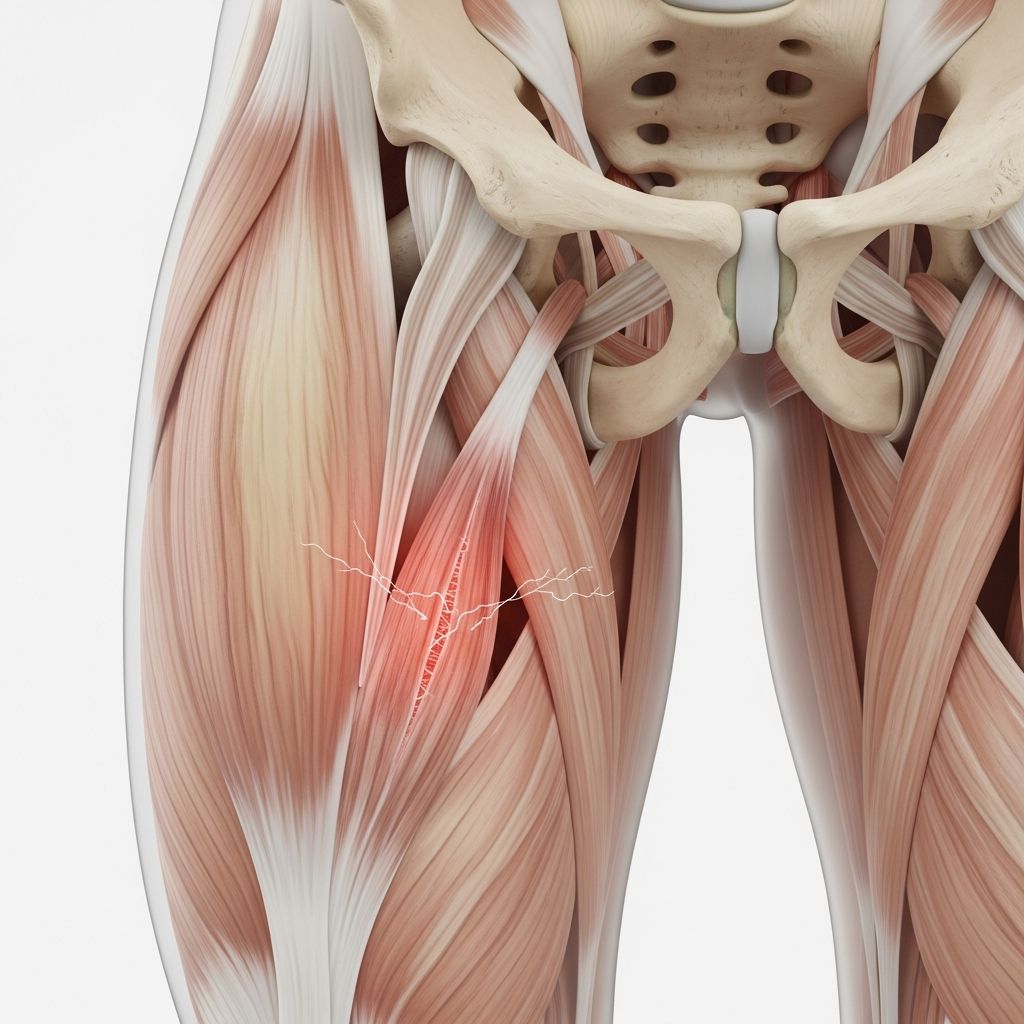
A groin strain, commonly known as a pulled groin muscle, is an injury to the adductor muscles of the inner thigh, where these muscles attach to the pubic bone. It occurs when these muscles are overstretched or torn, often during sudden movements in sports or daily activities, leading to pain, swelling, and limited mobility.
This injury affects athletes in sports like soccer, hockey, and football, accounting for 5-11% of injuries in these fields, but can also happen from everyday slips or heavy lifting. Most cases heal with conservative care, including rest, ice, physical therapy, and targeted exercises, allowing return to activity within weeks to months depending on severity.
What Is a Groin Strain?
The groin area is where the abdomen meets the legs, home to the adductor muscle group—five muscles (adductor longus, brevis, magnus, gracilis, and pectineus) that pull the thighs together, stabilize the hips, and enable inward leg rotation. A groin strain happens when these muscles suffer micro-tears or full ruptures from overload or rapid contraction.
Groin strains differ from hernias or hip joint issues, focusing specifically on muscle damage near the pubic bone. They range from mild discomfort to severe tears requiring extended recovery. Unlike chronic groin pain syndromes like athletic pubalgia, acute strains often resolve with proper management.
Symptoms of a Groin Strain
Symptoms appear immediately or within hours, including sharp
pain in the inner thigh or groin
, tenderness near the pubic bone, swelling, bruising, muscle spasms, weakness, and limping. Pain worsens with leg movements like walking, squeezing thighs together, or lifting the knee.- Sudden sharp pain or pop sensation during activity.
- Tenderness and swelling around the groin and pubic bone.
- Bruising from internal bleeding.
- Weakness or tightness in the leg, hindering daily tasks.
- Spasms or throbbing at rest, escalating with motion.
Higher-grade strains cause constant agony, even at rest, while mild ones flare only during exertion.
Groin Strain Grades
Groin strains are classified into three grades based on damage extent:
| Grade | Description | Symptoms | Recovery Time |
|---|---|---|---|
| Grade 1 (Mild) | Minor fiber stretch or tear | Tenderness, mild pain, full strength, normal walking | 1-2 weeks |
| Grade 2 (Moderate) | Partial tear, more fibers damaged | Moderate pain, swelling, reduced strength, limping | 3-6 weeks |
| Grade 3 (Severe) | Complete tear, muscle rupture | Severe pain, significant swelling/bruising, no function | 2-3 months or surgery |
Diagnosis via physical exam, history, and imaging like MRI distinguishes grades and rules out fractures or hernias.
Causes and Risk Factors
Groin strains stem from sudden thigh movements: sprinting, jumping, kicking, quick direction changes, or forceful adduction. Overuse in endurance sports or inadequate warm-ups contribute, as do daily incidents like slips or lifting.
Related Stories



Risk factors include:
- Male sex (higher incidence).
- Prior groin injuries.
- Hip muscle weakness (adductors/abductors).
- Previous season groin pain.
- Age 18-30 in athletes.
- Inadequate flexibility or conditioning.
Sports like soccer (5% injuries), hockey (10%), football, basketball, tennis, and dance pose highest risks.
How Is a Groin Strain Diagnosed?
Diagnosis starts with history (injury mechanism, pain onset) and exam (tenderness, strength tests, range of motion). Palpation along adductors and functional tests like single-leg stance confirm.
Imaging includes ultrasound for acute tears, MRI for severity/grade, X-rays to exclude bone issues, or bone scans for stress fractures. PTs assess biomechanics to identify weaknesses.
Treatment for Groin Strain
Initial care follows
RICE protocol
(Rest, Ice, Compression, Elevation) for 48-72 hours. NSAIDs reduce pain/swelling; avoid heat/alcohol initially.Progress to physical therapy: gentle stretching, strengthening hip/core/adductors, manual therapy. Severe cases (Grade 3) may need surgery, followed by PT. Hinge Health virtual PT aids remote recovery.
Recovery Timeline
- Grade 1: 1-2 weeks with rest/exercises.
- Grade 2: 4-8 weeks PT-focused.
- Grade 3: 3+ months, possible surgery.
Full return when pain-free, strength matches uninjured side (90%+), no limping.
Groin Strain Exercises and Stretches
Exercises restore strength/mobility, prevent recurrence. Start after acute phase.
- Adductor stretch: Sit, soles together, knees out; lean forward 20-30s, 3x/day.
- Hip flexor stretch: Lunge position, push hips forward 20-30s/side.
- Bridge: Lie on back, lift hips 10-15 reps.
- Side-lying leg lift: Strengthen abductors 10-15 reps/side.
- Clamshell: Side-lying, knee lift 10-15 reps.
- Core planks: 20-30s holds.
Progress to sport-specific drills. Videos recommended via PT apps.
Groin Strain Prevention
Prevent via warm-ups, dynamic stretches, balanced strength training (adductors/abductors/core), proper technique, gradual training increases. Address weaknesses early; use PT home programs.
When to See a Doctor for Groin Strain
Seek care if: severe pain/pop, inability to walk/bear weight, swelling/bruising worsens, pain persists >1 week despite RICE, fever/redness (infection), or groin lumps. Rule out fractures, hernias, labral tears. Urgent for sudden intense pain.
Frequently Asked Questions (FAQs)
How long does a pulled groin muscle take to heal?
Healing varies: 1-2 weeks for mild (Grade 1), 4-8 weeks moderate (Grade 2), 3+ months severe (Grade 3).
Should you massage a pulled groin muscle?
Avoid initially (first 72 hours); gentle massage later via PT to reduce scar tissue.
Can you walk with a pulled groin muscle?
Mild strains allow limping walking; severe ones prevent it. Use crutches if needed.
What is the fastest way to heal a pulled groin muscle?
RICE + early PT exercises accelerate recovery over rest alone.
Is a hot bath good for a pulled groin?
No initially—increases swelling; use after 72 hours for relaxation.
References
- Groin Strain: Causes, Symptoms, and Treatment — Hinge Health. 2023. https://www.hingehealth.com/resources/articles/groin-strain/
- Physical Therapy Guide to Groin Strain — ChoosePT (American Physical Therapy Association). 2023. https://www.choosept.com/guide/physical-therapy-guide-groin-strain
- Groin Strain (for Teens) — Nemours KidsHealth. 2023. https://kidshealth.org/en/teens/groin-strain.html
- Groin Injuries in Sports Medicine — PubMed Central (PMC). 2012-09-01. https://pmc.ncbi.nlm.nih.gov/articles/PMC3445110/
- Groin pain — MedlinePlus (U.S. National Library of Medicine). 2023. https://medlineplus.gov/ency/article/003111.htm
Similar Articles








Read full bio of Sneha Tete