The Growing Child: Understanding 3-Year-Old Development
Comprehensive guide to 3-year-old development, milestones, and parenting strategies.
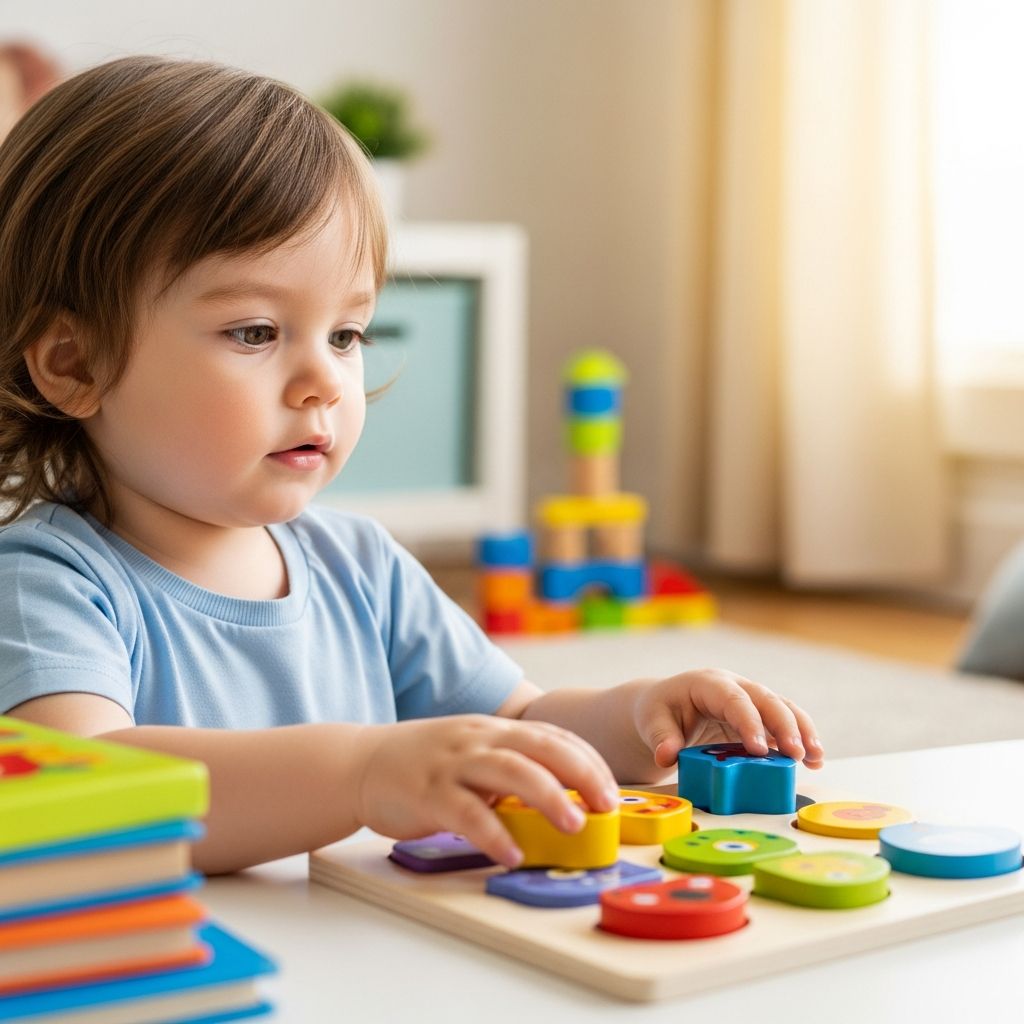
Understanding Your 3-Year-Old Child
Three-year-olds are at a fascinating stage of development, marked by rapid growth in cognitive abilities, language skills, and social awareness. At this age, children transition from toddlerhood into preschool years, demonstrating increased independence, curiosity, and complex thinking patterns. Understanding the typical developmental milestones and variations can help parents and caregivers provide appropriate support for healthy growth.
Cognitive Development at Age Three
By age three, children demonstrate astonishing cognitive competence that extends far beyond their earlier toddler years. Research shows that preschoolers aged 3 to 5 years become fundamentally different kinds of thinkers than they were as infants and toddlers, developing more conscious awareness of their own knowledge and understanding.
Key Cognitive Milestones
Three-year-olds typically exhibit the following cognitive developments:
- Increased symbolic thinking and imaginative play, using objects to represent other things
- Basic problem-solving abilities through trial-and-error experimentation
- Improved ability to follow two-step or three-step instructions
- Growing memory skills, including recalling recent events and familiar people
- Beginning to understand cause and effect relationships
- More conscious awareness of their own knowledge and learning processes
Learning Through Play and Interaction
Preschoolers at age three are intuitive learners who absorb knowledge through direct experience and doing rather than abstract thinking. Shared activities with educators and peers become potent opportunities for cognitive growth. Interactive play, such as building with blocks, engaging in pretend play, and exploring their environment, supports the development of problem-solving skills and creative thinking.
Adults can intentionally support cognitive development by observing the child’s interests, asking open-ended questions, and encouraging exploration. Interactive activities like storybook reading, where children describe pictures and engage in dialogue with adults about narratives, significantly enhance cognitive abilities and language development.
Language and Communication Development
Language development accelerates dramatically during the third year of life. By age three, most children have developed considerably more sophisticated communication abilities than they possessed at age two.
Speech and Language Milestones
- Vocabulary expansion to 250-900 words or more
- Use of two-word to multi-word phrases and simple sentences
- Ability to ask questions, particularly “why” and “what” questions
- Understanding and following simple conversations
- Singing songs and reciting familiar rhymes
- Telling simple stories about daily events
- Using pronouns like “I,” “you,” and “me” appropriately
Supporting Language Development
Parents and caregivers can enhance language development through responsive interaction. Engaging in back-and-forth conversations, naming objects and actions, reading books together, and responding to the child’s attempts at communication all support robust language growth. The back-and-forth interaction of child and adult activity provides stimulus for the developing awareness of the adult’s thinking and use of language.
Social and Emotional Development
Three-year-olds demonstrate increasingly complex social and emotional capabilities. Social, emotional, and behavioral skills are foundational to learning and long-term success, with sensitive, consistent, and responsive parenting in the first 5 years of life being one of the strongest predictors of children’s social-behavioral competence.
Emotional Milestones
- Expressing a wider range of emotions including joy, frustration, fear, and sadness
- Beginning to recognize emotions in others
- Developing attachment to primary caregivers with increasing independence
- Showing empathy and concern for others’ feelings
- Developing self-awareness and beginning to understand their role in social situations
- Demonstrating increased desire for autonomy and asserting preferences
Social Development and Peer Interaction
At age three, children are beginning to engage with peers in more meaningful ways. While parallel play (playing alongside other children without direct interaction) remains common, three-year-olds increasingly attempt cooperative play and show interest in other children. However, sharing and taking turns are still challenging skills that require adult guidance and support.
Supporting Emotional and Social Growth
Responsive caregiving that includes warm relationships, accessibility to help during exploration and interaction with peers, and emotional support contributes significantly to healthy social-emotional development. Positive parenting strategies, including establishing consistent routines, setting clear expectations, engaging in child-centered activities that promote learning, and using positive discipline strategies have been linked with children’s social-behavioral skill development.
Physical Development and Motor Skills
Three-year-olds demonstrate substantial improvements in both gross and fine motor skills, enabling greater independence in daily activities.
Gross Motor Development
- Running, jumping, and skipping with improving coordination
- Climbing stairs alternating feet
- Pedaling a tricycle
- Balancing briefly on one foot
- Throwing a ball overhand with reasonable accuracy
- Kicking a ball forward
Fine Motor Development
- Drawing circles, crosses, and simple lines
- Copying simple shapes
- Stacking blocks with increased precision
- Turning pages in a book one at a time
- Eating with a fork and spoon with minimal spillage
- Drinking from an open cup
- Beginning to show hand preference
- Undressing themselves with some difficulty
Self-Care Skills
Three-year-olds are developing increased independence in self-care activities. Many children at this age are becoming toilet trained, though readiness varies considerably. They can wash and dry their hands with assistance, begin to help with dressing, and participate in feeding themselves with utensils, though messiness is still common.
Play and Learning
Play is the primary vehicle through which three-year-olds learn and develop. Imaginative play becomes increasingly sophisticated, with children creating elaborate scenarios and assigning roles.
Types of Play at Age Three
- Pretend Play: Acting out roles from daily life or fantasy scenarios
- Constructive Play: Building with blocks and other materials
- Physical Play: Running, climbing, and exploring movement
- Social Play: Increasing engagement with other children
- Sensory Play: Exploring textures, sounds, and materials
Health and Wellness
Maintaining optimal health supports all areas of development in three-year-olds.
Nutrition
Three-year-olds require approximately 1,200-1,400 calories daily, distributed across three meals and one to two snacks. A balanced diet should include fruits, vegetables, whole grains, proteins, and dairy products. Encouraging self-feeding and involving children in food selection helps develop healthy eating habits.
Sleep Requirements
Most three-year-olds require 10-13 hours of sleep per 24-hour period, including nighttime sleep and daytime naps. Consistent bedtime routines support healthy sleep patterns and contribute to better behavior and learning during waking hours.
Physical Activity
Three-year-olds should engage in at least 3 hours of physical activity throughout the day, including both structured play and unstructured exploration. Regular physical activity supports cardiovascular health, motor skill development, and emotional well-being.
Preventive Health Care
Regular well-child visits support early identification of any developmental concerns. Vaccination according to recommended schedules protects children from preventable diseases. Vision and hearing screening ensure sensory systems are developing normally.
Behavioral Expectations and Discipline
Understanding typical three-year-old behavior helps parents respond appropriately to developmental challenges.
Common Behaviors
- Increased assertiveness and desire for control (“Terrible Threes”)
- Difficulty transitioning between activities
- Tantrums and emotional outbursts when frustrated
- Testing boundaries and saying “no”
- Limited impulse control
- Curiosity about cause and effect (sometimes destructive)
Effective Guidance Strategies
Positive discipline approaches are more effective than punitive methods. These include clear, consistent expectations; natural consequences; redirection; and positive reinforcement of desired behaviors. Setting clear expectations and maintaining consistent routines help three-year-olds feel secure while learning self-regulation skills.
Supporting School Readiness
Experiences during ages three to five lay important groundwork for future academic success. Research demonstrates that social-behavioral readiness at kindergarten entry predicts later school outcomes significantly. Children who develop strong social-behavioral skills during the preschool years are better positioned for academic achievement and positive peer relationships.
Key Foundations for Learning
- Communication and language skills for classroom participation
- Ability to follow instructions and routines
- Social skills for peer interaction and cooperation
- Emotional regulation and impulse control
- Curiosity and engagement with learning activities
- Self-care independence
Frequently Asked Questions
Q: When should I be concerned about my 3-year-old’s development?
A: Contact your pediatrician if your child is not speaking in simple sentences, cannot follow basic instructions, shows little interest in play or interaction with others, has extreme difficulty with transitions, or displays persistent behavioral concerns. Early intervention can address developmental delays effectively.
Q: How much screen time is appropriate for a 3-year-old?
A: Limit screen time to high-quality programming shared with your child whenever possible. Experts recommend no more than one hour per day of quality programming. Interactive experiences with caregivers remain more beneficial for development than passive screen watching.
Q: Is my 3-year-old ready for preschool?
A: Readiness varies among children. Consider your child’s ability to separate from parents, follow directions, interact with peers, manage self-care tasks, and handle transitions. Some three-year-olds thrive in preschool settings, while others benefit from waiting until age four.
Q: How can I handle tantrums effectively?
A: Remain calm and ensure safety during tantrums. Validate emotions while maintaining boundaries on behavior. Offering choices, using redirection, and maintaining consistent routines help prevent tantrums. Most tantrums pass more quickly when parents avoid power struggles.
Q: What should I do about aggressive behavior?
A: Aggression is common in three-year-olds who lack impulse control and verbal skills. Intervene immediately to ensure safety, clearly state that hitting is not acceptable, help the child label emotions, teach appropriate alternatives, and model calm conflict resolution consistently.
Q: How can I encourage independence while keeping my child safe?
A: Provide age-appropriate choices and responsibilities while maintaining necessary safety measures. Use childproofing, supervise closely during exploration, teach safety rules clearly, and praise efforts at independence. Balancing autonomy with safety builds both confidence and security.
References
- Cognitive Development and Early Learning — National Academies of Sciences, Engineering, and Medicine. 2015. https://www.nationalacademies.org/read/19401/chapter/8
- The Costly Consequences of not Being Socially and Behaviorally Ready to Learn — Journal of School Psychology. 2019. National Center for Biotechnology Information. https://www.ncbi.nlm.nih.gov/pmc/articles/PMC5862700/
- Healthy Child Care America Resources — U.S. Department of Health & Human Services. https://www.healthychildcare.org
- Developmental Screening and Assessment — Centers for Disease Control and Prevention. 2024. https://www.cdc.gov/ncbddd/child-development
Similar Articles








Read full bio of medha deb