Growth Hormone Therapy and Childhood Vision Risks
Exploring how growth hormone treatments in kids may influence eye health, myopia progression, and potential vision complications.
Growth hormone (GH) therapy is widely prescribed to children with growth deficiencies to promote normal stature development. However, emerging research highlights its potential effects on ocular health, particularly in relation to myopia progression, retinal changes, and intraocular pressure. While benefits for physical growth are clear, understanding vision-related risks is crucial for pediatricians, endocrinologists, and ophthalmologists managing these patients.
Understanding Growth Hormone’s Role in Child Development
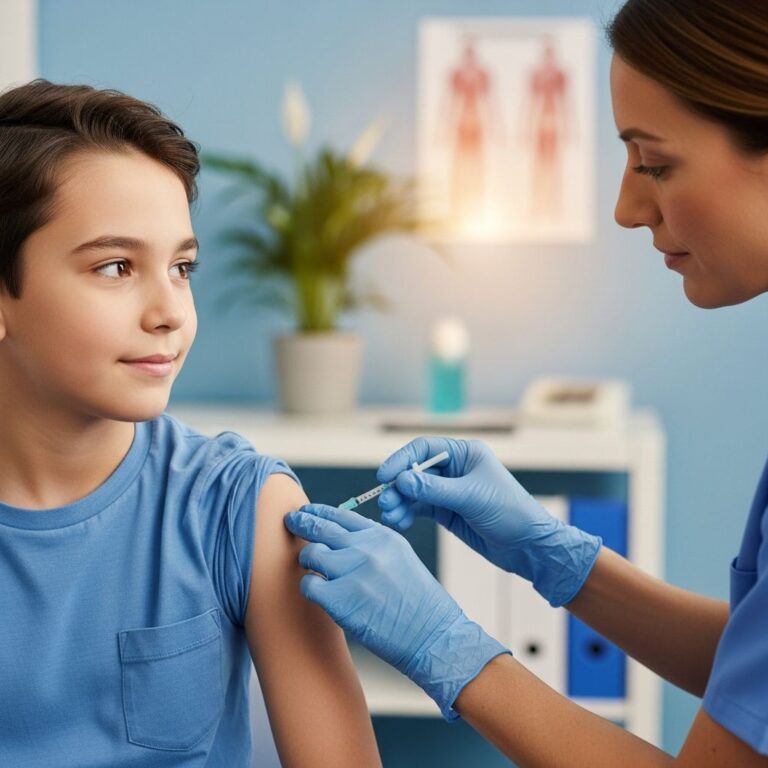
Growth hormone, produced by the pituitary gland, regulates linear growth, metabolism, and tissue repair. In children with congenital GH deficiency or idiopathic short stature, recombinant human GH (rhGH) is administered subcutaneously to mimic natural levels. Typical dosing ranges from 0.04 mg/kg/day, often 5 days a week, depending on the condition like Turner syndrome or chronic kidney disease.
During childhood, the eye undergoes emmetropization—a process where refraction stabilizes as the eyeball grows proportionally. Disruptions in this balance can lead to refractive errors like myopia (nearsightedness), where the eyeball elongates excessively. GH influences somatic growth, raising questions about its impact on ocular structures such as axial length and corneal curvature.
Links Between GH Therapy and Myopia Development
Studies indicate that GH deficiency may alter emmetropization. In children with congenital GH deficiency, eye dioptric power decreases less effectively compared to healthy peers, potentially delaying normal vision maturation. After two years of GH replacement, both deficient and control groups showed refractive shifts, but healthy children exhibited greater changes, suggesting late therapy initiation in GH-deficient kids hampers optimal eye growth.
Conversely, exogenous GH can accelerate myopia in some cases. High doses have been linked to rapid axial elongation, exacerbating nearsightedness. Parents and clinicians should monitor refraction annually in GH-treated children, especially those with pre-existing hypermetropia or family history of myopia.
- Key Risk Factors: High GH doses (>10 mg/m²/week), severe refractive errors, and delayed therapy start.
- Monitoring Tips: Baseline cycloplegic refraction and axial length measurements before treatment.
- Progression Signs: Increased minus sphere in glasses prescription over 6-12 months.
Retinal Complications from GH Administration
Retinopathy represents a serious vision threat in GH therapy. Case reports describe central serous retinopathy and macular edema in non-diabetic children on high-dose GH. One patient developed bilateral retinal edema after 10.5 mg/m²/week, resolving upon discontinuation, only to recur at lower doses (3.9 mg/m²/week).
Mechanisms may involve GH-induced vascular permeability, akin to diabetic retinopathy. In animal models, GH promotes leaky retinal vessels, leading to scarring and potential detachment. Children with extreme short stature or hypoxia-related conditions appear particularly susceptible.
| Complication | Symptoms | Resolution |
|---|---|---|
| Macular Edema | Blurred central vision, reduced acuity | GH cessation, typically 1-3 months |
| Central Serous Retinopathy | Distorted vision, metamorphopsia | Spontaneous or with dose reduction |
| Vascular Leakage | Floaters, scotomas | Monitor with OCT imaging |
Intraocular Pressure Elevation and Glaucoma Concerns
Recombinant GH correlates with elevated intraocular pressure (IOP) in children. A study of 55 treated kids (aged 5+) found average IOP of 16 mmHg versus 13 mmHg in controls, with higher doses and longer durations worsening effects. Though within normal ranges (<21 mmHg), prolonged elevation risks glaucoma.
Related Stories



Intracranial hypertension (IH), or pseudotumor cerebri, is another GH-related issue. Symptoms include headaches, nausea, blurry vision, and transient obscurations. Optic nerve swelling (papilledema) can lead to permanent loss if untreated. GH-induced IH is rare but significant in growth-deficient children.
- Screen for family glaucoma history before starting GH.
- Tonometry every 3-6 months during therapy.
- Discontinue if IOP exceeds 21 mmHg or papilledema appears.
Positive Visual Outcomes in Specific Conditions
Not all GH effects are adverse. In children with cerebral palsy and visual pathway lesions, GH combined with tachistoscope stimulation improved visual evoked potentials (VEPs). Latency of N75, P100, and N145 waves decreased significantly (p<0.001), enhancing amplitudes and functional vision. One case showed MRI resolution of occipital cysts.
These benefits stem from GH’s neuroprotective properties, promoting axonal repair post-injury. Ongoing trials explore GH’s role in optic nerve recovery, though results vary by etiology.
Clinical Guidelines for Safe GH Therapy
Pre-treatment ophthalmic evaluation is essential: refraction, fundoscopy, IOP, and visual fields. Repeat every 6 months or sooner if symptoms arise. Dose adjustments or pauses mitigate risks without halting growth benefits.
Multidisciplinary care involving endocrinologists and ophthalmologists optimizes outcomes. For myopia-prone kids, adjuncts like atropine drops or orthokeratology may counter GH effects.
Long-Term Implications for Eye Health
While short-term risks dominate literature, long-term data on GH and high myopia are limited. Accelerated eye growth could heighten retinal detachment or myopic degeneration risks in adulthood. Population studies are needed to quantify incidence.
Genetic factors, like IGF-1 polymorphisms, may predict susceptibility. Future therapies targeting GH receptors selectively could preserve growth while safeguarding vision.
Frequently Asked Questions (FAQs)
Does GH therapy always cause myopia in children?
No, but it may accelerate progression in at-risk kids. Regular monitoring detects changes early.
Can vision problems from GH be reversed?
Many resolve upon stopping therapy, like macular edema, but prompt intervention is key.
Should my child get an eye exam before GH?
Yes, comprehensive baseline assessment is standard.
Is GH safe for kids with family glaucoma history?
Caution advised; exclude via screening and monitor closely.
Can GH help vision in brain-injured children?
Promising in cerebral palsy cases with stimulation.
Prevention Strategies for Parents
- Schedule joint endo-ophtho visits quarterly.
- Track vision changes at home (reading distance, headaches).
- Promote outdoor time to slow myopia (2+ hours/day).
- Avoid high-dose regimens unless necessary.
Balancing growth promotion with vision preservation requires vigilance. Informed families contribute to safer outcomes.
References
- Deterioration of Visual Acuity Associated with Growth Hormone — Karger Publishers. 2007. https://karger.com/hrp/article/67/2/67/369707/Deterioration-of-Visual-Acuity-Associated-with
- Growth Hormone and Visual Stimulation Restore Normal Vision in Children with Cerebral Palsy — ESmed.org. 2023. https://esmed.org/MRA/mra/article/view/3069
- Congenital growth hormone deficiency and eye refraction — PubMed/Karger. 2005-08-01. https://pubmed.ncbi.nlm.nih.gov/16088242/
- Growth Hormone Turns a Blind Eye — Science.org. 1997-11-14. https://www.science.org/content/article/growth-hormone-turns-blind-eye
- Growth Hormone Connected to Increased Eye Pressure in Children — Pharmacy Times. 2023. https://www.pharmacytimes.com/view/growth-hormone-connected-to-increased-eye-pressure-in-children
- Growth hormone-related intracranial hypertension — University of Iowa. 2023. https://webeye.ophth.uiowa.edu/eyeforum/cases/288-gh-related-iih.htm
Similar Articles








Read full bio of Sneha Tete