Adult Eczema: Evidence-Based Management Guidelines
Comprehensive management strategies for treating adult eczema and reducing flare severity.
Guidelines for the Management of Adult Eczema
Adult eczema, also known as atopic dermatitis, is a chronic relapsing inflammatory skin condition that requires a comprehensive and individualized treatment approach. The primary objectives of eczema management are to reduce the number and severity of flares, increase disease-free periods, and improve quality of life. These guidelines synthesize recommendations from the American Academy of Dermatology and the British Association of Dermatologists, providing evidence-based strategies for treating adult eczema in clinical practice.
Treatment Goals and Principles
Effective eczema management requires a multifaceted approach that addresses both acute flares and long-term disease control. Treatment goals should focus on minimizing the frequency and intensity of exacerbations while extending periods of remission. A comprehensive treatment plan must incorporate identification and avoidance of triggering factors, maintenance of skin hydration, management of pruritus (itching), treatment of acute flares, and early intervention for secondary infections. Success in eczema management is measured not only by clinical improvement but also by the patient’s ability to maintain skin health and minimize treatment burden.
Primary Treatment Plan for Adult Eczema
The foundation of eczema treatment rests on several key components that should be implemented systematically:
- Identify and eliminate exacerbating factors: Determining and removing triggers is essential for long-term control. Common irritants include soaps, fragrances, harsh detergents, and certain fabrics.
- Keep skin hydrated: Regular emollient application is the cornerstone of maintenance therapy and helps restore the skin barrier function.
- Treat pruritus and prevent flares: Managing itching prevents the scratch-itch cycle that perpetuates inflammation.
- Treat exacerbations promptly: Using intermediate- and high-potency topical corticosteroids for short periods controls acute flares.
- Treat secondary infections early: Staphylococcus aureus infections are common complications requiring prompt antibiotic intervention.
Emollient Therapy: The Foundation of Care
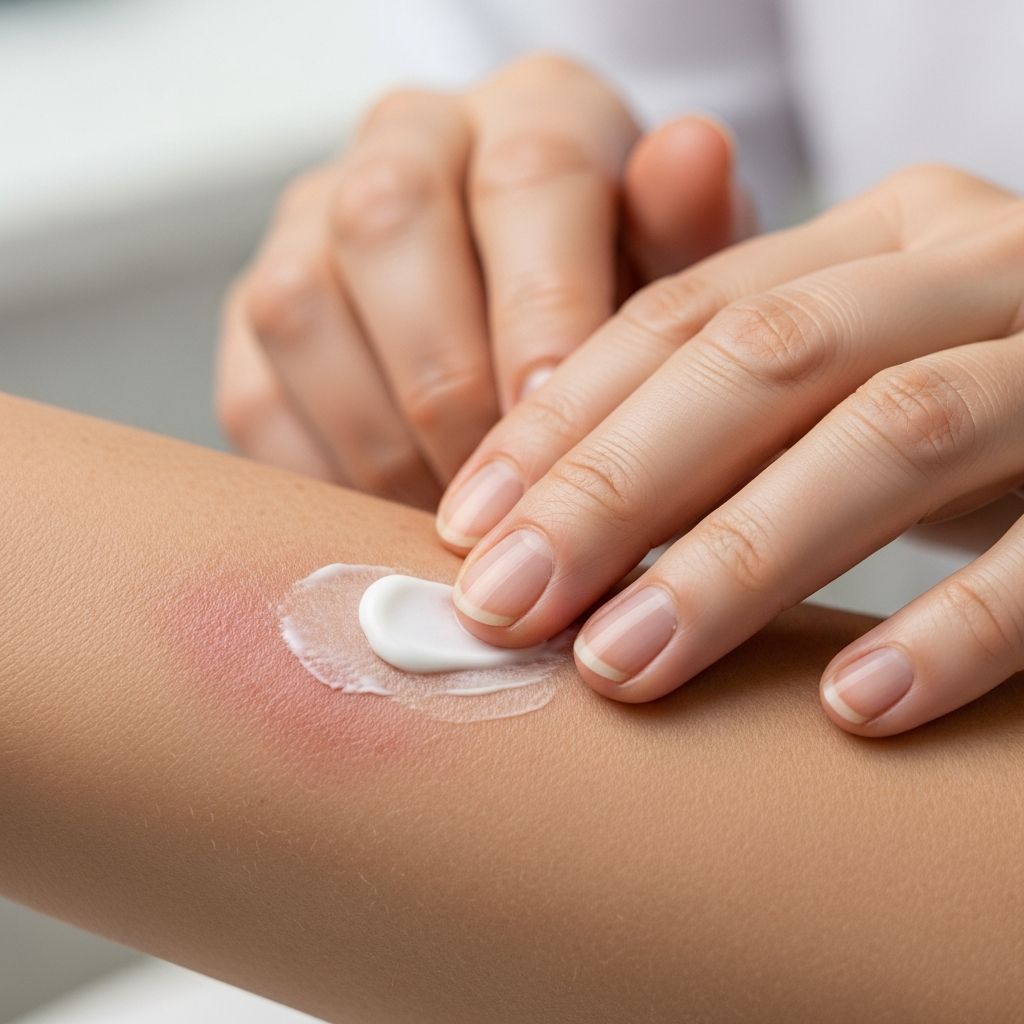
Emollients are the most important component of eczema management and should be recommended to all patients. These products restore and maintain the skin barrier function, reducing transepidermal water loss and preventing dryness that exacerbates inflammation. Patients should be encouraged to apply emollients regularly, with a minimum of twice-daily application recommended. For adults with extensive eczema, emollient requirements can be substantial, necessitating approximately 500 grams per week or more to provide adequate coverage and symptom relief.
When selecting emollients, product formulation and patient preference are important considerations. Lighter cream-based formulations may be preferable during daytime hours, while greasier ointment-based products are beneficial for nighttime use and provide superior barrier protection. Ointments are generally preferred over creams as they contain fewer potential sensitizers and allergens. Patients should be provided with a range of products to try, allowing them to identify formulations that work best for their skin. To minimize bacterial contamination, patients should use clean spoons or spatulas to dispense emollients from tubs, or alternatively use pump-dispensing containers. Healthcare providers must also counsel patients on the flammability risks associated with greasy formulations.
Topical Corticosteroid Therapy
Topical corticosteroids are recommended when emollients alone are insufficient to control eczema symptoms. These anti-inflammatory agents are highly effective for managing acute flares and should be applied in appropriate amounts to all affected areas to achieve rapid control. The potency of the steroid should be matched to the severity of the flare: mild steroids for mild flares, moderately potent steroids for moderate flares, and potent steroids for severe exacerbations.
Application technique is crucial for optimal therapeutic benefit. The fingertip unit (FTU) method provides a standardized measurement for dosing. One fingertip unit—squeezed from the last finger crease to the fingertip—is sufficient to treat an area equivalent to two adult handprints. Topical steroids should be applied in a downward motion following hair growth patterns without vigorous rubbing, which can block hair follicles and increase infection risk. Treatment duration should be limited to short courses, typically 5-7 days for facial eczema and up to 14 days for trunk and limb involvement, with dosing adjusted based on clinical response.
Topical Steroid Regimens by Body Site
| Body Site | Recommended Regimen |
|---|---|
| Face and Neck | 0.5% or 1% hydrocortisone ointment once daily for 5-7 days. If response is unsatisfactory, increase to twice-daily application for 5-7 days. Severe facial eczema may require moderate potency steroid (e.g., clobetasone butyrate 0.5% ointment) for 3-5 days, then step down to hydrocortisone for 5-7 days. |
| Trunk and Limbs | Moderate potency topical steroid (e.g., clobetasone butyrate 0.5% ointment) once daily for up to 14 days. If no response or particularly severe eczema, use potent steroid (e.g., betamethasone valerate 0.1% ointment) for up to 14 days. |
Healthcare providers should reassure patients that topical steroids are safe and effective when used appropriately. Concerns about steroid phobia should be addressed through patient education emphasizing proper use and short-term application. Oral steroids should be avoided for eczema management whenever possible, as short-term improvements are rarely sustained, and the condition often becomes more unstable following oral corticosteroid use.
Topical Immunomodulatory Agents
Topical immunomodulatory agents, including tacrolimus and pimecrolimus, offer suitable alternatives to topical corticosteroids, particularly for sensitive areas such as the face and intertriginous regions. Pimecrolimus cream is licensed for treatment of mild to moderate atopic eczema. Application should be made twice daily to areas of active eczema for up to 3 weeks, then reduced to once-daily application if eczema remains active. The cream should be applied in amounts sufficient to produce a thin shine on treated skin. These agents are particularly valuable for patients with corticosteroid sensitivity or those requiring prolonged maintenance therapy.
Management of Infection
Secondary bacterial infection, particularly with Staphylococcus aureus, is a recurrent complication of adult eczema that can significantly worsen disease severity. When clinical signs of infection are present, including increased inflammation, weeping, or pustules, oral antibiotics should be initiated in conjunction with topical steroid therapy. Flucloxacillin is a good first-line choice, with clarithromycin recommended for penicillin-allergic patients. A short course of antibiotics typically helps resolve stubborn disease, though antibiotics alone will not settle flares—topical steroids and emollients remain essential components of treatment.
For patients with recurrent infections, bacterial swabs should be obtained to guide antibiotic selection and detect resistance patterns. Combined topical antibiotic-steroid preparations may be beneficial, though fusidic acid preparations should be limited to short-term use only due to high resistance rates. Routine use of emollients containing antiseptics is not recommended because they may cause sensitization.
Advanced Treatment Strategies
Wet Wrap Therapy
Wet wrap dressings provide an intensive treatment option for severe eczema. This technique involves applying topical steroids and emollients, then covering the area with damp cotton layers followed by dry outer layers to enhance penetration and provide soothing relief. Wet wraps are typically applied overnight and removed in the morning. Emollients should continue to be applied frequently throughout the day. This treatment should be limited to a few nights, with maximum consecutive use of 5-7 nights, until redness, swelling, and weeping have resolved. Wet wraps may be particularly valuable for hand, foot, and limb eczema when used in conjunction with occlusive cotton tubular bandages or gloves.
Phototherapy
Phototherapy represents an important treatment option for patients with refractory eczema that does not respond to first-line therapies. Specialist dermatologists should oversee phototherapy initiation and monitoring to ensure appropriate protocols and patient safety.
Systemic Immunomodulatory Agents
Patients with severe eczema unresponsive to topical therapies may be candidates for systemic immunomodulatory agents. These advanced treatments require specialist assessment and ongoing monitoring by dermatologists experienced in their use.
Response to Treatment and Follow-Up
Patient response to first-line therapy determines the next course of action and can be classified as complete response, partial response, or treatment failure. Complete response is relatively rare unless a specific exacerbating factor can be identified and removed or corrected. Most patients achieve a partial response since eczema is a chronic relapsing condition. Patients who do not respond to first-line therapy require complete reassessment and, if necessary, referral to a dermatologist for specialist evaluation and consideration of alternative diagnoses.
Patients with partial response will experience reduced pruritus and disease severity. These patients require a long-term follow-up plan incorporating:
- Continued regular emollient use
- Maintenance topical corticosteroid therapy on scheduled days (typically 2 consecutive days per week for several months)
- Periodic clinical review every 3-6 months to assess treatment response and monitor for signs of skin atrophy
- Adjustment of treatment intensity based on disease activity
- Patient education regarding trigger avoidance and proper application techniques
Management of Recurrent Flares
Patients experiencing more than 4 flares per year benefit from a maintenance approach. This strategy involves applying the topical steroid used for flare management on 2 consecutive days per week (for example, weekends) for several months while continuing daily emollient and soap substitute use. After several months, patients should attempt to discontinue topical steroids while continuing emollients and gentle cleansing products. Patients on maintenance therapy require regular review to assess treatment response and detect signs of cutaneous atrophy.
Practical Patient Education
Successful eczema management depends critically on patient understanding and adherence to treatment plans. Key educational points include:
- Topical steroids are safe and effective when used appropriately for short-term flare management
- Irritants such as soaps, fragrances, and harsh detergents should be avoided
- Dietary modification is usually not required for eczema management
- Emollients should be applied liberally and frequently, even on clear skin, for optimal prevention
- Cosmetic moisturizers often contain multiple ingredients and allergens that may exacerbate eczema; medical emollients are preferred
- Products labeled as ‘natural,’ ‘dermatologically-tested,’ or ‘hypoallergenic’ can still cause irritant or allergic reactions
- A written action plan helps patients understand how to manage their eczema and when to escalate care
When to Refer to a Dermatologist
Patients with severe eczema or those who do not respond to first-line therapy should be referred to a dermatologist for specialist evaluation and treatment consideration. Specialist referral is also indicated when:
- Eczema significantly impacts quality of life and functioning
- Frequent or severe infections occur
- Facial eczema is particularly severe or resistant to standard therapy
- Occupational eczema or hand dermatitis limits work capacity
- Multiple failed treatment attempts occur
- Alternative diagnoses need consideration
Frequently Asked Questions (FAQs)
Q: How much emollient should I use daily for adult eczema?
A: Adults with extensive eczema may require as much as 500 grams of emollient cream weekly. This translates to generous applications twice daily or more frequently as needed, with additional applications after bathing and whenever the skin feels dry.
Q: Are topical steroids safe for long-term use in eczema?
A: Topical steroids are safe and effective for short-term use during flares. They should not be used continuously but rather applied for limited periods (5-14 days depending on location). Maintenance therapy involves application on specific days per week rather than daily use. Regular monitoring for skin atrophy is recommended with maintenance regimens.
Q: What should I do if my eczema doesn’t improve with emollients and topical steroids?
A: Complete reassessment of your condition is warranted. Ensure you are using sufficient quantities of emollient, applying steroids correctly, and avoiding known irritants. If symptoms persist despite these measures, referral to a dermatologist is recommended to explore specialist treatments such as phototherapy or systemic immunomodulatory agents.
Q: Should I take oral steroids for severe eczema flares?
A: Oral steroids should be avoided for eczema management whenever possible. Although they may provide short-term improvement, this benefit is rarely sustained, and the condition often becomes more unstable after oral corticosteroid use. Topical steroids and specialist treatments are preferred for severe flares.
Q: Can I use cosmetic moisturizers instead of medical emollients?
A: Medical emollients are preferred over cosmetic moisturizers for eczema-prone skin. Cosmetic moisturizers typically contain larger numbers of ingredients and potential allergens that may irritate or trigger flares. Products labeled as ‘natural,’ ‘hypoallergenic,’ or ‘dermatologically-tested’ can still cause both irritant and allergic reactions.
Q: How do I know if my eczema is infected?
A: Signs of infection include increased redness, swelling, warmth, pustules, yellow crusting, or weeping. If you suspect infection, consult your healthcare provider promptly. Bacterial swabs may be obtained to guide antibiotic selection, and oral antibiotics are typically prescribed alongside topical steroids and emollients.
References
- Guidelines for the management of adult eczema — DermNet. Available at: https://dermnetnz.org/topics/guidelines-for-the-treatment-of-adult-eczema
- Eczema (Dermatitis), Atopic (Adult) — NHS Lothian RefHelp. Available at: https://apps.nhslothian.scot/refhelp/guidelines/dermatology/eczemaatopicadult/
- Treatment of atopic dermatitis — DermNet. Available at: https://dermnetnz.org/topics/treatment-of-atopic-dermatitis
- Facial eczema — National Eczema Association. Available at: https://eczema.org/information-and-advice/types-of-eczema/facial-eczema/
- Managing ECZEMA — Best Practice Journal. September 2009. Available at: https://bpac.org.nz/bpj/2009/september/eczema.aspx
- Eczema Patient Information — Newcastle Hospitals NHS Foundation Trust. Available at: https://www.newcastle-hospitals.nhs.uk/services/dermatology/patient-dermatology-information-leaflets/eczema/
Similar Articles






Read full bio of medha deb