Gum Cancer Symptoms: 9 Early Signs, Risk Factors, Treatment
Recognize the early signs of gum cancer, understand risk factors, treatments, and prevention strategies for better outcomes.
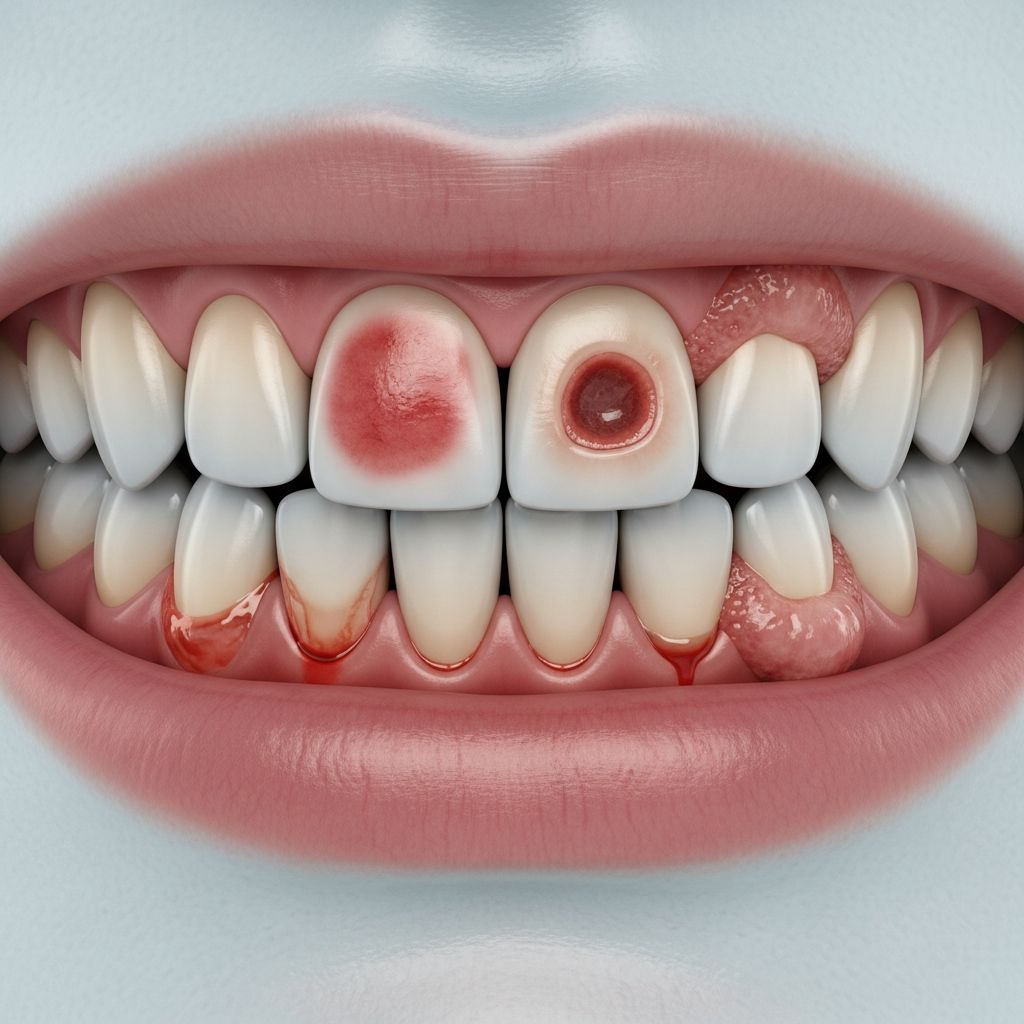
Gum cancer, a subtype of oral cancer, typically manifests as squamous cell carcinoma on the gum tissue. Early detection through recognizing symptoms like persistent sores or lumps significantly improves prognosis, with survival rates higher when caught early.
What Is Gum Cancer?
Gum cancer develops in the soft tissues covering the teeth, primarily as squamous cell carcinoma, which arises from the flat cells lining the gums. It often begins as a small bump, sore, or thickened area that fails to heal within two weeks. Unlike benign gum issues, cancerous lesions may bleed easily, change color to white, red, or dark, and cause nearby teeth to loosen or dentures to fit poorly.
This form of oral cancer accounts for a portion of mouth cancers affecting the gums, lips, tongue, and inner cheeks. If untreated, it can invade deeper tissues, spread to lymph nodes, or metastasize to distant sites. The oral cavity’s exposure to carcinogens makes it vulnerable, but most cases originate from modifiable risk factors.
Symptoms of Gum Cancer
Symptoms often mimic common oral issues, delaying diagnosis. Key signs include:
- A non-healing sore on the gums that persists beyond 14 days, possibly white, red, pale, or discolored.
- Lumps or thickened areas that do not resolve.
- Bleeding gums without obvious injury.
- Cracking or fissuring of the gum tissue.
- Loose teeth or ill-fitting dentures near the affected area.
- Pain or numbness in the mouth or ear.
- Swollen lymph nodes in the neck.
- Difficulty chewing, swallowing, or speaking.
- Unexplained weight loss.
Early stages may be painless, appearing as rough, crusty patches or erythroplakia (red patches). Advanced symptoms involve functional impairments like slurred speech or severe pain.
Risk Factors for Gum Cancer
Several factors elevate risk, though not everyone exposed develops cancer. Primary risks include:
- Tobacco use (smoking or smokeless), the leading cause, synergizing with alcohol.
- Heavy alcohol consumption, damaging oral mucosa.
- Human papillomavirus (HPV) infection, especially HPV-16.
- Age over 40, with peak incidence in older adults.
- Male gender, due to higher tobacco/alcohol prevalence.
- Poor oral hygiene leading to chronic irritation.
- Diet low in fruits and vegetables, lacking antioxidants.
- Chronic mouth irritation from sharp teeth, dentures, or betel nut chewing.
Genetics and immunosuppression play minor roles. Avoiding these reduces incidence significantly.
How Is Gum Cancer Diagnosed?
Diagnosis starts with a dental or medical exam. Dentists check for abnormalities during routine visits. Suspicious areas prompt:
- Vital staining with toluidine blue to highlight dysplastic cells.
- Biopsy: Incisional or excisional removal of tissue for histopathological analysis confirming squamous cell carcinoma.
- Imaging: CT, MRI, PET scans assess spread; endoscopy evaluates the full oral cavity.
- TNM staging: T (tumor size), N (nodes), M (metastasis) determines stage I-IV.
Early diagnosis via self-exams and professional screenings is crucial, as stages I-II offer 80-90% five-year survival.
Gum Cancer Treatment
Related Stories



Treatment aims for cure or remission, tailored by stage, patient health, and location. Multimodal approaches are common.
Surgery
Primary treatment: Wide local excision removes tumor with margins. Advanced cases require neck dissection for lymph nodes, mandibulectomy if bone-involved, or flap reconstruction.
Radiation Therapy
External beam or brachytherapy targets cancer cells post-surgery or as primary for early stages. Intensity-modulated radiation therapy (IMRT) spares healthy tissue.
Chemotherapy
Cisplatin-based regimens for advanced disease, often with radiation (chemoradiation). Used palliatively in metastatic cases.
Targeted and Immunotherapy
Cetuximab targets EGFR in HPV-negative tumors. Immunotherapies like pembrolizumab boost immune response.
Supportive care includes pain management, nutritional support, speech therapy, and dental prosthetics.
Outlook for Gum Cancer
Prognosis varies by stage. For oral cancers:
| Years After Diagnosis | Survival Rate |
|---|---|
| 1 year | 80% |
| 5 years | 55% |
| 10 years | 45% |
Early-stage (I-II) exceeds 80% five-year survival; advanced drops below 40%. HPV-positive tumors have better outcomes.
Complications of Gum Cancer
Untreated or advanced disease causes:
- Obstruction of eating/swallowing, malnutrition.
- Speech and cosmetic disfigurement.
- Spread to jaw, sinuses, neck nodes.
- Treatment side effects: xerostomia, mucositis, osteoradionecrosis, secondary cancers.
Follow-up monitors recurrence, common in first 2-3 years.
Prevention of Gum Cancer
Up to 90% preventable:
- Quit tobacco and limit alcohol (<1 drink/day women, <2 men).
- HPV vaccination (Gardasil 9) before exposure.
- Daily oral hygiene: brush, floss, antiseptic rinses.
- Antioxidant-rich diet: fruits, vegetables.
- Regular dental checkups for irritation removal.
- Self-exams monthly; report persistent changes.
Frequently Asked Questions (FAQs)
Is gum cancer curable?
Yes, especially early-stage with 80-90% five-year survival via surgery/radiation.
How fast does gum cancer spread?
Varies; early confined to gums, advanced spreads in months to lymph nodes.
Can gum cancer be seen on X-ray?
Not directly; CT/MRI better for bone/soft tissue invasion.
Does gum cancer cause bad breath?
Possibly, from infection/necrosis, but not diagnostic.
Who is at highest risk for gum cancer?
Older male tobacco/alcohol users with poor hygiene.
References
- Gum Cancer: Symptoms, Risk Factors, Outlook, and More — Healthgrades. 2023. https://resources.healthgrades.com/right-care/cancer/gum-cancer
- Mouth cancer – Symptoms and causes — Mayo Clinic. 2024-01-25. https://www.mayoclinic.org/diseases-conditions/mouth-cancer/symptoms-causes/syc-20350997
- Oral Cancer: Causes, Symptoms & Treatment — Cleveland Clinic. 2024. https://my.clevelandclinic.org/health/diseases/11184-oral-cancer
- Oral cancer symptoms by stage — MD Anderson Cancer Center. 2020-08-17. https://www.mdanderson.org/cancerwise/oral-cancer-symptoms-by-stage.h00-159699123.html
Similar Articles








Read full bio of Sneha Tete