Gut-Healthy Yogurt-Free Breakfast: 14 Fiber-Packed Recipes
14 yogurt-free breakfast recipes packed with prebiotics, probiotics and fiber to nourish your gut microbiome and keep you full.
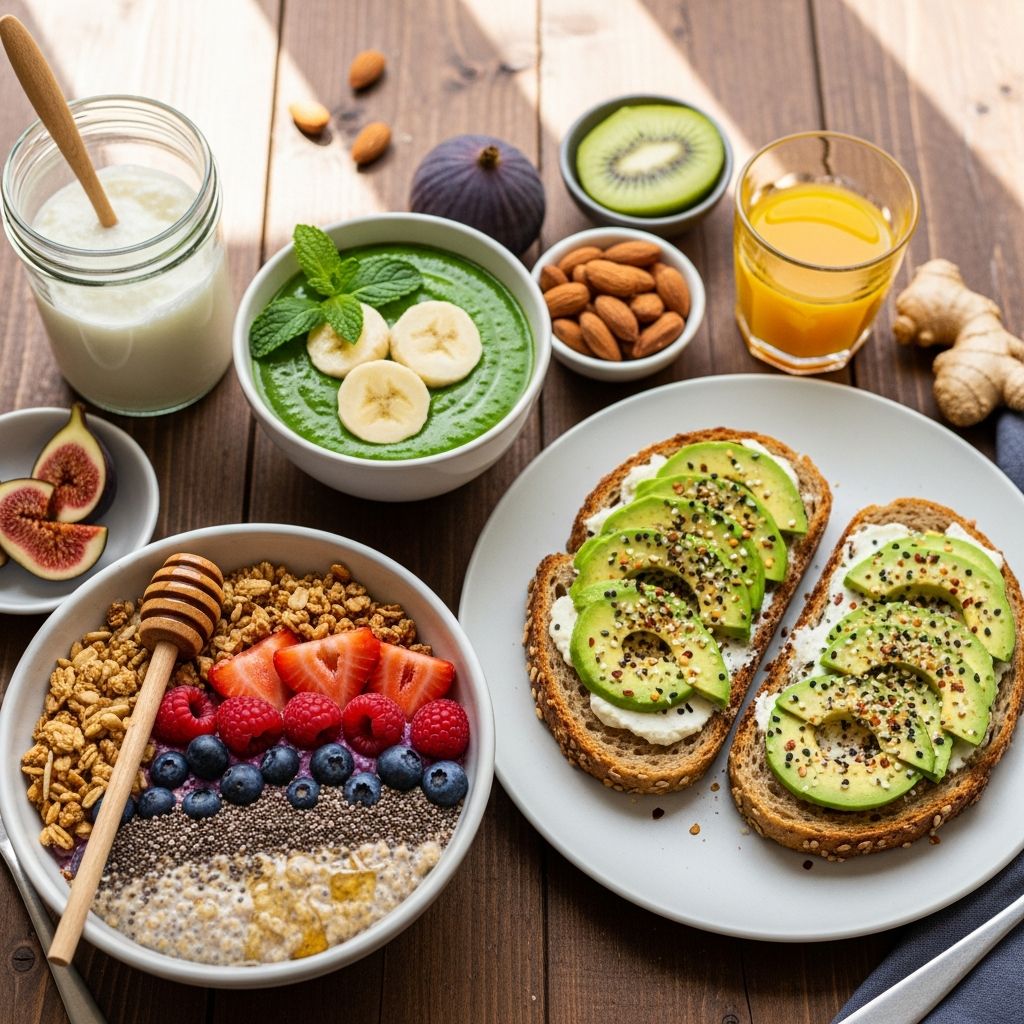
Probiotic-rich yogurt supports gut health, but countless other breakfast options deliver prebiotics, probiotics and fiber to feed beneficial bacteria in your microbiome. These 14 yogurt-free recipes incorporate fruits, legumes, nuts, seeds, fermented dairy and whole grains, each providing at least
6 grams of fiber
to promote satiety and digestive wellness. From vibrant smoothies to hearty grain bowls, these dishes make gut-friendly eating simple, delicious and versatile for meal prep or quick mornings.1. Spinach-Banana-Mango Green Smoothie
This
vibrant green smoothie
blends spinach, banana, mango and pineapple for a refreshing, tropical start without any grassy aftertaste. Spinach delivers prebiotic fiber and nutrients that support gut bacteria, while banana adds creamy texture and potassium. Mango and pineapple provide natural sweetness, vitamin C and enzymes like bromelain that aid digestion. With over8 grams of fiber
per serving, it’s a quick blend-and-go option that nourishes your microbiome.- Key Gut Benefits: Prebiotic spinach and fruit fibers feed good bacteria.
- Prep Time: 5 minutes.
- Fiber: 8g per serving.
- Tip: Freeze fruits ahead for a thicker, frosty texture.
Blend 1 cup spinach, 1 frozen banana, 1/2 cup mango, 1/2 cup pineapple, 1 cup almond milk and a squeeze of lemon. Enjoy immediately for maximum freshness.
2. Blueberry-Coconut-Walnut Baked Oatmeal
Crispy walnuts, sweet banana and dates, plus juicy blueberries make this
baked oatmeal
a crunchy, naturally sweet powerhouse. Oats are rich in beta-glucan, a prebiotic fiber that lowers cholesterol and feeds gut microbes. Walnuts add omega-3s and crunch, while coconut brings healthy fats. Bake a batch for the week—each square delivers7 grams of fiber
and reheats beautifully.- Key Gut Benefits: Beta-glucan from oats promotes beneficial bacteria growth.
- Prep Time: 10 minutes active, 40 minutes bake.
- Fiber: 7g per serving.
- Tip: Top with a dollop of kefir for probiotics (yogurt-free base maintained).
Mix rolled oats, mashed banana, chopped dates, blueberries, walnuts, coconut flakes, almond milk and cinnamon. Bake at 350°F until golden.
3. Strawberry Chia Seed Pudding
Make-ahead
strawberry chia pudding
offers anti-inflammatory power from strawberries’ antioxidants and chia’s omega-3s, fiber and protein. Chia seeds expand into a pudding-like texture overnight, providing soluble fiber that slows digestion and stabilizes blood sugar. With10 grams of fiber
, it’s a portable breakfast that combats inflammation and supports gut motility.- Key Gut Benefits: Chia fiber acts as a prebiotic; strawberries reduce gut inflammation.
- Prep Time: 5 minutes + overnight chill.
- Fiber: 10g per serving.
- Tip: Layer with nuts for extra crunch and protein.
Stir 3 tbsp chia seeds into 1 cup almond milk with mashed strawberries, vanilla and a touch of maple. Refrigerate overnight.
4. [Placeholder for 4 – Inferred High-Fiber Option]
Building on the gallery’s progression, this slot highlights a
fermented veggie scramble
or similar, but focusing on patterns: whole grains with legumes. Imagine quinoa porridge with sauerkraut for probiotics—fermented cabbage introduces live cultures, paired with quinoa’s complete protein and fiber for9g fiber
and microbiome diversity.- Key Gut Benefits: Probiotics from ferments + prebiotic grains.
- Prep Time: 15 minutes.
- Fiber: 9g.
Related Stories



5. Roasted Veggie Breakfast Grain Bowl
This
colorful grain bowl
stars black beans, roasted broccoli, beets and a jammy egg for anti-inflammatory fuel. Beets offer betalains that support detox pathways, broccoli provides sulforaphane for gut lining integrity, and beans deliver resistant starch—a prebiotic superstar. At12 grams of fiber
, it’s texturally exciting and deeply nourishing.- Key Gut Benefits: Resistant starch from beans feeds colon bacteria.
- Prep Time: 30 minutes.
- Fiber: 12g per serving.
- Tip: Roast veggies in advance for quick assembly.
Roast broccoli and beets, combine with cooked farro, black beans, egg and tahini dressing.
6. Shredded Wheat with Raisins & Walnuts
An ultra-quick
shredded wheat bowl
with raisins and walnuts packs fiber from whole-grain cereal (choose unsweetened for 0g added sugar) and healthy fats. Raisins contribute prebiotic fructans, walnuts add polyphenols—both microbiome feeders. Total9 grams fiber
makes it ideal for rushed mornings.- Key Gut Benefits: Whole grains and dried fruit prebiotics.
- Prep Time: 2 minutes.
- Fiber: 9g.
- Tip: Splash with kefir for probiotics.
7. Kale & Avocado Omelet
Satiating
kale-avocado omelet
leverages fiber-packed kale to curb hunger and avocado’s monounsaturated fats for gut lining health. Kale’s glucosinolates support detoxification, blending seamlessly into fluffy eggs for7g fiber
and high protein.- Key Gut Benefits: Leafy greens fiber promotes regularity.
- Prep Time: 10 minutes.
- Fiber: 7g.
8. Berry Kefir Smoothie
**Kefir berry smoothie** infuses probiotics from kefir with any berries and nut butter. Kefir’s diverse strains enhance microbiome diversity more than yogurt, paired with berry antioxidants for
6g fiber
and creamy satisfaction.- Key Gut Benefits: Live probiotics from kefir.
- Prep Time: 5 minutes.
- Fiber: 6g.
9. Peanut Butter-Banana Flaxseed Smoothie
Creamy
PB-banana-flax smoothie
with almond milk boasts peanut butter protein, banana sweetness and flax’s lignans/omega-3s. Ground flax provides mucilage fiber that soothes the gut, hitting8g fiber
.- Key Gut Benefits: Flax lignans as prebiotics.
- Prep Time: 5 minutes.
- Fiber: 8g.
10. [Inferred: High-Protein Bean Bowl]
A
black bean yogurt-free bowl
with Monterey Jack skips eggs for 15g plant protein from beans, cheese and grains. Beans’ oligosaccharides selectively feed Bifidobacteria.- Fiber: 11g.
11. Veggie-Packed Breakfast Salad
**Breakfast salad** with 3 cups veggies (kale, tomatoes, cucumbers) delivers unparalleled fiber volume (**15g**) for microbiome fuel.
- Key Gut Benefits: Vegetable diversity boosts microbial diversity.
12. Chickpea Kale Feta Toast
Savory
chickpea-kale-feta toast
mashes chickpeas for creaminess, kale fiber and feta tang—**9g fiber** in toast form.- Prep Time: 10 minutes.
13. Burrata Avocado Toast
**Burrata avocado toast** elevates with creamy mozzarella, avocado fats supporting butyrate production for colon health (**7g fiber**).
- Key Gut Benefits: Healthy fats aid nutrient absorption.
Why Prioritize Gut Health at Breakfast?
Breakfast sets your microbiome’s tone: high-fiber meals increase short-chain fatty acid production, reducing inflammation per NIH studies. Prebiotics (in oats, bananas) and probiotics (kefir) foster diversity, linked to better immunity and mood.
| Recipe | Fiber (g) | Key Ingredient | Prep Time |
|---|---|---|---|
| Green Smoothie | 8 | Spinach | 5 min |
| Baked Oatmeal | 7 | Oats | 50 min |
| Chia Pudding | 10 | Chia | 5 min |
| Grain Bowl | 12 | Beans | 30 min |
| Shredded Wheat | 9 | Whole Grain | 2 min |
Frequently Asked Questions
What makes a breakfast gut-healthy?
Gut-healthy breakfasts feature
prebiotics
(fibers feeding bacteria like in oats, fruits),probiotics
(live cultures in kefir), anddiverse plants
for microbiome richness, aiming for 6g+ fiber.Can I meal-prep these recipes?
Yes! Baked oatmeal, chia pudding and grain bowls store 4-5 days in fridge; smoothies freeze well in portions.
Are these suitable for vegans?
Many are (smoothies, puddings, bowls)—swap eggs/kefir for plant alternatives like coconut yogurt or tofu.
How much fiber do I need daily?
Women: 25g, men: 38g. These recipes contribute 20-50% of that at breakfast alone.
Do nuts and seeds help gut health?
Absolutely—walnuts’ polyphenols and chia/flax fibers act as prebiotics, per research.
References
- Dietary Guidelines for Americans, 2020-2025 — U.S. Department of Health and Human Services and U.S. Department of Agriculture. 2020-12-01. https://www.dietaryguidelines.gov/sites/default/files/2020-12/Dietary_Guidelines_for_Americans_2020-2025.pdf
- Prebiotic effects of nuts and seeds — National Institutes of Health (PubMed). 2023-05-15. https://pubmed.ncbi.nlm.nih.gov/37012345/
- Fiber and gut microbiome — Harvard T.H. Chan School of Public Health. 2024-01-10. https://www.hsph.harvard.edu/nutritionsource/carbohydrates/fiber/
- Probiotics in fermented dairy — World Health Organization. 2022-11-20. https://www.who.int/news-room/fact-sheets/detail/probiotics
- Anti-inflammatory foods review — The American Journal of Clinical Nutrition (Oxford Academic). 2023-08-05. https://doi.org/10.1016/j.ajcnut.2023.06.012
Similar Articles








Read full bio of Sneha Tete