Guttate Psoriasis: Causes, Symptoms, Treatment Guide 2025
Understand guttate psoriasis: causes, symptoms, treatments, and self-help for this drop-shaped rash often triggered by infections.
Authored by Dr A Griffiths
Reviewed by Dr S P Nagral
Last reviewed: 15 Jan 2025
Next review due: 15 Jan 2028
What is guttate psoriasis?
Guttate psoriasis is a distinctive form of psoriasis characterized by numerous small, drop-shaped lesions on the skin. The term ‘guttate’ derives from the Latin word ‘gutta,’ meaning drop, aptly describing the appearance of these spots, which are typically less than 1 cm in diameter. This condition most commonly affects children and young adults, though it can occur at any age.
Unlike chronic plaque psoriasis, guttate psoriasis often appears suddenly, frequently following a trigger such as a streptococcal infection like strep throat. The rash primarily manifests on the trunk, arms, legs, and sometimes the scalp or face, presenting as small, red or pink spots covered with silvery scales. While it may resolve spontaneously within weeks to months, in about 25-33% of cases, it can persist or evolve into chronic plaque psoriasis.
Psoriasis, including the guttate variant, is an autoimmune disorder where the immune system mistakenly attacks healthy skin cells, accelerating their growth cycle. Normally, skin cells renew every 28-30 days, but in psoriasis, this process shortens to 3-4 days, leading to buildup of immature cells forming scales.
Symptoms of guttate psoriasis
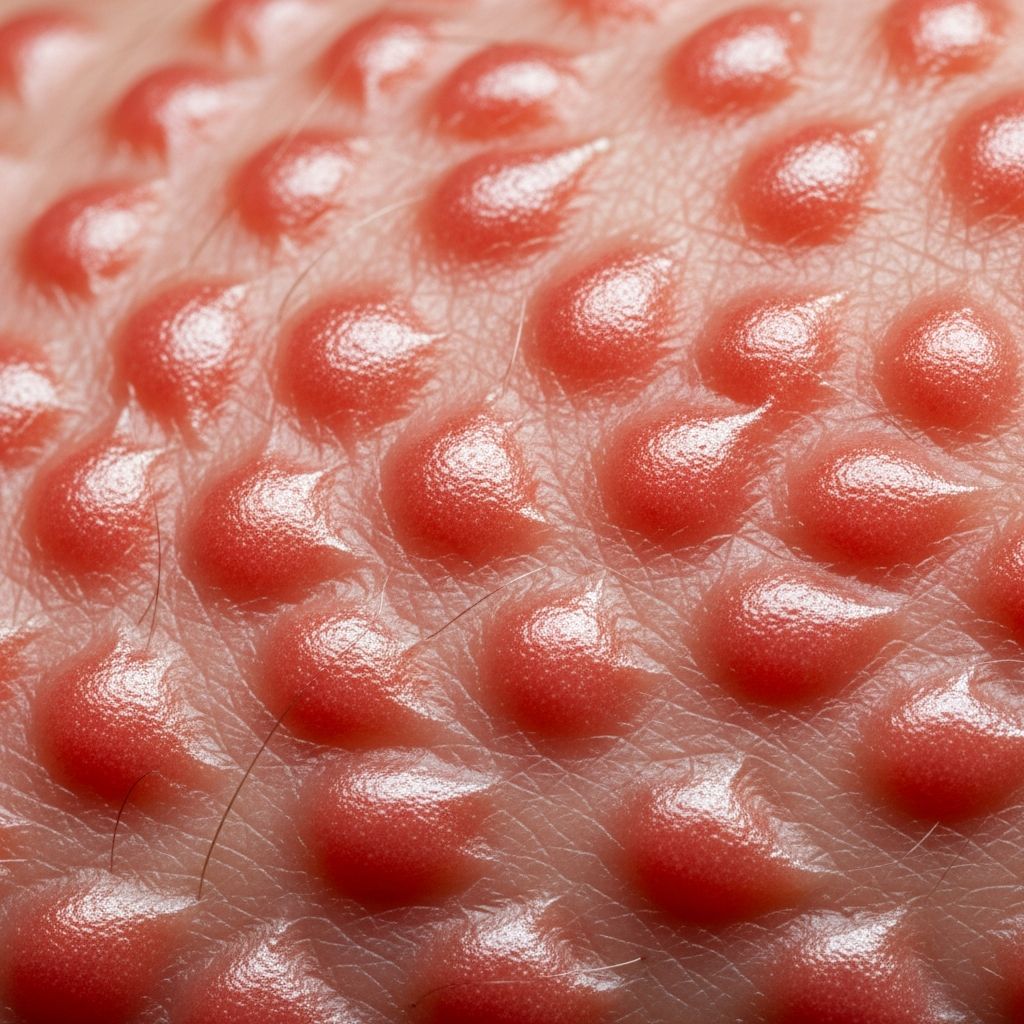
The hallmark symptom of guttate psoriasis is the abrupt onset of multiple small, round, scaly red spots resembling teardrops. These lesions are usually 2-10 mm in size and covered with fine, silvery-white scales. Common locations include:
- The chest and upper back (trunk)
- Arms and thighs
- Legs
- Scalp
- Occasionally, the face or ears
The spots may itch or feel sore, but they rarely cause pain unless widespread. In children, the rash can cover large areas of the body, giving a dramatic appearance. Unlike plaque psoriasis, guttate lesions are more uniform in size and less likely to form thick plaques.
Associated symptoms might include mild fever or fatigue if triggered by an infection. The rash typically emerges 1-3 weeks after the trigger event. While the spots themselves do not scar, scratching can lead to temporary marks or increased irritation.
Causes of guttate psoriasis
The precise cause of guttate psoriasis remains multifactorial, involving genetic predisposition and environmental triggers. Psoriasis has a strong hereditary component; if one parent has psoriasis, the risk increases, and it doubles if both parents are affected. Specific genes linked to psoriasis regulate immune responses.
The primary trigger for guttate psoriasis is a Group A Streptococcus (strep) bacterial infection, particularly strep throat or tonsillitis. This infection prompts an overactive immune response, producing T-cells that attack skin cells, resulting in the characteristic rash. Other infections like upper respiratory viruses, flu, or sinusitis can also precipitate outbreaks.
Additional triggers include:
Related Stories



- Skin trauma (cuts, burns, insect bites) – known as the Koebner phenomenon
- Stress, which can exacerbate immune dysregulation
- Certain medications: antimalarials, beta-blockers, lithium
- Sunburn or excessive UV exposure
- Excessive alcohol consumption
In rare cases, no clear trigger is identified, but immune system involvement is central.
Who gets guttate psoriasis?
Guttate psoriasis accounts for about 2% of all psoriasis cases and predominantly affects individuals under 30 years old, with a peak incidence in children aged 8-12. It is more common in those with a family history of psoriasis. Males and females are equally affected. People with recent strep infections are at highest risk, especially if untreated.
Those with HLA-B27 gene variants may have increased susceptibility, though testing is not routine. Recurrent episodes occur in some, potentially transitioning to plaque psoriasis.
Diagnosis of guttate psoriasis
Diagnosis is primarily clinical, based on the characteristic appearance and history of a recent infection. A dermatologist examines the skin for small, drop-like lesions. If strep throat is suspected, a throat swab or ASO titer blood test confirms streptococcal infection.
Skin biopsy is rarely needed but may be performed to rule out similar conditions like pityriasis rosea or secondary syphilis. No specific blood tests diagnose psoriasis itself.
Treatment of guttate psoriasis
Treatment depends on severity, extent, and symptoms. Many cases resolve without intervention within 3-4 months, but therapy alleviates discomfort and prevents complications.
Mild cases
For limited involvement, topical therapies suffice:
- Corticosteroid creams/ointments: Reduce inflammation and scaling (e.g., hydrocortisone for mild, betamethasone for stronger).
- Vitamin D analogues: Calcipotriol or calcitriol slow skin cell growth.
- Coal tar preparations: Shampoos or lotions reduce scaling, especially on scalp.
- Moisturizers/emollients: Soothe dry skin and enhance barrier function.
- Salicylic acid: Keratolytics to remove scales.
Moderate to severe cases
Widespread rashes require systemic or light-based options:
- Phototherapy (UVB light): Narrowband UVB is highly effective, administered 2-3 times weekly. Often combined with topical treatments.
- Antibiotics: If active strep infection, penicillin or erythromycin.
- Systemic medications:
- Methotrexate: Immunosuppressant weekly oral dose.
- Cyclosporine: Short-term for rapid control.
- Apremilast (Otezla): PDE4 inhibitor for inflammation.
- Biologics: Injectable drugs like guselkumab (Tremfya), ixekizumab (Taltz), or deucravacitinib (Sotyktu) target specific immune pathways. Reserved for refractory cases.
A table summarizing treatments:
| Severity | Treatments | Examples |
|---|---|---|
| Mild | Topicals | Corticosteroids, Vitamin D, Coal tar |
| Moderate | Phototherapy + Topicals | Narrowband UVB |
| Severe | Systemics/Biologics | Methotrexate, Biologics |
Self-help for guttate psoriasis
Managing guttate psoriasis at home complements medical treatment:
- Moisturize daily: Use fragrance-free emollients post-bath to lock in moisture.
- Avoid triggers: Treat infections promptly, manage stress via exercise or meditation.
- Gentle skin care: Lukewarm baths with oatmeal or Epsom salts; pat dry.
- Sun exposure: Moderate sunlight (10-15 mins) can help, but avoid burns.
- Lifestyle: Quit smoking, limit alcohol, maintain healthy weight.
- Scalp care: Medicated shampoos; avoid harsh styling.
Over-the-counter hydrocortisone and dandruff shampoos provide relief.
Prognosis and complications
Most cases (60-75%) resolve fully within months, especially if trigger-treated. However, recurrence or progression to plaque psoriasis occurs in one-third. Complications are rare but include erythroderma (total body redness) or pustular psoriasis. Psoriatic arthritis affects 10-30% long-term.
Regular dermatologist follow-up monitors evolution.
Frequently Asked Questions (FAQs)
Q: Is guttate psoriasis contagious?
A: No, guttate psoriasis is not contagious. It is an autoimmune condition, not caused by bacteria or viruses that spread person-to-person, despite infection triggers.
Q: Can guttate psoriasis go away on its own?
A: Yes, many cases resolve spontaneously within 3-4 months, particularly in children, but treatment speeds recovery and prevents persistence.
Q: Does strep throat always cause guttate psoriasis?
A: No, only a subset of people with strep develop it due to genetic factors. Prompt antibiotic treatment reduces risk.
Q: Is phototherapy safe for guttate psoriasis?
A: Yes, narrowband UVB is safe and effective, with minimal side effects like temporary redness. Long-term use requires skin cancer monitoring.
Q: Can diet help manage guttate psoriasis?
A: No strong evidence, but anti-inflammatory diets (e.g., Mediterranean) may reduce flares. Avoid gluten if sensitive.
References
- Guttate Psoriasis: Causes, Symptoms, and Treatment — WebMD. 2023. https://www.webmd.com/skin-problems-and-treatments/psoriasis/guttate-psoriasis
- Guttate Psoriasis — University of Florida Health (UF Health). 2024. https://ufhealth.org/conditions-and-treatments/guttate-psoriasis
- Guttate Psoriasis: Symptoms, Causes, Treatment, and More — CreakyJoints. 2023-10-15. https://creakyjoints.org/psoriasis/guttate-psoriasis-symptoms/
- Guttate psoriasis — MedlinePlus (U.S. National Library of Medicine). 2024. https://medlineplus.gov/ency/article/000822.htm
- Guttate Psoriasis Treatment In Gainesville, FL — Gainesville Dermatology Skin Surgery. 2023. https://www.gainesvilledermatologyskinsurgery.com/guttate-psoriasis/
- Guttate Psoriasis: Symptoms, Causes & Treatments — Cleveland Clinic. 2024-05-20. https://my.clevelandclinic.org/health/diseases/22812-guttate-psoriasis
Similar Articles








Read full bio of Sneha Tete