H. Pylori And Skin Diseases: 12 Conditions To Know
Understanding the link between H. pylori bacteria and various skin conditions.
Helicobacter pylori Infection and Skin Diseases
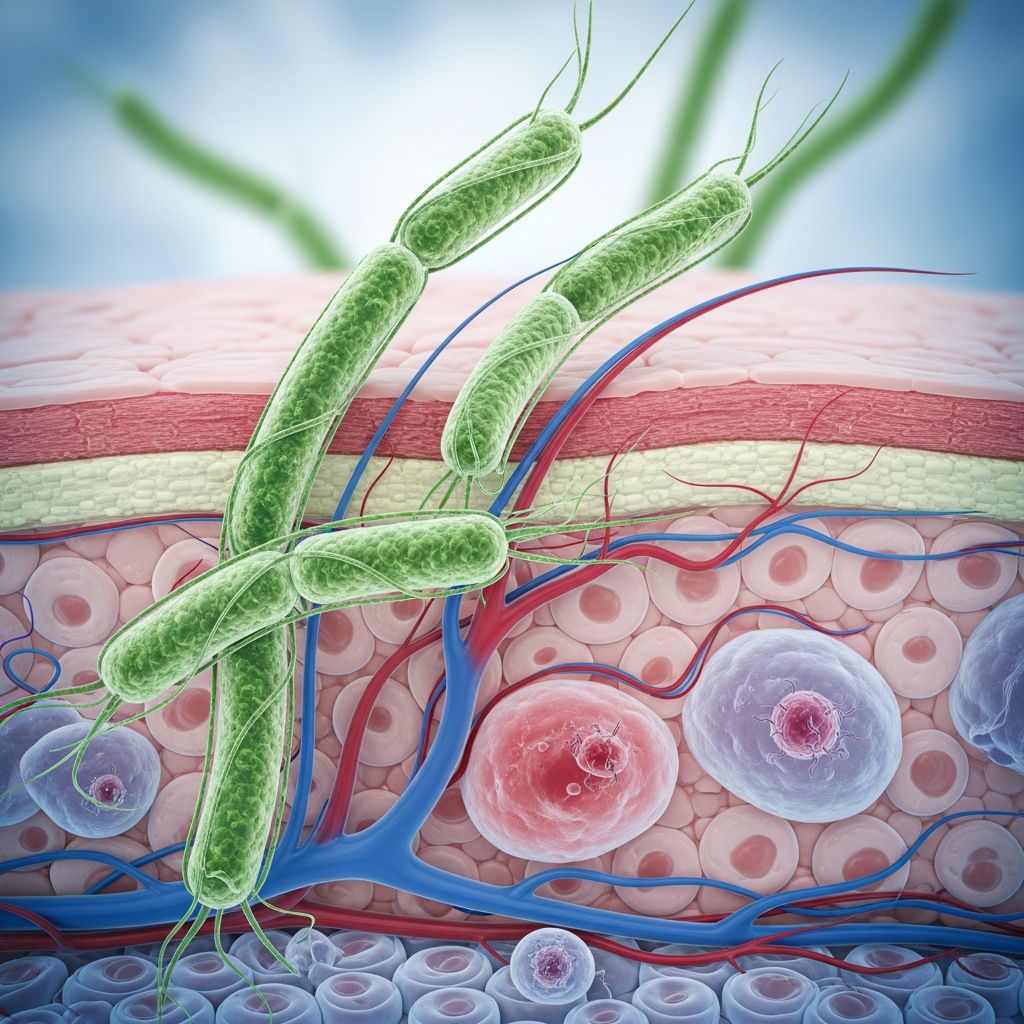
Helicobacter pylori (H. pylori) is a bacterium best known for its role in gastrointestinal pathology, particularly in the development of peptic ulcers and gastritis. However, mounting evidence suggests that this pathogen has implications far beyond the digestive system. Dermatologists and medical professionals increasingly recognize that H. pylori infection may be implicated in a variety of cutaneous manifestations. The bacterium triggers both localized inflammatory responses in the stomach and chronic systemic immune responses that can extend to affect the skin and other organ systems. This connection has prompted researchers to investigate whether eradicating H. pylori might improve outcomes in patients suffering from certain dermatological conditions.
The Immune Connection: How H. pylori Affects the Skin
The mechanism linking H. pylori infection to skin disease involves complex immunological pathways. When H. pylori colonizes the gastric mucosa, it stimulates a marked local inflammatory response and a chronic systemic immune response. During this immune activation, the body releases inflammatory mediators—chemical messengers that coordinate the inflammatory process. These mediators circulate systemically and may potentially trigger or exacerbate skin pathology in susceptible individuals.
For conditions such as rosacea, H. pylori may contribute to disease manifestation through multiple mechanisms. The bacteria stimulate immune system activation, leading to the production of numerous inflammatory mediators that rely on blood vessel dilation to promote an inflammatory response. Additionally, H. pylori can directly encourage blood vessel dilation, which triggers the flushing and visible red veins characteristic of rosacea. This dual mechanism—both immune-mediated inflammation and vascular effects—helps explain why some patients with rosacea experience symptom improvement following H. pylori eradication.
Skin Conditions Associated with H. pylori
Research has identified numerous skin conditions that may be associated with H. pylori infection. While evidence remains strongest for some conditions and more speculative for others, the following disorders have been studied in relation to H. pylori infection:
- Chronic spontaneous urticaria: One of the conditions with the strongest evidence of association
- Rosacea: Shows consistent improvement with eradication therapy in multiple studies
- Psoriasis: Increasing evidence suggests a role in disease severity and progression
- Lichen planus: Documented association with potential improvement after treatment
- Atopic dermatitis: Emerging evidence of possible association
- Behçet disease: Shows promise for improvement with eradication therapy
- Sweet syndrome: Limited but promising case reports of association
- Systemic sclerosis: Potential association documented in select studies
- Henoch-Schönlein purpura: Rare but dramatic case reports of resolution with H. pylori treatment
- Sjögren syndrome: Suggested association requiring further investigation
- Pemphigus vulgaris and vitiligo: Additional conditions with proposed associations requiring confirmation
Chronic Spontaneous Urticaria
Chronic idiopathic urticaria (chronic spontaneous urticaria) represents one of the conditions with the clearest evidence for H. pylori association. In a significant cohort study, researchers examined 42 patients with chronic urticaria and found that 55% were infected with H. pylori. Of those infected patients who received eradication therapy, 88% showed total or partial remission of urticaria symptoms. In contrast, symptoms remained unchanged in all uninfected patients. This striking difference suggests a genuine pathogenic role for H. pylori in at least a subset of urticaria cases, indicating that screening for and treating H. pylori infection should be considered part of the management algorithm for chronic urticaria.
Related Stories



Rosacea
Rosacea represents another condition with compelling evidence linking it to H. pylori infection. Many studies have suggested that H. pylori is involved in the aetiology of rosacea, at least as a triggering factor, and that eradication treatment provides symptomatic relief. In one important study examining 53 subjects with cutaneous rosacea symptoms and H. pylori infection, 51 individuals showed disappearance or improvement of skin lesions after eradication of the bacterium, with the best results observed in cases with mild or moderate skin symptoms.
The underlying mechanism appears to involve the relationship between rosacea and gastritis, particularly antral involvement. The theory suggests that rosacea may be a disorder with various gastrointestinal symptoms closely related to gastritis, especially involving the antral mucosa. When H. pylori is eradicated, both rosacea symptoms and related gastrointestinal symptoms demonstrate improvement. This observation has led many researchers to propose that H. pylori screening and treatment should be considered in patients with rosacea, particularly those with associated gastrointestinal manifestations.
Psoriasis
The relationship between H. pylori and psoriasis has received increasing attention in recent dermatological research. Psoriasis is a chronic skin condition characterized by immune-mediated inflammation, and recent research suggests a possible interaction between H. pylori infection and the immunopathogenesis of psoriasis. A systematic review and meta-analysis revealed a strong correlation between H. pylori infection and psoriasis, with findings indicating that this correlation might be influenced by the H. pylori detection method and psoriasis severity.
Research has demonstrated that H. pylori infection is more common in patients with moderate-to-severe psoriasis than in those without psoriasis, potentially linking infection rate to disease severity, particularly in more severe cases. This correlation may be attributed to immune mechanisms activated by the infection. In clinical trials, patients who received H. pylori treatment showed significant improvement compared to controls, with decreases in mean PASI scores (a standard measurement of psoriasis severity). These findings suggest that H. pylori infection may play a role in psoriasis severity, and that eradicating such infections may enhance the effectiveness of psoriasis treatment. The eradication of H. pylori has been shown to improve treatment outcomes in patients with psoriasis, suggesting bactericidal therapy may be necessary in the clinical management of H. pylori-positive patients with moderate-to-severe disease.
Other Dermatological Conditions
Beyond urticaria, rosacea, and psoriasis, smaller studies and case reports have documented associations between H. pylori and other skin conditions. Henoch-Schönlein purpura (HSP), a leukocytoclastic vasculitis of small vessels, has shown dramatic response to H. pylori eradication in case reports. One documented case involved a 33-year-old man presenting with HSP accompanied by gastric H. pylori infection; both the gastrointestinal manifestations and purpuric rashes resolved dramatically after eradication therapy.
Several small studies have suggested that eradicating H. pylori may have a positive outcome on lichen planus, atopic dermatitis, Sweet syndrome, and systemic sclerosis. However, it should be noted that conditions such as psoriasis and rosacea may not benefit equally across all patient populations, and individual responses to treatment vary considerably. The evidence for conditions including Behçet disease, alopecia areata, and cutaneous lymphomas remains preliminary and requires further systematic investigation.
Evidence Quality and Clinical Implications
While the associations between H. pylori and various skin conditions are intriguing, it is important to acknowledge that the quality and consistency of evidence vary considerably across different conditions. Clear evidence exists for some associations, while in the majority of cases, the data appear contrasting or incomplete. Most of the mechanisms discussed in the literature remain as hypotheses that require more extensive investigation. These studies investigating the role of H. pylori largely speculate rather than demonstrate a definitive pathogenic role for this pathogen.
Furthermore, most animal models of skin diseases do not provide robust data to support the role of H. pylori in disease development, limiting the mechanistic understanding at the experimental level. Despite these limitations, the clinical observations from human studies remain noteworthy, and many dermatologists increasingly recognize that screening for H. pylori may be warranted in patients with certain skin conditions, particularly chronic urticaria and rosacea.
Treatment and Management
When H. pylori infection is identified in patients with associated skin disease, eradication therapy is typically recommended. Standard treatment regimens utilize triple therapy combinations, commonly including amoxycillin and clarithromycin along with a proton pump inhibitor. Treatment success rates are generally high, with eradication cures achieved in up to 90% of individuals when appropriate antibiotic combinations are used.
The timing of improvement varies depending on the skin condition. Some patients experience rapid improvement, while others may require weeks to months to observe clinical benefit. For conditions such as urticaria and rosacea, improvement in skin symptoms often parallels resolution of associated gastrointestinal symptoms, supporting the hypothesis of a shared pathogenic mechanism. Future studies should re-evaluate patients after H. pylori treatment to assess outcomes definitively, determining whether changes in clinical severity scores are statistically significant, which may help guide the clinical use of adjunctive treatments for various dermatological conditions.
Recommendations for Dermatologists
Given the potential associations between H. pylori and various skin conditions, dermatologists should consider screening for H. pylori infection in patients presenting with certain skin diseases, particularly:
- Chronic spontaneous urticaria, especially cases resistant to standard treatment
- Rosacea with associated gastrointestinal symptoms
- Moderate-to-severe psoriasis
- Lichen planus with unclear etiology
- Atopic dermatitis not responding adequately to conventional therapy
Screening can be accomplished through serological testing, endoscopy with biopsy, or non-invasive methods such as urea breath tests, depending on clinical context and availability. When H. pylori infection is confirmed, eradication therapy should be offered, with follow-up assessment to determine whether skin disease improves or resolves. However, H. pylori treatment should not replace established dermatological therapies but rather complement them as an adjunctive approach.
Frequently Asked Questions
Q: Is H. pylori infection the primary cause of chronic urticaria?
A: No, H. pylori is not the primary cause but appears to be one of multiple potential triggers in susceptible individuals. Approximately 55% of chronic urticaria patients in some studies are H. pylori-positive, and eradication helps only in infected individuals.
Q: Will eradication of H. pylori cure my rosacea?
A: In some patients, particularly those with mild-to-moderate rosacea, H. pylori eradication may significantly improve or resolve symptoms. However, individual responses vary, and rosacea often requires ongoing management with topical and systemic therapies.
Q: How is H. pylori detected?
A: H. pylori can be detected through serological tests (antibody testing), endoscopic biopsy, urea breath tests, or stool antigen testing. The choice of method depends on clinical circumstances and local availability.
Q: How long does it take to see improvement in skin symptoms after H. pylori eradication?
A: Improvement timelines vary considerably. Some patients notice changes within weeks, while others may require months. Follow-up assessment should be conducted several weeks after treatment completion.
Q: Should I be screened for H. pylori if I have a skin condition?
A: Screening is most strongly recommended for chronic urticaria and rosacea. For other conditions, discussion with your dermatologist regarding individual risk-benefit assessment is advised.
References
- Helicobacter pylori and skin disorders: a comprehensive review — PubMed/National Center for Biotechnology Information. 2020. https://pubmed.ncbi.nlm.nih.gov/33336746/
- Helicobacter pylori infection and skin disorders — Hong Kong Medical Journal. 2016. https://www.hkmj.org/abstracts/v20n4/317.htm
- Helicobacter pylori infection and skin diseases — DermNet NZ. https://dermnetnz.org/topics/helicobacter-pylori-infection-and-skin-diseases
- Helicobacter pylori infection and its impact on psoriasis — Frontiers in Medicine. 2024. https://www.frontiersin.org/journals/medicine/articles/10.3389/fmed.2024.1500670/full
- The Link Between H. Pylori and Rosacea — Dermatology Associates of New Jersey. https://www.dermatologyassociatesnj.com/blog/the-link-between-h-pylori-and-rosacea
- May Helicobacter pylori be important for dermatologists? — PubMed/National Center for Biotechnology Information. https://pubmed.ncbi.nlm.nih.gov/8589488/
Similar Articles








Read full bio of Sneha Tete