Hair And Scalp: Diagnostic Guide To Common Disorders
Comprehensive guide to hair and scalp disorders, from alopecia and shedding to common skin conditions and diagnostic approaches.
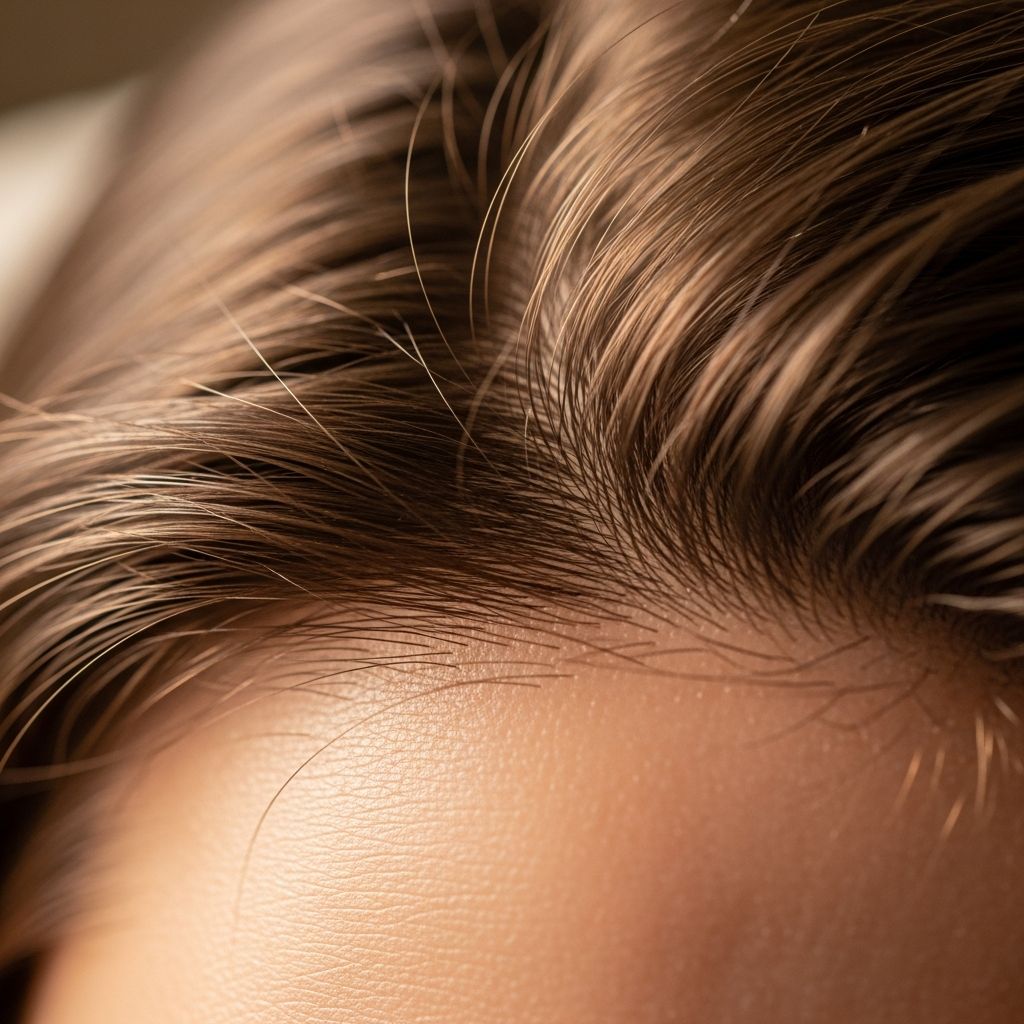
The hair and scalp are integral to dermatological health, prone to various disorders ranging from hair loss and excessive shedding to inflammatory skin conditions. This article covers examination principles, common disorders, specific conditions like scalp psoriasis and folliculitis, hair shaft defects, and diagnostic approaches.
Examination of Hair and Scalp
Proper examination begins with assessing scalp hair for thinning or balding, known as alopecia, which can be localised or diffuse. Localised alopecia affects single or multiple areas, revealed through inspection for patches or scarring. Diffuse alopecia often stems from pattern balding, prominent over the scalp vertex in males with frontal recession, or generalised shedding linked to telogen or anagen effluvium.
A hair pull test identifies excessive shedding: numerous telogen (club) hairs indicate telogen effluvium, while anagen hairs suggest anagen effluvium. Evaluate scalp appearance for oiliness, dryness, or lesions from inflammatory diseases. Excessive hair growth, termed hypertrichosis (localised or diffuse) or hirsutism in women (male-pattern), requires noting lanugo or terminal hair increases.
Disorders of the Hair and Scalp
Hair and scalp disorders encompass shedding, alopecia, shaft abnormalities, and skin diseases. Diffuse thinning in adults typically results from male pattern balding (androgen-dependent) or female pattern balding (non-androgen-dependent). Other causes include systemic diseases like lupus erythematosus, syphilis, iron deficiency (thin fragile hair), or hypothyroidism (coarse dry hair).
Hair Shedding
Normal daily shedding is 50-100 hairs. Excessive shedding signals telogen effluvium, often post-stress, illness, or medication. Anagen effluvium, from chemotherapy, halts growth abruptly.
Diffuse Alopecia
Beyond pattern balding, diffuse alopecia arises from nutritional deficiencies, endocrine disorders, or drugs. The scalp appears normal unless secondary inflammation occurs.
Localised Alopecia
Alopecia areata presents as round smooth bald patches with exclamation mark hairs (broken short stubs). It affects 5% as totalis (scalp only) or 1% universalis (total body). Traction alopecia from tight hairstyles shows marginal hairline loss. Tinea capitis causes scaly patches with broken hairs (black dots).
Hair Shaft Abnormalities
Rare genetic defects, diagnosed via microscopy, include monilethrix (beaded shafts breaking early), trichorrhexis nodosa (node-like fractures), and pili torti (twisted shafts). Acquired kinking mimics pubic hair on scalp; spun glass hair appears brittle due to inner sheath issues.
Skin Diseases Affecting the Scalp
Many dermatoses favour the scalp without always causing alopecia unless severe. Common conditions include:
| Condition | Features |
|---|---|
| Dandruff (pityriasis capitis) | Diffuse scaling |
| Seborrhoeic dermatitis | Ill-defined plaques with yellowish scale |
| Psoriasis | Well-defined erythematous plaques with silvery scale |
| Pityriasis amiantacea | Sticky scale over psoriasis or seborrhoeic dermatitis |
| Head lice | Adults, nits, haemorrhagic spots, excoriations |
| Lichen simplex | Lichenified itchy plaques on occiput |
| Folliculitis | Scattered pustules |
Specific Scalp Conditions
Scalp Psoriasis
Characterised by red thickened plaques with silvery scales, scalp psoriasis affects part or all of the scalp, extending to forehead, ears, or neck. It causes itching and flaking, often embarrassing despite hair camouflage. Chronic and relapsing, it links to immune dysregulation and genetics.
Related Stories



Demographics: Affects all ages, more common in plaque psoriasis patients. Causes include genetic predisposition, triggers like stress or infection. Clinical features: Sharply demarcated plaques, Auspitz sign (pinpoint bleeding on scale removal). In darker skin, less erythema, more scale.
Treatment: Topical corticosteroids, vitamin D analogues (calcipotriol), coal tar shampoos. Severe cases use phototherapy or systemic agents like methotrexate.
Scalp Folliculitis
An inflammatory disorder with itchy pustules, worst on frontal hairline. Also called acne necrotica miliaris. Caused by follicular reaction to microbes like Malassezia or bacteria (Propionibacterium, Staphylococcus).
Severe variant: Perifolliculitis capitis abscedens et suffodiens (dissecting cellulitis), rare in black men, features nodules, cysts, pus, leading to scarring alopecia. Treatment: Antifungal shampoos (ketoconazole), antibiotics, isotretinoin for severe cases.
Seborrhoeic Dermatitis
Common eczema affecting sebaceous areas: scalp (cradle cap in infants), face, trunk. Features greasy scales, erythema, itch. In darker skin, hypopigmented petaloid patches.
Associated with Malasseze yeast, immune response. Treatment: Antifungal shampoos, mild steroids.
Hair Loss (Alopecia)
Alopecia denotes hair loss, localised or diffuse, with or without scarring. Non-scarring: Reversible like alopecia areata, telogen effluvium. Scarring (cicatricial): Destroys follicles via inflammation (e.g., lichen planopilaris, discoid lupus).
Systemic causes: Thyroid disease, iron deficiency, syphilis. Traction, tinea, trichotillomania also key.
Defects of the Hair Shaft
Hair cycles: Anagen (growth), catagen (transition), telogen (rest). Shaft defects disrupt this. Monilethrix: Beaded, breaks leaving short hairs. Trichothiodystrophy: Tiger-tail under polarised light. Uncombable hair: Spun glass appearance from root sheath issues.
Diagnosis of Scalp Rashes
Common symptoms: Itch (most conditions), soreness, scaling, pustules. History and exam of scalp and body sites essential. Differentials: Psoriasis vs eczema, folliculitis vs impetigo.
Frequently Asked Questions (FAQs)
Q: What causes sudden hair shedding?
A: Telogen effluvium from stress, illness, or medications triggers excessive telogen hairs.
Q: Is pattern balding reversible?
A: No, it’s progressive androgenetic alopecia; treatments like minoxidil slow it.
Q: How to treat scalp psoriasis?
A: Medicated shampoos, topicals (steroids, vitamin D), systemic for severe cases.
Q: What is scalp folliculitis?
A: Itchy pustules from follicular inflammation; use antifungal washes.
Q: Does seborrhoeic dermatitis cause hair loss?
A: Rarely, if severe and untreated.
Scalp Tumours and Cysts
Most (93-99%) benign; 40-50% cysts (pilar, sebaceous). Malignant rare but include basal cell carcinoma, squamous cell. Diagnosis via biopsy.[10]
References
- Examination of hair and scalp — DermNet NZ. 2023. https://dermnetnz.org/cme/principles/examination-of-hair-and-scalp
- Disorders of the hair and scalp — DermNet NZ. 2023. https://dermnetnz.org/cme/follicular/disorders-of-the-hair-and-scalp
- Scalp psoriasis — DermNet NZ. 2024-01-15. https://dermnetnz.org/topics/scalp-psoriasis
- Scalp folliculitis — DermNet NZ. 2023. https://dermnetnz.org/topics/scalp-folliculitis
- Seborrhoeic dermatitis — DermNet NZ. 2024. https://dermnetnz.org/topics/seborrhoeic-dermatitis
- Defects of the hair shaft — DermNet NZ. 2023. https://dermnetnz.org/topics/defects-of-the-hair-shaft
- Hair loss — DermNet NZ. 2023. https://dermnetnz.org/topics/hair-loss
Similar Articles








Read full bio of Sneha Tete