Hair And Skin Color: Expert Guide To Melanin And Pigmentation
Comprehensive guide to the biology, genetics, and clinical aspects of human hair and skin pigmentation.
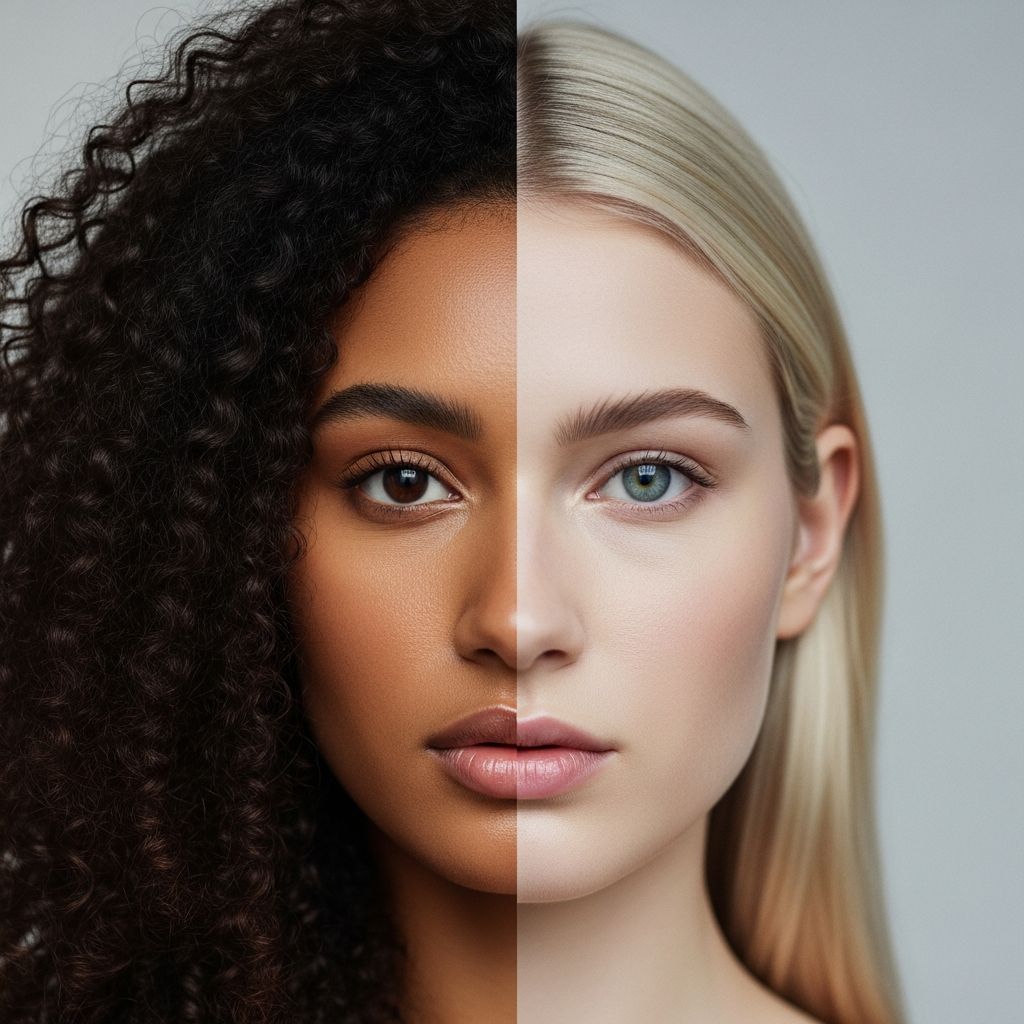
Human hair and skin colour are primarily determined by the pigment
melanin
, produced by specialized cells called melanocytes. This pigmentation serves crucial protective functions against ultraviolet (UV) radiation while contributing to individual phenotypic diversity across populations.What is melanin?
Melanin is a complex polymer synthesized within melanosomes in melanocytes. Two main types exist:
eumelanin
(black or brown) andpheomelanin
(red or yellow). The ratio and distribution of these pigments dictate colour variations, with higher eumelanin concentrations yielding darker tones. Melanin absorbs UV light, preventing DNA damage in keratinocytes, and its depth influences dermatoscopic colours—black for superficial epidermal melanin, brown for basal layers, grey for papillary dermis, and blue for reticular dermis.In skin, melanin transfers from melanocytes to keratinocytes via dendrites. Hair pigmentation occurs similarly in hair bulb melanocytes, colouring the cortex during shaft formation. Genetic regulation of melanin synthesis involves pathways like MC1R, where variants explain red hair and fair skin susceptibility.
Skin colour
Skin colour results from melanin amount, type, distribution, and additional factors like haemoglobin (red tones) and carotene (yellowish hues). Deeper dermal melanin appears blue-grey due to the Tyndall effect, scattering shorter wavelengths.
Geographic and ethnic variations reflect evolutionary adaptations to UV exposure. Equatorial populations have darker skin for UV protection, while higher latitudes favour lighter skin for vitamin D synthesis.
Fitzpatrick skin phototypes
The
Fitzpatrick scale
classifies skin into six types based on UV response and pigmentation:| Skin Type | Skin Colour | UV Response |
|---|---|---|
| I | White or freckled | Always burns, never tans |
| II | White | Usually burns, tans poorly |
| III | Olive | Sometimes burns mildly, gradually tans |
| IV | Light brown | Rarely burns, tans easily |
| V | Dark brown | Very rarely burns, tans very easily |
| VI | Black | Never burns, tans very easily |
This scale predicts photoageing and skin cancer risk. Types I–III (fair skin) show more photoageing, while IV–VI benefit from melanin photoprotection. Modern AI tools refine classification using melanin index and reflectance spectroscopy for diverse tones.
Hair colour
Hair colour arises from melanin in the cortex.
Black hair
has dense eumelanin;brown
moderate eumelanin;blond
sparse eumelanin;red
pheomelanin dominance via MC1R variants.Grey/white hair
results from melanocyte senescence, forming air-filled cortex cavities visible trichoscopically.Trichoscopy reveals normal shaft uniformity, perifollicular pigmentation variations, and racial differences in medulla/cortex structure. Pink dots in alopecia indicate fibrosis.
Genetics of pigmentation
Over 100 genes influence pigmentation. Key players include:
- MC1R: Red hair, fair skin, freckles (ephelides).
- TYR, OCA2: Albinism via melanin synthesis defects.
- SLC24A5, SLC45A2: Skin lightening alleles prevalent in Europeans.
Ephelides are UV-inducible melanin accumulations in keratinocytes without melanocyte hyperplasia, common in fair-skinned children.
Pigmentation disorders
Hyperpigmentation
Increased melanin causes lentigines (sun-induced epidermal nests), melasma (facial, hormonal), and post-inflammatory changes. Dermatoscopy shows brown dots/clods for nests.
Hypopigmentation
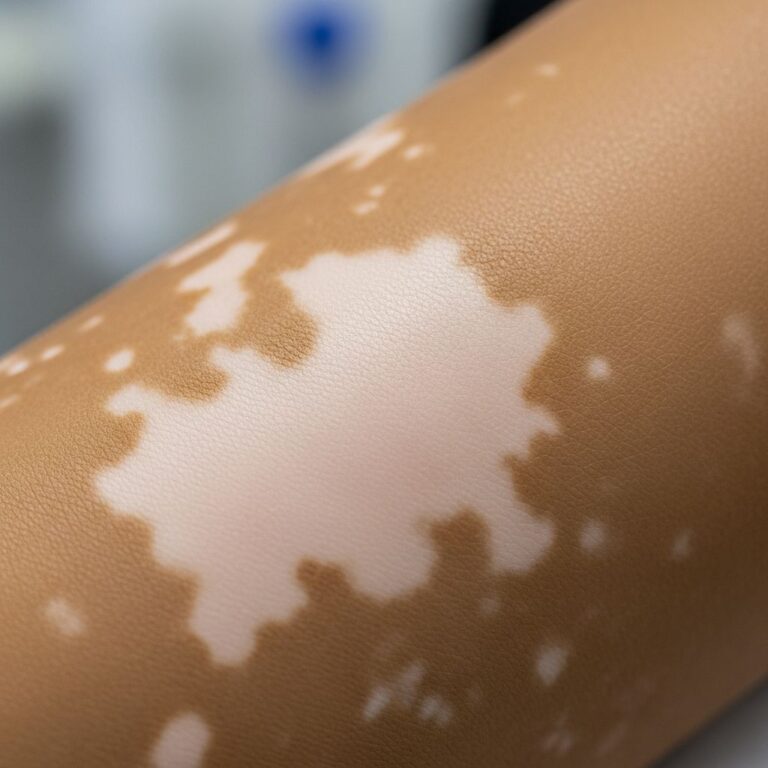
Reduced melanin manifests as vitiligo (autoimmune melanocyte loss), piebaldism, or albinism. Albinism impairs tyrosinase, yielding white hair/skin prone to UV damage and vision issues.
Other conditions
- Ephelides/freckles: Genetic, UV-enhanced.
- Solar lentigines: Photoaged, scaly.
- Seborrhoeic keratoses: Benign keratinocyte proliferations, pigmented.
Dermatoscopy of pigmented lesions
Dermatoscopy correlates colours/patterns with histopathology.
Dots
(small melanin foci): black (stratum corneum), brown (basal nests), grey/blue (dermal).Clods
indicate larger nests at varying depths. Structureless zones reflect fibrosis (white) or remodelling (skin-coloured).Related Stories



Vascular patterns and white clues aid amelanotic lesion diagnosis. Circles on facial skin highlight follicles.
Ageing and pigmentation
Intrinsic ageing causes mild even hypopigmentation; photoageing yields irregular pigmentation, lentigines, and poikiloderma in fair types. Darker phototypes show less photoageing but hypertrophic scarring.
Clinical implications
Understanding pigmentation aids diagnosis across tones. Fair skin risks melanoma; darker skin shows vitiligo vividly but basal cell carcinoma hypopigmented. AI enhances detection equity.
Frequently Asked Questions (FAQs)
What determines skin colour?
Skin colour is mainly due to melanin type/amount, modulated by genetics and UV exposure.
Why do freckles appear?
Freckles (ephelides) are melanin clusters in fair skin, triggered by sun via MC1R.
What is albinism?
Albinism is melanin deficiency causing white skin/hair, UV sensitivity, and visual issues.
How does Fitzpatrick scale help?
It predicts sunburn risk and guides UV protection/dermatological management.
Can hair colour change?
Yes, via greying (melanocyte loss) or disorders; trichoscopy assesses.
Why use dermatoscopy for colour?
It reveals pigment depth/patterns correlating to histopathology for diagnosis.
This article provides an overview; consult dermatologists for personalized advice.
References
- Dermatoscopic-histologic correlation — DermNet NZ. 2023. https://dermnetnz.org/cme/dermoscopy-course/dermatoscopic-histologic-correlation
- Skin ageing — DermNet NZ. 2023. https://dermnetnz.org/topics/ageing-skin
- Brown spots, lentigos and freckles — DermNet NZ. 2023. https://dermnetnz.org/topics/brown-spots-and-freckles
- Albinism — DermNet NZ. 2023. https://dermnetnz.org/topics/albinism
- Leveraging Artificial Intelligence to Improve the Diversity of Skin Cancer Early Detection — PMC (NIH). 2022-03-18. https://pmc.ncbi.nlm.nih.gov/articles/PMC8941446/
- Trichoscopy: A Complete Overview — DermNet NZ. 2023. https://dermnetnz.org/topics/trichoscopy
Similar Articles








Read full bio of Sneha Tete