Hair Replacement Surgery: Complete Guide
Comprehensive overview of hair replacement surgery options, procedures, and recovery.
Hair Replacement Surgery: A Complete Guide to Hair Restoration
Hair loss affects millions of people worldwide and can significantly impact self-esteem and quality of life. While various medical treatments and topical solutions exist for managing hair loss, hair replacement surgery offers a more permanent solution for those seeking to restore hair density and appearance. Hair replacement surgery, also known as hair transplantation or hair restoration surgery, is a surgical procedure that redistributes hair from areas of the scalp with adequate hair growth to areas experiencing hair loss.
This comprehensive guide explores the various aspects of hair replacement surgery, including the different techniques available, what to expect during the procedure, recovery timelines, and important considerations before undergoing surgery.
Understanding Hair Replacement Surgery
Hair replacement surgery is fundamentally a procedure of hair redistribution rather than creating new hair growth. The procedure involves taking hair follicles from donor areas—typically the back and sides of the scalp where hair is genetically resistant to loss—and transplanting them to recipient areas where hair loss has occurred. This redistribution approach allows surgeons to restore hair density in areas most visible to others, particularly the hairline and crown region that frame the face.
The success of hair replacement surgery relies on the principle that hair follicles retain their genetic characteristics even after transplantation. Hair transplanted from the back of the scalp will continue to grow throughout a person’s lifetime, making it a permanent solution for qualified candidates.
Common Reasons for Hair Loss
Before considering hair replacement surgery, it is important to understand the underlying causes of hair loss. Male androgenetic alopecia and female pattern hair loss represent the most common reasons patients seek hair restoration consultations with dermatologists and hair specialists. These conditions involve genetic predisposition and hormonal factors that cause progressive hair thinning and loss.
Other conditions may also contribute to hair loss, including traumatic alopecia from injury or burns, scarring alopecia from certain medical conditions, and hair loss following medical treatments such as chemotherapy. Determining the specific cause of hair loss is crucial for identifying whether a patient is a suitable candidate for surgical intervention.
Candidate Assessment and Consultation
The consultation process is a critical first step in determining whether hair replacement surgery is appropriate for an individual. During a comprehensive consultation, hair restoration specialists evaluate multiple factors to establish candidacy and develop personalized treatment plans.
What Happens During Consultation
During the initial consultation, the surgeon will:
– Review the patient’s medical history and current medications- Examine the extent and pattern of hair loss- Assess the density and quality of hair in potential donor areas- Discuss previous hair loss treatments and their outcomes- Evaluate the duration and progression of hair loss- Understand the patient’s expectations and aesthetic goals- Determine the underlying cause of hair loss- Discuss realistic outcomes and potential limitations
This thorough evaluation process ensures that patients understand their options and that treatment plans align with their goals and biological characteristics. Not all patients with hair loss are suitable candidates for surgical intervention, particularly those with certain autoimmune conditions affecting the scalp or those with limited donor hair availability.
Related Stories



Hair Transplantation Techniques
Modern hair replacement surgery primarily employs two main techniques for harvesting and transplanting hair: follicular unit transplantation (FUT) and follicular unit extraction (FUE). Each method has distinct advantages and considerations.
Follicular Unit Transplantation (FUT)
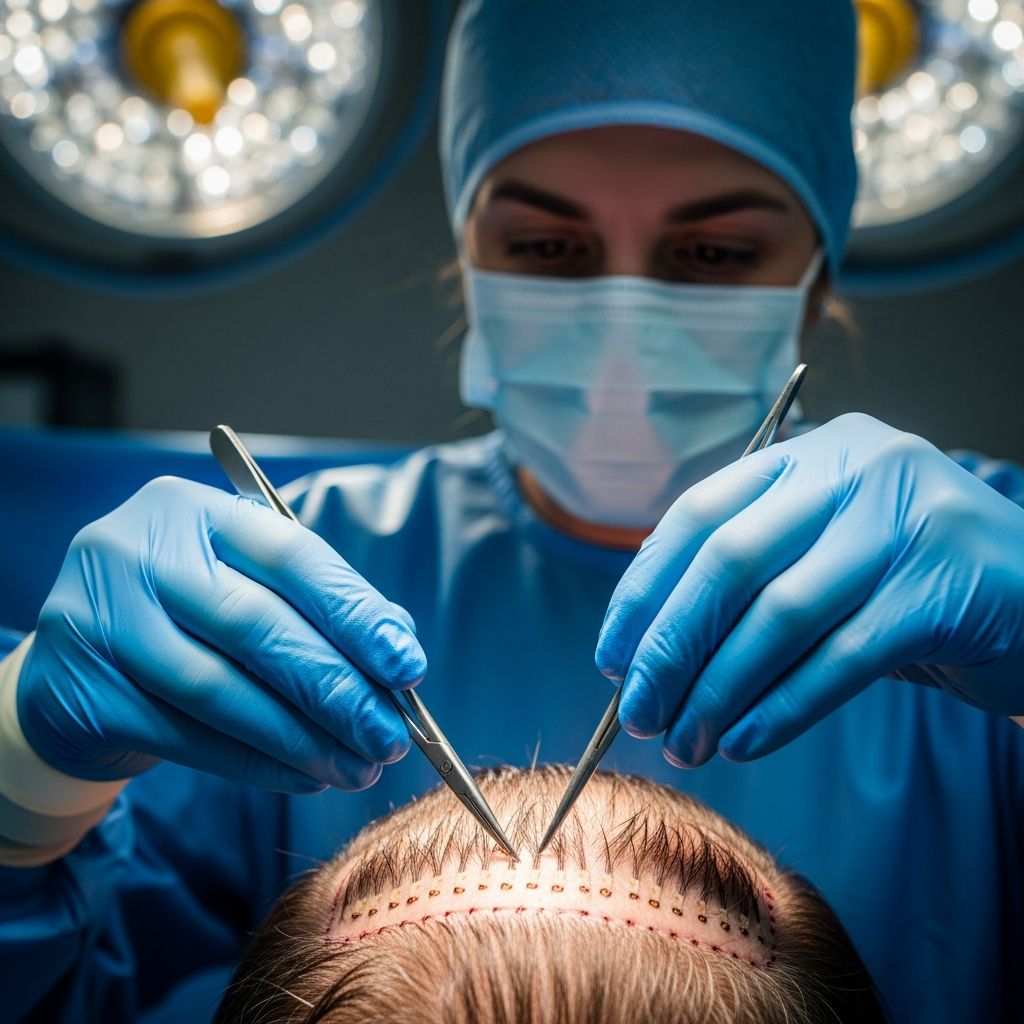
Follicular unit transplantation, also known as the strip method, represents the traditional approach to hair transplantation. During FUT, the surgeon removes a thin strip of scalp tissue from the donor area at the back of the head. This strip typically measures several inches in length but only a few millimeters in width, designed to minimize scarring in a less visible area.
Once the strip is removed, it is placed under a microscope where trained technicians carefully dissect individual hair follicles from the tissue. This meticulous process requires significant skill and precision to ensure that each follicular unit remains intact and viable. The harvested follicles are then prepared for transplantation to the recipient areas.
The advantages of FUT include the ability to harvest a large number of grafts in a single session and the lower cost compared to other methods. However, the technique does result in a linear scar at the donor site, though this is typically hidden by surrounding hair.
Follicular Unit Extraction (FUE)
Follicular unit extraction represents a newer, less invasive approach to harvesting hair for transplantation. Instead of removing a strip of tissue, FUE involves directly extracting individual hair follicles one by one from the donor area using specialized micromotor devices. This technique allows each follicle to be harvested with minimal trauma to surrounding tissue.
The primary advantage of FUE is that it eliminates the linear scar created by the strip method, instead leaving only tiny punctate scars that are virtually undetectable. This makes FUE an attractive option for patients who prefer to wear their hair short or who are concerned about visible scarring. Additionally, FUE recovery tends to be slightly faster, and patients typically experience less post-operative discomfort at the donor site.
The disadvantages of FUE include longer procedure duration, higher cost, and potential limitations when large numbers of grafts are needed, as the procedure is more time-intensive than FUT.
Comparing FUT and FUE
| Aspect | FUT (Strip Method) | FUE (Extraction Method) ||——–|——————-|————————|| Harvesting Approach | Removes strip of scalp tissue | Extracts individual follicles || Scarring | Linear scar at donor site | Minimal punctate scars || Number of Grafts | Large quantities in one session | Variable, time-dependent || Procedure Duration | Generally shorter | Typically longer || Cost | Generally less expensive | More expensive || Recovery Time | 7-10 days | 5-7 days typically || Suitable Hair Length | Can accommodate longer hair styles | Better for short hair styles |
The Hair Transplantation Procedure
Hair transplantation is performed in an outpatient clinic setting under local anesthesia. Patients remain awake throughout the procedure, with their scalp numbed using lidocaine injections to ensure comfort and minimize pain.
Procedure Timeline and Duration
A typical hair transplantation procedure requires between 5 to 7 hours, though the exact duration depends on several factors. The number of hair follicles requiring transplantation significantly influences procedure length, as does the size of the area being treated and the specific harvesting technique employed. Patients undergoing FUT procedures may complete them more quickly than those undergoing FUE, simply due to the nature of the harvesting process.
Despite the lengthy procedure time, patients report minimal discomfort during the surgery. The local anesthesia effectively numbs the scalp, preventing pain sensation throughout the transplantation process. Many patients describe feeling pressure rather than pain during the procedure.
Transplant Site Creation and Graft Placement
After harvesting hair follicles from the donor area, the surgeon creates thousands of tiny recipient sites in the areas experiencing hair loss. These sites must be created with precise spacing and angulation to ensure natural-looking results. The aesthetics of hair restoration depend significantly on proper site creation, as the angle and direction of hair growth must match the patient’s natural hair pattern.
Once recipient sites are prepared, technicians carefully place each harvested follicle into the recipient sites one by one. This meticulous process requires significant attention to detail and technical skill to maximize graft survival and achieve optimal density and appearance.
Recovery and Downtime
Recovery following hair transplantation is generally straightforward, with most patients returning to normal activities within approximately one week. However, the immediate post-operative period does involve some predictable changes and temporary side effects.
Immediate Post-Operative Period
Many patients experience facial swelling in the days following hair transplantation. This swelling occurs because transplanting thousands of hair follicles creates microscopic trauma to the scalp tissue. Although the scalp is the site of the procedure, gravity causes swelling to progress downward, affecting the forehead, area around the eyes, and then the face itself. Swelling typically peaks 2-3 days after the procedure and gradually resolves over the following week.
Despite the swelling, patients generally report minimal pain after the procedure. Most describe manageable discomfort that responds well to over-the-counter pain medication. Some patients may experience mild itching or tenderness at the transplant sites, which gradually diminishes as healing progresses.
Healing Timeline
The scalp typically heals within 7-10 days following hair transplantation. During this period, patients should follow specific care instructions to optimize healing and protect the transplanted grafts. These instructions typically include:
– Keeping the scalp clean and dry- Avoiding strenuous physical activity for at least one week- Sleeping with the head elevated to minimize swelling- Using prescribed medications or medicated shampoos as directed- Protecting the scalp from direct sunlight- Avoiding swimming or hot water exposure- Refraining from smoking, which can impair healing
Most patients can return to work and light activities within 5-7 days, though this depends on the extent of swelling and individual healing rates.
Hair Growth and Results
Understanding the timeline for hair growth after transplantation helps set realistic expectations. Transplanted hair does not immediately begin growing at full length.
Growth Timeline
In the first few weeks after transplantation, transplanted hairs may appear to fall out. This is a normal and expected response and should not cause concern. These hairs will regrow over the following months. Most patients begin noticing visible hair growth 3-4 months after the procedure, with progressive improvement continuing for 9-12 months. Full results typically become apparent approximately 12-18 months after surgery, as the transplanted hair achieves mature growth patterns and thickness.
Number of Procedures
For most patients, hair replacement surgery achieves optimal results with a single procedure. The surgeon carefully calculates the number of grafts needed to restore adequate density based on the extent of hair loss and the size of the treatment area. However, some patients with extensive hair loss may benefit from additional procedures performed at intervals to achieve their desired density and coverage. Additionally, patients who experience continued hair loss progression in untreated areas may choose to have additional procedures in the future.
Success Rates and Patient Satisfaction
Hair replacement surgery has achieved remarkable success in modern times, with results that appear natural and provide very high levels of patient satisfaction and safety. The combination of improved surgical techniques, better understanding of hair anatomy and aesthetics, and development of advanced microvascular surgical instruments has revolutionized hair restoration outcomes.
Graft survival rates typically exceed 90%, meaning the vast majority of transplanted hair follicles successfully establish blood supply and continue growing. Patient satisfaction rates remain consistently high, with most patients reporting improved confidence and quality of life following successful hair restoration.
Potential Complications and Risks
While serious complications associated with hair replacement surgery are rare in experienced providers’ hands, patients should understand potential risks before undergoing the procedure. A comprehensive review of modern hair transplantation complications revealed that the most common donor-site complication after FUT was hypertrophic scarring or keloid formation, occurring in up to 15.1% of cases. Recipient site complications included crusting (up to 54.8%), frontal edema (up to 50%), and sterile folliculitis (up to 53.3%), though these represent temporary reactions rather than serious adverse events. Any complication in the context of an elective procedure may be significant and psychologically important for individual patients, making comprehensive risk discussions with prospective patients essential.
Future Directions in Hair Restoration
The future of hair restoration surgery is advancing in exciting directions. Minimal-incision surgical techniques continue to be refined, offering improved outcomes with reduced scarring and faster recovery. Additionally, cell-based therapies show promise for potentially regenerating hair growth without requiring traditional transplantation of existing follicles. These emerging approaches may expand treatment options for patients with extensive hair loss or limited donor hair availability.
Frequently Asked Questions
Q: Am I a good candidate for hair replacement surgery?
A: Good candidates for hair replacement surgery typically have adequate donor hair in areas unaffected by permanent hair loss, realistic expectations about outcomes, good overall health, and clear medical reasons for seeking the procedure. A consultation with a qualified hair restoration specialist can determine your candidacy.
Q: How much does hair replacement surgery cost?
A: Hair transplantation costs vary based on the number of grafts needed, the technique used (FUT vs. FUE), and the surgeon’s experience. Most procedures range from several thousand to over ten thousand dollars. FUE procedures typically cost more than FUT procedures. Most insurance plans do not cover hair transplantation as it is considered a cosmetic procedure.
Q: How long do results last?
A: Hair transplanted to recipient areas is permanent because it retains the genetic characteristics of hair from the donor area. These follicles are resistant to the hormonal factors causing pattern baldness, so transplanted hair continues growing throughout a person’s lifetime.
Q: Will I have visible scarring?
A: With FUT, a linear scar remains at the donor site, though it is typically hidden by surrounding hair. With FUE, scars are minimal and virtually undetectable. The visibility of scarring depends on the technique used and your hair characteristics.
Q: When will I see results?
A: You may notice some shedding of transplanted hairs in the first few weeks, which is normal. New growth typically begins 3-4 months after surgery, with progressive improvement continuing for 9-12 months. Full results usually appear 12-18 months after the procedure.
Q: Can I combine hair transplantation with other treatments?
A: Yes, many patients combine hair transplantation with medical treatments like minoxidil or finasteride to maximize results and address continued hair loss in untreated areas. Your surgeon can recommend the best combination approach for your situation.
References
- Hair Restoration Surgery: The State of the Art — American Society of Plastic Surgeons. 2015. https://academic.oup.com/asj/article-pdf/33/1/128/6123437/33-1-128.pdf
- Hair Transplantation: Basic Overview — Johns Hopkins University School of Medicine. 2024. https://pure.johnshopkins.edu/en/publications/hair-transplantation-basic-overview
- A Scoping Review on Complications in Modern Hair Transplantation — Aesthetic Plastic Surgery, Vol. 49, Issue 3. February 2025. https://pubmed.ncbi.nlm.nih.gov/39179656/
- Hair Transplant Surgery: What You Need to Know — Johns Hopkins Medicine Facial Plastic Surgery. 2015. https://www.youtube.com/watch?v=0vaS51gXo6M
Similar Articles








Read full bio of Sneha Tete