Hair and Scalp Examination: Clinical Principles
Master systematic hair and scalp evaluation techniques for accurate diagnosis.
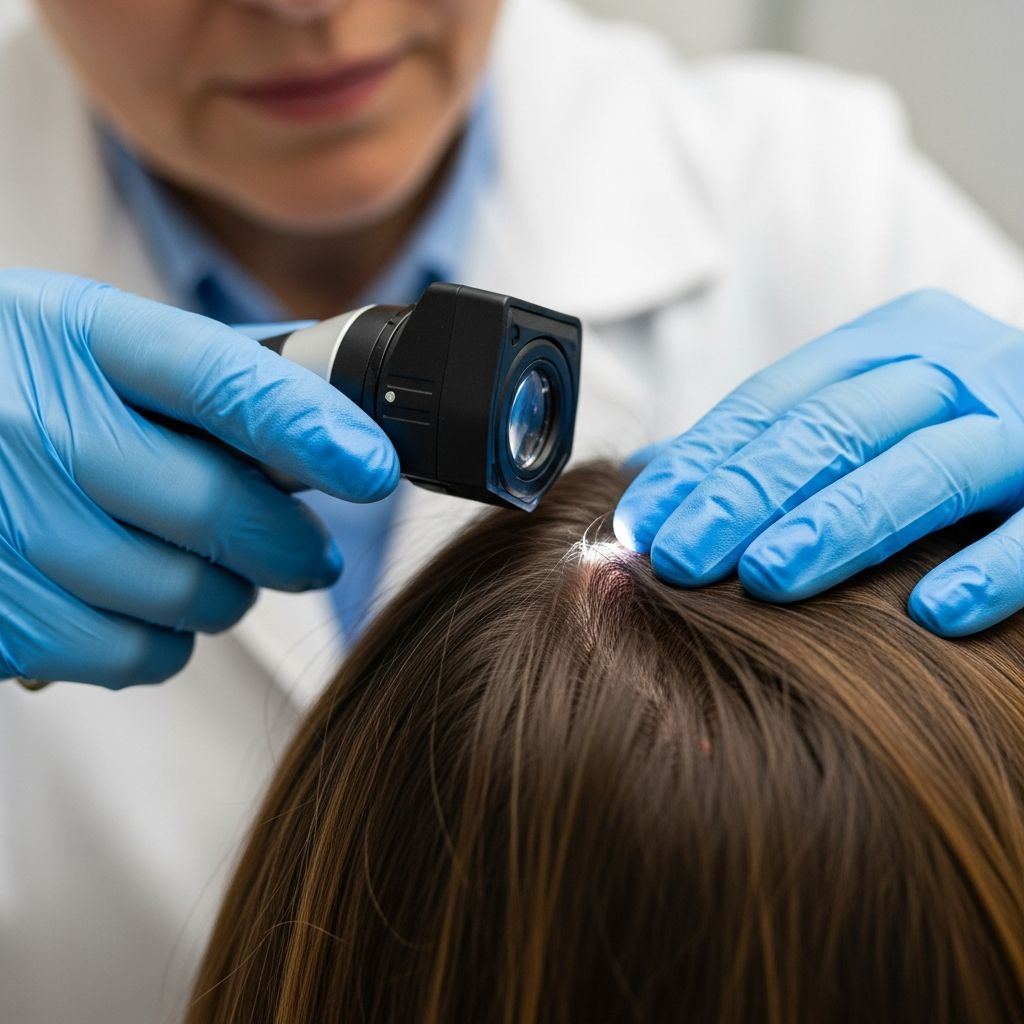
Examination of Hair and Scalp
A thorough examination of the hair and scalp is an essential component of a complete skin evaluation in dermatological practice. Hair and scalp assessment extends beyond simple visual inspection and requires a systematic, methodical approach to identify pathology accurately and efficiently. This examination encompasses evaluation of hair quantity and quality, assessment of the scalp surface, and examination of associated areas that provide diagnostic clues.
Hair Quantity and Quality Assessment
The initial step in hair evaluation involves assessing both the quantity and quality of hair present. Clinicians should evaluate the length, density, colour, and texture of the hair. Observation should include determining whether hair is straight, wavy, or curly, as these characteristics form the baseline for identifying abnormal changes.
Hair density refers to the number of hairs present per unit area of scalp. Uniform density across regions suggests normal hair growth, while variable density may indicate localized or diffuse hair loss. Documentation of baseline hair characteristics is particularly important when monitoring response to treatment or tracking disease progression over time.
Quality assessment includes examining the hair shaft for structural integrity and signs of damage. The appearance of the hair shaft can reveal evidence of physical trauma from styling practices, chemical treatments, or underlying pathological processes. Thinned hair shafts, for example, may indicate androgenetic alopecia, where miniaturization of hair follicles produces progressively shorter and thinner hairs.
Pattern and Distribution of Hair Loss
Hair loss, or alopecia, may present as either localized or diffuse patterns, each with different diagnostic implications. Understanding the distribution pattern is crucial for differential diagnosis.
Localized alopecia affects single or multiple discrete areas of the scalp. These areas may show complete hair loss or significant thinning. Regional patterns provide diagnostic clues; for instance, frontal and temporal recession typically suggests androgenetic alopecia in males, while vertex involvement indicates pattern baldness.
Diffuse alopecia involves widespread hair loss across the entire scalp. This pattern is most commonly associated with pattern baldding, though other causes include telogen effluvium and anagen effluvium. In diffuse alopecia, shedding may be normal or mildly increased in pattern balding, but excessive shedding suggests systemic or metabolic causes.
The Gentle Hair Pull Test
The hair pull test is a simple yet valuable clinical technique for assessing active hair shedding. The clinician grasps a lock of hair and applies firm but gentle traction to determine if hairs can be extracted. This test provides quantitative information about hair loss severity and helps differentiate between different types of alopecia.
Normal findings include extraction of 0-2 telogen hairs, which are hairs in the resting phase. These hairs are identified by their characteristic rounded bulb at the proximal end when examined under magnification. An elongated or tapered end indicates anagen hair in the growing phase; extraction of anagen hairs by gentle pull test is pathologic and suggests active hair loss.
Related Stories



A positive hair pull test, resulting in extraction of multiple hairs, indicates excessive shedding. The type of hairs extracted helps classify the condition: numerous telogen hairs suggest telogen effluvium, while anagen hairs indicate anagen effluvium. This distinction guides both diagnostic reasoning and treatment planning.
Scalp Surface Evaluation
Careful examination of the scalp surface reveals important diagnostic information beyond hair loss patterns. The clinician should assess the overall appearance of the scalp, noting whether it appears excessively oily or dry. The sebum production and hydration status can indicate associated conditions or be relevant to treatment considerations.
Visual inspection should identify localized lesions and inflammatory skin diseases affecting the scalp. Specific findings to document include:
- Scaling or desquamation
- Erythema (redness)
- Pigmentation changes
- Scarring or fibrosis
- Loss of follicular ostia (hair follicle openings)
The presence or absence of scarring has major diagnostic significance, as it distinguishes scarring alopecia (cicatricial) from non-scarring alopecia. Scarring alopecia represents permanent hair loss due to destruction of the hair follicle, while non-scarring alopecia may potentially recover if the underlying cause is reversed.
Examination of Associated Areas
A complete hair and scalp evaluation extends beyond the scalp itself. Examination of other anatomical areas provides valuable diagnostic clues and helps identify systemic or syndromic conditions.
Periauricular areas: Inspect the skin in and behind the ears for signs of seborrheic dermatitis, psoriasis, or discoid lupus erythematosus. These conditions commonly affect this region and may provide confirmation of a scalp diagnosis.
Facial hair: Assess the eyebrows, beard area, and facial hair distribution. Loss of facial hair may indicate alopecia areata or frontal fibrosing alopecia. Changes in facial hair distribution can also suggest hormonal abnormalities or systemic conditions.
Nails: Inspect the fingernails and toenails for changes such as pitting, onycholysis, or discoloration. Nail changes can indicate psoriasis, alopecia areata, or iron-deficiency anemia. These findings support diagnostic hypotheses generated from scalp examination.
Lymph nodes: Palpate for lymphadenopathy, which may be present in tinea capitis or secondary bacterial infections such as Staphylococcus aureus infection. Cervical and occipital lymphadenopathy can indicate active infection or severe inflammation.
Examination of Terminal Hair Distribution
Beyond scalp hair, a complete examination includes assessment of terminal hair in multiple body regions. The clinician should examine eyebrows, eyelashes, beard area (in males), axillary hair, pubic hair, and body hair generally. Documentation of hair distribution helps identify hormonal abnormalities, genetic conditions, or racial and ethnic variations in normal hair patterns.
In adolescents where relevant, notation of the stage of pubertal development using Tanner growth charts is appropriate. This is particularly important when evaluating growth and development concerns or precocious puberty.
Hirsutism assessment: When evaluating excessive facial or body hair, the clinician should assess the presence and severity of terminal hair on the face in beard areas and lower abdomen. A diamond pattern for pubic hair escutcheon indicates hirsutism, whereas the usual female pattern is triangular. Hirsutism may also affect the chest and back, and careful documentation helps differentiate pathological hair growth from normal variation.
Racial and Ethnic Variations
Hair characteristics vary significantly among different racial and ethnic groups. Clinicians should describe and understand racial variations in hair colour, morphology, quantity, and distribution to accurately distinguish normal variation from pathology. For example, Black populations typically have curly or coily hair with variations in texture that differ from straight or wavy hair patterns. Recognition of these normal variations prevents misinterpretation of findings and ensures culturally sensitive, accurate clinical assessment.
Diagnostic Techniques and Tools
Several diagnostic tools enhance the accuracy and completeness of hair and scalp examination:
Trichoscopy
Trichoscopy represents a non-invasive, low-cost technique involving examination of the scalp and hair using a handheld dermatoscope or videodermoscopy device. This magnified visualization provides in vivo information about scalp and hair shaft pathology that is not visible to the naked eye.
Trichoscopy can help distinguish scarring from non-scarring alopecia, identify early androgenetic alopecia versus telogen effluvium, and predict prognosis in alopecia areata. The technique also allows clinicians to monitor response to therapy and guide selection of optimal sites for scalp biopsy. Four basic structures are examined: hair follicles, hair shafts, perifollicular skin, and interfollicular skin.
Trichogram
A trichogram is a diagnostic test that quantifies hair loss and establishes the type of hair loss present. A strand of hair is taken from the forehead, temples, and neck using tweezers. The hair is examined microscopically and classified according to its type: anagen, catagen, or telogen. This test helps determine whether hair loss is due to telogen effluvium or anagen effluvium and can assess the rate of hair shrinking and occurrence of dystrophic bulbs.
Dermoscopy
Dermoscopy can be used to aid in diagnosing the type of alopecia and reduces the need for scalp biopsies. The magnified view enhances visualization of surface and subsurface features that help differentiate diagnostic patterns.
Scalp Biopsy
When necessary, a 4mm punch biopsy can provide definitive histopathological information to guide diagnosis and treatment. Biopsy is indicated when clinical and dermoscopic findings are inconclusive or when distinguishing between similar conditions is necessary.
Systematic Examination Approach
A methodical, systematic approach to scalp examination ensures that no findings are overlooked and improves both diagnostic accuracy and patient trust. The examination should follow an organized pattern:
- Request permission and establish patient comfort
- Remove wigs, extensions, or braids when possible to allow full visualization
- Gently part the hair and examine the scalp section by section
- Assess the pattern of hair loss and regions affected
- Examine hair density for uniformity versus variability
- Inspect the scalp for scaling, redness, pigmentation changes, scarring, or follicular ostia loss
- Evaluate the hair shaft for evidence of damage
- Perform a hair pull test to assess active shedding
- Examine associated areas outside the scalp
- Utilize appropriate tools such as magnifiers or dermatoscope when indicated
Cultural Considerations in Hair Examination
A thoughtful scalp exam requires cultural awareness and sensitivity. When examining the hair of Black patients and other populations with curly or coily hair, it is particularly important to avoid superficial visual examination. Instead, clinicians should touch and examine the scalp thoroughly and respectfully to ensure accurate evaluation and build patient trust. Proper technique includes gentle parting of the hair and direct visualization and palpation of the scalp surface, rather than leaning toward the patient to inspect from a distance.
Common Examination Findings
| Finding | Possible Conditions | Clinical Significance |
|---|---|---|
| Scarring on scalp surface | Scarring alopecia, trauma | Indicates permanent hair loss |
| Scaling and erythema | Seborrheic dermatitis, psoriasis, tinea capitis | Suggests inflammatory or infectious process |
| Loss of follicular ostia | Scarring alopecia | Indicates follicular destruction |
| Miniaturized hair shafts | Androgenetic alopecia | Progressive hair shaft thinning |
| Positive hair pull test | Telogen or anagen effluvium | Active, excessive hair shedding |
Frequently Asked Questions
Q: What is the difference between telogen and anagen hairs extracted during the hair pull test?
A: Telogen hairs, in the resting phase, have a rounded bulb at the proximal end and are normal findings (0-2 hairs expected). Anagen hairs, in the growing phase, have an elongated or tapered end and are pathologic when extracted by gentle pull test, indicating active hair loss.
Q: Why is examination of areas outside the scalp important?
A: Examination of facial hair, nails, ears, and lymph nodes provides diagnostic clues. For example, facial hair loss may indicate alopecia areata, nail pitting suggests psoriasis, and lymphadenopathy may indicate infection or severe inflammation.
Q: When is scalp biopsy indicated?
A: A 4mm punch biopsy is indicated when clinical and dermoscopic findings are inconclusive or when definitive histopathological diagnosis is needed to guide treatment decisions.
Q: How does trichoscopy improve hair and scalp diagnosis?
A: Trichoscopy provides magnified in vivo visualization of scalp and hair structures, helping distinguish scarring from non-scarring alopecia, identify early disease patterns, and monitor treatment response without need for biopsy.
Q: What cultural considerations are important during scalp examination?
A: Clinicians should recognize racial and ethnic variations in normal hair characteristics and avoid superficial visual examination. Direct touching and careful parting of the hair, especially in patients with curly or coily hair, ensures accurate diagnosis and builds patient trust.
Q: What does a positive hair pull test indicate?
A: A positive hair pull test, where multiple hairs are extracted, indicates excessive shedding. The type of hairs extracted (telogen vs. anagen) helps classify the condition as telogen or anagen effluvium.
References
- The Hair & Scalp Exam: Tools, Techniques, and Cultural Nuance — Elevate Dermatology. 2025. https://www.elevate-derm.com/all-blog-posts/the-hair-scalp-exam-tools-techniques-and-cultural-nuance
- Principles of Dermatological Practice: Examination of Hair and Scalp — DermNet New Zealand. 2008. https://dermnetnz.org/cme/principles/examination-of-hair-and-scalp
- Trichoscopy: A Complete Overview — DermNet New Zealand. https://dermnetnz.org/topics/trichoscopy
- Hair Loss (Baldness, Androgenetic Alopecia, Alopecia Areata) — Abimelec Dermatology. https://www.abimelec.com/dermatologist/hair-loss.html
- Hair Disorders — Geeky Medics. https://geekymedics.com/hair-disorders/
Similar Articles








Read full bio of medha deb