Haloperidol Long-Acting Injection: Uses, Dosage, and Side Effects
Complete guide to haloperidol decanoate: mechanism, administration, dosing, and patient considerations.
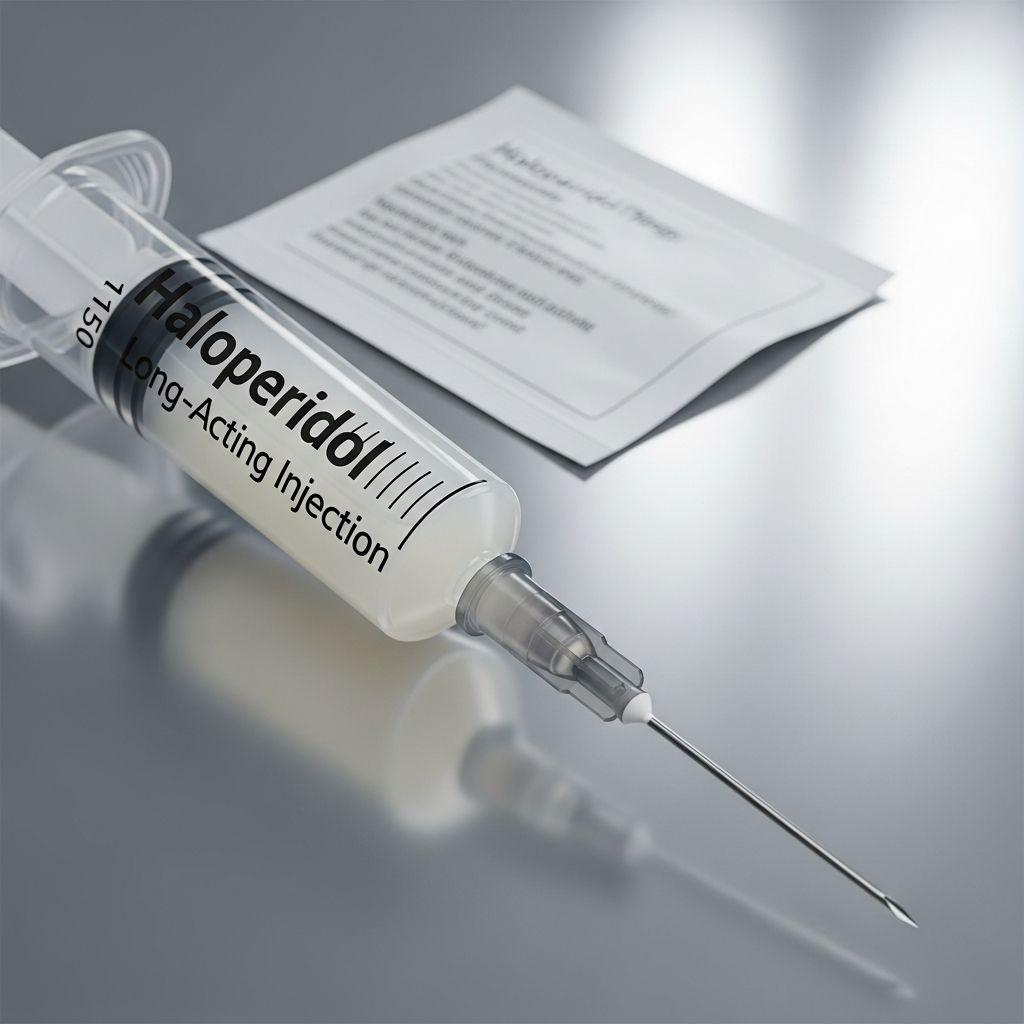
What is Haloperidol Long-Acting Injection?
Haloperidol long-acting injection, marketed as Haldol Decanoate, is a depot formulation of the antipsychotic medication haloperidol. This medication belongs to a class of drugs called antipsychotics and is used to treat schizophrenia in adults whose condition has previously been treated with haloperidol. Unlike immediate-release tablets or liquid forms that require daily dosing, haloperidol decanoate provides sustained therapeutic levels for extended periods, making it an effective option for patients who struggle with medication adherence.
Haloperidol decanoate is the decanoate ester of haloperidol, a butyrophenone antipsychotic agent. The medication is formulated in sesame oil and is administered as a deep intramuscular injection, allowing for slow and sustained release of the active drug over time. The long-acting formulation significantly improves treatment compliance and reduces the burden of daily medication management for both patients and healthcare providers.
How Does Haloperidol Long-Acting Injection Work?
Haloperidol works by balancing dopamine levels in the brain, a neurotransmitter that plays a crucial role in regulating mood and behavior. The medication blocks dopamine receptors in the central nervous system, helping to alleviate symptoms associated with schizophrenia, such as hallucinations, delusions, and disorganized thinking.
The drug also interacts with other neurotransmitter systems, including serotonergic, muscarinic cholinergic, and histaminergic receptors. This multi-system activity contributes to both the therapeutic effects and potential side effects of the medication.
Pharmacokinetics and Duration of Action
One of the defining characteristics of haloperidol decanoate is its extended pharmacokinetic profile. After intramuscular administration in sesame oil, the medication is absorbed slowly and releases haloperidol gradually into the bloodstream. Plasma concentrations rise gradually, reaching peak levels approximately 6 days after injection, with an apparent half-life of about 3 weeks.
In patients receiving monthly injections, steady-state plasma concentrations are typically achieved within 2 to 4 months. The relationship between the dose of haloperidol decanoate and plasma haloperidol concentration is roughly linear for doses below 450 mg, making dose adjustments relatively predictable. A single dose of Haldol Decanoate typically lasts for 4 weeks.
Uses and Indications
Haloperidol long-acting injection is primarily used to treat schizophrenia in adults. This medication is particularly beneficial for patients whose psychotic symptoms have been previously managed with haloperidol in its oral or short-acting forms. The depot formulation is especially valuable for individuals who have difficulty adhering to daily medication regimens, as it reduces the frequency of dosing to monthly or every 4-week intervals.
The medication may help prevent relapse in patients with schizophrenia and is suitable for those who are tolerant to oral haloperidol formulations. It is important to note that haloperidol long-acting injection should not be used to treat behavior problems in older adult patients who have dementia.
Related Stories



Dosage and Administration
Initial Dosing
Haloperidol decanoate must be administered by deep intramuscular injection only. A 21-gauge needle is recommended, and the maximum volume per injection site should not exceed 3 mL. Importantly, the medication must never be administered intravenously.
The starting dose of haloperidol decanoate should be individualized based on several factors including the patient’s age, clinical history, physical condition, and previous response to haloperidol. For adults, the typical starting dose is normally between 25 mg and 150 mg.
When converting from oral haloperidol to the long-acting injection, the initial dose is typically 10 to 20 times the previous daily dose in oral haloperidol equivalents. For patients who are tolerant to oral haloperidol, lower initial doses of 10-15 times the daily oral dose may be adequate.
Maintenance Dosing
Haloperidol decanoate is usually administered as a monthly injection or every 4 weeks. However, variation in patient response may necessitate dose adjustments. Doses higher than 75 mg every 4 weeks should only be given if the physician determines it is safe to do so.
The maximum recommended dosage of haloperidol decanoate is 450 mg once every 4 weeks. Close clinical supervision is required during the initiation and stabilization phases of haloperidol decanoate therapy.
Administration Technique
Healthcare providers should use the Z-track injection technique when administering haloperidol decanoate. This technique helps minimize tissue irritation and ensures proper intramuscular placement. The injection should be given deep into a muscle, and patients will receive this medication from a doctor or nurse in a clinical setting.
Important Safety Considerations
Cardiovascular Effects
Haloperidol carries a significant warning regarding cardiovascular risks. Administering haloperidol intravenously or exceeding recommended doses is associated with an increased risk of QTc interval prolongation, Torsades de Pointes, and sudden cardiac death. A QTc interval exceeding 500 milliseconds is particularly associated with increased risk of Torsades de Pointes.
Special caution is advised when prescribing haloperidol decanoate to patients with:
- Electrolyte imbalances, particularly hypokalemia or hypomagnesemia
- Underlying cardiac abnormalities
- Hypothyroidism
- Familial long QT syndrome
- Severe cardiovascular disorders
- Conditions that may cause QT prolongation
Patients with severe cardiovascular disorders should receive the medication cautiously due to the possibility of transient hypotension or precipitation of anginal pain. If hypotension occurs and a vasopressor is required, epinephrine must not be used, as haloperidol may block its effect.
Drug Interactions
When haloperidol decanoate is used in combination with other medications, careful consideration is necessary. Caution is advised when combining haloperidol with drugs known to cause electrolyte imbalance, such as diuretics or corticosteroids, as hypokalemia, hypomagnesemia, and hypocalcemia are risk factors for QT prolongation.
Haloperidol may interact with medications used to treat depression, blood pressure management, severe allergic reactions, and attention deficit hyperactivity disorder. Patients taking other medications that prolong the QTc interval require special monitoring and careful clinical evaluation.
Serious Side Effects to Monitor
While receiving haloperidol decanoate, patients should be aware of potential serious side effects that may require urgent medical attention:
- Neuroleptic malignant syndrome (a rare but serious condition)
- Problems with heart function or cardiac arrhythmias
- Difficulty controlling body or limb movements
- Severe allergic reactions
- Blood clots
- Respiratory problems, including narrowed airways and shortness of breath
- Nausea and vomiting
- Changes in blood cell counts, including severe decreases in white blood cells and platelets
Special Populations and Precautions
The dosing of haloperidol decanoate depends on several individual factors:
- Patient age
- Kidney or liver function status
- Previous response to haloperidol
- Other medications being taken
Patients should inform their healthcare provider of any existing medical conditions, particularly cardiovascular disease, electrolyte disorders, thyroid disease, or family history of long QT syndrome, before beginning treatment with haloperidol decanoate.
Mortality Risk in Elderly Patients with Dementia
An important clinical consideration is the increased mortality risk in elderly patients with dementia who are treated with antipsychotic medications. During a typical 10-week controlled trial, drug-treated patients had a mortality rate of approximately 4.5%, compared to about 2.6% in placebo-treated patients, representing a risk increase of 1.6 to 1.7 times. This finding underscores why haloperidol long-acting injection should not be used to treat behavioral problems in elderly dementia patients.
Advantages of Long-Acting Formulation
The long-acting injection form of haloperidol offers several clinical advantages compared to daily oral medications:
- Improved medication adherence and compliance
- Reduced treatment burden for patients with memory difficulties
- Monthly dosing schedule rather than daily administration
- Consistent therapeutic levels maintained over 4 weeks
- Reduced risk of relapse in stable patients
- Easier monitoring and oversight by healthcare providers
Frequently Asked Questions
Q: How often do I need to receive haloperidol long-acting injection?
A: Haloperidol decanoate is typically administered every 3 to 4 weeks by a healthcare provider. A single dose usually lasts for 4 weeks. Your doctor will determine the appropriate schedule based on your individual response to the medication.
Q: Can I switch directly from oral haloperidol to the long-acting injection?
A: Yes, conversion from oral haloperidol to haloperidol decanoate can be achieved by using an initial dose that is 10 to 20 times the previous daily oral dose. Your doctor may adjust this based on your tolerance and clinical response.
Q: What should I do if I have missed an injection appointment?
A: Contact your healthcare provider immediately. It is important to maintain regular injection schedules to ensure consistent therapeutic levels. Your doctor can advise you on rescheduling and any necessary adjustments.
Q: What are the signs of neuroleptic malignant syndrome?
A: Neuroleptic malignant syndrome is a rare but serious side effect. Symptoms include muscle rigidity, high fever, altered consciousness, and autonomic instability. Seek immediate medical attention if you experience these symptoms.
Q: Can haloperidol decanoate be given intravenously?
A: No. Haloperidol decanoate must only be administered as a deep intramuscular injection. Intravenous administration carries a significantly higher risk of serious cardiovascular complications including QTc prolongation and Torsades de Pointes.
Q: How long does it take to reach therapeutic levels?
A: Steady-state plasma concentrations are achieved within 2 to 4 months in patients receiving monthly injections. During this time, your doctor may provide additional oral haloperidol to bridge therapeutic coverage.
Q: Are there any dietary restrictions while taking haloperidol decanoate?
A: There are no specific dietary restrictions. However, maintaining proper electrolyte balance is important, as electrolyte imbalances (particularly low potassium and magnesium) increase the risk of cardiac complications.
Conclusion
Haloperidol long-acting injection (Haldol Decanoate) represents an important treatment option for adults with schizophrenia, particularly those who benefit from less frequent dosing schedules. The medication’s extended duration of action and predictable pharmacokinetics make it suitable for patients with adherence challenges. However, careful patient selection, regular monitoring for cardiovascular effects, and appropriate dose management are essential for safe and effective treatment. Close clinical supervision during initiation and ongoing follow-up appointments are necessary to optimize outcomes and minimize risks.
References
- HALDOL® Decanoate 50 (haloperidol) – FDA Drug Label — U.S. Food and Drug Administration. 2025. https://www.accessdata.fda.gov/drugsatfda_docs/label/2025/018701s078lbl.pdf
- Information for the patient HALDOL® Decanoate 50 mg/ml solution — UK Medicines and Healthcare products Regulatory Agency. 2024. https://www.medicines.org.uk/emc/files/pil.15245.pdf
- Haloperidol – StatPearls — National Center for Biotechnology Information. 2024. https://www.ncbi.nlm.nih.gov/books/NBK560892/
- Haloperidol (intramuscular route) – Side effects & uses — Mayo Clinic. 2024. https://www.mayoclinic.org/drugs-supplements/haloperidol-intramuscular-route/description/drg-20072783
- Haloperidol long-acting injection — Cleveland Clinic. 2024. https://my.clevelandclinic.org/health/drugs/20616-haloperidol-long-acting-injection
- Haloperidol (Haldol) — National Alliance on Mental Illness. 2024. https://www.nami.org/treatments-and-approaches/mental-health-medications/types-of-medication/haloperidol-haldol/
Similar Articles








Read full bio of medha deb