Hand, Foot, And Mouth Disease: Parent Guide
Everything parents need to know about HFMD: symptoms, causes, treatment, prevention, and when to seek medical help.
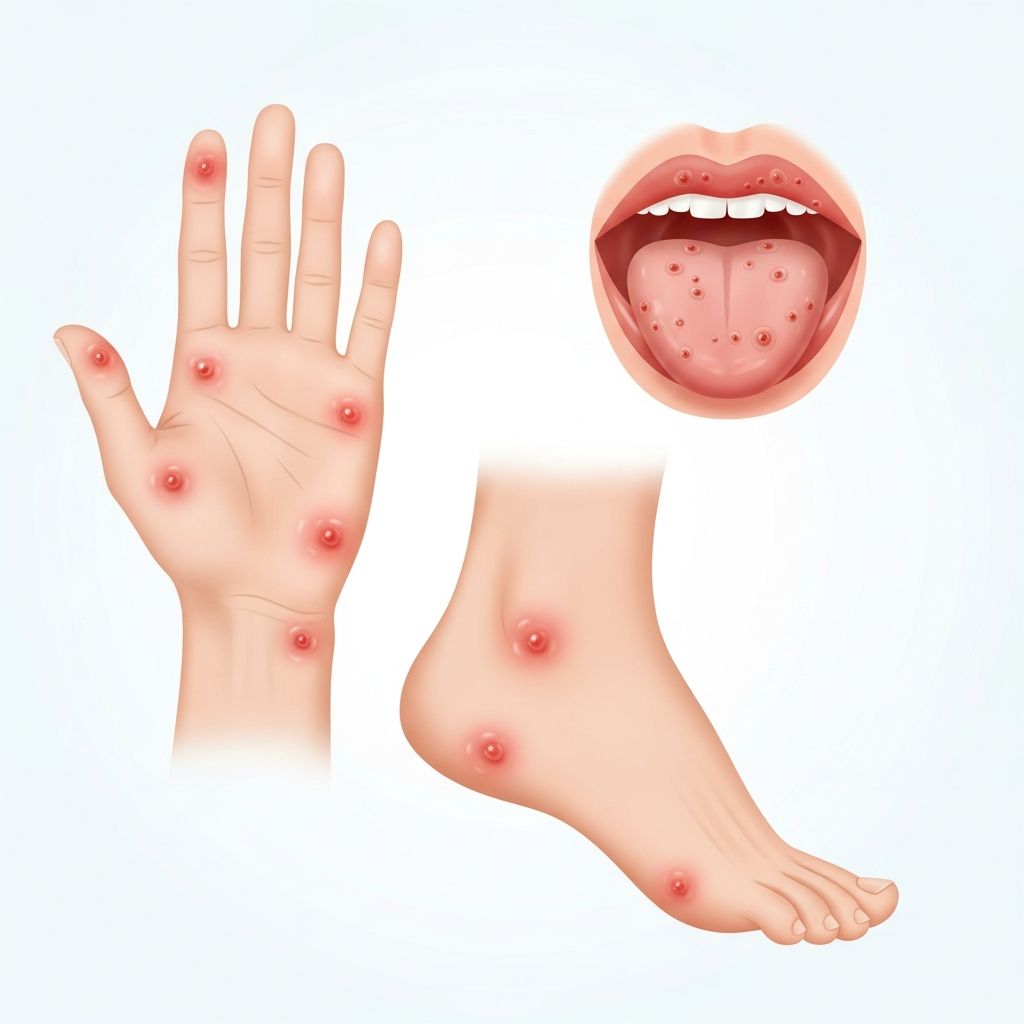
Hand, foot, and mouth disease (HFMD) is a highly contagious viral infection that primarily affects infants and children under 5 years old, causing fever, painful mouth sores, and a characteristic rash on the hands, feet, and sometimes other body areas.
What Is Hand, Foot, and Mouth Disease?
HFMD gets its name from the blister-like rash that typically appears on the hands and feet, accompanied by sores inside the mouth. Caused mainly by coxsackievirus A16 and other enteroviruses, it spreads easily in settings like daycares and schools. The illness is usually mild, resolving within 7-10 days without specific treatment, though it can be uncomfortable due to painful sores.
While most common in young children, adults and older kids can contract HFMD, often with milder or asymptomatic cases. Outbreaks peak in summer and fall.
Symptoms of Hand, Foot, and Mouth Disease
Symptoms develop 3-6 days after exposure and occur in stages. Initially, children experience flu-like signs:
- Fever (often 101°F or higher)
- Reduced appetite
- Sore throat
- General malaise or fussiness
After 1-2 days, a rash emerges: painful red spots or blisters in the mouth (on tongue, gums, inside cheeks), and on palms, soles, buttocks, or genitals. The rash may itch but typically doesn’t require popping blisters.
Symptoms peak early, with fever lasting 2-3 days and sores healing in a week. Children under 2 may shed the virus longer.
Causes of Hand, Foot, and Mouth Disease
HFMD is triggered by enteroviruses, especially coxsackievirus A16, residing in the digestive tract. Multiple strains exist, explaining varied severity.
| Virus Type | Common Association |
|---|---|
| Coxsackievirus A16 | Most cases, milder symptoms |
| Enterovirus 71 | Rarer, potential for complications |
| Other coxsackieviruses | Variable presentations |
Unlike bacterial infections, HFMD has no vaccine, but good hygiene curbs spread.
How Does Hand, Foot, and Mouth Disease Spread?
Extremely contagious, HFMD transmits via:
- Direct contact with saliva, mucus, blister fluid, or stool
- Respiratory droplets from coughs/sneezes
- Touching contaminated surfaces (toys, doorknobs)
- Poor hand hygiene, especially in diaper changes
Children shed virus most in the first week, even before symptoms, and via stool for weeks. Asymptomatic carriers, including adults, perpetuate outbreaks in childcare.
Hand, Foot, and Mouth Disease in Adults
Adults can get HFMD but often have mild or no symptoms due to prior immunity. They may unknowingly spread it to children. Pregnant individuals should consult doctors if exposed, as rare fetal risks exist, though evidence is limited.
Diagnosis
Diagnosis is clinical, based on symptoms and rash pattern—no tests needed usually. If unclear, PCR or viral cultures confirm enterovirus. Providers may recommend virtual visits to avoid spreading.
Treatment for Hand, Foot, and Mouth Disease
No antiviral cures exist; antibiotics don’t work on viruses. Focus on symptom relief:
- Acetaminophen or ibuprofen for fever/pain (avoid aspirin in kids)
- Cold fluids; soft, cool foods (yogurt, pudding) to ease swallowing
- Topical oral anesthetics for sores (per doctor)
- Oral rehydration if dehydrated
Related Stories



Keep kids home until fever-free 24 hours and no new blisters. Most recover fully in under 2 weeks.
Home Remedies and Care Tips
Supportive care speeds comfort:
- Hydration: Offer popsicles, ice chips; avoid acidic/juicy drinks
- Pain relief: Numbing mouth gels; salt rinses for older kids
- Skin care: Loose clothes; calamine lotion for rash itch
- Rest: Quiet activities; monitor for dehydration (dry diapers, no tears)
Discourage blister popping to prevent infection.
Prevention of Hand, Foot, and Mouth Disease
Prevention hinges on hygiene:
- Wash hands 20+ seconds with soap, especially after diaper changes/toilet
- Disinfect toys/surfaces daily
- Avoid close contact (sharing utensils, kissing)
- Cover coughs/sneezes
- Keep infected kids home until non-contagious
No vaccine available, but these steps reduce outbreaks significantly.
Complications
Rare, but include:
- Dehydration: From painful swallowing
- Fingernail/skin loss: Temporary, regrows
- Meningitis/encephalitis: Very rare, esp. with EV71
- Myocarditis: Heart inflammation, exceptional
Seek care for high fever >3 days, lethargy, stiff neck, or severe dehydration.
When to See a Doctor
Most cases self-resolve, but contact provider if:
- Fever >101°F persists >3 days
- Child refuses fluids, shows dehydration signs
- Extreme irritability or lethargy
- Rash worsens/spreads unusually
- Seizures or breathing issues
Notify if exposed before visits.
Hand, Foot, and Mouth Disease vs. Other Illnesses
| Condition | Key Differences from HFMD |
|---|---|
| Herpangina | Mouth/throat sores only, no hand/foot rash |
| Chickenpox | Itchy rash anywhere, crusts over; vaccine-preventable |
| Impetigo | Bacterial, honey-crusted sores, antibiotic-responsive |
Frequently Asked Questions (FAQs)
Is hand, foot, and mouth disease contagious?
Yes, highly so via fluids, droplets, and surfaces; most during first week.
How long does HFMD last?
7-10 days typically; fever 2-3 days, sores/rash 1 week.
Can adults get hand, foot, and mouth disease?
Yes, but usually milder; they can spread asymptomatically.
Is there a vaccine for HFMD?
No, in the US; hygiene is key.
When can my child return to school/daycare?
Fever-free 24 hours, no new blisters, feeling better.
Outlook and Long-Term Effects
HFMD rarely causes lasting issues; full recovery expected. Reinfections possible with different strains. Hygiene prevents community spread.
References
- Hand, Foot & Mouth Disease (HFMD): Symptoms & Causes — Cleveland Clinic. 2023. https://my.clevelandclinic.org/health/diseases/11129-hand-foot-and-mouth-disease
- Hand, Foot & Mouth Disease: Symptoms, Treatment & Prevention — American Academy of Pediatrics (healthychildren.org). 2023. https://www.healthychildren.org/English/health-issues/conditions/infections/Pages/Hand-Foot-and-Mouth-Disease.aspx
- Hand, Foot, and Mouth Disease: What Parents Need To Know — TRICARE Newsroom (Defense Health Agency). 2024-05-23. https://newsroom.tricare.mil/News/Defense-Health-Agency-News/Article/4198073/hand-foot-and-mouth-disease-what-parents-need-to-know
- Hand, Foot, and Mouth Disease – StatPearls — NCBI Bookshelf (NIH). 2023. https://www.ncbi.nlm.nih.gov/books/NBK431082/
- Hand, Foot, and Mouth Disease Factsheet — North Dakota Department of Health & Human Services. 2023. https://www.hhs.nd.gov/hand-foot-and-mouth-disease-factsheet
Similar Articles








Read full bio of Sneha Tete