Hand, Foot, and Mouth Disease: Symptoms, Treatment & Prevention
A complete guide to understanding, recognizing, and managing hand, foot, and mouth disease in children.
What Is Hand, Foot, and Mouth Disease?
Hand, foot, and mouth disease (HFMD) is a common viral illness that typically affects infants and young children, particularly those under five years of age. The infection is caused by viruses belonging to the enterovirus family, most commonly coxsackievirus A16 or enterovirus A71. HFMD is highly contagious and spreads rapidly in settings such as schools, daycare centers, and nurseries, where children are in close contact with one another.
The disease is characterized by the development of a distinctive rash on the hands and feet, combined with painful sores in the mouth and throat. While the condition is typically mild and self-limiting, understanding its symptoms, transmission, and management is essential for parents and caregivers to provide appropriate care and prevent spread to others.
How Is Hand, Foot, and Mouth Disease Transmitted?
HFMD spreads primarily through fecal-oral transmission, though it can also be transmitted through contact with saliva, nasal discharge, blisters, or rashes on the skin of an infected person. The virus is commonly spread when individuals fail to wash their hands properly, particularly after changing diapers or using the bathroom. Additionally, the virus can be found in a child’s digestive tract and respiratory secretions, making careful hygiene practices essential for preventing transmission.
Because the virus is shed in saliva and fecal matter, any surface contaminated by an infected child poses a transmission risk. This is why outbreaks are so common in group settings where children share toys, bathrooms, and close physical contact.
Causes of Hand, Foot, and Mouth Disease
The primary causative agent of HFMD is coxsackievirus A16, one of the nonpolio enteroviruses. However, multiple other strains of coxsackieviruses and enteroviruses can also cause the infection, including enterovirus A71. The virus belongs to the Picornaviridae family and is transmitted through respiratory droplets, direct contact with infected individuals, or contaminated surfaces.
Enteroviruses thrive in the digestive tract and can be detected in:
- Saliva and nasal secretions
- Blister fluid on the skin
- Fecal matter (primary transmission route)
- Throat secretions
Once a person is infected, they remain contagious for several days to weeks, depending on the viral strain and individual immune response.
Symptoms of Hand, Foot, and Mouth Disease
HFMD symptoms typically appear within an incubation period of three to six days after exposure to the virus. Initial symptoms often resemble those of a common cold or mild flu, followed by the characteristic rash and mouth sores.
Early Symptoms
Children with HFMD typically begin experiencing:
- Low-grade fever
- Sore throat and mouth pain
- Loss of appetite
- General malaise and fussiness
- Reduced energy levels
Related Stories



The fever usually lasts one to two days before the characteristic rash appears.
Distinctive Rash and Mouth Sores
The hallmark features of HFMD include:
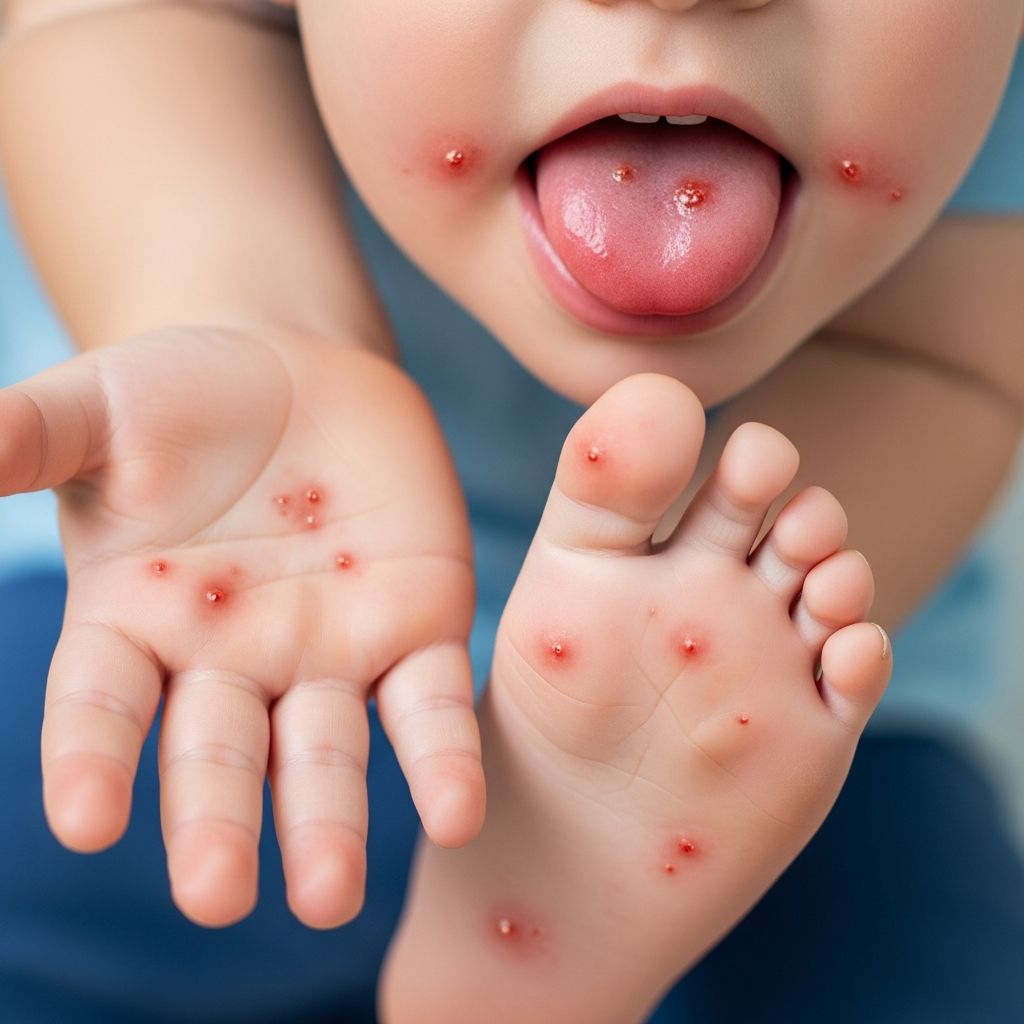
- Mouth sores: Painful blisters typically appear at the back of the throat, around the tonsils, and on the tongue. These blisters eventually rupture, forming superficial ulcers with a grey-yellow base surrounded by a red rim.
- Hand and foot rash: Small blisters or red bumps appear on the palms of the hands and soles of the feet, often in a non-itching pattern.
- Additional rash locations: The rash may also appear in the diaper area, on the legs, arms, and buttocks.
The mouth pain is typically most severe during the first three to five days of illness, which can make eating and drinking difficult for children.
When Symptoms Appear
Most children experience symptoms for approximately seven to 10 days. However, children younger than two years old may take longer for their bodies to clear the virus completely. It is important to note that symptoms may vary from child to child, and some may experience more severe mouth pain than others.
When to See a Doctor
While HFMD is typically mild and self-limiting, certain situations warrant immediate medical attention:
- Your child is younger than six months old
- Your child is unable to eat or drink, risking dehydration
- Symptoms persist longer than 10 days
- High fever that doesn’t respond to over-the-counter medications
- Signs of severe illness or unusual complications
If you suspect your child has been exposed to HFMD, alert your healthcare provider before scheduling an in-person examination. Your provider may recommend a virtual visit to protect the health of other patients in the office.
Diagnosis of Hand, Foot, and Mouth Disease
Diagnosing HFMD is typically based on clinical presentation and medical history. Your healthcare provider will:
- Ask about your child’s age and exposure history
- Examine the mouth sores and assess the rash pattern
- Differentiate HFMD from other viral infections with similar symptoms
If diagnostic confirmation is needed, your doctor may order:
- Throat swab to identify the specific virus
- Stool examination to detect viral presence
- PCR testing for enterovirus identification
It is important to distinguish HFMD from herpangina, another viral infection caused by coxsackievirus. The key difference is that herpangina causes blisters only in the mouth and throat, without the characteristic rash on hands and feet.
Treatment Options for Hand, Foot, and Mouth Disease
There is no specific antiviral medication or cure for hand, foot, and mouth disease. Antibiotics are ineffective because they do not target viruses. Instead, treatment focuses on managing symptoms and providing comfort care while the child’s immune system clears the infection naturally.
Pain and Fever Management
Over-the-counter pain relievers can ease discomfort:
- Acetaminophen (Tylenol): Effective for reducing fever and general pain
- Ibuprofen (Advil, Motrin): Anti-inflammatory pain reliever suitable for fever and mouth pain
- Topical oral anesthetic: Can provide localized relief for mouth sores
- Gargle mixture: A combination of ibuprofen and diphenhydramine can be used to gargle, helping coat ulcers and ease pain
Important: Do not give aspirin to children, especially for flu-like symptoms, as it is linked to Reye’s syndrome, a rare but serious condition.
Maintaining Hydration and Nutrition
Keeping children well-hydrated is critical, as mouth pain may reduce their desire to eat and drink:
- Offer soft foods: Yogurt, pasta, pudding, smoothies, and ice pops are easier to consume and help relieve mouth pain
- Provide fluids strategically: While water is important, it alone does not provide energy or the electrolytes needed to maintain blood pressure. Offer broths, electrolyte solutions, or drinks with natural sugars
- Avoid irritating foods: Citrus, spicy foods, and acidic beverages can worsen mouth pain
- Monitor intake: Watch for signs of dehydration, including decreased urination, dry mouth, and lethargy
If your child refuses to eat or drink for an extended period, seek medical advice to assess hydration status.
Prevention and Control of Spread
Since HFMD is highly contagious, prevention is paramount. Key strategies include:
- Hand hygiene: Wash hands thoroughly with soap and water, especially after diaper changes, using the bathroom, and before eating
- Surface cleaning: Disinfect toys, doorknobs, and other frequently touched surfaces
- Respiratory etiquette: Cover mouth and nose when coughing or sneezing
- Isolation: Keep infected children home from school or daycare until symptoms significantly improve
- Avoid sharing: Do not share utensils, cups, or personal items with infected individuals
- Personal care items: Use separate towels and avoid direct contact with blisters or rashes
Complications from Hand, Foot, and Mouth Disease
Complications from HFMD are rare. Most cases resolve without serious sequelae. However, the primary concern is dehydration, which can occur if mouth pain prevents adequate fluid intake. In very rare cases, serious complications such as viral meningitis or myocarditis may develop, particularly with enterovirus A71 infection, though these are uncommon in developed countries.
Children at higher risk for complications include infants younger than six months and those with compromised immune systems.
Recovery Timeline
Most children recover completely within seven to 10 days. The timeline typically follows this pattern:
- Days 1-2: Fever and early symptoms appear
- Days 2-5: Rash develops; mouth pain is most severe
- Days 5-10: Gradual improvement; blisters crust over; pain subsides
- After day 10: Full recovery; return to normal activities
Frequently Asked Questions About Hand, Foot, and Mouth Disease
Q: Can adults get hand, foot, and mouth disease?
A: Yes, while HFMD most commonly affects children under five, adults can contract the infection, though cases in adults are less common and symptoms are often milder.
Q: How long is a child contagious with HFMD?
A: Children are most contagious during the first few days of illness, but the virus can be shed for weeks in fecal matter. Strict hand hygiene should be maintained throughout recovery.
Q: Is there a vaccine for hand, foot, and mouth disease?
A: Currently, there is no widely available vaccine for HFMD in most countries. However, vaccines for enterovirus A71 exist in some Asian countries where this strain causes more severe disease.
Q: Can my child return to school after HFMD?
A: Most schools recommend keeping children home until the fever subsides and mouth sores begin to heal. Consult your child’s school for specific return-to-school guidelines.
Q: What is the difference between HFMD and herpangina?
A: Both are caused by coxsackievirus, but herpangina produces blisters only in the mouth and throat, while HFMD includes the distinctive rash on hands and feet.
Q: Should I use topical treatments on the rash?
A: The rash itself does not typically itch or require special treatment. Focus on pain management for mouth sores. Avoid irritating the rash with harsh creams or ointments.
References
- Hand, Foot, and Mouth Disease — MedPark Hospital. 2024. https://www.medparkhospital.com/en-US/disease-and-treatment/hand-foot-and-mouth-disease
- Hand-Foot-Mouth Disease — St. Louis Children’s Hospital. 2024. https://www.stlouischildrens.org/conditions-treatments/hand-foot-mouth-disease
- Hand, Foot & Mouth Disease (HFMD): Symptoms & Causes — Cleveland Clinic. 2024. https://my.clevelandclinic.org/health/diseases/11129-hand-foot-and-mouth-disease
- Hand, Foot, and Mouth Disease — National Center for Biotechnology Information (NCBI) StatPearls. 2024. https://www.ncbi.nlm.nih.gov/books/NBK431082/
- About Hand, Foot, and Mouth Disease — Centers for Disease Control and Prevention (CDC). 2024. https://www.cdc.gov/hand-foot-mouth/about/index.html
- Hand-foot-and-mouth disease – Diagnosis & Treatment — Mayo Clinic. 2024. https://www.mayoclinic.org/diseases-conditions/hand-foot-and-mouth-disease/diagnosis-treatment/drc-20353041
- What to Do if Your Child Has Hand, Foot and Mouth Disease — Children’s Hospital of Philadelphia (CHOP). 2024. https://www.chop.edu/news/health-tip/hand-foot-and-mouth-disease-what-you-need-know
Similar Articles








Read full bio of Sneha Tete