Harlequin Ichthyosis: Causes, Symptoms & Treatment
Understanding harlequin ichthyosis: A comprehensive guide to this rare genetic skin condition.
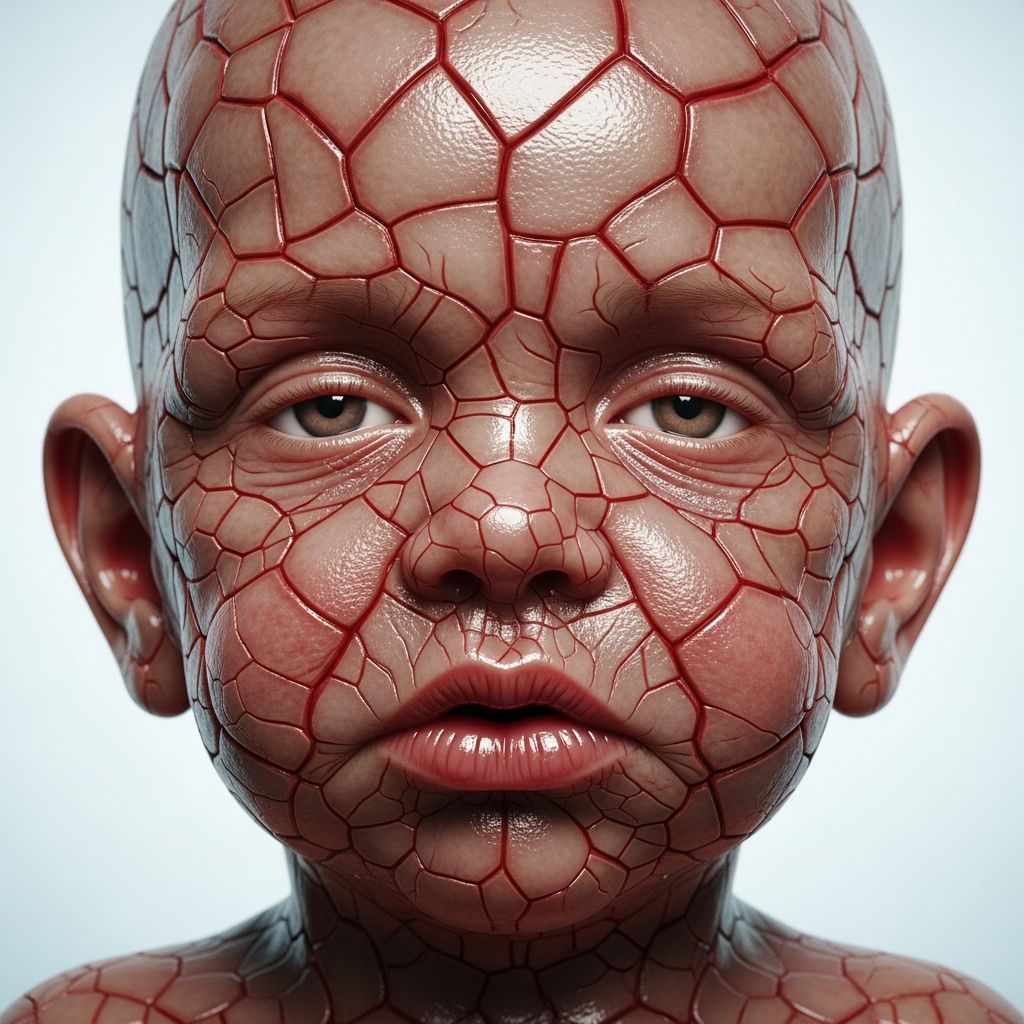
Harlequin ichthyosis is a rare genetic skin disease that affects newborns and represents the most severe form of ichthyosis among more than 20 types of the condition. This life-threatening disorder causes babies to be born with hard, thick plates of skin that crack and split, covering almost the entire body. The condition requires immediate intensive medical care and ongoing management throughout infancy and childhood. In the past, survival rates were extremely low, but advances in medical treatment have dramatically improved outcomes for affected infants.
What Is Harlequin Ichthyosis?
Harlequin ichthyosis is a severe genetic skin disorder characterized by abnormal skin development and function. Unlike milder forms of ichthyosis such as lamellar ichthyosis and ichthyosis vulgaris, harlequin ichthyosis presents with distinctive plate-like skin formations that severely restrict movement and bodily functions. The condition affects approximately 1 in 300,000 births, making it exceptionally rare. Historically documented as early as 1750, this condition has only recently seen significant improvements in survival rates due to advances in neonatal intensive care and pharmacological treatments.
Genetic Cause
Harlequin ichthyosis is caused by a loss-of-function mutation in the ABCA12 gene, which plays a crucial role in regulating protein synthesis for skin layer development. This genetic mutation impairs the transport of lipids in the skin layer and may result in shrunken versions of proteins responsible for proper skin development. Inherited in an autosomal recessive pattern, both parents must carry the mutated gene for a child to develop the condition. The severity of the mutation affects the presentation, with less severe mutations potentially resulting in related conditions like collodion membrane or congenital ichthyosiform erythroderma.
Symptoms and Characteristics
Appearance at Birth
Babies with harlequin ichthyosis are typically born prematurely and present with distinctive physical features. Their bodies are covered in thick, plate-like scales of skin that resemble armor plating. The extreme skin tightness creates deep cracks and fissures across the body’s surface. This characteristic tightness pulls the skin around the eyes and mouth, causing the eyelids and lips to turn inside out—a condition known as ectropion and eclabium respectively.
Physical Complications
The restrictive nature of the hardened skin causes multiple serious complications in affected newborns:
- Severe difficulty breathing due to tightened chest skin restricting expansion
- Feeding and nursing difficulties caused by pulled, tight lips and mouth positioning
- Ears fused or partially attached to the head
- Small, swollen hands and feet with limited mobility
- Restricted movement in arms and legs due to skin constriction
- Unusual facial features from stretched and tightened skin
- Thick, abnormal fingernails
- Problems with finger and hand movement
Systemic Complications
Beyond superficial skin manifestations, harlequin ichthyosis causes severe systemic issues. Infants experience excessive dehydration through cracked skin surfaces, leading to severe metabolic dysregulation. The deep fissures in the skin provide entry points for bacteria, making life-threatening infections a major concern in the first few weeks of life. Additional complications include low body temperature, abnormally high sodium levels in the blood (hypernatremia), respiratory depression and failure, and in some cases, seizures and other central nervous system involvement.
Long-term Skin Changes
After the newborn period, the thick plate-like scales gradually shed and peel off over several weeks. Once the plates are shed, the underlying skin is left dry and reddened, often covered in large thin scales. Some infants may experience sparse or thin hair resulting from scales on the scalp, recurring skin infections, problems with overheating due to scales interfering with normal sweating, and reduced hearing from scale buildup in the ears. Joint contractures and delayed growth are common long-term problems for children who survive the first year of life.
Related Stories



Initial Treatment and Neonatal Care
Intensive Care Management
A newborn with harlequin ichthyosis requires immediate admission to a neonatal intensive care unit (NICU) and management by a multidisciplinary team. This coordinated approach has been shown to significantly improve outcomes and reduce life-threatening complications. The infant is typically placed in a heated incubator with carefully controlled high humidity, which helps prevent dehydration and supports skin healing.
Nutritional Support
Feeding presents a major challenge for affected newborns due to physical restrictions and swallowing difficulties. Tube feeding is essential to prevent malnutrition and dehydration during the initial weeks of life. Nutritional support continues until the eclabium (pulled-in lips) resolves sufficiently to allow nursing or bottle feeding.
Respiratory and Eye Care
Some infants require a tube placed in the airway to facilitate proper breathing, especially when chest wall skin is severely restrictive. Ophthalmologic consultation is crucial for early management of ectropion (turned-in eyelids). Special lubrication and protective devices keep eyes healthy and prevent corneal damage. Liberal application of petroleum jelly is needed multiple times daily to maintain skin moisture and prevent infection.
Infection Prevention
Topical antibiotics are applied to prevent bacterial infections in deep skin cracks and fissures. Protective bandaging helps maintain a sterile barrier and reduces infection risk during the critical initial weeks.
Pharmacological Treatment
Oral Retinoid Therapy
For severe cases of harlequin ichthyosis, healthcare providers may prescribe oral retinoids—most commonly etretinate, isotretinoin, or acitretin. Early oral retinoid therapy has demonstrated remarkable effectiveness in improving outcomes. After as little as two weeks of daily oral isotretinoin, fissures in the skin can heal significantly, and plate-like scales can nearly resolve. Improvement in both eclabium and ectropion can be observed within weeks of starting treatment.
Oral retinoids work by helping to remove the thick, plate-like scales covering the skin and can reverse critical issues such as constricting fingers, compromised blood flow, tightened chest making breathing difficult, and tightened facial skin preventing feeding. However, healthcare providers use oral retinoids only in severe cases because long-term use carries known toxicity and serious potential adverse side effects, including birth defects if used by pregnant individuals and various systemic complications with extended use.
Topical Treatments
Topical retinoids such as tazarotene cream at 0.1% concentration serve as alternative or complementary therapeutic interventions. These topical agents help soften scales and encourage desquamation (shedding) without the systemic risks associated with oral medications. Soft splinting of feet and hands using topical retinoids can prevent complications like digit necrosis and avoid the need for surgical intervention in some cases.
Skin Care and Management
Moisturization and Emollients
After the acute newborn period passes and thick plates begin shedding, constant care is required to moisturize and protect the skin. Skin softening emollients are particularly effective when applied immediately after bathing while skin is still moist. Many patients with severe ichthyosis exfoliate manually by gently rubbing off thick scales using special exfoliating gloves with rough surfaces. Moisturizing treatments including lotions, creams, ointments, and bath oils form the foundation of long-term skin management.
Ongoing Complications Management
Some infants may experience necrosis of the digits (finger and toe death) due to extreme constriction from tight skin. In these cases, surgical interventions including fasciotomy techniques may be necessary. The combination of retinoid therapy with surgical approaches represents current best practice for managing severe complications, though surgical interventions must be approached cautiously due to high infection risk in compromised skin.
Prognosis and Survival Outcomes
The prognosis for harlequin ichthyosis has improved dramatically over the past two decades. Historically, approximately half of affected infants died within the first few months of life. However, with improved treatment options, intensive medical care, and early oral retinoid therapy, babies now have substantially better chances of surviving the newborn period and progressing into childhood and adulthood.
Children who survive the first year of life often continue to experience long-term challenges including persistent red skin, joint contractures limiting movement, and delayed growth compared to unaffected peers. Despite these ongoing issues, survival and improved quality of life represent significant achievements compared to historical outcomes. Continuous multidisciplinary care, including dermatology, pediatrics, infectious disease, nutrition, and other specialties, remains essential throughout childhood and into adulthood.
Harlequin Ichthyosis vs. Other Forms of Ichthyosis
| Characteristic | Harlequin Ichthyosis | Lamellar Ichthyosis | Ichthyosis Vulgaris |
|---|---|---|---|
| Severity | Most severe | Moderate to severe | Mild to moderate |
| Presentation at Birth | Plate-like scales, collodion membrane | Collodion membrane, erythroderma | Normal at birth; develops later |
| Genetic Cause | ABCA12 gene mutation | TGM1 gene mutation | FLG gene mutation |
| Life-Threatening | Yes, without treatment | Rarely life-threatening | Not life-threatening |
| Survival Rate | Improved with treatment | High | Normal |
Frequently Asked Questions
Q: How is harlequin ichthyosis diagnosed?
A: Diagnosis is typically made at birth based on distinctive physical characteristics and appearance of thick, plate-like skin. Genetic testing for ABCA12 gene mutations can confirm the diagnosis. Prenatal diagnosis is possible through genetic testing or fetal imaging.
Q: Can harlequin ichthyosis be cured?
A: There is currently no cure for harlequin ichthyosis. However, early treatment with oral retinoids and intensive supportive care can significantly improve symptoms and survival rates. Long-term management focuses on skin care and complication prevention.
Q: What is the life expectancy for children with harlequin ichthyosis?
A: With modern medical treatment and intensive care, many children with harlequin ichthyosis survive into adulthood. Survival rates have improved dramatically, though the condition remains serious and requires ongoing medical management throughout life.
Q: Is harlequin ichthyosis inherited?
A: Yes, harlequin ichthyosis is inherited in an autosomal recessive pattern. Both parents must carry the mutated ABCA12 gene for a child to develop the condition. Each child of two carrier parents has a 25% chance of being affected.
Q: How long does it take for the thick skin plates to shed?
A: The thick, plate-like skin typically gradually peels off over several weeks. With oral retinoid treatment, significant improvement can occur within two weeks, though complete shedding may take several weeks to months.
Q: What are the main complications of harlequin ichthyosis?
A: Major complications include severe dehydration, life-threatening infections from cracked skin, respiratory distress, feeding difficulties, metabolic imbalances, abnormal body temperature regulation, and in some cases, digit necrosis requiring surgical intervention.
References
- Harlequin Ichthyosis: Overview and Management — Cleveland Clinic. 2024. https://my.clevelandclinic.org/health/diseases/harlequin-ichthyosis
- Management of Harlequin Ichthyosis: A Brief Review of Recent Approaches — National Center for Biotechnology Information (NCBI). 2022. https://pmc.ncbi.nlm.nih.gov/articles/PMC9221756/
- Harlequin-type Ichthyosis — National Organization for Rare Disorders (NORD). 2024. https://rarediseases.org/rare-diseases/ichthyosis-harlequin-type/
- Harlequin Ichthyosis: Genetics and Inheritance — MedlinePlus Genetics, U.S. National Library of Medicine. 2024. https://medlineplus.gov/genetics/condition/harlequin-ichthyosis/
- Ichthyosis: Overview and Management — National Health Service (NHS). 2024. https://www.nhs.uk/conditions/ichthyosis/
- Harlequin Ichthyosis: Definition, Symptoms, and Treatment — Healthline. 2024. https://www.healthline.com/health/harlequin-ichthyosis
- ABCA12 Gene: Function and Role in Skin Development — U.S. National Library of Medicine. 2024. https://medlineplus.gov/genetics/gene/abca12/
Similar Articles








Read full bio of Sneha Tete