Head Lice: Identification and Treatment Guide
Learn how to identify head lice, understand transmission, and implement effective treatment strategies.
Head Lice: What You Need to Know
Head lice are among the most common parasitic infections affecting children and adults worldwide. Despite their prevalence, there remains significant confusion about how to identify them, how they spread, and the most effective ways to treat an infestation. This comprehensive guide provides evidence-based information to help you understand head lice, recognize the signs of infection, and take appropriate action if you or someone in your care becomes infested.
What Do Head Lice Look Like?
Head lice are small insects that are visible to the naked eye, though they can be difficult to spot due to their size and rapid movement. Understanding what to look for is the first step in accurate identification.
Adult Lice
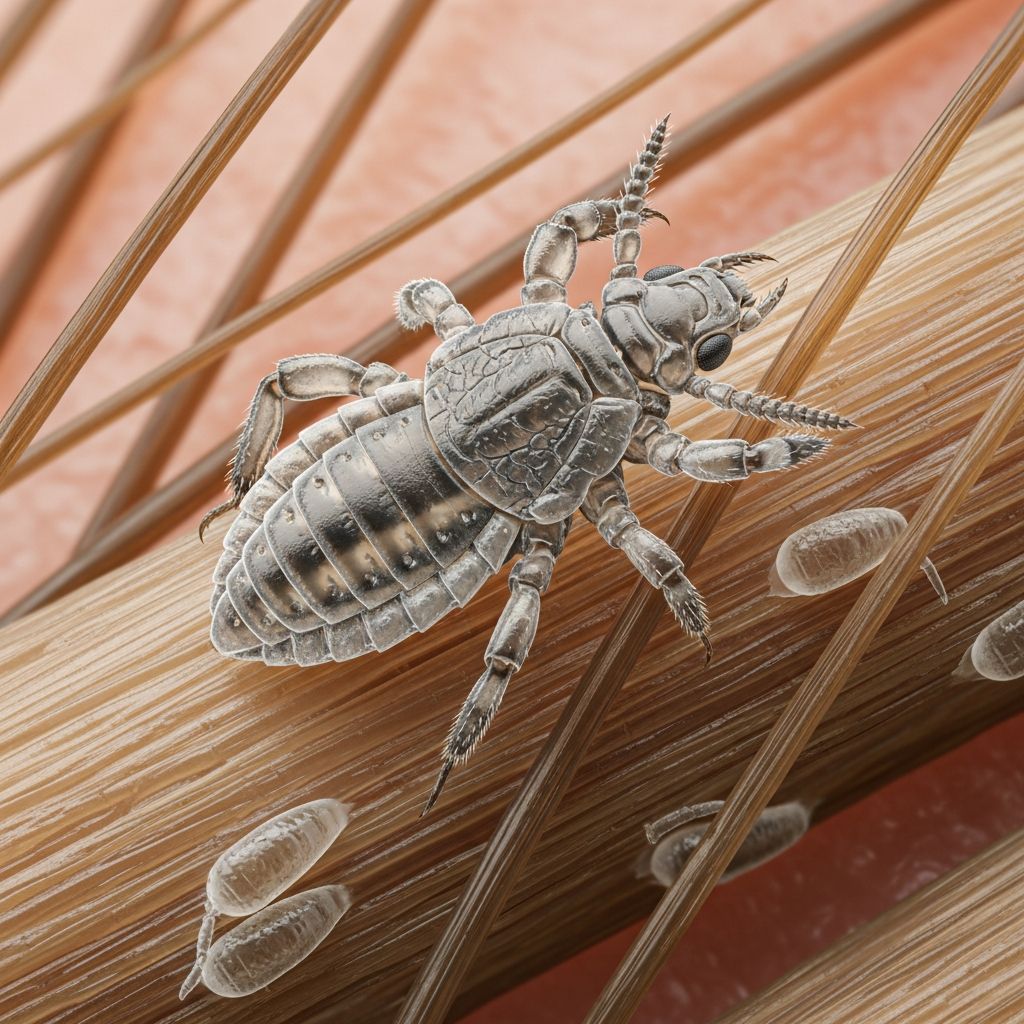
Adult head lice are tan, gray, or brownish in color and are approximately the size of a sesame seed. They measure about 2-3 millimeters in length and have six legs that allow them to crawl quickly across the scalp. These insects cannot jump, hop, or fly, but they are remarkably fast crawlers. Adult lice are most active in the warmth of the scalp and may be difficult to spot because they instinctively avoid light. They feed on small amounts of blood from the scalp and can survive for only 24 to 48 hours away from the human body.
Nits (Lice Eggs)
Nits are the eggs of head lice and are often easier to spot than the adult insects. Nits are oval-shaped and measure approximately 1/32 inch long (0.8 millimeters). They are attached firmly to individual hair shafts close to the scalp using a sticky substance secreted by the female louse. The color of nits varies depending on hair color; they may be whitish, yellowish, or tan and can be camouflaged by blending with the host’s natural hair pigment. Viable nits are typically found within 1/4 inch of the scalp, as this is where the warmth necessary for incubation is maintained. Nits further than 1/4 inch from the scalp have likely hatched or are no longer viable.
Common Signs and Symptoms
Recognizing the symptoms of head lice infection is crucial for early detection and treatment. The most reliable indicators include:
- Frequent itching of the scalp, often more intense at night
- Complaints of an itchy head or scalp sensation
- Visible redness or irritation behind the ears or on the back of the neck
- A sensation of something crawling on the head
- Small sores or scabs on the scalp from scratching
It is important to note that not all people with head lice experience itching, and itching alone does not confirm an infestation. Many conditions, including dandruff, dry scalp, and other skin irritations, can cause similar symptoms. Accurate diagnosis requires visual identification of live lice or viable nits.
How Head Lice Spread
Understanding transmission routes is essential for prevention and controlling outbreaks. Head lice are primarily transmitted through direct contact, though the specifics of how they spread may surprise you.
Primary Transmission Method
Head lice are mainly acquired through direct head-to-head contact with an infested person’s hair. This can occur during play, sports activities, or any situation where heads come into close proximity. Girls tend to have higher infection rates than boys, likely due to more frequent head-to-head contact during activities and play. Head lice infestation can occur across all socioeconomic classes and does not indicate poor hygiene or cleanliness; anyone can get head lice regardless of how often they wash their hair.
Related Stories



Fomite Transmission (Objects)
While head lice can theoretically be transmitted through shared personal items such as combs, brushes, hair accessories, hats, helmets, or headphones, this route of transmission is less common than direct head-to-head contact. Objects may harbor lice or nits under certain circumstances, so it is still recommended to clean items that have come into contact with an infested person’s head. However, because lice cannot survive more than 24 to 48 hours away from the human scalp, the risk from environmental transmission is relatively low.
What Lice Cannot Do
Several common misconceptions about head lice transmission should be clarified. Head lice cannot live on family pets, making animal contact a non-issue for transmission. Lice also cannot reproduce in carpets, furniture, or other household furnishings. Additionally, head lice cannot jump, hop, or fly; they can only crawl. This means that casual contact or sitting near someone with head lice poses minimal risk of infection.
Diagnosis and Inspection
Accurate diagnosis of head lice is critical because studies have shown that lice infestations are frequently misdiagnosed. A Harvard University study found that dandruff, fibers, dirt, scabs, skin cells, knotted hair, or other insects were misidentified as head lice in approximately 40% of cases submitted by teachers, parents, nurses, and physicians. Additionally, research has shown that many children with nits alone do not develop active lice infestations.
Proper inspection involves carefully examining the scalp and hair under good lighting, paying particular attention to areas behind the ears and the nape of the neck where lice and nits are most commonly found. Look for live adult lice, which will move away from light, and for viable nits attached to hair shafts within 1/4 inch of the scalp. If you are uncertain whether an infestation is present, consult a healthcare provider or school nurse for professional diagnosis.
Treatment Options
Several evidence-based treatment approaches are available for head lice, ranging from manual removal to medicated products.
Manual Removal
Manual removal is considered the safest and often most effective treatment method. This involves using a fine-toothed comb to systematically comb through the hair, removing live lice and nits. The process should be repeated every few days for at least 10 days to ensure all lice and newly hatched nymphs are removed. While time-consuming, manual removal avoids the use of pesticides and eliminates concerns about chemical resistance or adverse reactions.
Medical Treatments
For those preferring medical intervention, several options are available. Dimethicone, a silicone-based product, has demonstrated strong efficacy in treating head lice. Published studies have confirmed that 70% to 97% of patients became lice-free within two weeks of dimethicone treatment. Dimethicone is not absorbed through the skin and is associated with very few adverse effects, making it safe for use across all age groups.
Pyrethrin and pyrethroid-based insecticidal shampoos have been traditional treatment options; however, widespread resistance to these products has developed in many regions. When selecting an insecticidal shampoo, carefully read all label instructions and follow directions precisely. Individuals with asthma or those caring for asthmatic dependents should exercise extra caution and monitor for allergic reactions.
Treatment Protocol
Regardless of the treatment method selected, the following protocol is recommended:
- Apply or perform initial treatment according to product directions or manual removal technique
- Inspect the head closely every day for 10 days following treatment
- Administer a second treatment after 7 days to eliminate any newly hatched lice
- Continue monitoring for at least 10 days after the final treatment
Managing the Home Environment
While head lice primarily remain on the head rather than spreading throughout the home, certain precautions can help prevent re-infestation and reduce anxiety about environmental contamination.
Cleaning Personal Items
Items that have been in contact with an infested person’s hair should be cleaned appropriately:
- Wash items such as pillowcases, towels, hats, and scarves in hot water (at least 140°F) and dry in a hot dryer
- Items that cannot be laundered, such as bike helmets, earphones, or headgear, can be placed in a plastic bag and frozen at 5°F or lower for at least 10 hours to kill all lice and eggs
- Alternatively, seal items in a plastic bag and keep them off-limits for 48 hours, as lice cannot survive longer than 2 days without human contact
Environmental Cleaning
General household cleaning should focus on areas where the infested person’s head regularly contacts surfaces:
- Vacuum car seats, couches, chairs, and other furniture where the head commonly rests
- Wipe smooth surfaces with a damp cloth
- There is no need for extensive pesticide application or environmental treatment, as lice do not reproduce away from the human scalp
School Policies and Attendance
Many schools have implemented “no-nit” policies requiring children to be excluded from school until all nits are removed. However, current evidence does not support these policies. Both the American Academy of Pediatrics and the Centers for Disease Control and Prevention recommend that children with head lice not be excluded from school. Research has demonstrated that nits further than 1/4 inch from the scalp are not viable and that many children with nits alone do not develop active lice infestations.
The negative impacts of excluding children from school—including academic disruption, social stigma, and family hardship—exceed the risks posed by head lice transmission. A more appropriate approach involves notifying parents of an exposure, recommending prompt treatment, and allowing the child to return to school the next day following treatment initiation. Synchronized treatment of all infested individuals interrupts transmission and prevents re-infestation, particularly in school or childcare settings.
Prevention Strategies
While head lice can affect anyone regardless of hygiene practices, certain precautions can reduce the risk of infestation:
- Discourage children from sharing personal items such as combs, brushes, hair accessories, scarves, hats, or headphones
- Teach children to avoid head-to-head contact during play and activities when possible
- If shared headphones are used in educational settings, wipe them with a damp cloth between users
- Store each child’s hat and coat separately in individual spaces or labeled bags
- Regular scalp inspections, particularly among school-aged children, allow for early detection
Dispelling Myths About Head Lice
Several misconceptions persist about head lice and should be clarified:
Myth: Head lice indicate poor hygiene or cleanliness.
Fact: Head lice are not a sign of poor hygiene and can affect anyone regardless of how frequently they wash their hair or how clean they are.
Myth: Head lice are a serious health hazard.
Fact: Head lice are not a health hazard and do not transmit disease-causing pathogens. They are primarily an inconvenience rather than a medical emergency.
Myth: Head lice spread through pets.
Fact: Head lice cannot live on family pets and cannot be transmitted through animal contact.
Myth: Extensive environmental treatment is necessary to control head lice.
Fact: Lice remain on the head and do not reproduce in the home environment. Extensive pesticide application to furniture and clothing is not necessary and carries unnecessary health risks.
Frequently Asked Questions
Q: How long can head lice survive without a human host?
A: Head lice cannot survive longer than 24 to 48 hours away from the human scalp. This short survival time means that transmission through contaminated objects is relatively uncommon.
Q: Are nits contagious?
A: Nits themselves are not contagious; only live adult lice can transmit infestation. Many children with nits do not develop active lice infestations, and nits further than 1/4 inch from the scalp are typically no longer viable.
Q: Should I keep my child home from school if they have head lice?
A: No. Current recommendations from the American Academy of Pediatrics and CDC advise against excluding children from school for head lice. Children should be treated and may return to school the next day.
Q: What is the most effective treatment for head lice?
A: Manual removal using a fine-toothed comb is considered safe and effective. Dimethicone products are also highly effective, with 70-97% efficacy rates. Treatment choice should be made in consultation with a healthcare provider.
Q: Can I get head lice from sitting near someone with an infestation?
A: No. Head lice require direct head-to-head contact to spread. Casual contact such as sitting nearby or sharing a classroom does not typically result in transmission.
References
- Head Lice Management Guidelines — University of California Agriculture and Natural Resources, Integrated Pest Management Program. 2024. https://ipm.ucanr.edu/home-and-landscape/head-lice/pest-notes/
- A School’s Guide to the ‘Nitty-Gritty’ About Head Lice — University of Georgia, Cooperative Extension. 2024. https://fieldreport.caes.uga.edu/publications/C850/a-schools-guide-to-the-nitty-gritty-about-head-lice/
- How to Manage Head Lice — National Center for Biotechnology Information, U.S. National Library of Medicine. 2024. https://pmc.ncbi.nlm.nih.gov/articles/PMC1070891/
- Head Lice: Treatment and Prevention — Centers for Disease Control and Prevention. 2024. https://www.cdc.gov/parasites/lice/head/index.html
- Pediatric Head Lice: Clinical Practice Guidelines — American Academy of Pediatrics. 2024. https://www.aap.org/
Similar Articles








Read full bio of medha deb