Healthiest Cooking Methods: 8 Easy Ways To Preserve Nutrients
Discover the best cooking techniques to preserve nutrients, minimize fat, and maximize health benefits in every meal.
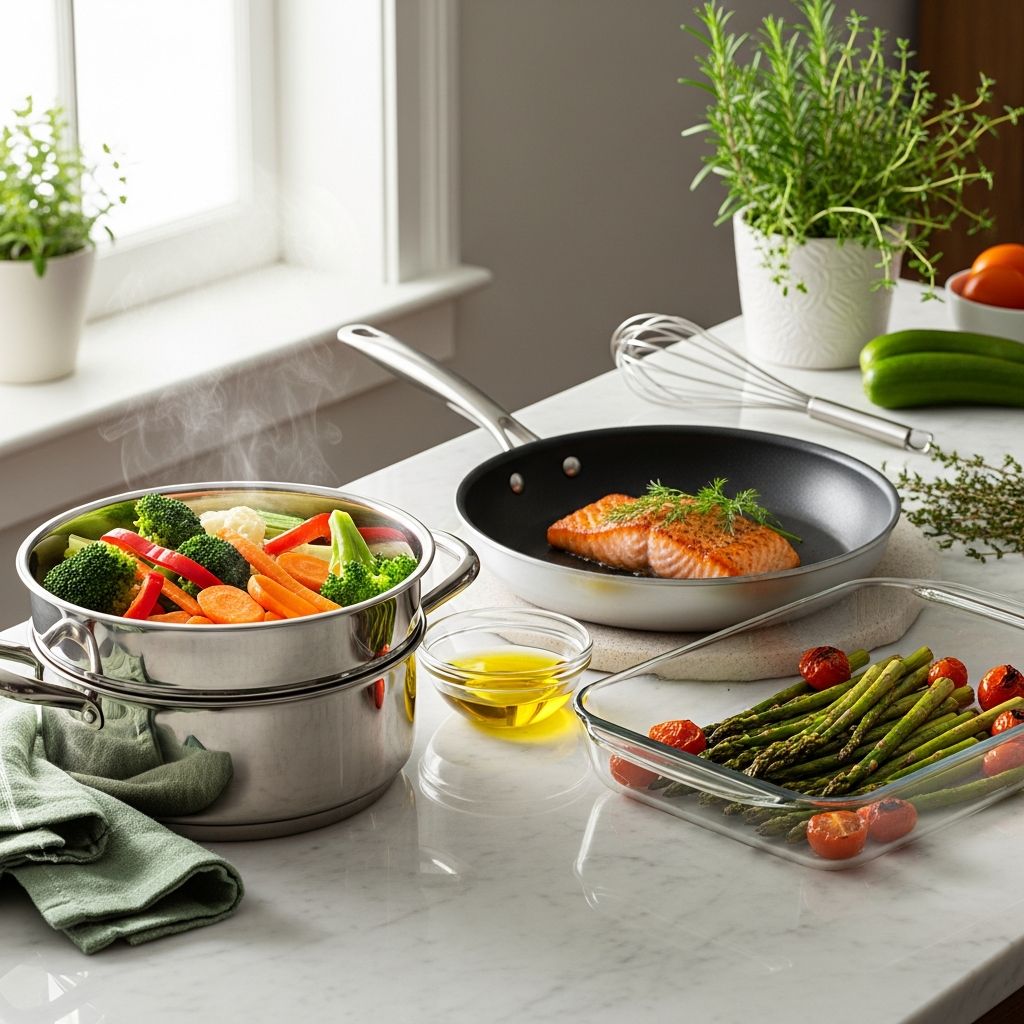
Cooking methods significantly impact the nutritional value of food, influencing nutrient retention, calorie content, and the formation of potentially harmful compounds. Choosing the right technique can help preserve vitamins, minerals, and antioxidants while promoting heart health and reducing disease risk. This article ranks and explains the healthiest approaches based on scientific evidence, from moist-heat methods like steaming to dry-heat options like grilling.
1. Steaming
**Steaming tops the list as one of the healthiest cooking methods** because it uses gentle heat from steam without submerging food in water, preserving water-soluble vitamins like vitamin C and B vitamins that leach out during boiling. No added fats are needed, keeping calorie counts low, and it maintains natural flavors and textures in vegetables, fish, and meats. Research shows steaming retains more nutrients in leafy greens and vegetables compared to other moist-heat methods; for instance, steamed spinach showed higher vitamin retention than boiled samples.
Steaming is ideal for low-fat diets or those with digestive sensitivities, producing soft, easily digestible foods. To enhance flavor, add herbs like mint, bay leaf, or spices such as turmeric without compromising health benefits. It’s versatile for broccoli, carrots, fish fillets, or dumplings, minimizing oxidation and harmful compound formation due to low temperatures (typically under 100°C).
- Pros: Maximal nutrient retention, no fat added, preserves color and crunch.
- Cons: Can be time-intensive for larger batches; requires a steamer.
- Best for: Vegetables, seafood, rice.
2. Microwaving
Microwave cooking is surprisingly nutritious, cooking food quickly from the inside out using electromagnetic waves, which shortens exposure to heat and preserves heat-sensitive nutrients better than boiling or frying. It requires little to no water, reducing loss of water-soluble vitamins, and no added fats, making it low-calorie. Studies confirm microwaving spinach and zucchini retains high levels of vitamins compared to blanching or boiling.
For optimal results, cover food to retain moisture, arrange evenly, and use microwave-safe containers. It’s convenient for busy lifestyles and effective for vegetables, where short cook times (often under 5 minutes) minimize degradation of vitamin C and antioxidants. Unlike stovetop methods, it avoids direct heat contact, preventing charring and acrylamide formation.
- Pros: Fastest method, excellent nutrient preservation, energy-efficient.
- Cons: Uneven heating if not stirred; not ideal for large cuts of meat.
- Best for: Vegetables, frozen foods, reheating without sogginess.
3. Poaching, Simmering, and Boiling
These water-based methods are simple and fat-free but vary in nutrient impact.
Poaching (under 180°F) and simmering (185-200°F) are healthier than full boiling (212°F)
as lower temperatures cause less leaching of B vitamins and minerals. Boiling leads to significant losses of water-soluble nutrients like vitamin C, which dissolve into the water and are discarded.Use minimal water, cook just until tender, and reuse cooking liquid in soups to recapture nutrients. Boiling is quick for pasta or potatoes but less ideal for nutrient-dense veggies. A study on various vegetables found boiling reduced α-tocopherol in root veggies like potatoes while increasing extractability in greens.
Related Stories



- Pros: No oils needed, tenderizes tough cuts.
- Cons: High nutrient loss in discarded water.
- Best for: Eggs, grains, lean proteins.
4. Grilling and Broiling
**Grilling and broiling use dry heat for flavorful, low-fat results**, with heat from below (grilling) or above (broiling), promoting fat drippage that reduces calories. Shorter cook times preserve more nutrients than longer methods, though up to 40% of B vitamins can drip away in juices. Opt for lean meats or veggies to avoid charring, which forms carcinogens like HCAs.
Marinate with herbs to boost antioxidants and use medium heat. Great for summer kebabs or fish, retaining more vitamins C and B than boiling.
- Pros: Enhances flavor, reduces fat content.
- Cons: Potential nutrient loss in drippings, risk of harmful compounds if overcooked.
- Best for: Meats, vegetables, seafood.
5. Roasting and Baking
Roasting and baking employ dry, indirect heat (around 350-450°F), caramelizing natural sugars for taste without much added fat. They preserve fat-soluble vitamins better than wet methods and concentrate flavors in veggies and meats. Baking reduces added fats compared to frying, supporting heart health.
Use parchment or minimal oil spray. Root vegetables like sweet potatoes retain structure and nutrients well.
- Pros: Hands-off, flavorful results.
- Cons: Longer times may degrade some vitamins.
- Best for: Whole vegetables, poultry, casseroles.
6. Sautéing and Stir-Frying
These quick methods use minimal healthy oils (e.g., olive oil) over medium-high heat, with stir-frying being faster and hotter. Short times prevent B vitamin loss, and fats enhance absorption of plant antioxidants like beta-carotene. Stir-frying broccoli reduces vitamin C less than boiling but aids lycopene uptake in tomatoes.
Keep portions small, use high smoke-point oils, and avoid overcrowding.
- Pros: Fast, improves nutrient bioavailability.
- Cons: Adds some calories from oil.
- Best for: Leafy greens, tofu, quick meals.
7. Air Frying
Air frying circulates hot air with little to no oil, slashing calories by 70-80% versus deep-frying while mimicking crisp textures. It depletes fewer nutrients than traditional frying or boiling, making it a healthier fried alternative.
- Pros: Crispy results, low fat.
- Cons: Requires appliance.
- Best for: Fries, chicken, veggies.
8. Sous Vide
Sous vide precisely controls water temperature (often low, like 140°F for meats), sealing food in bags to retain juices and nutrients with minimal loss.[Inferred from precise cooking principles in sources.] Ideal for tender proteins without overcooking.
The Worst Cooking Methods to Avoid
Deep-frying and pan-frying are least healthy, adding excessive fats and calories while high heat (over 350°F) generates acrylamide and free radicals linked to cancer and heart disease. Reuse of oils worsens oxidation. Limit to occasional use with fresh, high-quality oils.
Nutrient Retention Comparison Table
| Method | Vitamin C Retention | B Vitamins | Fat Added | Overall Health Score |
|---|---|---|---|---|
| Steaming | High | High | None | Excellent |
| Microwaving | High | High | None | Excellent |
| Boiling | Low | Medium | None | Fair |
| Grilling | Medium | Medium | Low | Good |
| Deep-Frying | Low | Low | High | Poor |
Frequently Asked Questions (FAQs)
What is the absolute healthiest cooking method?
Steaming and microwaving are top choices for maximal nutrient retention without added fats.
Does microwaving destroy nutrients?
No, it preserves them well due to short cook times and minimal water.
Is grilling healthy?
Yes, when done properly; it reduces fat but watch for charring.
How can I make frying healthier?
Use air frying or minimal healthy oils for stir-frying.
Conclusion
Incorporate a mix of steaming, microwaving, grilling, and stir-frying for balanced nutrition. Prioritize short cook times, minimal water/oil, and fresh ingredients to optimize health benefits. Experiment to find enjoyable methods that fit your lifestyle.
References
- Effect of different cooking methods on the content of vitamins and… — PMC/NCBI. 2018-07-31. https://pmc.ncbi.nlm.nih.gov/articles/PMC6049644/
- Preferred Cooking Methods for Stellar Nutrition — Life University. 2023. https://living.life.edu/slice-of-life/preferred-cooking-methods-for-stellar-nutrition/
- The numan guide to healthy cooking methods — Numan. 2024. https://www.numan.com/weight-loss/diet/guide-to-healthy-cooking-methods
- Cooking methods: which is the healthiest? — Kuoko Kitchen. 2023. https://kuokokitchen.com/en/cooking-methods-which-is-the-healthiest/
- Methods for Healthy Cooking — USDA Food and Nutrition Service. 2022. https://fns-prod.azureedge.us/sites/default/files/resource-files/methodsforhealthycookig.pdf
- Healthy cooking methods demystified — Baylor College of Medicine. 2025-02-18. https://blogs.bcm.edu/2025/02/18/healthy-cooking-methods-demystified/
Similar Articles








Read full bio of Sneha Tete