Healthiest Soups To Eat: Recipes, Swaps, And Meal Tips
Discover the most nutritious soups packed with lean proteins, fiber-rich veggies, and whole grains for optimal health benefits.
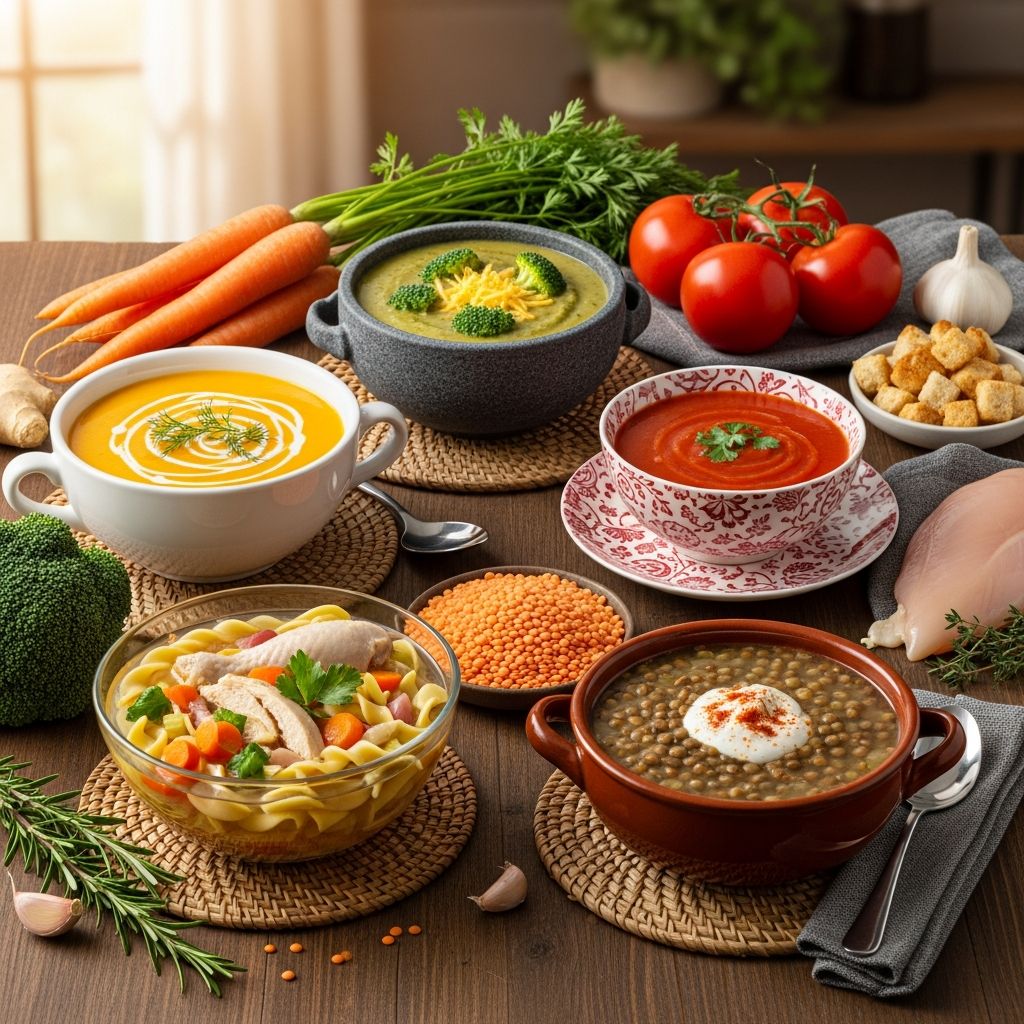
Soups are a comforting, versatile way to pack essential nutrients into meals while keeping calories in check. The
healthiest soups
prioritize broth bases, abundant vegetables, lean proteins, and minimal sodium, making them ideal for weight management, heart health, and immune support. This guide covers top categories of nutritious soups, smart ingredient swaps, and recipes to elevate your bowl game.Why Soups Are a Smart Choice for Health
A steaming bowl of soup delivers hydration, fiber, and vitamins in an easy-to-digest form. Broth-based varieties are typically lower in calories than cream-laden options, helping with portion control and satiety. According to health experts, soups rich in vegetables and lean proteins can reduce blood pressure risks from excess sodium while providing steady energy from whole grains.
Key benefits include:
- High fiber content from veggies and grains promotes digestion and fullness.
- Lean proteins like chicken or legumes support muscle maintenance without added fats.
- Low sodium options protect cardiovascular health when using herbs and spices.
- Hydration boost from broth bases aids overall wellness.
1. Broth-Based Vegetable Soups
Opt for
broth over cream
to slash saturated fats while retaining flavor. Pureed vegetables like butternut squash or tomatoes create creamy textures naturally. These soups are loaded with vitamins A, C, and K from ingredients such as carrots, spinach, kale, and zucchini.Recipe: Hearty Vegetable Medley Soup
- 2 carrots, sliced
- 2 celery stalks, chopped
- 1 zucchini, diced
- 2 cups spinach or kale
- 4 cups low-sodium vegetable broth
- 1 onion, diced
- 2 garlic cloves, minced
- Herbs: thyme, bay leaf
Sauté onion and garlic, add veggies and broth, simmer 20 minutes. Blend half for creaminess. Per serving: ~150 calories, 10g fiber.
Pro tip: Frozen veggies save time and retain nutrients, going straight from freezer to pot.
2. Lean Protein-Packed Soups
Swap fatty beef or sausage for
chicken, turkey, seafood, or plant-based proteins
like lentils and beans. These keep soups satisfying with protein and fiber, minus excess saturated fat.Recipe: Turkey Lentil Soup
- 1 lb ground turkey
- 1 cup lentils
- 1 onion, 2 carrots, 2 celery stalks
- 4 cups low-sodium chicken broth
- Spices: cumin, paprika
Brown turkey, add veggies and lentils, simmer 30 minutes. Yields 6 servings at ~250 calories each, 25g protein.
Legumes double as protein and fiber sources, ideal for vegetarian versions.
3. Whole Grain-Infused Soups
Replace white pasta or rice with
quinoa, barley, brown rice, or whole wheat pasta
for sustained energy and more fiber. Start with a 50/50 mix if transitioning.Recipe: Barley Vegetable Soup
- ½ cup barley
- Assorted veggies (peppers, mushrooms)
- 4 cups broth
- Fresh herbs
Cook barley in broth with veggies for 40 minutes. Nutrient boost: 8g fiber per bowl.
4. Low-Sodium Herb-Seasoned Soups
Cut salt by choosing
low-sodium or no-salt-added broths
and flavoring with garlic, onions, lemon, vinegar, or fresh herbs. Excess sodium raises blood pressure, so taste as you season.Related Stories



Table of Sodium Swaps:
| High-Sodium Item | Healthy Swap | Sodium Savings |
|---|---|---|
| Regular broth (900mg/cup) | Low-sodium broth (140mg/cup) | 760mg |
| Salt shaker | Lemon juice/herbs | 200-500mg |
| Seasoning packets | Fresh garlic/spices | 800mg+ |
5. Smart Toppings for Extra Nutrition
Ditch cheese, sour cream, and croutons for
Greek yogurt, avocado, fresh herbs, toasted seeds, or air-fried chickpeas
. These add crunch, healthy fats, and probiotics without calorie overload.- Pumpkin seeds: Omega-3s and crunch.
- Greek yogurt dollop: Protein boost.
- Avocado slices: Heart-healthy fats.
6. Portion Control and Meal Pairing
Even healthy soups benefit from moderation. Use smaller bowls, pair with salad or whole-grain bread, and wait 10 minutes before seconds to feel fullness.
7 Easy Swaps to Make Any Soup Healthier
Transform everyday soups with these expert tips:
- Broth over cream: Lighter, lower calories; puree veggies for creaminess.
- Heavy on veggies: Add carrots, kale for fiber and vitamins.
- Whole grains: Quinoa or barley for steady energy.
- Lean proteins: Turkey, beans over sausage.
- Reduce salt: Herbs, citrus instead.
- Smart toppings: Seeds, yogurt over cheese.
- Watch portions: Pair with sides for balance.
Health Benefits of These Soups
Nutrient-dense soups support weight loss (low cal, high volume), heart health (low sodium/fat), digestion (fiber), and immunity (veggie vitamins). Studies from authoritative sources confirm vegetable-rich diets lower chronic disease risks.
Frequently Asked Questions (FAQs)
Are cream-based soups unhealthy?
Not always, but broth-based are lighter. Use low-fat milk or purees as alternatives for creaminess.
Can soups help with weight loss?
Yes, low-calorie, high-fiber soups promote satiety. Pair with protein for best results.
How do I reduce sodium in canned soups?
Rinse contents, dilute with low-sodium broth, add fresh veggies and herbs.
Are frozen veggies as healthy as fresh in soups?
Yes, often more nutrient-retained due to flash-freezing.
What’s the best protein for soups?
Lean options like chicken, turkey, lentils—high protein, low fat.
Conclusion
Incorporate these healthiest soups into your routine for delicious, nutrient-packed meals. Small swaps yield big health gains without sacrificing comfort.
References
- Dietary Guidelines for Americans, 2020-2025 — U.S. Department of Health and Human Services and U.S. Department of Agriculture. 2020-09-01. https://www.dietaryguidelines.gov/sites/default/files/2020-12/Dietary_Guidelines_for_Americans_2020-2025.pdf
- Sodium in Your Diet — FDA (U.S. Food and Drug Administration). 2024-10-15. https://www.fda.gov/food/nutrition-education-resources-materials/sodium-your-diet
- Vegetable Consumption and Chronic Disease Risk — CDC (Centers for Disease Control and Prevention). 2023-05-20. https://www.cdc.gov/nutrition/healthy-eating/vegetables.html
- 7 Easy Swaps to Make Any Soup a Little Healthier — Health News Hub. 2024-11-12. https://healthnewshub.org/7-easy-swaps-to-make-any-soup-a-little-healthier/
- Lean Proteins in a Balanced Diet — NIH (National Institutes of Health). 2025-01-10. https://www.nhlbi.nih.gov/health/educational/hearttruth/more/minority/hlth.htm
Similar Articles








Read full bio of Sneha Tete