Hearing Loss: Types, Symptoms, Causes & Treatment
Understanding hearing loss: explore types, causes, symptoms, and effective treatment options available.
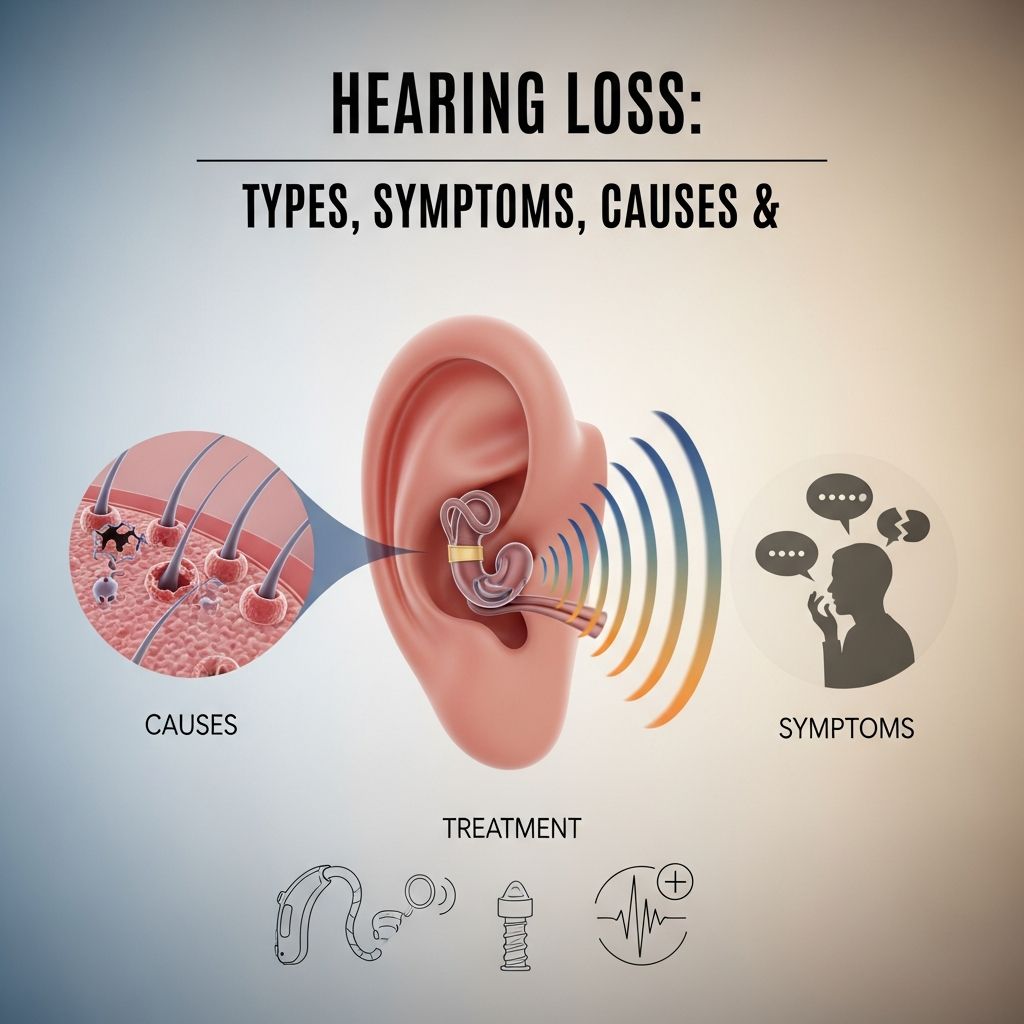
Understanding Hearing Loss: A Comprehensive Guide
Hearing loss is a condition that affects millions of people worldwide and can significantly impact your ability to work, communicate with others, and enjoy life to the fullest. While hearing loss cannot be reversed in most cases, effective treatments and management strategies are available to help improve your quality of life. Audiologists—healthcare providers who specialize in diagnosing and treating hearing loss—can recommend various treatments such as hearing aids, cochlear implants, and other assistive devices that can substantially reduce the impact of hearing loss on your daily activities.
Understanding the different types of hearing loss, recognizing symptoms, and knowing when to seek professional help are crucial steps toward managing this condition effectively. This guide provides comprehensive information about hearing loss to help you make informed decisions about your health and treatment options.
Types of Hearing Loss
Hearing loss can be classified into several distinct types based on where the problem occurs in the auditory system. Each type has different causes and may require different treatment approaches.
Sensorineural Hearing Loss
Sensorineural hearing loss occurs when there is damage to the inner ear (cochlea) or the auditory nerve that carries sound signals to the brain. This is the most common type of hearing loss and is often permanent. It can result from aging, exposure to loud noise, illness, or genetic factors. People with sensorineural hearing loss typically have difficulty hearing soft sounds and may find it challenging to understand speech, especially in noisy environments.
Conductive Hearing Loss
Conductive hearing loss happens when sound waves cannot effectively travel through the outer or middle ear to reach the inner ear. This can be caused by earwax buildup, ear infections, fluid in the middle ear, or problems with the tiny bones in the middle ear. Unlike sensorineural hearing loss, conductive hearing loss may be reversible through medical treatment or surgery. Many people with conductive hearing loss can benefit from surgical intervention to restore normal hearing.
Mixed Hearing Loss
Mixed hearing loss is a combination of both sensorineural and conductive hearing loss. This means there is damage to the inner ear and also a problem with the transmission of sound through the outer or middle ear. Treatment for mixed hearing loss may involve addressing both components, potentially combining surgical intervention with hearing aids or other assistive devices.
Common Symptoms and Warning Signs
Recognizing the signs of hearing loss is the first step toward seeking appropriate treatment. Hearing loss often develops gradually, and many people don’t realize they have a problem until it significantly affects their daily life. Common warning signs include:
- Frequently asking people to repeat themselves
- Difficulty hearing conversations in crowded spaces or noisy environments
- Complaining that others are mumbling when speaking at normal volume
- Difficulty hearing high-pitched sounds, such as women’s voices or ringing phones
- Trouble understanding speech on the telephone
- Needing to turn up the volume on the television or radio
- Social withdrawal due to difficulty communicating
- Tinnitus, or ringing in the ears, which may accompany hearing loss
Related Stories



If you experience any of these symptoms, it’s important to schedule a comprehensive hearing evaluation with an audiologist or your healthcare provider.
Causes of Hearing Loss
Hearing loss can result from various causes, ranging from age-related changes to traumatic injuries. Understanding the underlying cause is essential for determining the most appropriate treatment approach.
Age-Related Hearing Loss
Age-related hearing loss, also called presbycusis, is one of the most common types of hearing loss. As people age, the structures in the inner ear may deteriorate, leading to progressive hearing loss. This type of hearing loss typically affects the ability to hear high-pitched sounds first and gradually progresses to affect other frequencies.
Noise-Induced Hearing Loss
Prolonged exposure to loud noise can cause permanent damage to the hair cells in the inner ear. This can result from occupational exposure, recreational activities involving loud sounds, or a single exposure to extremely loud noise. Protecting your hearing by using earplugs in loud environments and keeping music at reasonable volumes can help prevent noise-induced hearing loss.
Illness and Infection
Certain infections and illnesses can damage the hearing system. Meningitis, measles, and other infections can cause sensorineural hearing loss. Chronic ear infections or otitis media (fluid in the middle ear) can lead to conductive hearing loss.
Medications and Medical Treatments
Some medications, known as ototoxic drugs, can damage hearing as a side effect. Certain chemotherapy drugs, antibiotics, and other medications may contribute to hearing loss. It’s important to discuss potential hearing-related side effects with your healthcare provider before starting any new medication.
Genetic Factors
Hearing loss can be hereditary, running in families. If you have a family history of hearing loss, you may be at higher risk and should consider regular hearing assessments.
Traumatic Injury
Head trauma, acoustic trauma from extremely loud sounds, or perforation of the eardrum can cause hearing loss. These injuries may sometimes be surgically correctable, depending on the nature and severity of the damage.
Diagnosis and Hearing Evaluation
A thorough hearing evaluation is essential for identifying the type and severity of hearing loss and determining the most appropriate treatment plan. Your healthcare provider will begin by asking about your symptoms and conducting a physical examination to check for signs of infection or other issues that might cause hearing loss.
Physical Examination
During the physical examination, your provider will inspect your ears for earwax buildup, signs of infection, or structural abnormalities. They may use an otoscope to look inside your ear canal and middle ear.
Imaging Tests
If you have experienced ear trauma or your provider suspects a more serious underlying condition such as a tumor, they may order imaging tests. A CT scan (computed tomography scan) or MRI (magnetic resonance imaging) can provide detailed images of your ear structures and help identify any abnormalities.
Comprehensive Audiologic Assessment
An audiologist performs specialized hearing tests to determine the type, magnitude, and configuration of your hearing loss. The most common test is an audiogram, which measures the softest sounds you can hear across different frequencies. This test helps determine how well you hear high-pitched sounds like a whistle and low-pitched sounds like thunder. The results indicate which frequencies are affected and help your healthcare provider choose the best treatment for your specific situation.
Hearing Needs Assessment
Beyond measuring hearing thresholds, your audiologist will assess your listening and communication needs. They will discuss how your hearing loss affects your daily activities, work, and social interactions. This information helps determine what treatment options and devices would be most beneficial for your lifestyle.
Treatment Options
Treatment for hearing loss depends on the type, severity, and underlying cause. While most hearing loss cannot be reversed, various treatments can significantly improve your ability to hear and communicate.
Hearing Aids
Hearing aids are the most common treatment for hearing loss. These devices amplify sounds and make them clearer, allowing you to hear better in various environments. Modern hearing aids come in different styles and offer advanced features such as directional microphones, noise reduction, and wireless connectivity. Hearing aids can be beneficial for people with any degree of hearing loss, from mild to profound. Your audiologist will help you select the style and features that best match your needs and lifestyle.
Cochlear Implants
For people with severe or profound hearing loss who do not benefit adequately from hearing aids, cochlear implants may be an option. These surgically implanted devices bypass damaged portions of the ear and directly stimulate the auditory nerve, allowing sound signals to reach the brain. Cochlear implants can provide significant improvement in hearing and speech understanding, particularly for individuals who have lost hearing after developing speech and language skills.
Bone-Anchored Auditory Implants
Bone-anchored auditory implants (BAHA) are another surgical option for certain types of hearing loss. These devices work by transmitting sound vibrations directly through the bone to the inner ear, bypassing the outer and middle ear. They may be particularly helpful for people with conductive hearing loss or mixed hearing loss.
Surgical Interventions
Some types of hearing loss may be improved through surgery. For example, if conductive hearing loss is caused by a problem with the middle ear bones or a perforated eardrum, surgical repair may restore hearing. Ear surgery can address structural problems and may eliminate the need for hearing aids in some cases.
Medical Treatment
When hearing loss results from infection, inflammation, or other medical conditions, treating the underlying condition may improve hearing. For example, antibiotics can treat bacterial ear infections, and removing earwax buildup can restore hearing if cerumen impaction is the cause.
Communication Strategies and Support
In addition to hearing devices and medical treatments, learning effective communication strategies can help you manage hearing loss and maintain strong relationships. These strategies include:
- Positioning yourself face-to-face with speakers to read lips and see facial expressions
- Asking speakers to face you and speak clearly without shouting
- Reducing background noise when having important conversations
- Using written communication when necessary
- Taking advantage of captioning services and visual alerts
- Informing friends and family about your hearing loss so they can adjust their communication accordingly
Many people with hearing loss also benefit from counseling and support groups that connect them with others experiencing similar challenges. Support services can provide emotional support and practical strategies for living successfully with hearing loss.
Living with Hearing Loss
Hearing loss is a common condition that affects your quality of life, but it is often one of the easiest conditions to improve with appropriate treatment and management. Taking action to address hearing loss early can help prevent social isolation, maintain cognitive function, and improve overall health outcomes.
If you or a loved one is experiencing difficulty hearing or communicating, don’t delay seeking professional help. Specialists can expertly diagnose all types of hearing loss and can refer you to another provider if an underlying health issue is causing your hearing loss. Remember that your right as a patient includes asking questions and seeking a second opinion about your treatment options.
Frequently Asked Questions
Q: Can hearing loss be reversed?
A: Most hearing loss cannot be reversed, particularly sensorineural hearing loss caused by damage to the inner ear. However, some types of conductive hearing loss may be corrected through surgery or medical treatment. Hearing aids and other assistive devices can effectively manage hearing loss and improve communication abilities.
Q: When should I see an audiologist?
A: You should see an audiologist if you notice signs of hearing loss, such as difficulty hearing conversations, frequently asking people to repeat themselves, or having trouble hearing in noisy environments. Regular hearing checks are particularly important if you have risk factors for hearing loss, such as age, occupational noise exposure, or a family history of hearing loss.
Q: Are hearing aids only for severe hearing loss?
A: No, hearing aids are available for any degree of hearing loss, from mild to profound. Modern hearing aids come in various styles with different features, and an audiologist can recommend options appropriate for your specific level of hearing loss and lifestyle needs.
Q: What is the difference between hearing aids and cochlear implants?
A: Hearing aids amplify sounds to make them louder and clearer, making them suitable for mild to moderate hearing loss. Cochlear implants are surgically implanted devices that bypass damaged portions of the ear and directly stimulate the auditory nerve, making them appropriate for severe to profound hearing loss that does not benefit adequately from hearing aids.
Q: How long does it take to adjust to hearing aids?
A: The adjustment period varies greatly from person to person. Many people require time to acclimate to hearing aids as their brain adapts to hearing sounds again. Regular follow-up appointments with your audiologist for fine-tuning adjustments and counseling can help facilitate the adjustment process.
Q: Can I prevent hearing loss?
A: While you cannot prevent all types of hearing loss, you can take steps to protect your hearing. Avoid prolonged exposure to loud noise, use hearing protection in noisy environments, keep music at reasonable volumes, and have regular hearing evaluations if you have risk factors for hearing loss.
References
- Clinical Practice Guideline: Age-Related Hearing Loss Executive Summary — American Academy of Otolaryngology–Head and Neck Surgery Foundation. 2024. https://pubmed.ncbi.nlm.nih.gov/38682789/
- Hearing Loss: Types, Symptoms, Causes & Treatment — Cleveland Clinic. 2024. https://my.clevelandclinic.org/health/diseases/17673-hearing-loss
- Hearing Loss Treatment (Audiology) — Cleveland Clinic. 2024. https://my.clevelandclinic.org/services/hearing-loss-treatment
- Hearing Loss is Often Undiscovered, but Screening is Easy — Cleveland Clinic Journal of Medicine, Vol. 71, No. 3. 2004. https://www.ccjm.org/content/ccjom/71/3/225.full.pdf
- Types of Hearing Aids: Styles & How They Work — Cleveland Clinic. 2024. https://my.clevelandclinic.org/health/articles/5122-hearing-aid-styles
- Improving Communication for Patients with Hearing Loss — Cleveland Clinic. 2024. https://my.clevelandclinic.org/departments/head-neck/medical-professionals/improving-communication-hearing-loss
Similar Articles








Read full bio of medha deb