Heart Attack: Causes, Symptoms & Emergency Treatment
Recognize heart attack symptoms and learn life-saving emergency response and treatment options.
Heart Attack (Myocardial Infarction): What You Need to Know
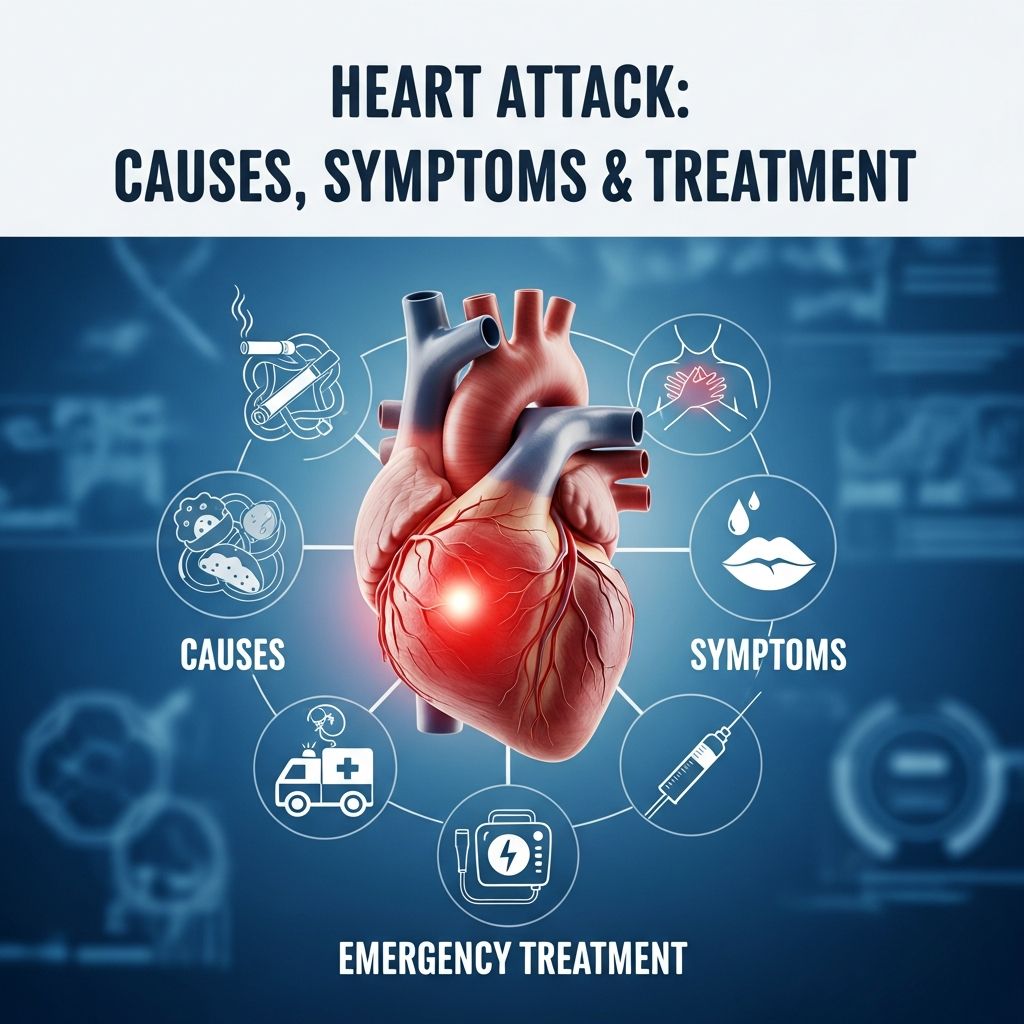
A heart attack, medically known as myocardial infarction, occurs when blood flow to the heart muscle is blocked, typically by a blood clot in a coronary artery. This blockage prevents oxygen-rich blood from reaching the heart muscle, causing damage or death to heart tissue. Heart attacks represent a medical emergency requiring immediate treatment to restore blood flow and minimize permanent damage to the heart. Time is critical—the longer blood flow remains blocked, the greater the risk of permanent heart damage or death.
Understanding Heart Attack Causes
The most common cause of a heart attack is coronary artery disease (CAD), a condition where plaque containing cholesterol accumulates in the coronary arteries over time. This buildup, called atherosclerosis, gradually narrows the arteries and limits blood flow to the heart muscle. When the plaque ruptures, a blood clot forms on the surface of the plaque, potentially blocking the artery completely.
Other causes and contributing factors include:
– Severe emotional or physical stress- Smoking and tobacco use- High blood pressure- High cholesterol levels- Diabetes- Obesity and sedentary lifestyle- Family history of heart disease- Age (risk increases with age)- Use of certain medications or stimulants- Previous heart attacks
Recognizing Heart Attack Symptoms
Heart attack symptoms can vary significantly between individuals and may differ based on age and gender. Some people experience severe symptoms, while others may have mild or no symptoms at all. However, most heart attacks involve discomfort in the center of the chest that lasts for more than a few minutes.
Common Symptoms Include:
– Chest pain or pressure described as squeezing, aching, or tightness- Pain or discomfort spreading to the shoulder, arm, back, neck, jaw, or upper abdomen- Cold sweat or excessive sweating- Fatigue or sudden weakness- Shortness of breath or difficulty breathing- Nausea or vomiting- Lightheadedness or dizziness- Feeling of indigestion or heartburn- Anxiety or sense of impending doom- Irregular or rapid heartbeat
Gender Differences in Symptoms
Women and diabetic patients may experience atypical symptoms that differ from the classic chest pain presentation. Women are more likely to report shortness of breath, nausea, upper back pressure, or extreme fatigue. Some individuals may experience only subtle symptoms such as dizziness or unusual tiredness. These variations can sometimes delay diagnosis and treatment, making it especially important for women and high-risk groups to recognize their personal warning signs.
When to Seek Emergency Help
If you experience chest pain or discomfort lasting more than a few minutes, accompanied by any of the symptoms listed above, call 911 or your local emergency number immediately. Do not wait or attempt to drive yourself to the hospital. An ambulance is the best option for fast treatment, as paramedics can begin emergency care immediately upon arrival and continue treatment while transporting you to the emergency room. Permanent heart damage may occur if blood flow is restricted for 30 minutes or longer.
While awaiting emergency help:
– Remain seated or lie down to reduce strain on your heart- Take nitroglycerin if prescribed by your healthcare provider- Chew aspirin if recommended (follow your doctor’s specific instructions)- Stay calm and avoid physical exertion- Do not ignore your symptoms—trust your body’s warning signs
Related Stories



Emergency Diagnosis and Treatment
Upon arrival at the hospital, medical professionals will rapidly assess your condition and perform diagnostic tests to confirm a heart attack and determine the extent of heart damage.
Diagnostic Tests
Healthcare providers use several diagnostic procedures to evaluate a suspected heart attack:
– Electrocardiogram (ECG/EKG) to detect abnormal electrical activity in the heart- Blood tests to measure cardiac enzymes and troponin levels- Chest X-rays to visualize the heart and lungs- Echocardiogram to assess heart function and identify damaged areas- Coronary angiogram to visualize blockages in the coronary arteries- Stress tests to evaluate heart function under controlled conditions- Cardiac catheterization to assess coronary artery disease
Immediate Treatment Approaches
The primary goal of heart attack treatment is to restore blood flow to the heart muscle as quickly as possible. This typically involves emergency procedures performed by interventional cardiologists.
Coronary Angioplasty and Stent Placement
In most cases, doctors perform an emergency coronary angioplasty (percutaneous coronary intervention or PCI) to open the blocked coronary artery. During this minimally invasive procedure, a catheter with a balloon is guided to the blockage site and inflated to compress the plaque and restore blood flow. In many cases, a stent—a small, expandable metal mesh tube—is placed in the artery to keep it open and prevent future blockages. Recovery from angioplasty typically takes about one week, though full recovery may take several weeks.
Coronary Artery Bypass Grafting (CABG)
In some cases, particularly when multiple arteries are severely blocked or when angioplasty is not suitable, physicians may recommend coronary artery bypass surgery. This surgical procedure creates a new route for blood to flow around the clogged areas using healthy blood vessels harvested from other parts of the body. Bypass surgery requires a longer recovery period—typically several months for full recovery—compared to angioplasty, and involves open-heart surgery with associated surgical risks.
Medications
Following acute treatment, patients typically receive medications to prevent future heart attacks and manage underlying conditions:
– Antiplatelet medications (such as aspirin and clopidogrel) to prevent blood clots- Beta-blockers to reduce heart workload and stabilize rhythm- ACE inhibitors to lower blood pressure and improve heart function- Statins to lower cholesterol levels- Nitrates to relieve chest pain and improve blood flow- Anticoagulants to prevent blood clots
If a stent is placed during angioplasty, you will likely need to take antiplatelet medication for 6 to 12 months to maintain stent patency.
Complications and Recovery
While procedures to restore blood flow are highly effective, potential complications may include:
– Arrhythmias (irregular heartbeat)- Heart failure or reduced heart function- Cardiogenic shock- Mechanical complications (ventricular rupture, septal defect)- Infection or bleeding at catheter insertion sites- Damage to blood vessels- Allergic reactions to contrast media or medications
Recovery timeline varies depending on the extent of heart damage and the treatment performed. Most patients can return to light activities within days but require several weeks to months for complete recovery. During recovery, healthcare providers monitor heart function through regular checkups, electrocardiograms, and echocardiograms.
Long-Term Management and Lifestyle Changes
After a heart attack, making significant lifestyle modifications is essential to prevent future cardiac events and promote heart health.
Recommended Lifestyle Changes
– Quit smoking immediately and avoid secondhand smoke exposure- Follow a heart-healthy diet low in saturated fats, cholesterol, and sodium- Engage in regular physical activity as approved by your cardiologist- Maintain a healthy weight- Manage stress through relaxation techniques, meditation, or counseling- Limit alcohol consumption- Control blood pressure and blood sugar levels- Ensure adequate sleep and rest- Attend cardiac rehabilitation programs
Medication Compliance
Taking prescribed medications consistently is crucial for preventing recurrent heart attacks. Follow your healthcare provider’s instructions carefully regarding medication schedules and dosages. Do not skip doses or stop taking medications without consulting your doctor. Regular follow-up appointments allow your provider to monitor the effectiveness of treatment and adjust medications as needed.
Risk Factors and Prevention
Understanding your personal risk factors for heart attack is essential for prevention. Controllable risk factors include smoking, high blood pressure, high cholesterol, diabetes, obesity, physical inactivity, and stress. Non-controllable factors include age, gender, and family history. By addressing controllable risk factors through lifestyle changes and appropriate medical treatment, you can significantly reduce your heart attack risk.
Primary prevention strategies include maintaining a healthy diet rich in fruits and vegetables, exercising regularly, maintaining a healthy weight, managing blood pressure and cholesterol through medication if necessary, controlling diabetes, and avoiding tobacco use. Regular health screenings can identify risk factors early, allowing for timely intervention.
CPR and First Aid for Heart Attack Victims
If you witness someone experiencing a heart attack, call 911 immediately and keep the person calm. CPR (cardiopulmonary resuscitation) should only be performed if the person becomes unconscious and lacks a pulse, indicating cardiac arrest—a more severe condition than a typical heart attack. For a conscious person experiencing chest pain, keep them seated, provide reassurance, and wait for emergency services. Do not perform CPR on an awake person, as this could worsen their condition.
Survival and Recovery Outlook
With modern emergency medical treatment, survival and recovery rates for heart attack patients are extremely high. The key to surviving a heart attack is obtaining immediate care to restore blood flow to the affected heart muscle. Time is critical—every minute counts in minimizing permanent damage. Advances in interventional cardiology and heart attack treatment protocols have dramatically improved outcomes over recent decades. Most heart attack survivors return to normal or near-normal activities within weeks to months with appropriate medical care and lifestyle modifications.
Frequently Asked Questions
Q: What is the difference between a heart attack and cardiac arrest?
A: A heart attack occurs when blood flow to the heart muscle is blocked, causing tissue damage. Cardiac arrest happens when the heart stops beating effectively, often as a result of a heart attack. A heart attack can lead to cardiac arrest if untreated.
Q: Can you have a heart attack without chest pain?
A: Yes, some people, particularly women and diabetics, may experience a heart attack with minimal or no chest pain. They may instead feel shortness of breath, extreme fatigue, nausea, or back pain. If you experience any concerning symptoms, seek medical attention immediately.
Q: How long does recovery take after a heart attack?
A: Recovery timeline varies based on the severity of damage and treatment type. Most patients recover basic function within days to weeks, but complete recovery may take several months. Regular follow-up care and adherence to medical recommendations accelerate recovery.
Q: What should I do if I think I’m having a heart attack?
A: Call 911 immediately. Do not drive yourself or wait for symptoms to pass. Take nitroglycerin if prescribed and chew aspirin if recommended. Remain calm and seated until emergency services arrive.
Q: Can you have another heart attack after the first one?
A: Yes, recurrent heart attacks are possible. However, following your doctor’s treatment plan, taking medications consistently, and maintaining heart-healthy lifestyle changes significantly reduce the risk of future cardiac events.
Q: Is it safe to return to exercise after a heart attack?
A: Yes, but only under medical guidance. Your cardiologist will recommend a cardiac rehabilitation program tailored to your specific condition. Gradual, supervised exercise significantly improves heart function and recovery outcomes.
References
- Silent Heart Attack: Signs, Symptoms & Recovery — Cleveland Clinic. 2024. https://my.clevelandclinic.org/health/diseases/21630-silent-heart-attack
- Stopping a Heart Attack in its Tracks — Cleveland Clinic Abu Dhabi. 2024. https://www.clevelandclinicabudhabi.ae/en/media-center/news/stopping-a-heart-attack-in-its-tracks
- Coronary Artery Disease — Cleveland Clinic Abu Dhabi. 2024. https://www.clevelandclinicabudhabi.ae/en/health-hub/health-resource/diseases-and-conditions/coronary-artery-disease
- Heart Attack – Symptoms & Causes — Mayo Clinic. 2024. https://www.mayoclinic.org/diseases-conditions/heart-attack/symptoms-causes/syc-20373106
- What To Do if Someone Is Having a Heart Attack — Cleveland Clinic. 2024. https://health.clevelandclinic.org/heart-attack-first-aid
- Private Heart Failure Care — Cleveland Clinic London. 2024. https://clevelandcliniclondon.uk/clinical-institutes/heart-vascular-thoracic/heart-failure
Similar Articles








Read full bio of Sneha Tete