Heart Chambers: Anatomy, Function & How They Work
Understand the four chambers of your heart and how they work together to pump blood throughout your body.
Understanding Your Heart Chambers
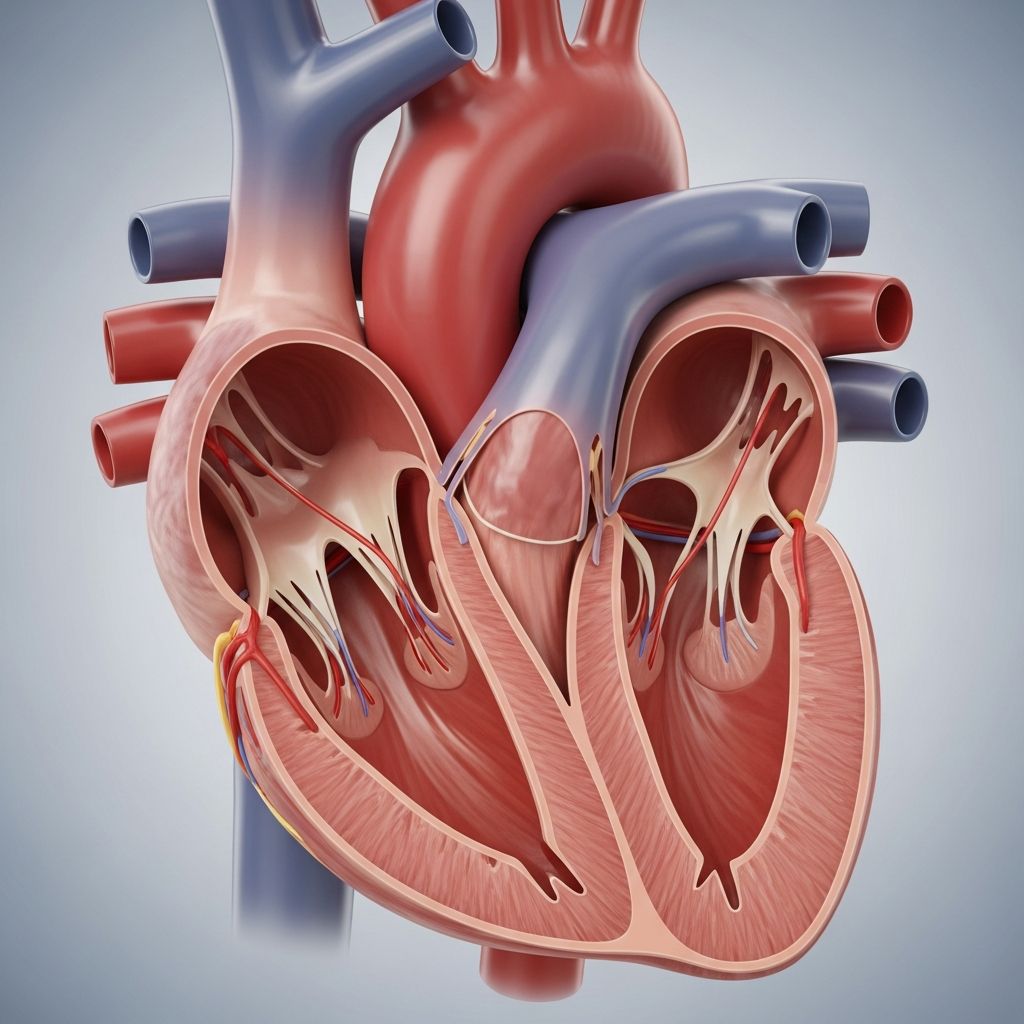
Your heart is one of the most vital organs in your body, working tirelessly to pump blood throughout your entire system. At the core of this remarkable organ are four hollow spaces called chambers. These chambers work together in perfect harmony to manage your heartbeat and ensure that oxygen-rich blood reaches every part of your body while removing oxygen-poor blood for re-oxygenation in your lungs.
Understanding how your heart chambers function is essential to appreciating how your cardiovascular system maintains your health and vitality. Whether you’re interested in general health knowledge or have concerns about heart conditions, learning about these four chambers provides valuable insight into one of your body’s most complex systems.
The Four Chambers of Your Heart
Your heart contains four distinct chambers, each with a specific role in the circulatory process. These chambers are divided into two upper chambers and two lower chambers, with the upper chambers positioned at the top of your heart and the lower chambers at the bottom.
The Upper Chambers: The Atria
The two upper chambers of your heart are called the atria (plural form of atrium). These chambers serve as collecting areas or reservoirs for blood before it moves into the lower chambers.
Right Atrium: This chamber receives oxygen-poor blood from your body through two large veins called the superior vena cava and the inferior vena cava. The superior vena cava brings blood from your upper body, while the inferior vena cava brings blood from your lower body. Once the right atrium fills with this deoxygenated blood, it contracts and passes the blood through the tricuspid valve into the right ventricle.
Left Atrium: This chamber receives oxygen-rich blood returning from your lungs through the pulmonary veins. After your blood has been oxygenated in your lungs, it travels back to your left atrium, which acts as a holding chamber. The left atrium then contracts and sends this precious oxygen-rich blood through the mitral valve into the left ventricle, preparing it for distribution throughout your entire body.
The Lower Chambers: The Ventricles
The two lower chambers are called ventricles, and they perform the heavy lifting of your heart’s pumping action. These are more muscular than the atria because they must generate the force necessary to pump blood great distances throughout your body.
Right Ventricle: After receiving oxygen-poor blood from the right atrium through the tricuspid valve, the right ventricle contracts forcefully. This contraction pumps the deoxygenated blood through the pulmonary valve into the pulmonary arteries, which carry it directly to your lungs. In your lungs, the blood releases carbon dioxide and picks up oxygen, becoming oxygen-rich and ready to nourish the rest of your body.
Related Stories



Left Ventricle: This is the most muscular and powerful chamber of your heart. After receiving oxygen-rich blood from your left atrium, the left ventricle contracts with tremendous force. This contraction pumps the oxygen-rich blood through the aortic valve and into your aorta, the largest artery in your body. From there, the blood travels throughout your entire body to deliver oxygen to every cell and tissue.
How Your Heart Chambers Are Structured
The physical structure of your heart chambers is specifically designed to facilitate efficient blood flow and prevent the mixing of oxygen-rich and oxygen-poor blood.
Chamber Walls and Composition
Your heart chambers are hollow fibrous shells covered in muscle fibers. The walls of these chambers are composed primarily of cardiac muscle tissue, which allows your heart to contract and generate the heartbeat. This muscle tissue is specialized to work continuously throughout your life without fatigue, thanks to its unique cellular structure and energy metabolism.
The Septum: Dividing Wall
A crucial structural feature of your heart is the septum, a thick wall of tissue that separates the right and left sides of your heart. This wall is absolutely essential because it keeps oxygen-poor blood on the right side separate from oxygen-rich blood on the left side. Without the septum, these two types of blood would mix, and your body would not receive adequate oxygen.
Chamber Arrangement and Location
Your heart is located beneath your ribcage, positioned just to the left of your breastbone and nestled between your two lungs. The chambers are arranged in a specific configuration that optimizes blood flow. The atria sit above the ventricles, which is why you often hear them referred to as “upper” and “lower” chambers. This arrangement, combined with the action of your heart valves, ensures that blood flows in the correct direction through each chamber in a coordinated sequence.
Heart Valves: The Gatekeepers of Blood Flow
Your heart valves are absolutely critical to proper heart function. Think of them as sophisticated doors that open and close to allow blood to move from chamber to chamber and in and out of your heart. They also serve the vital function of preventing blood from flowing backward, which would disrupt the entire circulation system.
Types of Heart Valves
Atrioventricular (AV) Valves: These valves sit between your atria and ventricles. The tricuspid valve opens between your right atrium and right ventricle, allowing three flaps to open and close. The mitral valve (also called the bicuspid valve) sits between your left atrium and left ventricle, with two flaps that control blood flow.
Semilunar (SL) Valves: These valves open when blood flows out of your ventricles. The pulmonary valve controls blood flow from your right ventricle into your pulmonary arteries leading to your lungs. The aortic valve controls blood flow from your left ventricle into your aorta, which distributes blood throughout your body.
The Journey of Blood Through Your Heart Chambers
Understanding the complete path of blood through your heart chambers helps illustrate why each chamber and valve is so important. This journey repeats with every single heartbeat, approximately 60 to 100 times per minute in a resting adult.
Step-by-Step Blood Flow Process
Step 1: Blood Enters the Right Atrium The journey begins when oxygen-poor blood from your entire body enters your right atrium through the superior and inferior vena cava. Your right atrium fills with this deoxygenated blood.
Step 2: Blood Moves to the Right Ventricle When your right atrium contracts, it sends blood through the tricuspid valve into your right ventricle. The tricuspid valve then closes to prevent backflow.
Step 3: Blood Travels to Your Lungs Your right ventricle contracts powerfully, forcing blood through the pulmonary valve into your pulmonary arteries. These arteries carry the oxygen-poor blood to your lungs, where it exchanges carbon dioxide for oxygen.
Step 4: Oxygenated Blood Returns to the Heart After being oxygenated in your lungs, blood travels back through your pulmonary veins and enters your left atrium. At this point, the blood is now oxygen-rich and ready to be distributed throughout your body.
Step 5: Blood Enters the Left Ventricle Your left atrium contracts, sending the oxygen-rich blood through the mitral valve into your left ventricle.
Step 6: Blood Distributes Throughout Your Body Your left ventricle, the most powerful chamber, contracts with great force. This sends oxygen-rich blood through the aortic valve into your aorta, from which it branches to supply every organ, tissue, and cell in your body.
The Teamwork Between Chambers
One of the most remarkable aspects of your heart is how its chambers work together as coordinated teams. Your heart functions as two separate pumps working in synchronization.
The Right Pump
Your right atrium and right ventricle work together as a team to move oxygen-poor blood from your body to your lungs. The right atrium collects the blood, and the right ventricle pumps it to the lungs for re-oxygenation.
The Left Pump
Your left atrium and left ventricle form another team that handles the distribution of oxygen-rich blood throughout your body. The left atrium receives oxygenated blood from the lungs, and the left ventricle pumps it to every part of your body with tremendous force.
This teamwork is essential for maintaining efficient circulation. If any chamber fails to perform its function properly, the entire system becomes compromised, and your body may not receive adequate oxygen.
How to Remember Your Heart Chambers
Many people struggle to remember the names and functions of the heart chambers. Here are some helpful memory aids:
Atria = Above: Both words begin with the letter “A,” making it easy to remember that your atria are your upper chambers. They sit above your ventricles.
Right vs. Left: When we refer to right and left chambers, we’re describing the chambers from the perspective of the heart itself, not from your perspective as you look down at your body. So your right atrium and right ventricle are on the right side of the heart from the heart’s own viewpoint.
The Journey Remember: Follow the path of blood: Body → Right atrium → Right ventricle → Lungs → Left atrium → Left ventricle → Body. This circular path emphasizes how chambers work in sequence.
Heart Chamber Conditions and Disorders
Because your heart chambers are so fundamental to your heart’s function, many heart conditions and diseases involve them. Some problems begin before birth as congenital heart defects, while others develop throughout life as we age.
Chamber-related conditions can include enlarged chambers (cardiomegaly), weakened chambers (heart failure), or improper chamber development. When chambers don’t function properly, blood may not circulate efficiently, and vital organs may not receive adequate oxygen. This is why regular heart health checkups and awareness of heart disease risk factors are so important.
Frequently Asked Questions About Heart Chambers
Q: How many chambers does the human heart have?
A: The human heart has four chambers: two atria (upper chambers) called the right atrium and left atrium, and two ventricles (lower chambers) called the right ventricle and left ventricle.
Q: What is the difference between the atria and ventricles?
A: The atria are the upper chambers that receive blood, while the ventricles are the lower chambers that pump blood out of the heart. Ventricles have thicker, more muscular walls because they must generate greater force to pump blood long distances.
Q: Why does the left ventricle have thicker walls than the right ventricle?
A: The left ventricle has thicker, more muscular walls because it must pump oxygen-rich blood throughout the entire body, requiring much greater force. The right ventricle only needs to pump blood to the nearby lungs.
Q: What separates the right and left sides of the heart?
A: A wall of tissue called the septum separates the right and left sides of your heart. This prevents oxygen-poor blood on the right side from mixing with oxygen-rich blood on the left side.
Q: What happens if a heart valve doesn’t work properly?
A: If a heart valve is damaged or doesn’t close properly, blood may flow backward or leak, disrupting normal circulation and forcing your heart to work harder. This can lead to heart disease, arrhythmias, or heart failure over time.
Q: How fast do the heart chambers contract?
A: In a healthy resting adult, the heart chambers contract approximately 60 to 100 times per minute. This rate increases during exercise, stress, or illness and decreases during rest and relaxation.
Q: Can a person live with only three heart chambers?
A: While rare, some people are born with congenital heart defects involving fewer than four functioning chambers. Whether they can survive depends on the specific condition and how well other heart structures compensate. Medical intervention is usually necessary.
Q: How do doctors assess if heart chambers are functioning properly?
A: Doctors use various tests including echocardiograms (ultrasound imaging), electrocardiograms (EKGs), cardiac catheterization, and imaging studies like CT or MRI to evaluate heart chamber structure and function.
Conclusion
Your heart chambers are extraordinary structures that work in perfect coordination to maintain the circulation of blood throughout your entire body. The right atrium and right ventricle manage the circulation of oxygen-poor blood to your lungs, while the left atrium and left ventricle handle the distribution of oxygen-rich blood to every cell in your body. Understanding how these chambers function helps you appreciate the complexity of your cardiovascular system and the importance of maintaining heart health through regular exercise, proper nutrition, stress management, and routine medical checkups. When your heart chambers work efficiently with properly functioning valves, you enjoy optimal health and vitality.
References
- Chambers of the Heart — Cleveland Clinic. 2024. https://my.clevelandclinic.org/health/body/23074-heart-chambers
- Heart: Anatomy & Function — Cleveland Clinic. 2024. https://my.clevelandclinic.org/health/body/21704-heart
- 4 Heart Valves: What They Are and How They Work — Cleveland Clinic. 2024. https://my.clevelandclinic.org/health/body/17067-heart-valves
- How Your Circulatory System Works — Cleveland Clinic. 2024. https://my.clevelandclinic.org/health/body/circulatory-and-cardiovascular-system
- Great Vessels of the Heart: Anatomy & Function — Cleveland Clinic. 2024. https://my.clevelandclinic.org/health/body/17057-your-heart–blood-vessels
Similar Articles








Read full bio of medha deb