Heart Failure: Understanding Causes, Symptoms & Treatment
Comprehensive guide to heart failure: causes, diagnosis, and evidence-based treatment options.
Understanding Heart Failure
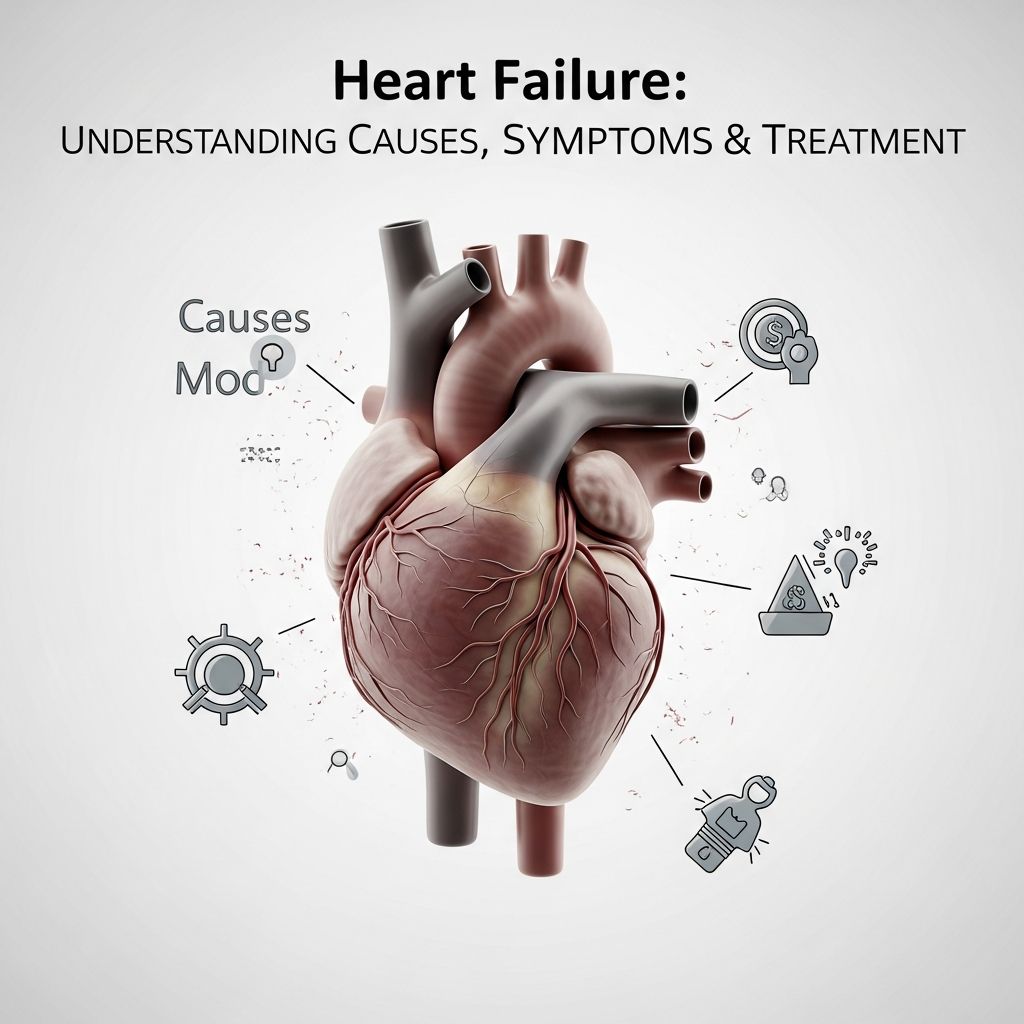
Heart failure is a serious medical condition in which the heart is unable to pump enough blood to meet the body’s needs for oxygen and nutrients. This condition does not mean the heart has stopped beating; rather, it indicates that the heart muscle is weakened or stiffened, affecting its ability to fill with or pump out blood effectively. Heart failure is a growing health concern affecting millions of people worldwide, particularly among aging populations and those with obesity or multiple chronic conditions.
The condition develops gradually as the heart’s pumping ability declines over time. When the heart cannot pump efficiently, blood backs up into the lungs and other tissues, causing fluid accumulation and a range of debilitating symptoms. Understanding the nature of heart failure is crucial for early detection and effective management of this chronic condition.
Types of Heart Failure
Heart failure is classified into several types based on how the heart is affected and its pumping capability:
Systolic Heart Failure
Systolic heart failure occurs when the left ventricle becomes weakened and cannot contract properly. The ejection fraction—the percentage of blood pumped out with each heartbeat—falls below 40%. This type of heart failure significantly impairs the heart’s ability to pump blood forward to the body, resulting in reduced cardiac output and inadequate oxygen delivery to vital organs.
Diastolic Heart Failure
Also known as heart failure with preserved ejection fraction (HFpEF), diastolic heart failure occurs when the left ventricle becomes stiffened and cannot relax and fill properly with blood. The ejection fraction remains normal at 45% or higher, but the heart’s ability to receive blood is compromised. This type of heart failure is increasingly common, particularly in elderly patients and those with hypertension or obesity.
Acute Decompensated Heart Failure
This is a sudden worsening of heart failure symptoms that constitutes a medical emergency requiring immediate hospitalization. Acute decompensated heart failure can develop rapidly and may be triggered by infection, medication non-compliance, dietary indiscretion, or other acute stressors on the cardiovascular system.
Chronic Heart Failure
Chronic heart failure is a long-term condition typically managed in the outpatient setting. Patients with chronic heart failure experience ongoing symptoms that may fluctuate but are generally controlled through medication and lifestyle modifications, with periodic episodes of acute decompensation.
Causes of Heart Failure
Heart failure can develop from various underlying conditions and risk factors that damage or stress the heart muscle. The most common causes include:
Coronary Artery Disease
Coronary artery disease, characterized by narrowing of the blood vessels supplying the heart, is the leading cause of heart failure. Reduced blood flow to the heart muscle (myocardium) causes ischemia and may lead to myocardial infarction (heart attack), resulting in scarring and weakening of the cardiac muscle.
Related Stories



High Blood Pressure
Chronic hypertension forces the heart to work harder to pump blood against increased resistance. Over time, this excessive workload causes the left ventricle to thicken (left ventricular hypertrophy), eventually leading to systolic or diastolic dysfunction.
Cardiomyopathy
Cardiomyopathy refers to disease of the heart muscle itself. Various forms include dilated cardiomyopathy (where the heart chambers enlarge), restrictive cardiomyopathy (where the heart becomes stiff), and hypertrophic cardiomyopathy (where the heart muscle thickens abnormally). Cardiomyopathy may result from genetic factors, viral infections, alcohol abuse, or other causes.
Valvular Heart Disease
Damaged or diseased heart valves fail to open or close properly, causing abnormal blood flow patterns and increased workload on the heart. Over time, valvular disease can lead to heart failure if left untreated.
Arrhythmias
Abnormal heart rhythms can weaken the heart muscle over time, particularly if they persist chronically or occur at very rapid rates. Atrial fibrillation and other arrhythmias may trigger or worsen heart failure.
Other Contributing Factors
Additional causes include diabetes, thyroid disease, sleep apnea, hemochromatosis, sarcoidosis, amyloidosis, HIV infection, nutritional deficiencies, and rheumatologic diseases. Certain medications and chemotherapy agents can also damage the heart and contribute to heart failure development.
Risk Factors
Several factors increase the likelihood of developing heart failure:
– Age: Risk increases significantly after age 65- Obesity: Excess body weight increases cardiac workload- Diabetes: Increases risk through multiple mechanisms- Smoking: Damages blood vessels and heart muscle- Sedentary lifestyle: Lack of physical activity weakens cardiovascular fitness- Excessive alcohol consumption: Toxic effects on cardiac muscle- Family history: Genetic predisposition to heart disease- Kidney disease: Impairs fluid and electrolyte balance
Signs and Symptoms
Heart failure symptoms vary widely but commonly include:
– Dyspnea: Shortness of breath during activity or at rest- Orthopnea: Difficulty breathing when lying flat- Paroxysmal nocturnal dyspnea: Sudden awakening from sleep with breathlessness- Fatigue and weakness: Persistent low energy despite adequate rest- Exercise intolerance: Inability to perform previously manageable activities- Dependent edema: Swelling in legs, ankles, and feet- Persistent cough: Often worse when lying down or at night- Weight gain: Rapid weight gain from fluid retention- Abdominal distension: Bloating and discomfort in the abdomen- Nocturia: Frequent nighttime urination- Cool extremities: Poor peripheral circulation- Cognitive impairment: Confusion or altered mental status, particularly in elderly patients
Less common presentations may include nausea, anorexia, cyanosis, and altered mentation. Notably, nocturnal cough often precedes acute decompensation by 7 to 14 days, making it an important warning sign.
Diagnosis of Heart Failure
Accurate diagnosis of heart failure requires a systematic approach combining clinical evaluation with diagnostic testing.
Clinical Assessment
The physician performs a thorough history and physical examination, assessing symptoms, risk factors, and physical signs of fluid retention. Careful observation of jugular venous pressure, lung sounds, heart sounds, and presence of edema helps establish the clinical diagnosis.
Electrocardiogram (EKG)
An EKG records the electrical activity of the heart and can reveal arrhythmias, left ventricular hypertrophy, or evidence of previous myocardial infarction that may contribute to heart failure.
Chest X-ray
Imaging of the chest shows heart size and shape, identifies cardiomegaly (enlarged heart), and reveals pulmonary congestion patterns indicative of heart failure. A cardiothoracic ratio exceeding 0.5 suggests cardiac enlargement.
Echocardiogram
Transthoracic echocardiography is the gold standard for evaluating cardiac structure and function. This ultrasound examination measures ejection fraction, assesses regional and global cardiac contractility, identifies valvular disease, detects cardiomyopathy, and evaluates for pericardial disease.
Blood Tests
Natriuretic peptides including B-type natriuretic peptide (BNP) and N-terminal pro-BNP (NT-proBNP) are elevated in heart failure and help confirm diagnosis. Additional blood work assesses electrolytes, renal function, liver function, and glucose control.
Cardiac Catheterization
Invasive cardiac catheterization is performed when heart failure is suspected to result from coronary artery disease or when noninvasive testing fails to establish the underlying etiology. Coronary angiography directly visualizes the coronary arteries and can identify significant stenosis requiring revascularization.
Management and Treatment
Heart failure management requires a comprehensive, multidisciplinary approach incorporating pharmacologic therapy, lifestyle modifications, risk factor management, and specialized care.
Pharmacologic Treatment
Medications form the cornerstone of heart failure treatment. Specific drug classes target different pathophysiologic mechanisms:
– ACE Inhibitors and Angiotensin Receptor Blockers: Reduce neurohormonal activation and decrease afterload- Beta-blockers: Reduce heart rate and contractility, improving survival- Diuretics: Alleviate fluid overload and congestion symptoms- Aldosterone antagonists: Block the renin-angiotensin-aldosterone system- Inotropic agents: Increase cardiac contractility in acute settings- Nitrates and vasodilators: Reduce cardiac workload- SGLT2 inhibitors: Improve outcomes in both HFrEF and HFpEF
Nonpharmacologic Interventions
Lifestyle modifications are essential for heart failure management and include sodium restriction, fluid restriction during acute decompensation, regular supervised exercise, weight management, stress reduction, and smoking cessation. Patients should maintain their “dry weight”—the weight at which congestion resolves without compromising blood pressure or renal function.
Risk Factor Modification
Aggressive management of hypertension, diabetes, hyperlipidemia, and other comorbidities is crucial. Patients should receive annual influenza vaccination and pneumococcal vaccination to prevent infections that could precipitate decompensation.
Device Therapies
Patients with reduced ejection fraction and electrical conduction abnormalities may benefit from cardiac resynchronization therapy (CRT). Those at high risk for sudden cardiac death may require an implantable cardioverter-defibrillator (ICD).
Advanced Therapies
Patients with end-stage heart failure refractory to medical therapy may be candidates for mechanical circulatory support devices, heart transplantation, or palliative care approaches focusing on symptom management and quality of life.
Specialized Heart Failure Care
Optimal heart failure management involves a multidisciplinary team including cardiologists, nurse practitioners, nurses, nutritionists, exercise physiologists, and pharmacists. Integrated care programs have demonstrated improved outcomes through comprehensive patient education, regular monitoring, medication optimization, and early intervention for symptoms.
Hospital-to-home transition programs combine interdisciplinary care, telemedicine, and remote patient monitoring to facilitate smooth transitions from hospital discharge to home management. These programs utilize heart failure zone tools to help patients self-monitor symptoms and weight, enabling early recognition of decompensation.
Treatment Goals
For patients with systolic heart failure, specific treatment targets include maintaining sodium levels between 135-145 mmol/L, potassium around 4.5 mmol/L, resting heart rate between 55-70 beats per minute, blood pressure less than 140/90 mmHg (or as tolerated), body weight at dry weight, and hematocrit above 34%.
Frequently Asked Questions
What is the difference between heart failure and a heart attack?
A heart attack occurs when blood flow to the heart muscle is suddenly blocked, typically by a blood clot in a coronary artery. Heart failure is a chronic condition where the heart cannot pump blood effectively. Heart attacks can cause heart failure if the resulting scar damage significantly weakens the heart muscle.
Is heart failure curable?
Heart failure is generally not curable but is highly manageable. With appropriate treatment and lifestyle modifications, most patients experience significant symptom improvement and stabilization. In rare cases, if underlying reversible causes (such as severe valvular disease) are corrected, heart function may improve substantially.
Can young people develop heart failure?
While heart failure is more common in older adults, younger individuals can develop it due to genetic cardiomyopathy, myocarditis, significant valvular disease, or other underlying cardiac conditions. Early detection and aggressive management are important for preserving long-term cardiac function.
How often should heart failure patients be monitored?
Chronic heart failure requires frequent outpatient follow-up, typically every 2-4 weeks initially after diagnosis or medication changes, then monthly or quarterly for stable patients. Acute decompensation requires immediate hospitalization and intensive management.
What dietary restrictions are important for heart failure patients?
Sodium restriction to less than 2 grams daily helps prevent fluid retention and decompensation. Fluid restriction may be recommended during acute decompensation. Patients should maintain balanced nutrition with attention to potassium and magnesium intake, coordinate with diuretic use.
When should heart failure patients be referred to a specialist?
Referral to a heart failure specialist or dedicated HFpEF center is appropriate for diagnostic uncertainty, refractory symptoms despite optimal therapy, consideration for advanced therapies, or when complex comorbidities complicate management.
References
- A Stepwise Guide to the Diagnosis and Treatment of Heart Failure with Preserved Ejection Fraction — National Center for Biotechnology Information (NCBI). 2021. https://pubmed.ncbi.nlm.nih.gov/34968656/
- Heart Failure — Johns Hopkins Diabetes Guide. Johns Hopkins Medicine. https://www.hopkinsguides.com/hopkins/view/Johns_Hopkins_Diabetes_Guide/547061/all/Heart_Failure
- Living Well with Heart Failure, the Misnamed, Misunderstood Condition — Johns Hopkins University Press. https://www.press.jhu.edu/books/title/9210/living-well-heart-failure-misnamed-misunderstood-condition
- Congestive Heart Failure: Hospital to Home Transition Program — Johns Hopkins Medicine Division of Cardiology. December 2020. https://www.youtube.com/watch?v=vRVYnzhjmlc
- The Johns Hopkins Complete Guide for Avoiding Heart Disease — JAMA Network. https://jamanetwork.com/journals/jama/fullarticle/381369
Similar Articles








Read full bio of Sneha Tete