Atheroma Explained: Causes, Symptoms, Treatment And Prevention
Understand atheroma: the fatty buildup in arteries causing heart disease, stroke, and more. Learn causes, symptoms, and prevention strategies.
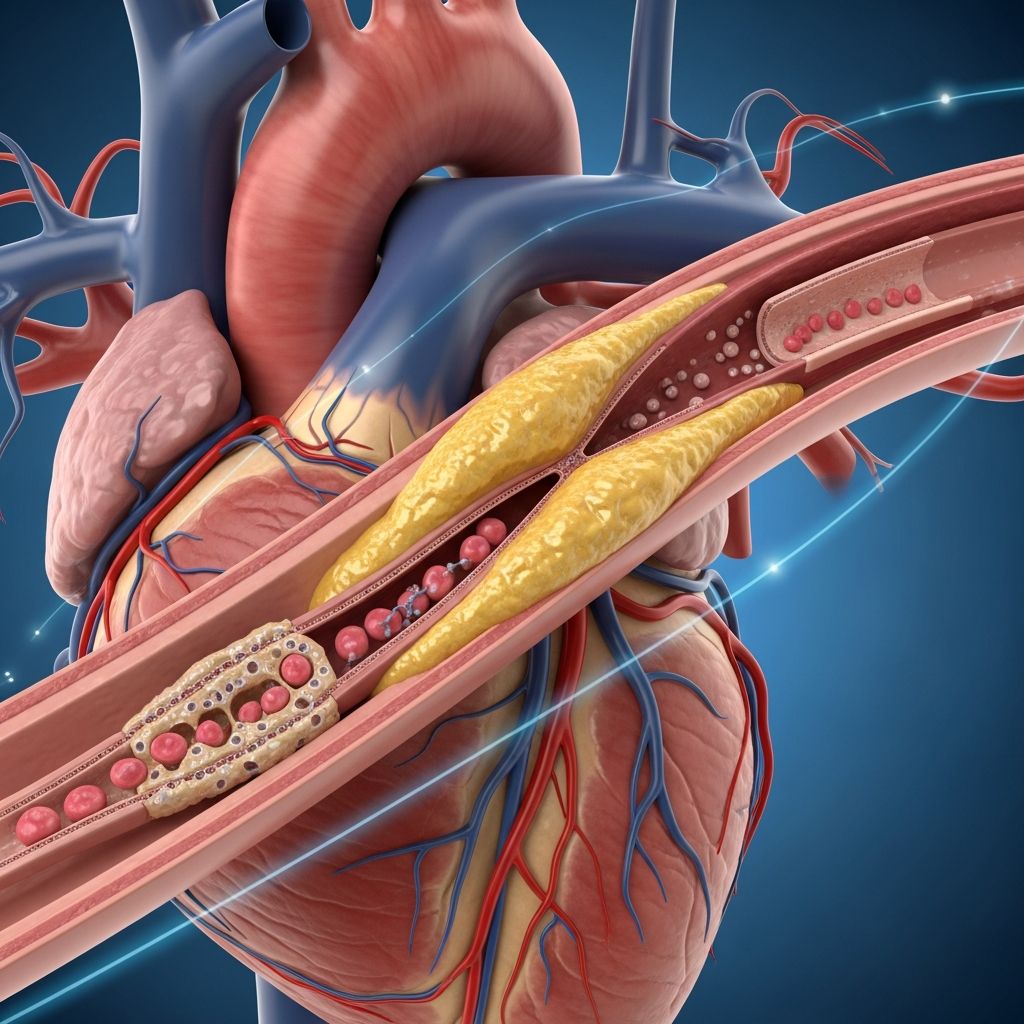
Atheroma, also known as atherosclerosis, is a condition where fatty deposits called plaques build up inside the arteries, narrowing them and restricting blood flow. This process is the primary underlying cause of cardiovascular diseases, responsible for approximately 50% of deaths in Western societies.
What is Atheroma?
Atheroma develops gradually as arteries harden due to plaque accumulation. Plaques consist of fat, cholesterol, calcium, and other substances that stick to the arterial walls. This buildup thickens artery walls, reduces the lumen (inner space), and can lead to serious complications like heart attacks and strokes. Early stages are often silent, with no symptoms until significant narrowing or plaque rupture occurs.
The process begins with damage to the artery’s inner lining (endothelium), allowing low-density lipoprotein (LDL) cholesterol to enter and oxidize, triggering inflammation. Immune cells like macrophages engulf the lipids, forming foam cells that create fatty streaks—the earliest visible lesions.
Symptoms of Atheroma
In its initial phases, atheroma is asymptomatic because plaques grow outward, compensating for lumen narrowing without immediate flow restriction. Symptoms emerge when arteries narrow significantly (over 70%) or plaques rupture, forming clots.
Common presentations depend on affected arteries:
- Coronary arteries: Chest pain (angina), shortness of breath, heart attack.
- Carotid arteries: Transient ischemic attacks (TIAs), stroke symptoms like sudden weakness or speech issues.
- Peripheral arteries: Leg pain during walking (claudication), cold extremities, poor pulses.
- Aorta: Aneurysms, abdominal or back pain.
Physical signs may include xanthelasmata (yellow cholesterol deposits around eyes), bruits (whooshing sounds over arteries), or reduced ankle-brachial index (ABI <0.9).
Causes of Atheroma
Atheroma results from a combination of endothelial injury and lipid retention in the arterial intima. Key triggers include:
- High LDL cholesterol: Primary driver; particles accumulate at branch points with turbulent flow.
- Hypertension: Damages endothelium, promoting inflammation.
- Smoking: Oxidizes LDL and impairs vessel repair.
- Diabetes: High blood sugar accelerates plaque formation.
- Inflammation: Chronic states like obesity or infections exacerbate progression.
- Genetics: Familial hypercholesterolemia increases risk.
Non-modifiable factors: Age (peaks 55-65 years), male sex, family history. Plaques form preferentially at bifurcations due to disturbed laminar flow.
How Does Atheroma Progress?
Atherosclerosis evolves through distinct phases:
- Fatty streak: Initial lipid-laden foam cells in intima.
- Fibroatheroma: Smooth muscle cells (SMCs) migrate from media, producing collagen-rich fibrous cap over necrotic core.
- Thin-cap fibroatheroma (vulnerable plaque): Thin cap (<65μm), large lipid core, high macrophage activity, prone to rupture via matrix metalloproteinases (MMPs).
- Advanced lesion: Calcification, stenosis, or thrombosis.
Plaque rupture exposes thrombogenic core, activating platelets and coagulation, forming occlusive clots. Plaque erosion (endothelial denudation over proteoglycan-rich intima) accounts for ~40% of acute events, more common in women.
| Stage | Key Features | Risk |
|---|---|---|
| Fatty Streak | Foam cells, lipids | Low |
| Fibroatheroma | Fibrous cap, necrotic core | Moderate |
| Thin-Cap Fibroatheroma | Thin cap, inflammation | High (rupture-prone) |
| Complicated Lesion | Thrombus, calcification | Very High |
Diagnosis of Atheroma
Diagnosis combines risk assessment, imaging, and biomarkers:
- Risk calculators: QRISK3 or Framingham score using age, BP, lipids, etc.
- Blood tests: Lipid profile (LDL goal <1.8 mmol/L high-risk), HbA1c, hs-CRP for inflammation.
- Non-invasive imaging: Carotid intima-media thickness (CIMT), coronary artery calcium (CAC) score via CT, ABI for PAD.
- Invasive: Coronary angiography for high-risk patients with symptoms; intravascular ultrasound (IVUS) or optical coherence tomography (OCT) visualizes plaque composition.
Related Stories



ECG, stress testing, or CT angiography aids in detecting ischemia.
Complications of Atheroma
Atheroma leads to diverse cardiovascular events:
- Coronary artery disease (CAD): Acute coronary syndrome (ACS), myocardial infarction (MI), heart failure.
- Cerebrovascular disease: Stroke, TIA.
- Peripheral artery disease (PAD): Claudication, critical limb ischemia, gangrene.
- Aortic aneurysm: Risk of rupture causing massive hemorrhage.
- Renal artery stenosis: Hypertension, kidney failure.
- Atheroembolism: Cholesterol crystals post-procedure affecting organs.
Treatment of Atheroma
Treatment targets risk factors, stabilizes plaques, and restores flow:
Lifestyle Modifications
- Mediterranean diet: High in fruits, vegetables, fish; low saturated fats.
- Exercise: 150 min/week moderate activity.
- Smoking cessation: Reduces events by 50% within 1-2 years.
- Weight management: BMI <25 kg/m².
Medications
- Statins: High-intensity (atorvastatin 40-80mg) lower LDL by 50%, stabilize plaques.
- Antihypertensives: ACE inhibitors, target BP <130/80 mmHg.
- Antiplatelets: Aspirin 75-100mg daily for secondary prevention.
- Others: Ezetimibe, PCSK9 inhibitors for refractory hyperlipidemia; SGLT2i/GLP-1RA for diabetes/CVD.
Procedures
- Percutaneous coronary intervention (PCI): Stents for stenoses.
- CABG: For multivessel disease.
- Endarterectomy: Carotid stenosis.
- Aneurysm repair: EVAR or open surgery.
Prevention of Atheroma
Primary prevention focuses on modifiable risks from young adulthood:
- Screen lipids from age 20; treat if LDL >3 mmol/L or familial.
- Control diabetes (HbA1c <7%), hypertension.
- Promote population-level changes: Tobacco control, healthy food policies.
- Secondary prevention post-event: Intensive therapy halves recurrence risk.
Prognosis improves dramatically with adherence: Statins, BP control, and lifestyle reduce mortality by 80% in high-risk groups.
Frequently Asked Questions (FAQs)
Q: Is atheroma reversible?
A: Plaques can regress partially with aggressive LDL lowering (<1 mmol/L), but complete reversal is rare; stabilization prevents events.
Q: Who is at highest risk for atheroma?
A: Those with multiple risks: Smoking, high LDL, hypertension, diabetes, family history, age >50.
Q: Can diet alone prevent atheroma?
A: No, but a heart-healthy diet reduces risk by 30%; combine with exercise and meds.
Q: What is a vulnerable plaque?
A: Thin fibrous cap over lipid-rich necrotic core, prone to rupture causing acute events.
Q: How is ABI measured?
A: Ratio of ankle to brachial systolic BP; <0.9 indicates PAD.
References
- Atherosclerosis – StatPearls — NCBI Bookshelf / NIH. 2023-07-17. https://www.ncbi.nlm.nih.gov/books/NBK507799/
- Atherosclerosis: Symptoms, Causes & Treatment — Cleveland Clinic. 2023-11-08. https://my.clevelandclinic.org/health/diseases/16753-atherosclerosis-arterial-disease
- Arteriosclerosis / Atherosclerosis – Symptoms and Causes — Mayo Clinic. 2023-09-01. https://www.mayoclinic.org/diseases-conditions/arteriosclerosis-atherosclerosis/symptoms-causes/syc-20350569
- Atherosclerosis | Doctor — Patient.info. 2024-02-15. https://patient.info/doctor/cardiovascular-disease/atherosclerosis
- Cardiovascular Disease — NHS. 2023-05-12. https://www.nhs.uk/conditions/cardiovascular-disease/
Similar Articles








Read full bio of medha deb