Heart-Healthy Restaurant Copycat Dinner Recipes
Master delicious heart-healthy versions of your favorite restaurant dinners at home.
Restaurant meals often come laden with excess sodium, unhealthy fats, and hidden calories that can undermine your heart health goals. However, you don’t have to give up your favorite dining experiences to maintain a cardiovascular-friendly diet. By recreating beloved restaurant dishes at home with thoughtful substitutions and cooking techniques, you can enjoy delicious meals that align with your health objectives. This comprehensive guide presents expertly crafted heart-healthy versions of popular restaurant dinners that taste just as satisfying as their original counterparts.
Why Restaurant Copycat Recipes Matter for Heart Health
The American Heart Association emphasizes that dietary choices significantly impact cardiovascular health. Restaurant meals typically contain excessive sodium—often exceeding daily recommended limits in a single serving. Additionally, many dishes rely on saturated fats, refined carbohydrates, and calorie-dense preparations that contribute to heart disease risk factors including high blood pressure, elevated cholesterol, and weight gain.
Creating heart-healthy copycat recipes allows you to:
- Control sodium levels by preparing dishes at home
- Use heart-healthy cooking methods like grilling, baking, and steaming
- Incorporate more whole grains, vegetables, and lean proteins
- Reduce added sugars and unhealthy fats
- Maintain portion awareness and caloric balance
- Save money while improving nutritional outcomes
Essential Techniques for Heart-Healthy Cooking
Mastering fundamental cooking techniques is crucial for creating restaurant-quality meals that support cardiovascular health. Understanding how professional chefs achieve flavor without relying on excessive salt, butter, and oil empowers home cooks to replicate those results.
Oil Selection and Usage
Rather than using large quantities of any oil, incorporate heart-healthy options like olive oil in measured amounts. Extra virgin olive oil contains polyphenols and monounsaturated fats that support cardiovascular function. Use cooking spray or non-stick cookware to minimize oil while preventing sticking. For high-heat cooking, consider refined oils with higher smoke points, such as avocado oil.
Seasoning Without Sodium
Professional chefs build complex flavors through layering techniques rather than relying primarily on salt. Implement these strategies:
- Use fresh and dried herbs to enhance natural flavors
- Incorporate citrus zest and juice for brightness
- Apply dry rubs with spices like paprika, cumin, and black pepper
- Toast spices before using to intensify aromatic compounds
- Use garlic, ginger, and onions as flavor foundations
- Add vinegars and low-sodium broths for depth
Lean Protein Preparation
Select lean protein sources and prepare them using methods that don’t require excessive fats. Grilling creates appealing caramelization through the Maillard reaction without added fats. Poaching in flavorful broths keeps proteins moist while infusing taste. Baking at appropriate temperatures ensures even cooking without drying.
Heart-Healthy Copycat Recipes
Grilled Salmon with Herb Crust
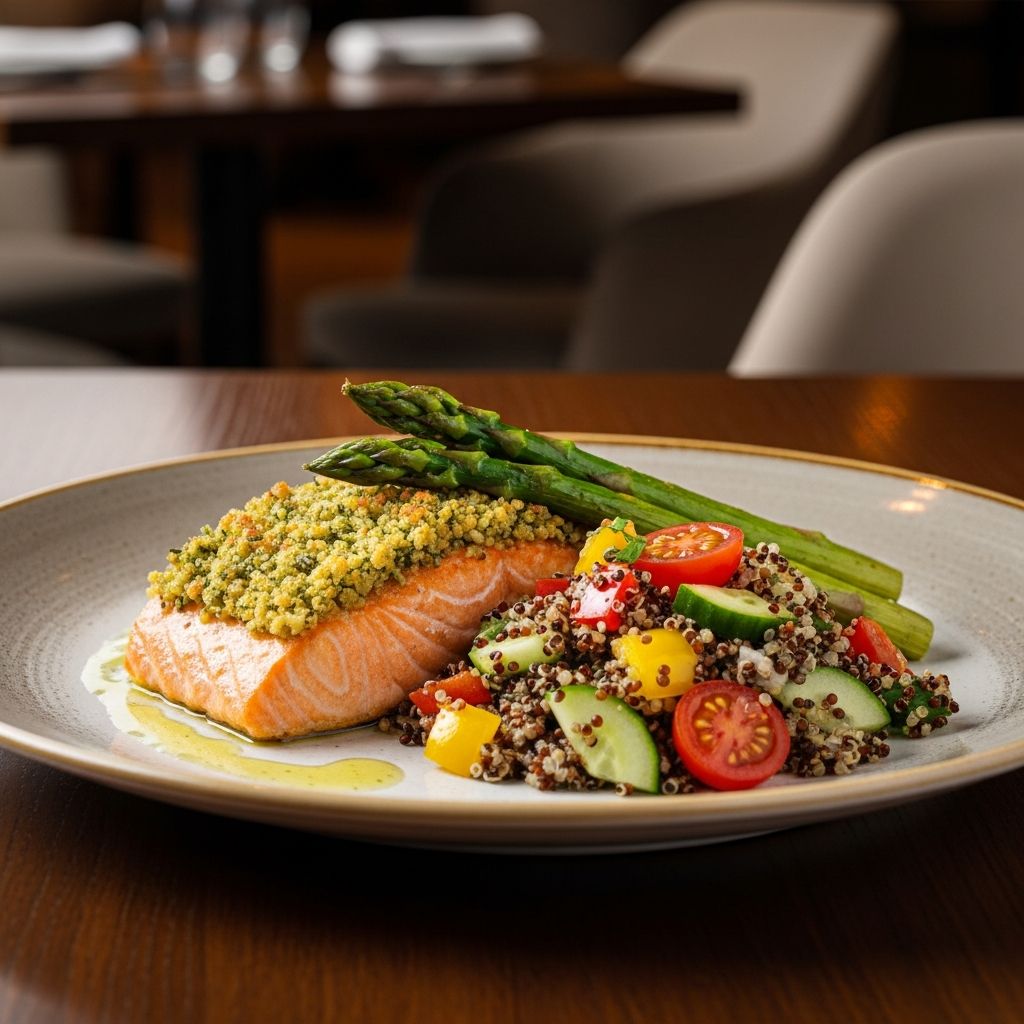
Salmon provides omega-3 fatty acids, which research demonstrates support heart health by reducing inflammation and improving cholesterol profiles. This restaurant-style preparation uses minimal oil while maximizing flavor through an herb crust.
Key modifications:
- Use fresh herbs instead of buttery sauces
- Apply a thin herb coating that adheres without oil
- Grill to achieve restaurant-quality presentation
- Pair with roasted vegetables and whole grain accompaniments
Related Stories



Mediterranean Chicken Breast
This heart-healthy Mediterranean preparation incorporates lean chicken breast with vegetables, olives, and heart-healthy fats from olive oil. The Mediterranean diet ranks among the most cardiovascularly beneficial eating patterns according to nutritional research.
Preparation approach:
- Pound chicken to even thickness for consistent cooking
- Sear briefly to develop flavor
- Combine with tomatoes, cucumbers, and fresh herbs
- Use modest olive oil with vinegar-based dressing
- Serve with whole grain sides
Vegetable-Forward Stir-Fry
Stir-fries traditionally rely on excess oil and sodium-heavy sauces. The heart-healthy version emphasizes vegetable volume while using minimal oil and creating savory sauce from low-sodium broth, vinegar, and spices.
Heart-healthy modifications:
- Fill half the plate with colorful vegetables
- Use cooking spray instead of pouring oil
- Make sauce with low-sodium broth and spices
- Include lean protein such as tofu or chicken breast
- Serve over brown rice or cauliflower rice
Baked White Fish with Vegetable Medley
White fish like cod and tilapia provide lean protein without excessive saturated fat. Baking in parchment paper (en papillote) creates an elegant presentation while retaining moisture and nutrients.
Recipe components:
- Mild white fish fillet
- Assorted vegetables (zucchini, bell peppers, carrots)
- Fresh herbs and lemon
- Minimal olive oil
- Low-sodium seasoning
Lean Turkey Meatballs with Marinara
Ground turkey breast offers significantly less fat than beef while maintaining satisfying texture. These meatballs satisfy comfort food cravings while supporting cardiovascular goals.
Healthy preparation tips:
- Use 93% lean ground turkey
- Incorporate finely minced vegetables as binders
- Use whole wheat breadcrumbs instead of white
- Bake instead of frying to eliminate excess oil
- Serve with whole wheat pasta and low-sodium marinara
Smart Substitutions for Restaurant Favorites
| Original Restaurant Item | Heart-Healthy Substitution | Benefits |
|---|---|---|
| Cream-based pasta sauce | Tomato-based marinara with herbs | Reduces saturated fat and calories |
| Fried chicken | Grilled or baked chicken breast | Eliminates trans fats, reduces calories |
| Buttered vegetables | Steamed or roasted with olive oil spray | Maintains nutrients, reduces fat |
| Rich cream soups | Broth-based vegetable soups | Lower in fat and sodium |
| White rice or pasta | Brown rice or whole wheat pasta | Higher fiber, better satiety |
| High-sodium salad dressing | Vinegar-based dressing with olive oil | Controls sodium intake |
Building a Heart-Healthy Copycat Recipe Collection
Developing expertise in recreating restaurant dishes takes practice and intentional skill-building. Start with simpler preparations before advancing to complex flavor profiles. Keep organized notes about modifications that work well, creating a personal recipe database for future reference.
Shopping Strategy
Purchase high-quality ingredients that shine in simple preparations. Fresh herbs, quality spices, and lean proteins form the foundation of excellent heart-healthy copycat cooking. Buy in-season produce for superior flavor and nutrition.
Flavor Building
Invest in learning about flavor combinations from different cuisines. Mediterranean, Asian, and Latin American traditions excel at creating satisfying meals with minimal unhealthy fats. Understanding these flavor profiles allows you to confidently modify restaurant recipes.
Practice and Refinement
Recreating restaurant dishes requires experimentation. Don’t expect perfect results immediately. Adjust seasoning, cooking times, and techniques based on outcomes. Keep a cooking journal noting what succeeded and what needs adjustment.
Nutritional Considerations for Heart Health
Creating heart-healthy copycat recipes requires understanding key nutritional targets that support cardiovascular wellness.
Sodium Management
The American Heart Association recommends limiting sodium to 2,300 milligrams daily, with an ideal limit of 1,500 milligrams for optimal heart health. Restaurant meals often exceed these amounts in single servings. Home preparation allows precise control through measuring salt and avoiding processed ingredients.
Fat Quality
Prioritize monounsaturated and polyunsaturated fats from sources like olive oil, avocados, nuts, and fatty fish. Limit saturated fat to less than 7% of daily calories and avoid trans fats entirely.
Fiber Integration
Soluble fiber from oats, beans, and certain vegetables helps manage cholesterol levels. Aim to incorporate 25-30 grams of total fiber daily through whole grains, legumes, and vegetables.
Potassium and Magnesium
These minerals support healthy blood pressure regulation. Include abundant vegetables, particularly leafy greens, sweet potatoes, and legumes in copycat recipes.
Time-Saving Strategies for Busy Schedules
Many people hesitate to recreate restaurant meals at home due to perceived time requirements. Strategic planning and preparation techniques streamline the process:
- Meal prep proteins on weekend for weeknight assembly
- Pre-cut vegetables in advance for quick cooking
- Prepare homemade sauces and dressings in batches
- Invest in quality non-stick cookware for faster cooking
- Use convenient heart-healthy ingredients like canned beans and frozen vegetables
- Keep a well-stocked spice cabinet for quick flavor development
- Utilize slow cookers for hands-off meal preparation
Frequently Asked Questions
Q: Can I make restaurant pasta dishes heart-healthy?
A: Yes. Use whole wheat or legume-based pasta, replace cream sauces with tomato-based alternatives, increase vegetable content, and use modest amounts of heart-healthy oil instead of butter. This maintains satisfaction while improving nutritional profiles.
Q: How do I achieve restaurant-quality flavor without excessive salt?
A: Layer flavors through proper seasoning technique: toast spices to enhance aromatics, use fresh herbs, incorporate acidic elements like vinegar and citrus, develop umami through proper cooking methods, and balance sweet and savory elements thoughtfully.
Q: What cooking equipment is essential for heart-healthy copycat cooking?
A: Quality non-stick cookware, a sharp knife set, measuring tools for portion control, a grill or grill pan, and basic small appliances like food processors facilitate healthy cooking. These investments improve outcomes and reduce reliance on added fats.
Q: How can I modify creamy restaurant sauces?
A: Replace heavy cream with Greek yogurt, low-fat milk, or pureed vegetables. Use evaporated skim milk for richness without excessive fat. Thicken with cornstarch or vegetable purees instead of cream, maintaining desired texture.
Q: Are there cuisines that naturally align with heart-healthy principles?
A: Mediterranean, Japanese, and traditional Latin American cuisines excel at creating flavorful meals with abundant vegetables, lean proteins, and heart-healthy fats. Learning these culinary traditions provides endless inspiration for copycat recipes.
Q: How do I handle dining out while perfecting copycat recipes?
A: Request modifications at restaurants: ask for sauces on the side, request grilling instead of frying, substitute vegetables for fried sides, and request low-sodium preparation. These strategies reduce cardiovascular impact when dining out.
Conclusion
Creating heart-healthy restaurant copycat recipes represents a powerful strategy for maintaining cardiovascular health while enjoying restaurant-quality meals at home. By understanding professional cooking techniques, making smart ingredient substitutions, and learning flavor-building strategies, you transform beloved dishes into nutritious options that support long-term health goals. The investment in developing these skills pays dividends through improved health markers, sustained satisfaction with your diet, and the confidence to confidently recreate any favorite meal in a heart-healthy manner. Start with one simple recipe, master the techniques, and gradually expand your collection of restaurant copycat recipes that align with your cardiovascular wellness objectives.
References
- Dietary Guidelines for Americans 2020-2025 — U.S. Department of Agriculture and U.S. Department of Health and Human Services. 2020. https://www.dietaryguidelines.gov
- Nutrition Recommendations and Interventions for Diabetes — American Diabetes Association. 2024. https://diabetes.org
- The Mediterranean Diet and Cardiovascular Health — American Heart Association. 2023. https://www.heart.org
- Monounsaturated Fats and Cardiovascular Disease — National Institutes of Health, National Heart, Lung, and Blood Institute. 2023. https://www.nhlbi.nih.gov
- Sodium Intake and Hypertension Management — Centers for Disease Control and Prevention. 2024. https://www.cdc.gov
- Dietary Fiber and Cholesterol Management — Mayo Clinic. 2024. https://www.mayoclinic.org
- Omega-3 Fatty Acids and Heart Health — National Center for Complementary and Integrative Health. 2024. https://nccih.nih.gov
Similar Articles








Read full bio of Sneha Tete