Heart Murmurs: Understanding Causes, Symptoms, and Treatment
Learn what heart murmurs are, their types, symptoms, diagnosis, and when treatment is needed.
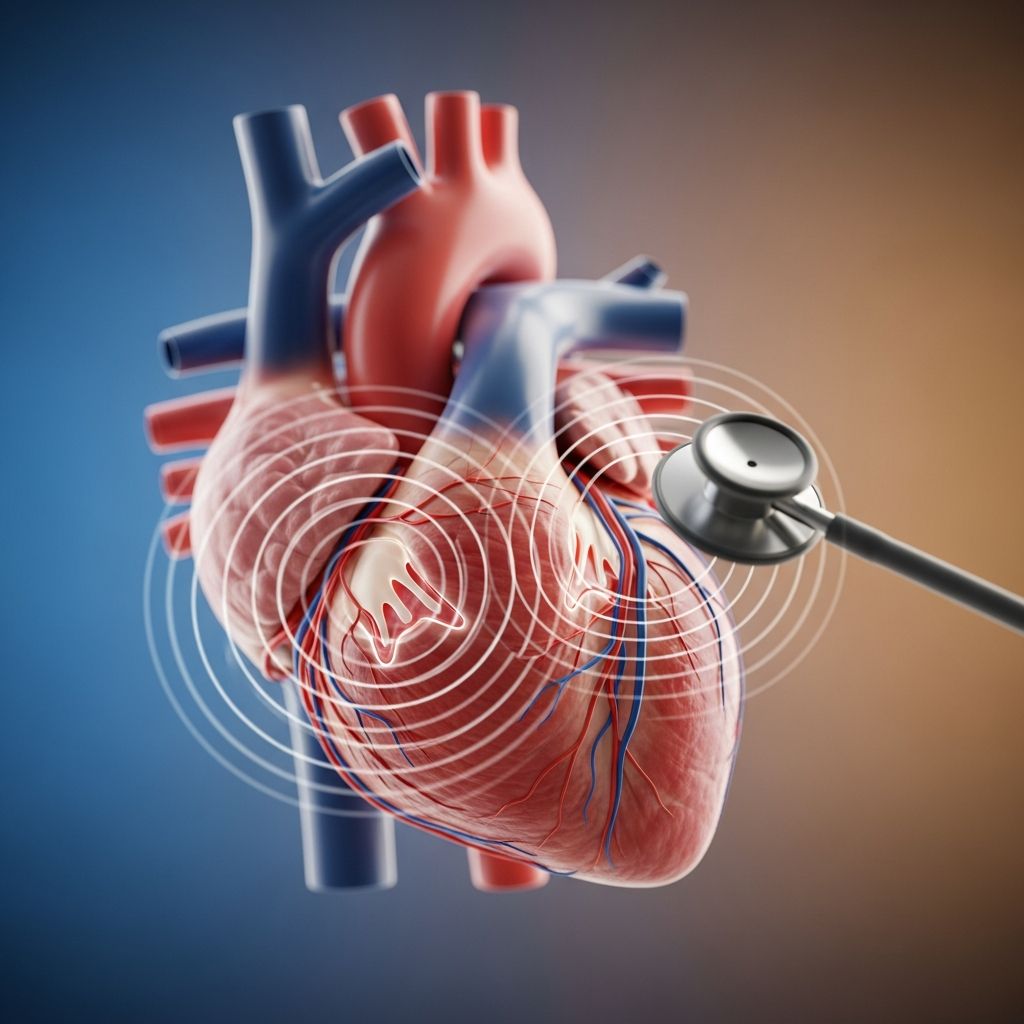
What is a Heart Murmur?
A heart murmur is an unusual or extra sound heard during the heartbeat cycle. The normal heartbeat produces a characteristic “lub-dub” sound, which represents the opening and closing of the heart valves as they direct blood through the heart during normal circulation. A heart murmur occurs when the valves are not functioning properly, causing blood to flow backward through the heart or through narrowed pathways instead of following the normal circulatory route.
Many people discover they have a heart murmur during a routine physical examination when a healthcare provider listens to the heart with a stethoscope. While heart murmurs can sound concerning, it is important to understand that many murmurs are harmless and require no treatment. However, some murmurs may indicate an underlying heart condition that requires monitoring or intervention.
Types of Heart Murmurs
Heart murmurs are classified based on when they occur during the cardiac cycle. Understanding these categories helps physicians determine the underlying cause and appropriate management strategy.
Systolic Murmurs
Systolic murmurs occur during the contraction phase of the heart, specifically when the ventricles pump blood out of the heart. These murmurs are further subdivided into two categories:
- Ejection Murmurs: Caused by blood flowing through a narrowed valve or irregular valve opening. These occur as blood is ejected from the ventricles through the aorta or pulmonary artery.
- Regurgitant Murmurs: Result from backward blood flow into one of the heart’s chambers, typically due to a valve that does not close completely.
Diastolic Murmurs
Diastolic murmurs occur during the relaxation phase of the heart between beats, when the ventricles are filling with blood. These murmurs are typically caused by:
- Narrowing of the mitral or tricuspid valves
- Regurgitation of the aortic or pulmonary valves, allowing blood to leak backward
Continuous Murmurs
Continuous murmurs persist throughout the entire cardiac cycle, occurring during both the contraction and relaxation phases. These murmurs often indicate specific structural abnormalities such as a patent ductus arteriosus or arteriovenous fistula.
Innocent Versus Abnormal Murmurs
Not all heart murmurs indicate disease. Innocent heart murmurs, also called “normal” or “physiological” murmurs, are sounds made by blood circulating normally through the heart. These murmurs result from blood traveling through the heart’s chambers, valves, or nearby blood vessels during regular circulation. Innocent murmurs are common in children and can also occur in adults, particularly during pregnancy, fever, or exercise when blood flow increases.
Abnormal murmurs, in contrast, suggest underlying structural or functional problems with the heart valves or septum. These may require further evaluation and treatment depending on their severity and associated symptoms.
Symptoms of Heart Murmurs
Many people with heart murmurs experience no symptoms at all, especially when the murmur is innocent. However, some individuals may experience various signs that warrant medical attention:
- Poor circulation leading to cold or bluish extremities, particularly the fingertips, toes, and lips
- Swelling and unexplained weight gain
- Heavy sweating with minimal physical exertion
- Dizziness or lightheadedness
- Fainting episodes
- Chest pain or discomfort
- Chronic cough
- Shortness of breath, especially during activity
Related Stories



In young children and infants, additional symptoms may include poor appetite and failure to thrive or grow normally. If you or your child experiences any of these symptoms, it is important to consult a healthcare provider to determine the underlying cause.
Diagnosis of Heart Murmurs
The diagnosis of a heart murmur typically begins with a physical examination and medical history.
Physical Examination
A healthcare provider uses a stethoscope to listen to the heart and identify any unusual sounds. During this examination, the physician will characterize the murmur by noting its location on the chest, timing within the cardiac cycle, intensity or loudness, and sound quality.
Intensity Grading
The intensity or loudness of a murmur is graded on a scale from 1 to 6:
- Grade 1: Barely audible with a stethoscope on the chest
- Grade 2: Faint but easily audible with a stethoscope on the chest
- Grade 3: Loud and easily heard with a stethoscope on the chest
- Grade 4: Loud and easily heard with a stethoscope on the chest; a palpable thrill may be felt
- Grade 5: Very loud; may be heard with the stethoscope only partially on the chest with a palpable thrill
- Grade 6: Audible without a stethoscope; associated with a palpable thrill
Additional Diagnostic Tests
If a murmur is detected, your healthcare provider may recommend additional testing to confirm the diagnosis and determine the underlying cause:
- Electrocardiogram (ECG): Records the electrical activity of the heart and can reveal abnormalities associated with certain murmurs.
- Chest X-ray: Provides imaging of the heart and lungs to assess size and structure.
- Echocardiogram (Echo): Uses ultrasound to create detailed images of the heart’s structure and function, allowing visualization of the valves and blood flow patterns.
Characteristics That Help Identify Murmur Type
Healthcare providers use specific characteristics to differentiate between types of murmurs and determine their clinical significance.
Shape and Duration
Murmurs may have varying dynamics of intensity from beginning to end. A crescendo-decrescendo murmur, for example, begins softly, increases in loudness to a peak, and then decreases. Other murmurs may maintain constant intensity throughout their duration. Early systolic murmurs begin at the start of contraction and end before the heart’s relaxation phase, while late systolic murmurs begin mid-cycle and end as relaxation begins.
Pitch
The sound frequency of a murmur can vary. High-pitched, high-frequency murmurs typically result from high-pressure gradients across small openings, such as those seen in small patent ductus arteriosus or ventricular septal defects. Low-pitched murmurs are often associated with larger defects.
Response to Position and Maneuvers
Innocent murmurs typically become louder when a person is in a supine (lying flat) position. Healthcare providers may also assess how murmurs respond to physical maneuvers such as Valsalva (straining), which helps differentiate innocent from pathological murmurs.
Severity and Prognosis
The majority of heart murmurs are not serious problems and require only routine monitoring. Many are discovered incidentally during regular check-ups, and the healthcare provider may recommend periodic follow-up examinations but no immediate treatment.
However, the severity and significance of a murmur depend on several factors, including its type, intensity, associated symptoms, and any underlying heart abnormalities. Some murmurs may worsen over time or require intervention if they cause hemodynamic problems or lead to complications.
Treatment Options
Treatment for heart murmurs varies based on the underlying cause and severity of the condition.
Conservative Management
For innocent murmurs and many asymptomatic abnormal murmurs, conservative management is appropriate. This may include periodic clinical evaluations to monitor for changes and ensure the murmur remains stable.
Medical Management
When a murmur causes symptoms or is associated with valvular dysfunction, medications may be prescribed to help manage symptoms and prevent complications. These might include diuretics to reduce fluid accumulation, beta-blockers to improve heart efficiency, or anticoagulants to prevent blood clots.
Surgical or Interventional Options
In cases where a murmur is caused by a structural abnormality that significantly impairs heart function, surgical repair or replacement of the affected valve may be necessary. Minimally invasive catheter-based interventions are also available for certain conditions.
Living with a Heart Murmur
If you or your child has been diagnosed with a heart murmur, several practical steps can help you manage the condition effectively:
- Maintain regular follow-up appointments with your healthcare provider as recommended
- Keep track of any new or changing symptoms and report them promptly
- Inform all healthcare providers about the murmur, including dentists and specialists
- Follow any activity restrictions or exercise recommendations provided by your cardiologist
- Take prescribed medications exactly as directed
- Maintain a heart-healthy lifestyle with appropriate diet and regular physical activity
- Manage stress through relaxation techniques and counseling if needed
When to Seek Medical Attention
Contact your healthcare provider if you experience:
- New onset shortness of breath or chest pain
- Increased fainting episodes or severe dizziness
- Increased swelling in the legs, feet, or abdomen
- Persistent cough that worsens
- Unexplained weight gain
- Increased fatigue or exercise intolerance
Frequently Asked Questions
Q: Can a heart murmur go away on its own?
A: Many innocent heart murmurs, particularly in children, may disappear as the child grows and the heart develops. However, murmurs caused by structural abnormalities typically persist and require ongoing monitoring.
Q: Is a heart murmur dangerous?
A: Most heart murmurs are harmless and do not pose significant health risks. However, some murmurs indicate underlying conditions that require medical management and monitoring to prevent complications.
Q: Can children with heart murmurs participate in sports?
A: Many children with innocent murmurs or well-managed murmurs can participate in sports and normal activities. However, activity recommendations should be determined by a cardiologist based on the specific diagnosis.
Q: How often should someone with a heart murmur be evaluated?
A: The frequency of evaluations depends on the type and severity of the murmur. Innocent murmurs may require only occasional check-ups, while abnormal murmurs may need more frequent monitoring through clinical visits and diagnostic tests.
Q: What causes an abnormal heart murmur?
A: Abnormal murmurs can result from valvular disease, septal defects, regurgitation, stenosis, or other structural heart abnormalities that disrupt normal blood flow patterns.
Q: Can pregnancy cause a heart murmur?
A: Pregnancy can cause innocent or physiological murmurs due to increased blood volume and circulation demands. These typically resolve after delivery.
References
- What is a Heart Murmur and What are the Signs? — Heart Surgery Info. Accessed December 1, 2025. https://heartsurgeryinfo.com/heart-murmur-signs/
- Heart Murmurs — Johns Hopkins Harriet Lane Continuity Clinic Internet Curriculum. 2012. https://legacy.hopkinsilc.org/modules/6_167/printer167.pdf
- Understanding Heart Murmurs: What Are They and Are They — Tampa Bay Parenting / Johns Hopkins All Children’s Hospital. Accessed December 1, 2025. https://tampabayparenting.com/understanding-heart-murmurs/
Similar Articles








Read full bio of Sneha Tete